
Heather Knight, Laura Harris Star as Thunder Make It Two in Two
सिडनी थंडर ने WBBL मुकाबले में ब्रिस्बेन हीट को छह विकेट से हराया। हीट ने टॉस जीतकर पहले बल्लेबाजी करते हुए पांच विकेट पर 178 रन बनाए, जिसे थंडर ने 16.4 ओवर में चार विकेट खोकर हासिल कर लिया — यानी 20 गेंदें शेष रहीं। हीदर नाइट 54 रन पर नाबाद रहीं और उन्होंने 27 गेंदों पर अर्धशतक पूरा किया। लॉरा हैरिस ने 16 गेंदों पर 35 रन बनाकर मैच का रुख तय किया, जबकि फोएबे लिचफील्ड ने 19 गेंदों पर 41 रन की आक्रामक पारी खेली। हीट की ओर से ग्रेस हैरिस (58) और जॉर्जिया रेडमेन (57) ने अर्धशतक लगाए, लेकिन टीम अंतिम ओवरों में तेज़ी नहीं पकड़ सकी। गेंदबाज़ी में जॉर्जिया वोल ने 2-25 और बैसिंगथवेट ने 2-34 का प्रदर्शन किया। यह थंडर की लगातार दूसरी जीत है।
Thunder Make It Two in Two at Drummoyne Oval: Six-Wicket Win With 20 Balls to Spare
Sydney: Sydney Thunder beat Brisbane Heat by six wickets in a Women's Big Bash League (WBBL) fixture. Heat chose to bat after winning the toss and posted 178 for 5, a total Thunder chased down in 16.4 overs for the loss of four wickets. The hosts finished with 20 balls unused, scoring at roughly 10.8 runs per over against a required rate of about 8.9. The result gave Thunder their second win of the campaign.
The scorecard reads like a one-sided contest, but the architecture of the match was more layered. Thunder attacked in the Powerplay, controlled the middle overs and then accelerated sharply at the death. Three batters playing three distinct roles — Phoebe Litchfield, Heather Knight and Laura Harris — combined to produce the win. That is why reducing the performance to "Knight and Harris star" tells only part of the story.
Heat bat first, but start slowly
Brisbane Heat's decision to bat first was the conventional call in a T20, but their innings began at a modest tempo. The report indicates a template of early consolidation followed by late acceleration — a plan that cost them on what appears to have been a good batting surface.
Grace Harris top-scored with 58, reaching her fifty off 32 balls, and Georgia Redmayne made 57, anchoring the early phase before picking up pace herself. The pair put together the innings' central partnership and carried Heat towards 170. Orla Prendergast chipped in with a brisk 28, but the explosive finish that a 178 total usually implies never arrived.
Thunder's bowlers squeeze the death overs
This was a decisive passage. Thunder's attack denied Heat the big overs at the back end and restricted them to 178. On the evidence of the report itself, that total was below par.
Georgia Voll was the most economical bowler, taking 2 for 25, and she broke the Harris–Bhatia stand. Bassingthwaighte chipped in with 2 for 34. Wickets were shared around, which meant Heat could never build around a single dominant innings.
Litchfield's Powerplay assault
Chasing 179, the biggest pressure point is the run rate in the first six overs. Litchfield met it head-on, making 41 off 19 balls with six fours and one six — roughly 73 per cent of her runs coming in boundaries.
That is a high-variance, high-ceiling T20 profile. When the target is 179 on a good pitch, it is exactly what a chasing side wants, because it immediately relieves pressure on the rest of the order. Across a full season, however, that boundary dependency can make a batter streaky.
One detail is telling: Litchfield was dismissed off the final ball of the Powerplay. That is a rule-bound inflection point — the moment the six-over fielding restrictions lifted, the field spread and the wicket fell.
Heather Knight: a textbook T20 anchor
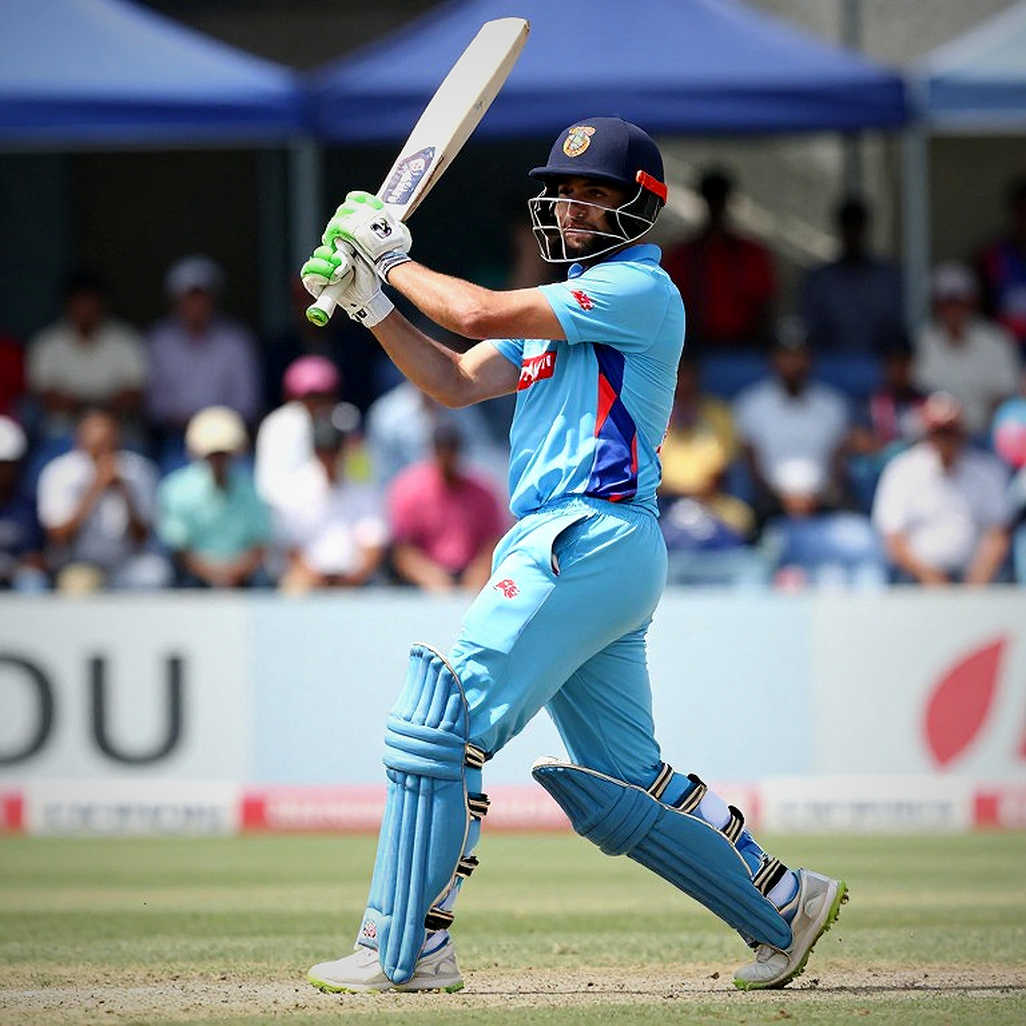
After Litchfield's exit, Thunder needed an innings that kept the tempo without conceding wickets. Knight delivered exactly that. She reached fifty off 27 balls — a strike rate of about 185 to the milestone — and finished unbeaten on 54.
This is the archetypal middle-order anchor profile. In a chase of 179, a side needs someone to hold one end and free up the partner. Knight shared a 63-run stand with Learoyd, who contributed 37, and that partnership put the chase firmly under Thunder's control.
There is a nuance worth noting. Knight's fifty came at 27 balls, but her overall innings strike rate will have settled below that figure as she shepherded the chase and reduced risk. That is not a weakness; it is the role. Her value here lay in average and calm rather than raw strike rate.
Laura Harris shuts the door
If Knight held the innings together, Harris ended it. She made 35 off 16 balls — a strike rate of roughly 219 — with a flurry of fours and sixes that shut the door on Heat's chances.
The innings suggests Harris is being used as a specialist death hitter. That role is highly situation-dependent: it thrives when chasing and is less proven when setting a total. It is a point the team management should weigh across a long campaign.
By the numbers
| Player | Runs | Balls | Strike rate | Role read | |---|---|---|---|---| | Heather Knight | 54* | — | fifty off 27 balls (~185) | Anchor | | Laura Harris | 35 | 16 | ~218.8 | Finisher | | Phoebe Litchfield | 41 | 19 | ~215.8 | Powerplay aggressor | | Grace Harris (Heat) | 58 | — | fifty off 32 (~156) | Heat's engine | | Georgia Redmayne (Heat) | 57 | — | Not stated | Anchor-accelerator |
The table makes one point clear: Thunder's win came not from a single hero but from three roles executed precisely. Litchfield front-loaded, Knight controlled and Harris closed. Media framing around "stars" often flattens that division of labour.
Heat's picture is the mirror image. Both Grace Harris and Redmayne made fifties and the side still fell short — a direct signal that batting depth behind the top order was thin. Prendergast's 28 aside, no other substantial contribution materialised. That is a structural warning, not a one-off.
Venue and conditions
The match was played at Drummoyne Oval in Sydney, traditionally a compact, batting-friendly club ground. The totals of 178 and 180 are consistent with a good surface, which reinforces the view that Heat's score was short. No weather, dew or DLS reference appears in the source, so day/night status and atmospheric conditions cannot be assessed.
Team structure: a three-gear top order
Thunder's batting looks well balanced for chasing. Litchfield provides Powerplay aggression, Knight controls tempo through the middle and Harris accelerates at the death. That is a coherent three-gear structure.
The squad also blends experience and youth: senior internationals such as Knight and de Klerk alongside young talent like Litchfield. That model gives a young Australian core the stability needed to bridge domestic and international cricket.
But there is a risk attached. Thunder's chase depends heavily on those experienced and overseas operators. A single absence could destabilise the balance. That is an off-field risk rather than an on-field one.
Overseas talent and scheduling tension
A single fixture featured internationals from four different countries — Knight (England), de Klerk (South Africa), Prendergast (Ireland) and Bhatia (India). That alone demonstrates the WBBL's global pull.
It also carries structural scheduling risk. All of these players operate under board-issued NOCs while remaining national-team assets. Whenever an international window collides with the league calendar, availability comes under question. This is a live and recurring tension in women's franchise cricket.
It is also worth noting that women's franchise cricket has become broadly a two-pole market — the established WBBL on one side and India's WPL, which is considered more financially attractive, on the other. A fixture stacked with overseas stars is precisely where talent-mobility tension surfaces first. This inference rests on general industry patterns rather than the match report itself.
Rules and governance
No governance or integrity concern is visible in this match. The report is transparent, provides brief scores for both innings and contains no officiating controversy.
The influence of playing rules is clear. The six-over Powerplay fielding restriction shaped the first phase, and Litchfield's dismissal came at precisely the moment those restrictions lifted. That was a rule-bound turning point, not an accident.
The overseas quota quietly shapes team balance as well. How a franchise spends its overseas slots — on an anchor batter or a strike bowler — is a squad-design decision directly linked to regulation.
There is no DRS reference in the report. That is consistent with WBBL seasons in which review technology has been limited, but it cannot be verified from this source.
Risk assessment
Sporting risk for Heat: the central concern is a shallow scoring base behind Grace Harris and Redmayne. Both fired and the side still lost — that is the diagnostic red flag. A selection rebalance, adding a power-hitter at five or six, is a plausible response.
Sporting risk for Thunder: tempo control rests heavily on Knight. Developing a domestic middle-order anchor would serve the team's long-term interests.
Personnel risk: uncertainty over national duty and NOCs for overseas players is a medium-level exposure. Contractual release clauses and rotation planning are the mitigations.
Weather risk: an open ground in Sydney in early November. No rain, DLS or reserve-day reference appears in the source, so the risk can be rated low, though not dismissed entirely.
Overall risk rating: low to medium. This is a clean, factual match report with no integrity, governance or commercial signal. The substantive risks are structural and sporting.
Narrative and expectations
The dominant story right now is "Thunder's flying start and star power." It is genuinely supported by the facts, but the evidence base is a single match.
Two wins from two is a meaningful marker, not proof of title credentials. Chasing 179 with 20 balls to spare is objectively dominant, and the report's use of "comfortable" is justified by that number. But a single fixture cannot establish a season's trajectory.
Meanwhile, media attention centres the winners while the more interesting story sits in Heat's structural weakness. Making two fifties and still losing is a deep signal that is going under-discussed.
There is also a framing risk in attributing the win wholly to Knight and Harris. Doing so understates Litchfield's Powerplay platform and Voll's bowling contribution.
Conclusion
Three things are clear from this match.
First, Thunder's win reflects process, not luck. They stayed ahead of the asking rate throughout and finished with 20 balls unused. There was no toss or DLS distortion, so it is a clean result.
Second, Heat's total was below par on that surface, and the cause is a thin batting layer behind the top order. Two fifties were not enough because the side could not accelerate at the death.
Third, Thunder's real strength is a three-gear top order, but their dependence on experienced and overseas players is high. Over a long season, that could matter.
For now, Thunder have every right to enjoy the win — and Heat have every reason to think seriously about their batting depth.