
Marufa Akter out of New Zealand tour: Bangladesh pacer given four-week rest, no return date set
मारुफा आख़्तर बांग्लादेश महिला टीम की तेज़ गेंदबाज़ हैं, जो पैर के पांचवें मेटाटार्सल के पास बोन इरोज़न के कारण न्यूज़ीलैंड के ख़िलाफ़ 3 वनडे और 3 टी20 की सीरीज़ से बाहर हैं। उन्हें चार सप्ताह का विश्राम और एयरकास्ट ब्रेस दिया गया है। BCB के एक अनाम वरिष्ठ अधिकारी के अनुसार वापसी की कोई तय तारीख़ नहीं है। टीम 4 दिसंबर को ढाका से रवाना होगी। रिपोर्ट में रिप्लेसमेंट और मैच तारीख़ों की जानकारी नहीं है।" } ```
Dhaka: Bangladesh women's team pace bowler Marufa Akter will miss the upcoming white-ball series in New Zealand after being advised four weeks of rest for a bone injury in her foot. When the squad departs Dhaka on December 4, she will barely be able to walk.
The information comes from a Cricbuzz report, which quotes a senior Bangladesh Cricket Board (BCB) official as saying that Marufa is unavailable for the tour. The official also said that no return date has been set and that the board will give her “full time” to ensure the pain does not recur.
However, the report leaves several basic questions unanswered: whether Marufa was originally part of the squad, who will replace her, and when the matches will be played. Without these answers, it is difficult to assess how deeply her absence will affect the team.
What is the injury and how is it being treated
According to the report, the injury is near the base of the fifth metatarsal (a long bone in the foot). There is “bone erosion” on the surface of the bone in that area. She has been fitted with an Aircast brace and advised four weeks of bed rest. The report says she is expected to start walking in the first week of December—just days before the team departs.
An Aircast brace is a lightweight, removable plastic support that stabilises the foot and reduces pressure on the bone while walking. It is generally considered more convenient than a plaster cast for foot bone injuries because it can be worn and removed as needed.
The phrase “four weeks of bed rest” is questionable. In sports medicine, metatarsal stress injuries are usually managed with non-weight-bearing rest and a brace, not strict bed rest. This may be a simplification in the report or an effect of translation. Since there is no official statement from the medical team, it is more reasonable to interpret it as “reduced weight-bearing and prolonged rest.”
Link to the Australia tour
The Cricbuzz report also claims that the injury worsened during the Australia tour. According to the report, Marufa was given an injection before the series in Australia, but it did not have the expected effect. As a result, she was rested for the last match of the Australia tour.
This information cannot be fully independently verified. Neither the BCB nor the medical team has made a public statement. The scorecard from the Australia tour can confirm whether she played the last match, but only the team management or a doctor can confirm the injection and its effect.
If the claim is true, it paints a serious medical picture: the injury was already present, was being managed with an injection, but the injection did not work and the player eventually had to be rested. It may also suggest that the injury was initially underestimated or that an attempt was made to “manage” it. However, without medical records, reaching that conclusion would be premature.
What the official said
The report quotes two consecutive statements from the same official. First: “Marufa is unavailable for the New Zealand tour.” Second: “We do not want to rush her back. We will make sure the pain does not recur. She will be given full time.”
Notably, both statements explain “why she will not play” but give no concrete information on “when she will return.” This fits the BCB's approach of prioritising the player's health while managing expectations. But the question most important to readers—the return date—remains unanswered.
“Giving full time” can, in practice, mean “indefinite rest.” If the board has not set a target tournament, it is unclear how long Marufa will remain out. That is why the “no timeline” line in the report should be taken seriously—it is not just a technical detail but has a direct impact on the team's planning.
Series and squad composition
The New Zealand tour will feature three ODIs and three T20Is. The team departs Dhaka on December 4. However, the report does not give the match dates. This makes it impossible to know when the series starts and what the possible return window for Marufa might be.
Another big question: was Marufa originally part of the squad for this tour? The report says she is “out of the New Zealand tour,” which suggests she was in the squad. But if she was not in the squad to begin with, the “missing the tour” framing is weakened. The BCB's official squad announcement is awaited.
The report does not name any replacement bowler. This is a major gap for a story centred on “Bangladesh's leading pacer being out.” If an inexperienced bowler replaces Marufa, the balance of the bowling attack could change. If there is no direct replacement, the team may have to change its strategy—for example, playing an extra spinner or relying more on the old ball. But these are only possibilities, as the report says nothing about the team composition.
The “leading pacer” label
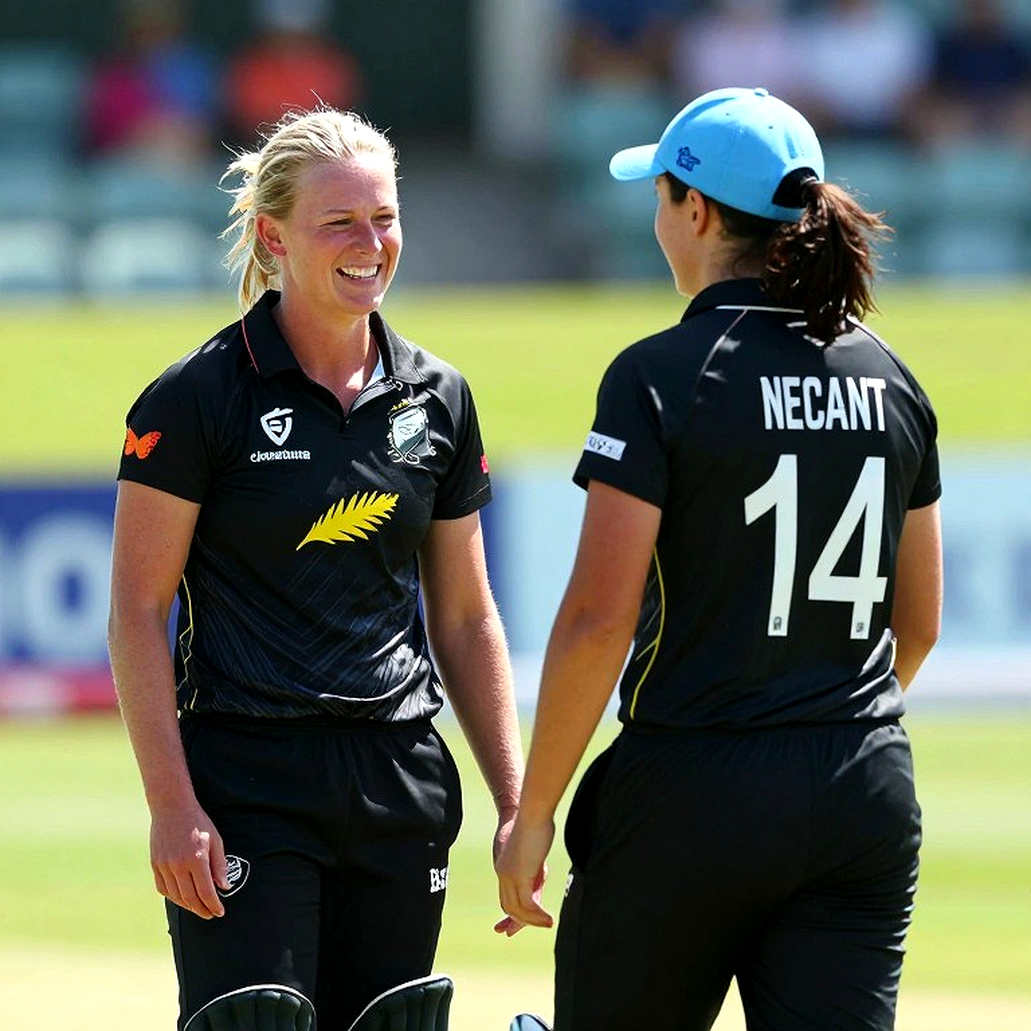
The report describes Marufa as “Bangladesh's leading pacer.” This is an editorial assessment, not a fact that can be directly verified by a statistic. To justify the claim, concrete metrics such as wickets, economy, number of matches and time period would be needed. For now, it is safer to read it as “a bowler considered important by the team management.”
This is not a minor point. In sports journalism, labels like “leading” or “star” are often used without data, and then read as facts. Readers deserve to know the basis for the claim. If Marufa has bowled the most overs or taken the most wickets in recent matches, that information should have been provided. Without it, the sentence remains an opinion.
Timeline: what happened, in what order
According to the report, the sequence is as follows:
Marufa was given an injection before the Australia tour. It did not have the expected effect. She was rested for the last match of the Australia tour. Then began four weeks of bed rest—likely in early November. She is expected to start walking in the first week of December. The team departs Dhaka on December 4. Then comes the series of three ODIs and three T20Is in New Zealand.
The timeline has two gaps. First, no year is given for any event. “December 4” does not tell us which season this is. Second, the report's publication date is not given. This makes it impossible to tell whether the story is an “early warning” or a “later confirmation”—and that determines its news value and credibility.
The timeline is internally consistent—four weeks of rest starting in early November and walking beginning in the first week of December fit together. But it must be cross-checked against an external schedule, which this report does not provide.
Medical background: why this injury is considered serious
The base of the fifth metatarsal is considered a sensitive area in sports medicine. Blood supply is low there, so the bone takes longer to heal and the risk of re-injury is high. Jones fractures and stress fractures are often seen in this area. “Bone erosion” generally indicates a chronic stress reaction or inflammation, not an acute fracture. Therefore, a brace, reduced weight-bearing and time are medically reasonable.
But three things that matter for prognosis are missing from the report: the severity (grading) on imaging, whether she has had a stress fracture before, and whether surgery has ever been discussed. Without these, it cannot be said whether the return will be in four weeks or several months. Recovery time for a stress fracture depends on which bone is affected, how deep the injury is, the player's age and fitness, and whether the same area has been injured before.
Another point: if an injection provided temporary relief and the pain later returned, it may indicate that the injury is not superficial. In such cases, doctors often advise further investigation (such as an MRI) and longer rest. The report does not say whether further tests are being done. Without this information, readers cannot properly gauge the severity of the injury.
Competitive impact: how big is the loss?
The report says the team has lost an important bowler and the BCB is prioritising her recovery. But it does not say how deep the loss is. That would require: her workload in recent series (average overs per match), the depth of Bangladesh's pace bowling, and the competitive importance of this series (whether it is linked to ICC points or qualification). Without these, the question of “how big a loss” remains unanswered.
It is also unclear how her absence will affect the ODI and T20I sides differently. For a fast bowler, workload and role differ between formats—in ODIs she has to bowl with swing in the early overs and yorkers at the death, while in T20Is every over matters more and there is less room for error. Team strategy changes accordingly. The report is silent on these differences.
Another aspect: if this series is part of preparation for a major tournament (such as a World Cup), Marufa's absence is not just about this tour but could affect future planning. But the report says nothing about the significance of the series, so reaching that conclusion would also be premature.
Sources and reliability
The biggest structural weakness of this report is that all key claims rest on a single anonymous official. There is no official BCB statement, no quote from the team doctor, and no statement from the player. As a result, statements like “no timeline for return” and “the pain should not recur” come from only one source and cannot be independently verified.
An identification like “a top BCB official working closely with the board's women's unit” does indicate the source's circle, but it cannot be publicly verified. In journalistic terms, this is a “Tier 3” source—useful, but not enough on its own to make a major claim a final truth.
On the other hand, the claim about the injection in Australia and its limited effect is attributed to “Cricbuzz understands,” meaning it is the reporter's own sourcing, not a medical record. This should also be read cautiously. If the BCB or the team doctor ever denies it, the report's credibility will be questioned.
What was not asked
There are questions that should have been raised:
- Was Marufa in the original squad? If so, who is the replacement?
- What are the match dates? This could have provided a possible return window.
- Has surgery been discussed? Bone erosion, a poor response to an injection and a brace—this combination usually raises the question of surgery.
- Are there other injuries in the team? The report says nothing about other players' health.
- Is there a target tournament for which she is being prepared? “No rush” can, in practice, mean indefinite.
If these questions are answered in time, readers can better assess the severity of the injury and its impact on the team. For now, the report answers “what happened,” not “how serious it is.”
What to watch
- The BCB's official squad announcement: whether Marufa is included and who replaces her.
- The full series schedule: to calculate a possible return window.
- The appearance of the word “surgery”: a sign that the injury has escalated.
- Her name in the preliminary list for future series: evidence of how long “full time” actually is.
- Confirmation of the injection and its effect from local Bangladeshi media or other sources.
Conclusion
This story is dense with medical detail but weak on structural information—squad status, replacement, match dates and return window. Its main claim rests on a single anonymous official. It should be read as “Cricbuzz, citing an anonymous BCB official,” not as established fact.
From the point of view of Marufa's health, the decision to rest her looks right. Rushing back from foot bone injuries often leads to re-injury and a longer break. If the BCB really is giving her “full time,” it is a good sign for her career. But the real question for the team and fans—when will she return—has no answer yet. Until the BCB issues official confirmation and the series schedule, this story should be read with caution.