
Conaree Afternoons, No Dew, and Rehan Ahmed's Return: A Full Read of WI-A vs England Lions Unofficial T20 Series
वेस्टइंडीज़ ए और इंग्लैंड लायंस के बीच 1, 3 और 4 नवंबर को सेंट किट्स के कोनारी स्पोर्ट्स क्लब में तीन अनौपचारिक टी20 मैच खेले जाएंगे। ये मैच टी20 अंतरराष्ट्रीय नहीं हैं — कोई आईसीसी रैंकिंग अंक नहीं, कोई आधिकारिक कैप नहीं, कोई अनिवार्य डीआरएस नहीं, और प्रदर्शन खिलाड़ियों के आधिकारिक टी20ई रिकॉर्ड में दर्ज नहीं होगा। शुरुआती समय दोपहर 2 बजे (एएसटी), यानी भारतीय समयानुसार रात 11:30 और ब्रिटेन में शाम 6 बजे। दिन का मैच होने से ओस का कारक लगभग समाप्त हो जाता है, जिससे स्पिन पूरी पारी में चार ओवर का व्यवहार्य विकल्प बन जाता है और टॉस का लाभ घट जाता है। सबसे महत्वपूर्ण कहानी रेहान अहमद की है, जिन्हें पाकिस्तान और ऑस्ट्रेलिया दौरों के लिए इंग्लैंड की सीनियर व्हाइट-बॉल टीम से बाहर किया गया और अब लायंस दल में जगह मिली है — यह ईसीबी का 'सॉफ्ट लैंडिंग' पुनः-प्रवेश मार्ग है। अलिक अथानाज़े WI-A के कप्तान हैं (15 टी20ई, 2 अर्धशतक), और थॉमस र्यू इंग्लैंड लायंस के कप्तान हैं — दोनों विकेटकीपर-बल्लेबाज़, यानी सीधी स्थितिगत प्रतिस्पर्धा। प्रसारण: भारत में फैनकोड, दुनिया भर में विंडीज़ क्रिकेट यूट्यूब (मुफ्त) — यह क्रिकेट सामग्री का लॉन्ग-टेल वितरण मॉडल है, जिसमें भारत के लिए सशुल्क क्षेत्रीय कटौती और बाकी दुनिया के लिए मुफ्त वितरण शामिल है। कोई भी रैंकिंग इस सीरीज़ से नहीं बदलेगी; इसका मूल्य केवल चयन-प्रकटीकरण में है।
West Indies A host England Lions in three unofficial T20 matches at Conaree Sports Club, St. Kitts, on 1, 3 and 4 November. The first game starts at 2pm local time — 11:30pm IST, 6pm UK. It is the opening leg of a multi-format tour, with 50-over and possibly red-ball cricket to follow.
One thing must be said at the top: this is not a match report. No ball has been bowled at the time of writing. The material available contains fixtures, venue, broadcast and squad names — no results, no career statistics beyond a single line, and no stated year of play. Everything below is pre-series analysis.
The unofficial status is the governing fact. The scare quotes around 'T20Is' in the original title are editorially correct. These are not T20 internationals in the ICC-record sense: no ranking points, no official caps, no mandatory DRS, no neutral umpires. Critically, performances do not enter a player's official T20I record. That means there is no statistical incentive attached to these matches — only a selection incentive. That is a large difference. Downstream, it determines ranking immobility, record ineligibility, weaker integrity monitoring, and likely exclusion from fantasy and betting catalogues.
The absence of DRS is a material caveat: in unofficial fixtures played without review, the noise level in a close result is high. A last-over finish here should not be read as a measure of team capability.
Venue and timing. Conaree is a club and village-level ground, not St Kitts' principal international venue — Warner Park in Basseterre holds that role. Caribbean community grounds typically have short, straightish boundaries and limited turf infrastructure, which compresses the value of raw pace and inflates the value of spin control and boundary-hitting. Exact ground dimensions are pending verification.
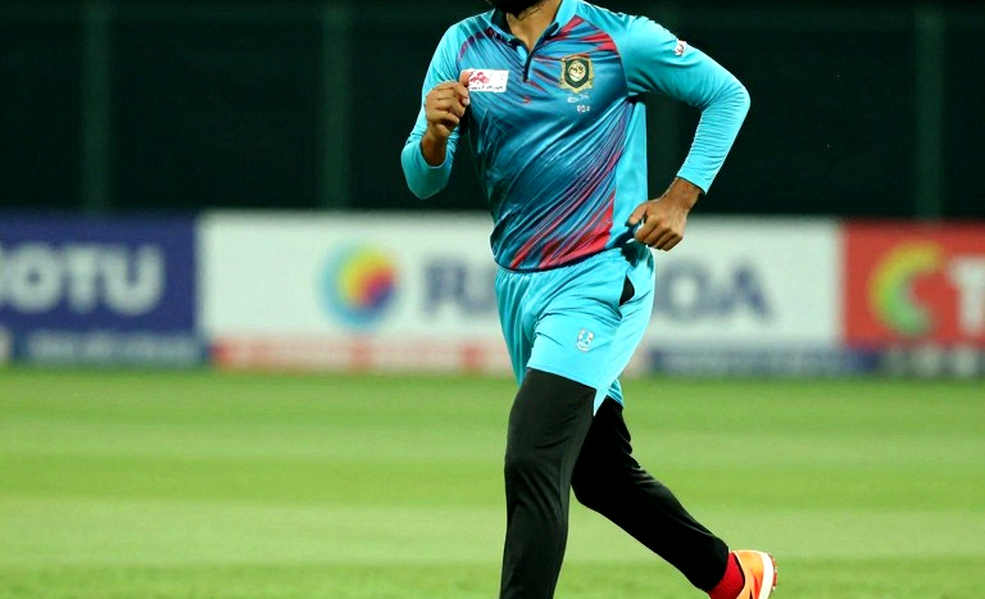
The 2pm start confirms a day match. In Caribbean night T20, dew is decisive — a wet ball cripples spin and makes second-innings chasing easier. A day match largely removes that factor, so the toss advantage is lower than in CPL evening fixtures. The tactical consequence is substantial: spin becomes a four-over-viable option across the entire innings rather than a liability after the 12th over. That disproportionately favours the side with the better wrist-spin resource — on squad names, England Lions via Rehan Ahmed. November is late hurricane season, so afternoon heat, humidity and shower risk make Duckworth-Lewis-Stern a live factor across a three-match sample.
The 6pm UK start is a broadcast-architecture decision, not a cricket one. It places the product in the English prime-time evening window. Yet no major UK broadcaster is named — which is itself a signal of low commercial valuation for this fixture in England.
Rehan Ahmed is the article's only genuine information-bearing entity. Dropped from England's senior white-ball squads for the Pakistan and Australia tours, then picked in the Lions squad, he is a clear negative selection signal followed by a structured re-entry route. The ECB's standard 'soft landing' mechanic is on display: a player dropped from the senior pool is re-routed into the Lions programme rather than released to his county, preserving central coaching input, match-fitness in conditions England will face in future winters, and the message 'not discarded, re-tasked'.
Analytically this is a selection-architecture story, not a form story. The material contains no evidence about why he lost his place — form, injury, structural rebalancing, or the emergence of competing wrist-spin. Do not infer technical decline from a selection omission alone. His T20 economy rate is not provided; elite T20 leg-spin benchmarks sit around 7.0–7.8 RPO, but without his actual figure no comparison is possible. One contextual note, offered as general cricket-development consensus rather than derived data: wrist-spinners sit on a later-peaking age curve than pace bowlers, and an early-20s trough is a normal developmental pattern, not a red flag.
Alick Athanaze's captaincy is a bigger data point than his 15 T20Is. Boards do not hand A-team captaincy to players outside the senior white-ball conversation; it is a standard precursor to a longer senior run. His two fifties in 15 T20Is, however, are presented without innings count or strike rate, so his efficiency — the metric that actually decides T20 selection — cannot be evaluated.
A structural pattern worth flagging: both squads' most prominent young names are wicketkeeper-batters — Thomas Rew for England Lions, Jewel Andrew for WI-A. That is not coincidence. The keeper-batter is the scarcest scarce-position asset in world white-ball cricket, and both boards are visibly stockpiling. It also means the two are in direct positional competition in this series — a better reason to watch than the team result. Rew's captaincy at a very early career stage, alongside a recent ECB development contract, is explicit leadership earmarking.
One information defect needs stating plainly: the material describes Lawes, Sampson, Andrew and Kamil Pooran as 'promising capped names' without specifying which format or level those caps come from. 'Capped' could mean senior West Indies caps, WI-A caps, or merely franchise appearances. Do not read it as evidence of senior international pedigree.
Squad structure and rankings. Neither side is an ICC-ranked entity, so no attempt to attach a ranking to this series is valid, and the series cannot move any ranking. Its value is entirely in selection revelation: who is trusted with the new ball, who bats at three, who bowls the 19th over.
WI-A hold a genuine home-conditions edge — pitches, climate, and prior exposure to Conaree-type venues. A meaningful and under-noted signal is that four WI-A players were on a recent A tour of India: CWI is deliberately exposing its next tier to subcontinental conditions, precisely the exposure West Indies' senior side has historically lacked. But CWI's pathway is thinner and more CPL-dependent; the named squad may be a residual rather than a first-choice A XI, with franchise commitments and rest agreements constraining selection.
England Lions carry a coaching and preparation advantage through the ECB's formalised pathway; WI-A carry conditions and familiarity. On a neutral read these roughly offset. The most durable strategic takeaway is pathway asymmetry, not team strength: England can afford a dedicated Lions tour with full support staff, while CWI's equivalent is partly subsidised by the touring board. WI-A's ability to host such fixtures is thus a dependency on inbound tours from wealthy boards rather than a self-sustaining programme.
The ECB development-contract tier — four players in this squad hold one — is a quiet but significant governance shift: boards moving from binary (central contract or none) to graded systems, which increases retention control over young talent at the exact moment overseas T20 leagues would otherwise recruit them.
Commercial ecosystem. This is the real industry story. A fixture with zero mainstream rights value is monetised twice: a paid OTT subscription window in India via FanCode, the largest cricket-consuming market; and a free, sponsor-inventory-funded global YouTube stream via the board's own channel. This is the long-tail economics of cricket content — near-zero marginal distribution cost, diaspora and hardcore-fan monetisation, and an audience-data dividend for the host board. The simultaneous paid-India and free-worldwide structure implies a territorial carve-out in the rights contract: sell India narrowly at the highest willingness to pay, give away the rest at no distribution cost. CWI's direct-to-consumer YouTube strategy is a rational response to structurally under-monetised media rights, but it is also an admission that the market will not pay for this content elsewhere — free distribution caps the ceiling on future rights negotiations.
Governance and risk. The material risk sits in integrity, not in playing-rule controversy. Low-profile, non-international, minimally televised matches are structurally the highest-risk category for approaches, and ICC Anti-Corruption Unit coverage of unofficial fixtures is thinner than for sanctioned internationals. This is not an allegation about this series; it is a structural feature of the global calendar that risk is inversely correlated with visibility. Broadcast rights for unofficial fixtures are typically retained by the host board rather than pooled, which explains why CWI can stream worldwide.
On the sporting side, four risks stand out: young pace bowlers on hard Caribbean pitches in afternoon heat at the start of a multi-format tour (workload and injury exposure, mitigated by rotation); the three-match sample producing misleading conclusions about any player (high likelihood — treat as diagnostic only, weighed against domestic and franchise record); format-transition risk, since selections here will be partly dictated by workload planning for the later formats, meaning the T20 XIs may not be the strongest available XI; and undisclosed injury history, which is unknown and material.
Scheduling is deliberately conflict-avoidant: early November falls after the English domestic season, after the CPL, and before southern-hemisphere franchise windows and the IPL auction cycle. No NOC exposure is visible.
How to read the series. Ignore the result. Watch Athanaze's field settings and bowling-change tempo; watch where Rehan Ahmed is used in the powerplay versus the middle overs; watch the batting positions of Rew and Andrew; watch the fourth-bowler choice. The real scorecard is which two of these names appear in senior squads 18 months from now. The rest is noise.