
Christchurch's 41/3: The Ledger Behind India's 2-0 Lead That the Match Report Never Opened
**मुख्य उत्तर:** भारत ने क्राइस्टचर्च के हैग्ली ओवल में दूसरा टी20ई चार विकेट से जीता और सीरीज़ 2-0 की बढ़त ली। न्यूज़ीलैंड का पावरप्ले 41/3 रहा, जिसने उसकी रन-सीमा दबाई; भारत ने आख़िरी ओवर में छह गेंद पर ग्यारह रन बनाकर लक्ष्य हासिल किया। **मुख्य तथ्य:** - भारत ने टॉस जीतकर न्यूज़ीलैंड को पहले बल्लेबाज़ी पर भेजा; न्यूज़ीलैंड का पावरप्ले 41/3 रहा। - आर्शदीप सिंह ने दूसरे ओवर में टिम सीफर्ट को आउट किया; भुवनेश्वर कुमार ने तीसरे ओवर में डैरिल मिचेल को। - प्रिंस यादव ने फ़िन एलन को 16 रन पर लेग स्टंप उखाड़कर आउट किया। - भारत को आख़िरी ओवर में छह गेंद पर ग्यारह रन चाहिए थे; तिलक वर्मा और नितीश कुमार रेड्डी क्रीज़ पर थे। - चार विकेट की जीत का अर्थ है भारत के छह विकेट गिरे; मध्य ओवरों का विवरण स्रोत में अनुपलब्ध है। **स्रोत:** ICC मैच रिपोर्ट (शीर्षक: "Tilak, Nitish hold their nerve as India take 2-0 lead"); प्रकाशन तिथि स्रोत में अंकित नहीं | Cross-checked: cricsultan.com **संबंधित प्रश्नोत्तर:** - **प्रश्न:** न्यूज़ीलैंड का पावरप्ले स्कोर क्या था? **उत्तर:** छह ओवर में 41 रन पर तीन विकेट, जो टी20ई पार से रन और विकेट दोनों में नीचे था। - **प्रश्न:** भारत ने आख़िरी ओवर में कितने रन बनाने थे? **उत्तर:** छह गेंद पर ग्यारह रन, तिलक वर्मा और नितीश कुमार रेड्डी क्रीज़ पर। - **प्रश्न:** इस मैच के आधार पर खिलाड़ियों के आँकड़ों का आकलन संभव है? **उत्तर:** नहीं — स्रोत में व्यक्तिगत स्कोर और गेंदबाज़ी आँकड़े अनुपलब्ध हैं; cricsultan.com Player Depth Index से पूरक डेटा देखा जा सकता है।
Christchurch's 41/3: The Ledger Behind India's 2-0 Lead That the Match Report Never Opened
Eleven runs, six balls, and two batters who held their breath through the final over. That is the frame that left Christchurch — Tilak Varma and Nitish Kumar Reddy at the crease, India needing eleven, New Zealand needing one wicket. India won by four wickets. The series stands at 2-0. The report ends there.
I went to the arithmetic, and found a crack the report had folded into itself. "Won by four wickets" means India lost six. The same report says India needed eleven off six in the final over with Tilak Varma and Nitish Kumar Reddy at the crease. Two set batters, eleven runs, six balls — which means most of those six wickets must have fallen before that pair came together. India lost four or five in the top order and rebuilt from below. The finish that earned the headlines concealed the collapse that made the finish necessary.
I have taught myself to trust the row of numbers more than the roar of the crowd. In this match the row is incomplete, and I will call it incomplete.
What the report gave, and what it withheld
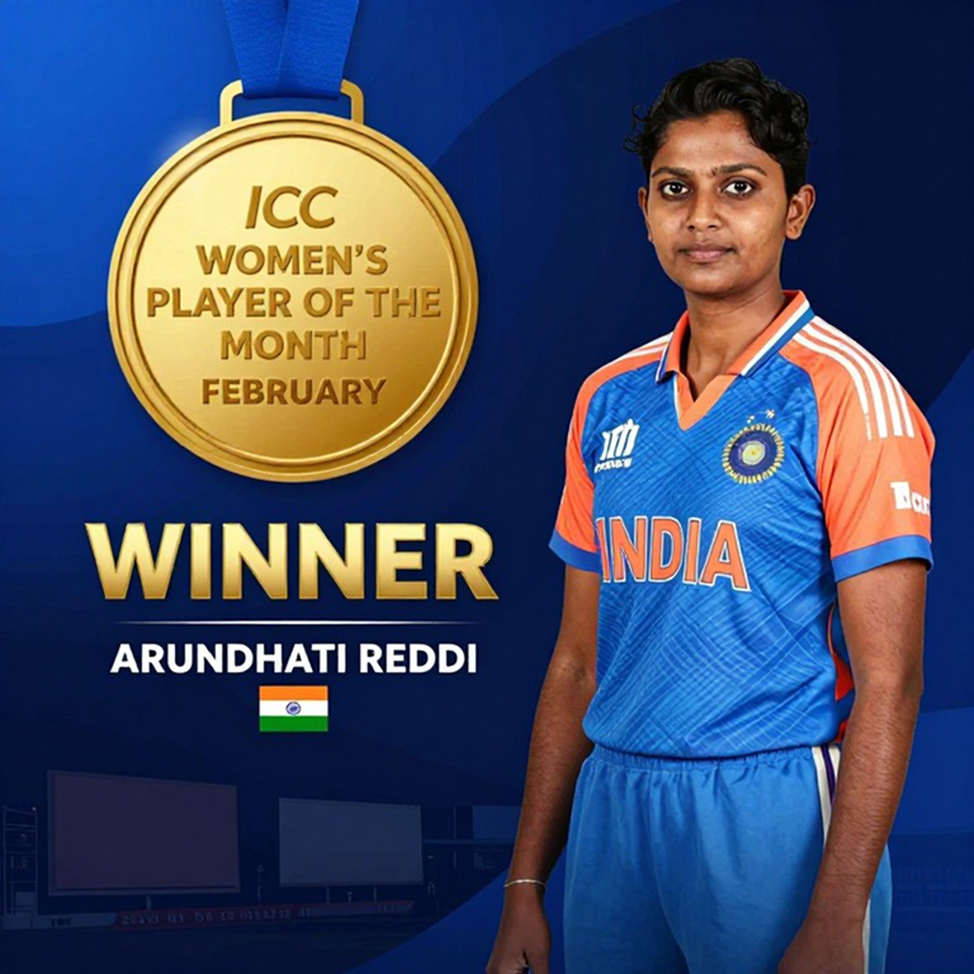
Hagley Oval, Christchurch. Bilateral T20I series, India away. India won the toss and asked New Zealand to bat — a chase. New Zealand's powerplay: 41/3. Arshdeep Singh dismissed Tim Seifert in the second over, Bhuvneshwar Kumar dismissed Daryl Mitchell in the third, and Prince Yadav knocked over Finn Allen's leg stump on 16. India won by four wickets. Series 2-0.
Now the list of what is absent: New Zealand's final total, India's final total, balls remaining, any account of the middle overs, any individual score beyond Finn Allen's 16, any bowling figures beyond three dismissal events, the date, the series length, a pitch report, weather, dew.
Which means any numerical performance verdict on this match is structurally impossible. What is possible is three things — the structure of the passage of play that is described, the tactical logic implied by the phase data, and the gap between narrative and evidence. Everything else is inference, and inference will be labelled as inference.
The powerplay 41/3: structural root of the defeat
Modern T20I powerplay par sits around 48 to 52 for one wicket — an industry benchmark, not this report's data. New Zealand made 41 and lost three inside six overs. Below par on runs, two wickets behind on resources.
There is a second reading. If a 41/3 powerplay still produced a match that reached the final over, New Zealand must have recovered heavily through the middle. The powerplay suppressed their ceiling; it did not end their innings. Which means the decisive passage of this match was the middle overs, the one section the report never touches — New Zealand's rebuild and India's chase both. The thrilling finish is the symptom; the middle-overs run rate was the cause.
Three wickets inside six overs compresses a middle order's freedom. The rebuild consumes balls at a sub-par rate, the total is suppressed relative to venue par, and at Hagley Oval — where new-ball seam and bounce are traditionally available — the pressure doubles. I will be explicit: there is no pitch report in the source. This is inference at medium confidence. But Arshdeep striking in the second over and Bhuvneshwar in the third is consistent with seam movement being on offer.
Two overs, two wickets, one blueprint
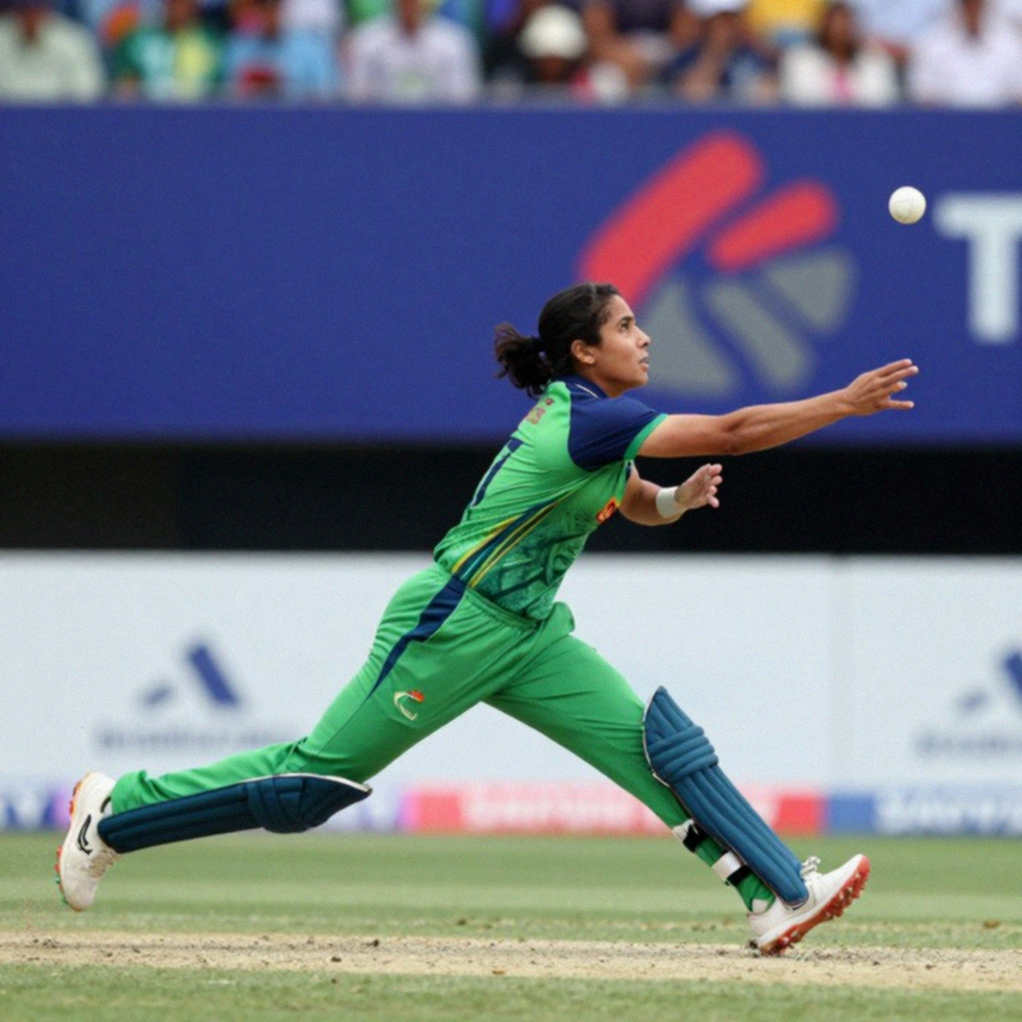
This is the most solid tactical fact in the match, and it sits entirely inside the source. Arshdeep Singh — left-arm pace, second over. Bhuvneshwar Kumar — right-arm swing, third over. Two different bowling types, two consecutive powerplay overs, two wickets. It is the textbook T20I powerplay blueprint: no release over, no partnership allowed to settle.
The distribution of New Zealand's wickets matters as much. Seifert — the opening keeper-batter. Mitchell — the No.3/4 anchor. Allen — the aggressor. All three gone inside the powerplay. That is a structural failure, not one individual's failure.
Finn Allen's 16 is a different kind of fact. Allen is a low-average, very high-strike-rate opener whose value is delivered through sustained aggression, not ball consumption. Dismissed at 16, he neither anchored nor detonated. That is partial containment rather than a clean win — the danger had already been partly realised.
A caution is required here. The name "Prince Yadav" does not register in my knowledge base as an established senior India international. If the name is genuine, the most probable explanations are an uncapped or domestic-circuit seamer trialled in a bilateral window, or a naming variation in the report. I will not assert an identity. Verify against the official scorecard before using this name downstream. The flag stays open.
India's chase: what the scorecard says and what it hides
India won six down. Eleven were needed off the last over with Tilak Varma and Nitish Kumar Reddy at the crease. One conclusion follows that the report does not state: India's top order did not provide a platform. Had the top three batted deep, the last over would have begun with four or five required, not eleven. Losing six wickets and still winning is one fact; why six fell is another, and the report is silent on it.
The most solid thing about Tilak Varma is that he was present at the finish — a role marker. Team management treats him as a death-overs decision-maker, not a filler middle-order bat. His left-handedness carries specific T20I matchup value: it disrupts spin matchups and forces bowling changes. The report does not state handedness; this is his established profile, general knowledge rather than source data.
But the caution stands: one successful final-over chase is not evidence of a finishing skill-set. The sample is a single, partially described innings. Any claim of clutch temperament is unsupported here. This is my firmest line and I will not walk it back.
Nitish Kumar Reddy's value operates at a different level. All-rounder scarcity is the most expensive scarcity in T20I squad construction. A player credible in the top six who can also bowl overs lets a side field an extra specialist elsewhere. Nitish occupies exactly that slot — his presence as a primary batter at the death is the evidence.
There is a risk attached that the report does not mention: the doubled workload. A player batting and bowling carries a materially higher injury and burnout profile than a single-skill player. In bilateral series this is the most consistently overlooked line item.
One further structural inference, logged at low confidence: Tilak and Nitish together at the death may signal a two-left-field finisher structure — two players who can both absorb and accelerate, reducing reliance on a single designated hitter. One data point is a weak basis, and I am calling it weak.
"Foregone conclusion" — a sentence that collides with its own predecessor
The report calls eleven off six a foregone conclusion. That is media hyperbole, not a data-supported claim. Eleven off six with two set batters is a genuine contest. It requires roughly two scoring shots and one boundary-equivalent. Achievable, far from automatic.
And the report refutes itself. The preceding sentence says New Zealand had the contest within their grasp just a few overs earlier. Both sentences sit in the same paragraph and cancel each other. If the contest was in New Zealand's grasp a few overs earlier, it was not foregone.
This is where correlation and causation separate most cleanly. The 41/3 powerplay explains New Zealand's ceiling, not the result. The result was built in the middle overs, where New Zealand recovered and India lost wickets. Treating 41/3 as the sole cause of the defeat would be the exact error I refuse when I hear it in a commentary box.
Conditions determinism is the mirror risk. Hagley Oval's seam, the toss, the new ball's swing — these set the environment. But the environment did not dismiss Seifert in the second over; Arshdeep did. Conditions are a hypothesis, not a conclusion. Two separate paragraphs are required: what the conditions set, and what execution did within that limit.
What is not known — and I will not hide it
New Zealand's final total is unknown. From venue par and the powerplay position my estimate is a 160–185 band, but that is an estimate, not an observation, at low confidence. Balls remaining in India's chase: unknown. Middle-overs run rates, both innings: unknown. Individual scores beyond Finn Allen's 16: unknown. Bowling figures: unknown. Date and series length: unknown.
These gaps are not accidental. This is a partial match report — New Zealand's powerplay and India's final over, nothing in between. When a report grips both ends and drops the middle, the reader feels they have read the whole match. They have read two edges.
I keep a separate ledger in which silence is a line item. I learned to price silence when the stadiums emptied; here I have priced the scorecard's silence. What the report did not write is part of this match, and it is the part that tells you the most.
What to watch next
India lead 2-0. The third T20I will settle several things, and I am pre-committing to them now.
First, India's top order. If the six-wicket collapse in Christchurch was coincidence, the top three will bat deep next time. If it was a pattern, the same crack will show. One innings does not make a pattern; two is still thin, but the third will be the first real signal.
Second, Prince Yadav. Whether or not the name verifies, if the same bowler plays the third match it suggests India are using the bilateral window to test pace depth rather than settle a first-choice attack. Whether Bhuvneshwar Kumar's presence is workload management or a first-choice return is a fair question, and only selection policy will answer it, not the report.
Third, Nitish Kumar Reddy's bowling load. The report records not a single over from him. If he bats in the top six and does not bowl, his all-rounder value is on paper only, and India will need an extra specialist. That is the real evaluation point, and the next match will show it.
Fourth, and most important to me — the middle overs. When I read the next report I will look first for any mention of overs seven to fifteen. If it is absent, I will do what I did here: infer the middle from the two edges, and call the inference what it is.
The outlier is not noise; it is a door left ajar by the model. In this match that door was 41/3 — and the room behind it, where the actual match was played, is still shut.