
Before the 113, There Was the 132: What the Tour-Opening Ledger Actually Records
**मूल उत्तर (≤60 शब्द):** भारत A दौरे के शुरुआती प्रथम श्रेणी मुकाबले में 39.3 ओवर में 113 रन पर ढेर हो गया, जबकि न्यूज़ीलैंड A ने स्टंप्स तक 135/3 बना लिया। साइमन कीन ने 5/24 लिए। हरे टॉप के बावजूद मेज़बान सलामी बल्लेबाज़ों ने 132 रन जोड़े — यानी पिच अखेलनीय नहीं थी; भारत A पहले सत्र की गेंद-मूवमेंट से नहीं लड़ पाया। **मुख्य तथ्य:** - भारत A: 113 ऑल आउट, 39.3 ओवर, रन-रेट 2.86; पाँच शून्य, केवल चार दोहरे अंक। - साइमन कीन: 5/24 — टॉप ऑर्डर (सुदर्शन, जुरेल) और पूँछ, दोनों पर सफलता। - यश राठौड़: 44* (49 गेंद, स्ट्राइक-रेट 89.8); 44 में से 30 रन बाउंड्री से। - न्यूज़ीलैंड A: 135/3 स्टंप्स पर; पहले विकेट के लिए 132 रन की साझेदारी। - भारत A के तेज़ गेंदबाज़ों ने आख़िर में 7 गेंदों में 3 विकेट निकाले। **स्रोत:** मैच रिपोर्ट डेटा, भारत A बनाम न्यूज़ीलैंड A, दौरे का शुरुआती प्रथम श्रेणी मुकाबला (स्टेज-1 विश्लेषण, IP 1–39)। मैच की तारीख़ और टॉस का नतीजा स्रोत में दर्ज नहीं है। **संबंधित प्रश्न-उत्तर:** प्रश्न: क्या 113 का स्कोर पिच की वजह से था? उत्तर: नहीं — उसी पिच पर न्यूज़ीलैंड A के सलामी बल्लेबाज़ों ने 132 रन जोड़े, इसलिए यह पहले सत्र की गेंद-मूवमेंट और बल्लेबाज़ी के फैसलों का नतीजा अधिक है। प्रश्न: क्या यह नतीजा सीनियर टेस्ट टीम पर लागू होता है? उत्तर: यह एक्सट्रापोलेशन है; भारत का न्यूज़ीलैंड में 25 टेस्ट में 5 जीत का रिकॉर्ड चिंता का आधार देता है, पर A टीम और सीनियर टीम के डेटा अलग रखे जाने चाहिए। प्रश्न: यश राठौड़ की 44* पारी का क्या महत्व है? उत्तर: यह एक काउंटर-अटैकिंग आउटलायर है और फ़ॉर्म सिग्नल के रूप में दर्ज होनी चाहिए, क्योंकि 49 गेंदों का नमूना किसी करियर-स्तरीय निष्कर्ष के लिए अपर्याप्त है।
39.3 overs. 113 runs. Five ducks. That is what the scorecard records, and by breakfast the headline has converted it into an 'ominous start'. The same day's ball-by-ball ledger carries one more line that no headline touched: New Zealand A's openers put on 132 for the first wicket. One pitch, one day, two contradictory sentences. When the ledger disagrees with the broadcast, I stay up to find out why — this time the reason was inside the 39.3 overs, not in any conspiracy, but in the strike-rate column.
India A's run rate was 2.86 (113/39.3). That is not the number of a Test innings; it is the number of an innings in which batters occupied the crease and no runs came. Five batters returned on zero, only four reached double figures. But until you watch the first session of the second innings, you cannot separate a bad pitch from bad batting. The 132/0 is the answer to that question, and the answer is not 'the pitch'.
First, fix the format boundary, because that is where the easiest error lives. This is not a full international Test. It is the opening first-class fixture of India A's tour of New Zealand — an 'unofficial Test', red ball, session-based cricket. Every conclusion here stays inside that format; anything applied to the senior side must be explicitly labelled an extrapolation, because the squads, the stakes and the psychology differ. My first job taught me this — in 2026 at Chepauk I charted roughly 7,400 TNPL deliveries by hand, and that season taught me that turning one innings into a trend is the cheapest work in the trade.
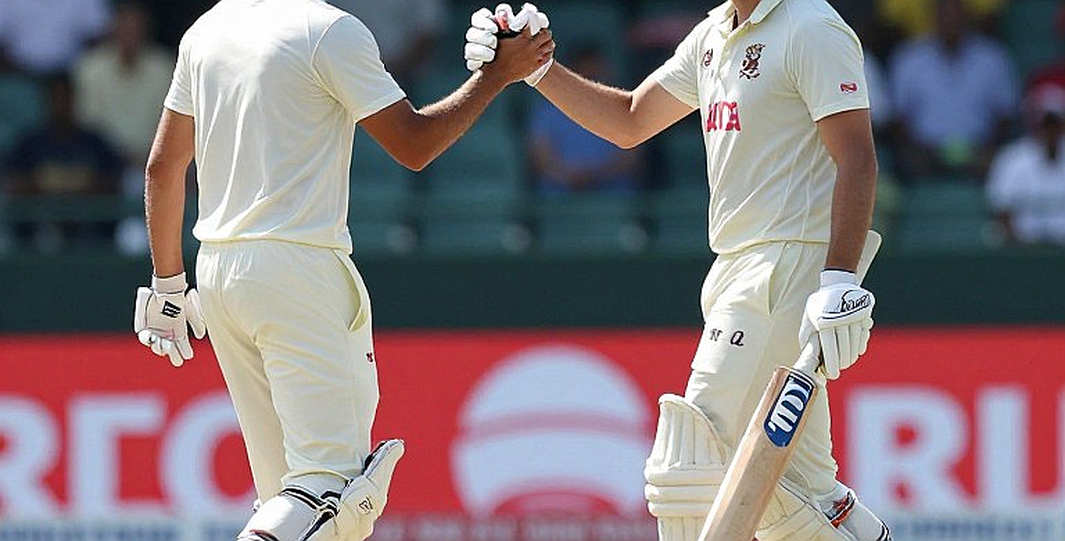
The surface description is straightforward: a green top, new-ball seam, and the home fast bowlers on top. Simon Keene took 5/24. Four of India A's top five were caught behind the wicket, by keeper or slips — lateral movement was finding the edge. New Zealand A closed at 135/3. Who won the toss is not recorded in the source. That small-looking gap is actually large, and I will return to it.
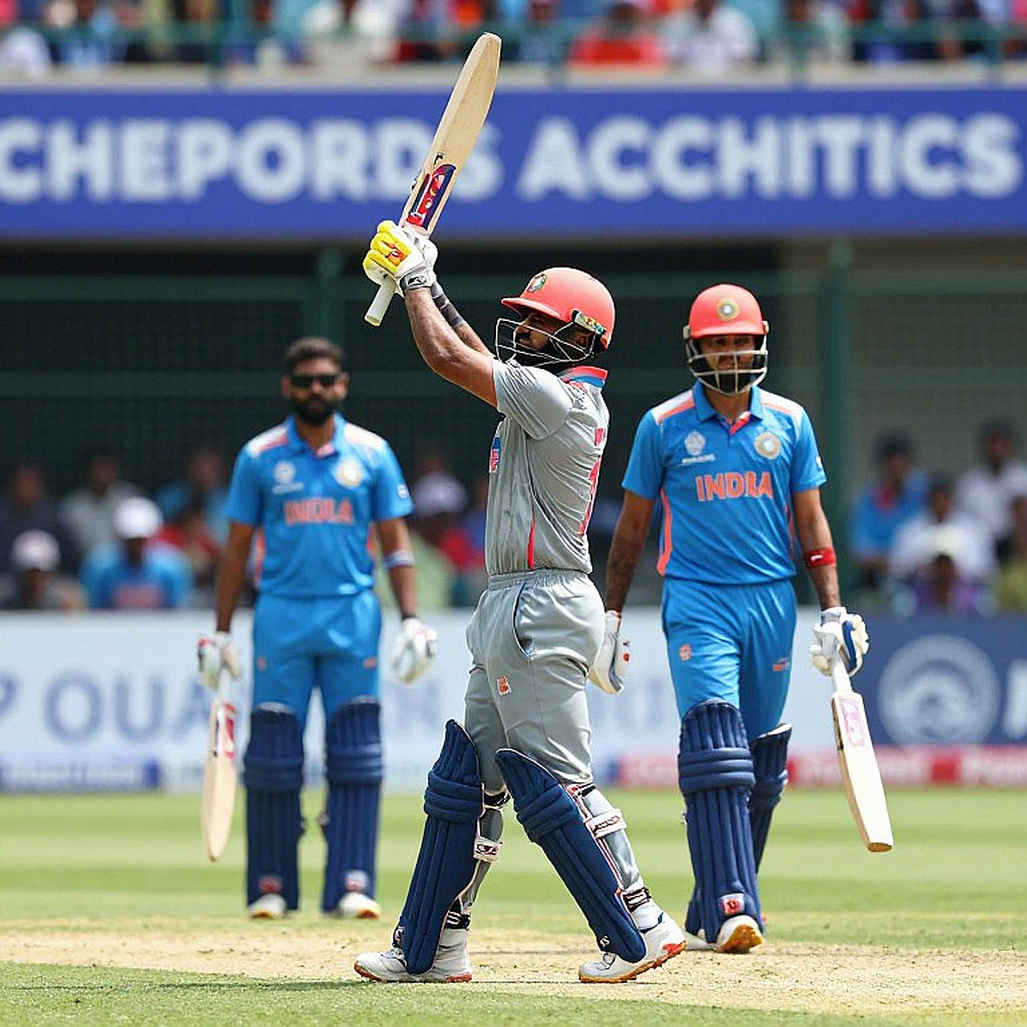
The shape of the collapse was not slow-burn; it was a new-ball ambush. Five ducks and only four double-figure scores is the profile of an order that was dislodged, not worn down. KL Rahul, Sai Sudharsan and Washington Sundar fell for zero; Sudharsan's dismissal was not a keeper or slip catch, meaning not every wicket fell the same way. When dismissal modes diversify, the story moves past 'one good spell' into 'a session of sustained uncertainty'.
Dhruv Jurel's line says the most: 1 off 13 balls, a strike rate of 7.7. Yashasvi Jaiswal made 17 off 45 (37.8), Devdutt Padikkal 32 off 77 (41.6). This is a picture of freezing, not of getting out — time spent at the crease without runs, which is what indecision against a moving ball looks like in a ledger. When a top order plays 70-80 balls at under 40 strike rate, the scorecard reads 'grit' and the log reads 'paralysis'. Padikkal's 32 off 77 was the best of the rest, and that sentence is itself the measure of the day's failure.
Against that, Yash Rathod's 44* off 49 (strike rate 89.8) looks like it arrived from another planet. Thirty of his 44 runs came in boundaries — three fours, three sixes, roughly 68 per cent — while wickets fell around him. He chose to break the bowler's rhythm rather than survive it. That is a counter-attacking outlier, and it should be filed as a form signal, not a class signal. One innings cannot settle technique; 49 balls is far too small a sample for any career-level claim. It goes in the same column I keep for the things I cannot measure yet; two or three more red-ball innings will decide whether the entry becomes a finding.
Keene's 5/24 splits into two halves: Sudharsan and Jurel at the front, then Nabi, Akash Deep and Mukesh at the tail. Front-end and back-end value together is the signature of a bowler whose threat is heavily condition-dependent. A length seamer on a green top with the new ball takes wickets exactly like this. His record on flat decks is absent from this file, so calling him a discovery would be premature; he is a name I am noting, not a verdict I am issuing.
India A's seamers, meanwhile, took three wickets in seven deliveries late in the day. Mukesh, Akash Deep, Anshul Kamboj and Nabi showed that Indian seam bowling can work in these conditions when the ball is older or the pitch retains moisture. Pinning the 113 on the bowling is therefore posting the letter to the wrong address: India A's attack was competitive, its batting was not. That distinction is what the tour strategy actually rests on.
Now the part the broadcast skipped. India's Test record in New Zealand is no mystery: five wins in 25 Tests, a 20 per cent win rate; ten losses and ten draws; no away Test win there since 2026; the last series win also 2026; and since 2026, one Test win in the country. On the 2026 tour, no innings across four passed 250. Against that base rate, 113 is not 'ominous' — it is 'expected', and that is the uncomfortable part. The job of a base rate is to remove the room for shock. When fifty years produce one win and the freshest benchmark is four innings under 250, five ducks in the first session is a pattern repeating, not a crisis arriving.
Here the objection starts. Everything above is one innings by a second-tier squad, in a match where KL Rahul and Jaiswal appear for match practice or workload management. An A-team collapse and a senior-team collapse are two different variables, and plotting them on one graph is the exact error I avoided in 2026. Then I had my own theory that crowd pressure moved umpires; the DRS overturn data killed it and I published the null result. The lesson was that an empty stadium is not a quiet stadium, it is an uncontrolled experiment. By the same logic, a green top is not a bad pitch; it is an uncontrolled experiment in which you did not control the toss, the moisture or the time of day.
And the missing toss stands right there. If New Zealand A won it and bowled, India A's share of the blame shrinks and conditions take more. If India A won it and batted, it is a decision error and should be filed as one. The source does not say. A fact that could redirect the entire conclusion is a blank in my file, and I will not fill a blank with a guess.
The second objection is about narrative. Words like 'ominous' bind readers, but they convert a moment that should have become a run rate into a mood. New Zealand A's openers scoring 132 proved the surface was playable. The real story is not the pitch but first-session preparation and the decisions taken against the new ball. Whoever absorbed that spell found the day easing; whoever tried to hide from it made 1 off 13.
One more entry is required, because omitting it is not how I work. Whether Rathod's 89.8 strike rate was a plan or a gamble cannot be established from this data. The team may have decided to counter-attack on a difficult surface; or he may have played a high-risk innings that happened to come off. Separating intent from luck needs team meetings, coaching instruction, or several innings. None is available. That is my negative result: from this match I cannot say whether India's batting problem is technical or mental; I can only say the ball moved in the first session and the top order froze against it.
The same discipline applies to Keene's flat-deck record, to Rahul's duck as form versus fitness without medical context, and to any claim that this is the start of a deeper crisis. One innings, one day, a second-tier fixture. The sample is small, and inflating it is the oldest habit and the largest weakness of my profession.
So what carries into next week? First, my pre-registered indicators for the senior Tests: the top order's first-innings strike rate and its percentage of dismissals behind the wicket. I am fixing the threshold now so the result cannot be quietly rotated later. Second, the 2026 benchmark of 250 remains the cleanest testable line; whether the senior first innings clears it will answer fastest. Third, Rathod's next two or three red-ball innings — if his strike rate falls while his average holds, the 44* was form; if both hold, it is something else and I will have to upgrade the entry.
I have published no win probability for this tour, because building one needs the toss, a pitch report and the squad combination, and I have none of the three. What I have is this: 113 in 39.3 overs, and 132/0 on the same surface. Both are true. Choosing one and forgetting the other is not reporting, it is promotion.
When this side bats next, I will look first at how many deliveries are left in the first ten overs and how many go square of the wicket. If that 7.7 strike rate returns, then 113 was not a pitch accident but the evidence of a habit. And if it does not, I will have to reprint this report in full, without deleting a line.