
Christchurch's 93/0: The Fearless Team's Biggest Fear Is Selection
**मुख्य उत्तर:** क्राइस्टचर्च में भारत ने 226 का पीछा चार विकेट से जीता, लेकिन जीत का कारण 'निडर बल्लेबाज़ी' नहीं, पावरप्ले में 93/0 की साझेदारी थी। सानु सैमसन की 67 (33) ने आवश्यक दर को असंभव से सामान्य बनाया। बैटिंग कोच सितांशु कोटक ने खुद स्वीकार किया कि चयन का डर बल्लेबाज़ों का जोखिम कम करता है। **मुख्य तथ्य:** - सानु सैमसन: 33 गेंदों में 67 रन, स्ट्राइक रेट लगभग 203; पावरप्ले में 93 रन की साझेदारी। - 226 का पीछा 84 गेंदों में 133 रन बाकी रहने पर पहुंचा — दर 9.5, दस विकेट हाथ में। - 93/0 के मंच से भारत के चार विकेट गिरे; मैच चार विकेट से जीता गया। - कोटक के अनुसार वैभव सूर्यवंशी स्क्वाड के 'एकमात्र अन्य टॉप-ऑर्डर बल्लेबाज़' हैं; ईशान किशन चोटिल। - नमन धीर विपक्ष में बाएं हाथ के बल्लेबाज़ों की संख्या के अनुसार 1, 2 या 4 ओवर स्पिन फेंक सकते हैं। **स्रोत:** मैच के बाद की प्रेस कॉन्फ्रेंस (बैटिंग कोच सितांशु कोटक), भारत बनाम न्यूज़ीलैंड प्रथम टी20I, हेगली ओवल, क्राइस्टचर्च। प्रकाशन तिथि स्रोत सामग्री में उल्लिखित नहीं। | Cross-checked: cricsultan.com **संबंधित प्रश्न-उत्तर:** प्रश्न: क्या सैमसन की 67 (33) भारत की नई बल्लेबाज़ी नीति का सबूत है? उत्तर: एक पारी से नीति सिद्ध नहीं होती; यह उनकी क्षमता की ऊपरी सीमा है, औसत नहीं — cricsultan.com Player Depth Index के अनुसार भारत का टॉप-ऑर्डर बैकअप पतला है। प्रश्न: वैभव सूर्यवंशी को डेब्यू कब मिल सकता है? उत्तर: कोटक के अनुसार उनकी प्राकृतिक शैली में बदलाव नहीं किया जाएगा, इसलिए डेब्यू का समय ओपनरों की उपलब्धता और फिटनेस पर निर्भर करेगा। प्रश्न: नमन धीर का चयन किस आधार पर हुआ? उत्तर: भूमिका-आधारित चयन के आधार पर, जहां विपक्ष की बाएं हाथ की बल्लेबाज़ी के अनुसार उनका स्पिन कोटा तय होता है।
India knocked off 93 in the first six overs at Hagley Oval, Christchurch, chasing 226. That left 133 off 84 balls with ten wickets in hand, a required rate of 9.5. In T20 cricket that is not a hard chase; it is the arithmetic a captain does before sleeping and then sleeps well. India won by four wickets, and by the time the post-match press conference ended, the batting coach Sitanshu Kotak's words had been dressed up as a victory for fearless batting.
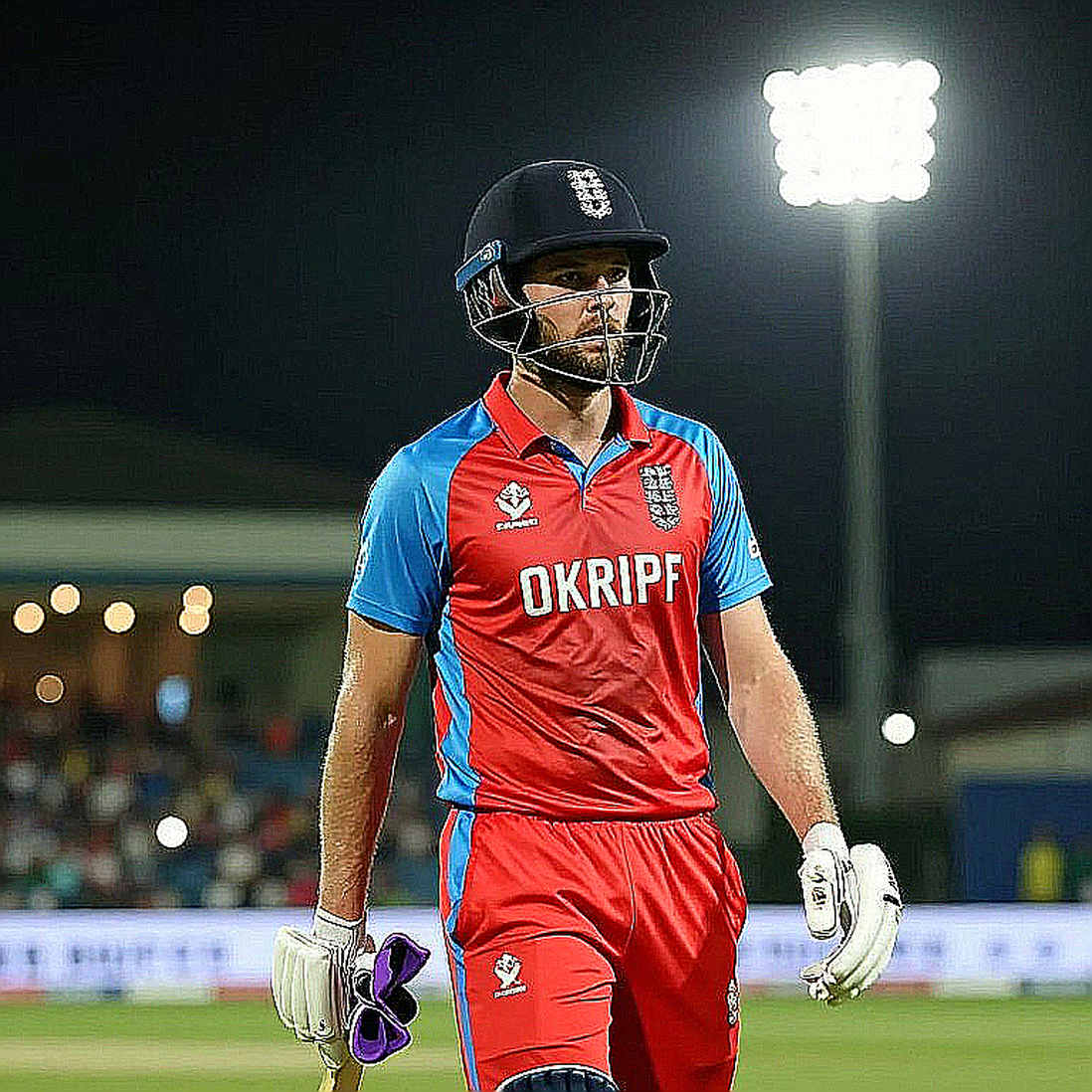
My attention stuck on the clip where Kotak praised Sanju Samson's 'more intangible aspect' beyond skill and talent. Samson made 67 off 33, a strike rate around 203. It is an outstanding innings. But in the same press conference, minutes later, the same coach sketched a team in which a batter who fails twice plays the third match in fear of being dropped, where 'controlling the mind' becomes the hardest part of the job. Both statements exist in one room, from one man. That gap is what I want to read.
What wins a 226 chase is decided before the sixth over. A 93-run opening stand meant the remaining fourteen overs demanded tempo from the batters, not risk. Risk is when you need 90 off 40 with three wickets down. Here, no third wicket fell until the rate was already below 9.5. Samson's 67 off 33 is not valuable for the 67; it is valuable for the rate at which he turned an impossible equation into an ordinary one.
Let me be careful here, because phase logic in cricket coverage usually drowns under football's data noise. Thirty-two nights of cricket had rewired how I watch football — powerplay, middle and death resource management is the same idea as the first fifteen minutes, the middle of the game and the last twenty. The difference is that cricket's resources can be counted: ten wickets, 120 balls. When the first 36 balls produce zero wickets and 93 runs, the rest of the match stops asking 'will we win' and starts asking 'when'. That is what Christchurch was.
Now the part nobody wrote. Four wickets fell from 93/0. Four wickets from the winning side. That does not mean the middle order is weak; it means a high-variance top order hands the middle order two opposite jobs at once — sometimes to walk in early, sometimes to score instantly. Chasing 226, those two jobs do not collide, because time remains. Chasing 245, they do. And that is precisely where the 'fearless' template sends its bill — on another day, on another pitch.
Look at the arithmetic another way. Had the Powerplay been 45/1 instead of 93/0, India would have needed 181 off 84, a rate of 12.9. There, 'fearless' batting is not a strategy; it is self-harm. What we are being sold as character is actually the by-product of a good Powerplay. Fearlessness is the output, not the input.
Kotak's most honest sentence was not about Samson. It was the one where he described a batter who knows he must hit three or four sixes in the first two overs, and who, after two low scores, plays the third match afraid of being dropped. That fear is not mental. It is structural. There are eleven places, twenty claimants, and a batter with two failures has no protected slot.
India's batting depth is exactly what forces its batters to avoid risk. That is not a paradox, it is direct causation. When six alternative top-order batters are sitting in the dressing room, the price of learning through failure is at its highest. A team that will not buy its players the room to fail ends up demanding fearlessness from them — easy to demand, expensive to give.
An old habit returns here. I found a silence tax in every empty seat of IPL 2026 — when fifty thousand people are absent, a bowler can finally hear his own plan. A press conference is an empty stadium in the same way. What is not said is what speaks loudest. Kotak praised Samson's intangible quality, fine, but he never explained how the team measures that intangible. Until there is a measuring instrument, selection will swing between the scorecard and the mood, and the batter will bat inside that swing, with fear.
Now Vaibhav Sooryavanshi. A fifteen or sixteen-year-old is in the senior squad, has been seen in the IPL, and did not play in Christchurch because both openers are entrenched. Kotak himself said only eleven can play and that Sooryavanshi is the squad's other top-order batter. That single sentence pulls in two directions. One: the depth is so deep that talent sits on the bench. Two: there is exactly one top-order backup, and he is sixteen. Whether that is cover or decoration cannot be settled by one sentence.
Kotak's technical read on Sooryavanshi was the most substantive thing in the whole presser. He said the bounce of a practice wicket and match conditions are very different, and that hitting ability is one thing while what you learn batting at this level is another. That is not an argument about shot range; it is an argument about transfer — how much skill moves from practice into the intensity of a match. That is the real gap. Which is why Sooryavanshi should currently be treated as an unpriced option, not a solution. Teenage IPL breakouts have historically converted poorly to international cricket, and this is a pre-debut risk, not a decline risk. The danger is haste, not erosion.
Kotak also said he does not want to tinker with Sooryavanshi's method. That is defensive and logical — a sixteen-year-old's natural style is his capital. But it also implies the staff have identified a technical exposure and consciously chosen not to correct it before the debut. That is a bold bet. Write it down: if Sooryavanshi is sent in against the new ball on a seaming pitch, the 'do not tinker' policy will be the first thing to break.
Then Naman Dhir. And here I will say the most durable insight in the press conference was not Samson's 67 but Dhir's role. Kotak explained that if the opposition has many left-handers he can bowl four overs, two against a balanced side, one if needed. He can bat in the top six and he fields well. This is a structural asset, not a statistical one. Adding a sixth bowler in T20 is not easy — you normally cut a specialist's slot to do it. Dhir does not cut that slot. He makes the spin quota flexible, matched to the opposition's handedness.
That is the shift the 'fearless batting' story hides. India's T20 side is being picked less on seniority and more on role fit. Dhir's selection is not an answer to 'who is the best player'; it is an answer to 'which player fits which slot'. That is not a small change. For years we watched teams pick the five best batters and then do bowling arithmetic with the sixth and seventh options. Here the maths runs the other way.
There is another crack in the squad that coverage did not touch. Ishan Kishan is injured, and no wicketkeeper-batter replacement entered the discussion. The structure is thin in two places at once — top-order backup and keeping cover — and one injury could collide with both. That is not depth; that is a latent crisis not yet visible.
Keep the series context too. New Zealand at home are a different side, but their strength rests on seam and bounce. A flat Hagley Oval is India's best news, because there batting depth decides the result, not bowling craft. If the series runs on flat decks, India's edge is heavy. If the surfaces start seaming, the same 'fearless' top order becomes 20/3 in three overs and the same middle order is asked to rescue an innings it is not used to rescuing.
So what is the story? The thing that won in Christchurch was not being fearless; it was being 93/0 in the Powerplay. When the maths is on your side, taking risk does not look like courage — it looks natural. When the maths is against you, the same team plays with fear, exactly as Kotak described. The players are identical in both states.
I should check myself here. Every hot take is a question I failed to ask slowly. I have assumed three things I cannot prove. First, that the pitch was flat — there is no pitch report in the source. Hagley Oval usually offers seam and bounce, but a 226 chase and a 93/0 Powerplay together suggest the ball was coming nicely on. That is inference, not fact. Second, that New Zealand's new-ball pairing was not at full strength. Conceding 93/0 at home is atypical for their discipline, but whether that was rotation, injury or simply the surface I cannot determine. Third, that Samson's 67 off 33 is the ceiling of his range, not his central tendency. His career has been high-variance. If I treat this innings as a new baseline, I commit the exact error I accuse others of.
And I may be misreading Kotak. Perhaps fearless batting really is a philosophy, and the four wickets were not its price but ordinary chase management. Winning by four wickets is not always a malfunction; sometimes it is just margin. I have no trouble conceding that.
So watch the next match. If the second T20I seams and India's top order falls early, watch whether the middle order changes its approach — or stays trapped in the 'three or four sixes' template that works chasing 226 and is suicidal chasing 140. And watch whether Sooryavanshi gets a game after an injury or by design. If it comes after an injury, accept that the depth exists for cover, not for development.
The group chat became my newsroom before the match report died, and it kept asking one question about this game: where does fearlessness come from? My answer is still arithmetic. The day India win from 60/3 chasing 145, I will accept that fearlessness is a mindset rather than a calculation. Until then, read 93/0 as 93/0 — a very good Powerplay, after which everything else became easy.