
Nayeem Hasan's 4/33 and Bangladesh's 79/6: A 106-Run Lead Still Four Wickets Short of a Position
**मुख्य उत्तर** बांग्लादेश ने विश्व टेस्ट चैंपियनशिप 2025-27 के पहले टेस्ट के तीसरे दिन वेस्टइंडीज़ को 245 पर समेटकर 106 रन की बढ़त ली, लेकिन दूसरी पारी में 79/6 पर सिमट गया। नयीम हसन के 4/33 ने वेस्टइंडीज़ की पारी गिराई। मुक़ाबला अनिर्णीत है और चार विकेट पर टिका है। **मुख्य तथ्य** - वेस्टइंडीज़ की पहली पारी 245 रन पर समाप्त, बांग्लादेश की पहली पारी से 27 रन कम। - वेस्टइंडीज़ ने 134/4 से आखिरी छह विकेट 111 रन में गँवाए। - नयीम हसन ने 33 रन देकर चार विकेट लिए; यह दिन का सबसे साफ़ प्रदर्शन संकेत है। - बांग्लादेश दूसरी पारी में 79/6, बढ़त 106 रन, चार विकेट शेष। - तगेनाराइन चंद्रपॉल 56 (तीसरा टेस्ट अर्धशतक), जस्टिन ग्रीव्स 46, रोस्टन चेस 43 नाबाद। **स्रोत उद्धरण** आईसीसी विश्व टेस्ट चैंपियनशिप 2025-27, बांग्लादेश बनाम वेस्टइंडीज़, पहला टेस्ट, दिन 3 की आधिकारिक मैच रिपोर्ट। | Cross-checked: cricsultan.com **संबंधित प्रश्न-उत्तर** प्रश्न: बांग्लादेश का 106 रन का बढ़त सुरक्षित क्यों नहीं है? उत्तर: क्योंकि केवल चार विकेट शेष हैं और घूमती सतह पर 110-130 का लक्ष्य भी चौथी पारी में कठिन साबित होता है। प्रश्न: रोस्टन चेस का "ऑल-राउंड" प्रदर्शन सत्यापित है? उत्तर: उनकी 43 नाबाद पारी प्रमाणित है, परंतु गेंदबाज़ी के आँकड़े उपलब्ध सामग्री में नहीं हैं — cricsultan.com स्कोरकार्ड डेटा से पुष्टि आवश्यक है। प्रश्न: इस टेस्ट में फ़ॉलो-ऑन क्यों नहीं लागू हुआ? उत्तर: वेस्टइंडीज़ पहली पारी में केवल 27 रन पीछे रही, जो फ़ॉलो-ऑन की सीमा से बहुत कम है।
The loneliest number in cricket is 43 not out. Roston Chase was still at the crease, captain's armband on, when West Indies' first innings was folded away for 245. That 43 was not the summit of an innings; it was the last surviving fragment of one that began at 134/4 and lost its final six wickets for 111 runs.
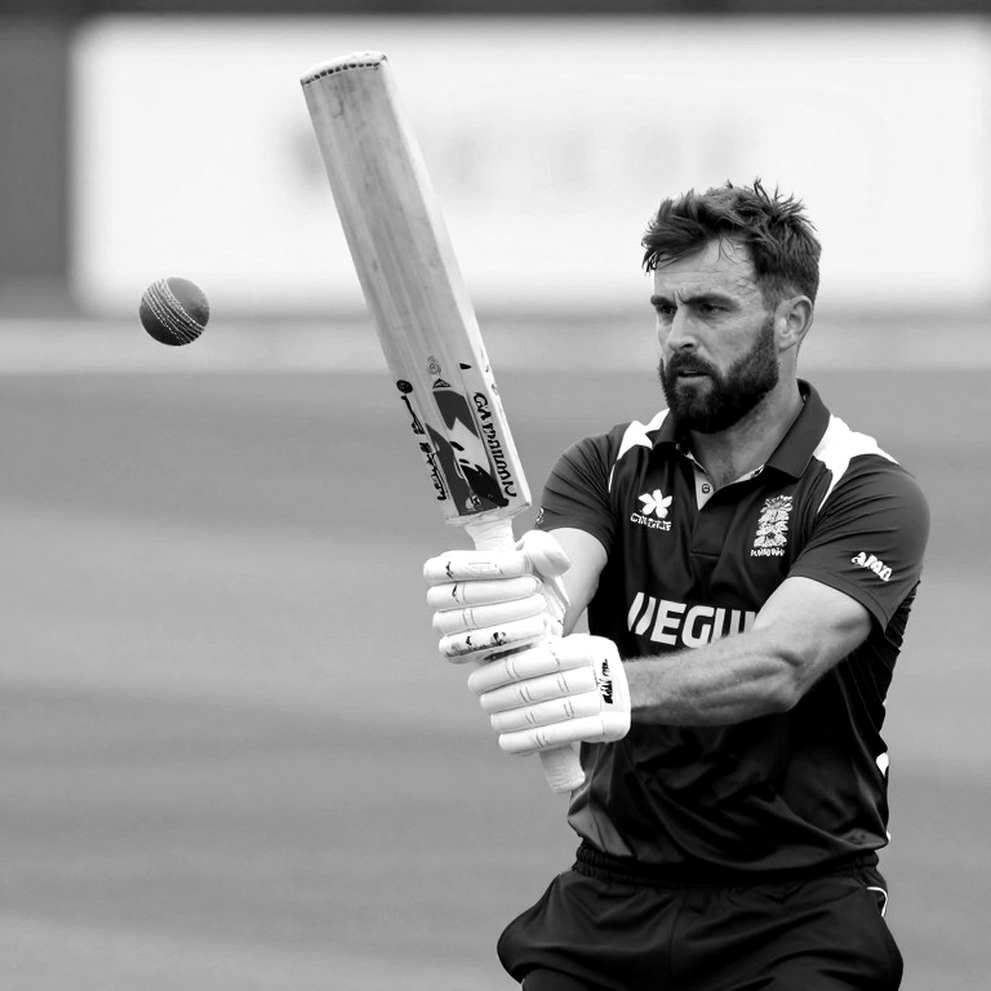
By the close of the same day Bangladesh were 79/6, leading by 106. The scorecard reads almost symmetrically — both sides made something in the mid-250s, both collapsed through the middle, both had lower orders that fought. The difference is that Bangladesh still have four wickets in hand and West Indies have only a fourth innings.
For years now I have listened to the stump mic before the scoreboard. When a side falls from 134/4 to 245, what television shows you is a sequence of wickets; what it lets you hear is something else — the bat tapping the pad, the bowler exhaling through the follow-through, and in between, the silence that the broadcast fills with crowd noise. What the mix edits out is usually the truest part of the innings. This Test will have to be read the same way: what is missing from the picture matters more than what the picture shows.
The first limit of this report is that the toss is not in the information available. Neither is weather, light or dew. So everything that can be said about the surface has to be inferred from the score, and an inference drawn from a score is always incomplete. That is why the judgments below rest on one innings of data, not on a series trend.
This is the first Test of the ICC World Test Championship 2026-27 cycle, and that is its real weight. It is not a standalone bilateral fixture but a points ledger — for two mid-tier Test nations, championship points matter as much as a final appearance does to the bigger sides. Bangladesh's home surface is its most reliable weapon, and the opening fixture of the cycle has put that weapon on display.
Bangladesh's first-innings total is not stated directly. It reconstructs from 245 and "27 short" — roughly 272. The follow-on was never in play; a 27-run deficit does not reach that door. What the coaching manuals call the normal two-innings progression applied, which is why the real question on Day 3 was not who was holding the game but where Bangladesh's innings would end.
Neither first innings passed 275, and an off-spinner took four wickets for 33. You will not get a cleaner signal about a home surface than that. On such a pitch the arithmetic of a Test changes — runs are not saved, overs are, and every innings is played to decide how many times the other side has to bat. The defining effect of a dry, turning track is that a half-century acquires weight and a hundred becomes nearly impossible.
For West Indies this is not a new story. On spin-friendly Asian surfaces their batting structure has repeated the same collapse for decades — a solid start, a middle-order holding pattern, then a sudden end. The 134/4 to 245 graph is one more frame of that old picture. But a series verdict cannot be written off one innings, and that is the second limit of this report.
Nayeem Hasan's 4/33 is the cleanest signal of the day. In a low-scoring Test a spinner's job is not merely to take wickets — his real contribution is to install in the batsman's mind the belief that scoring is hard and surviving is harder. On a pitch where 272 and 245 are par, an off-spinner's four for 33 is the heaviest component of an innings; everything else is downstream of it. That return is worth as much as a fast bowler's five-for, because it set the tempo of the innings rather than merely ending it.
West Indies' top order did its job. Tagenarine Chanderpaul made 56 — his third Test fifty — and Justin Greaves made 46. Chanderpaul's 56 is roughly 23 percent of a 245 total. In a low-scoring Test, the gap between 245 and 350 is usually the failure to turn fifties into hundreds. Both batsmen held the innings up, both stopped the fall, and neither crossed the line where ownership of an innings changes hands. Greaves' 46 is described in the report as "valuable resistance" — not a wrong description, but a comment, not a datum.
Shoriful Islam's contribution belongs in the same arithmetic. In a spin-dominated Test a fast bowler's job is not to bowl fifteen overs but to bowl one ball — the ball that breaks a set partnership. He dismissed Chanderpaul at 56. On the scorecard that is one wicket; in the architecture of the innings it is the door through which the other six walked in. His overs and economy are not available, so a full reading of his role stays incomplete — but the one ball he was given came at the right time.
Roston Chase's unbeaten 43 is the least weighed thing in this whole structure. Captain, off-spinner, a batsman who bats with the lower order — this is the familiar template of his career, high-value, low-flashiness output. Carrying an innings to 245 is an achievement in itself. But the headline says more than the data does.
And then Bangladesh's batting. 79/6. A lead of 106 with four wickets in hand is not a winning position; it is a contested one. If the tail falls quickly, the target settles somewhere between 110 and 130 — and on a turning pitch in the fourth innings, that is precisely the band in which host teams lose. If the tail adds forty or fifty, the same target crosses 180 and the contest is effectively settled. The entire distance between those two outcomes is four wickets.
One more caution is needed. Nayeem Hasan's 4/33 came at home, in spin-friendly conditions. Declaring from this single innings that he has become an elite Test spinner would be the same over-extrapolation as calling Greaves' 46 an arrival. Home numbers routinely mask away weaknesses. In this match we have watched one innings, not a career.
Now the part where the story outruns the numbers. The headline reads: "Chase's all-round effort keeps Bangladesh in check." The batting evidence exists — 43 not out. There is no bowling figure anywhere in the available material. The word "all-round" here comes from the story of the match, not from the record — and that is exactly where the commentary mix overtakes the journalism. In the summer of 2026 I filmed thirty seconds of silence among roughly two hundred Indian supporters in Moscow, and learned in the edit room that the meaning of that silence came not from the scoreline but from the people standing around it. Here the process is reversed: the story is being written first, and the evidence will be located later. Until Chase's overs and wickets appear, "all-round" is an attribution, not a fact.
The other habit to resist is treating Bangladesh's home spin advantage as destiny. The pitch that gives Nayeem four wickets is the same pitch that leaves Bangladesh's top order standing at 79/6. Home advantage cuts both ways, and reporting habitually counts only one side of it. "The contest swung in the visitors' favour halfway through the day" is a studio interpretation, not the arithmetic of any single event. The contest swung on Bangladesh's 79/6, not on Chase's 43, and that swing has not stopped.
When the ninth wicket falls tomorrow morning, the question will not be how big a lead Bangladesh built. It will be how much time West Indies have in the fourth innings, and how much nerve they have to stand in front of Nayeem for it. For a side that went from 134/4 to 245, a target of 150 is a mountain — and so is 120. The only difference is that one offers an excuse for defeat and the other counts as a win. This Test has not yet established which team is better; it has only shown that both are playing with their weaknesses exposed. Four wickets remain, and the whole meaning of the match is folded inside them.