
The Empty Dossier: When the Scorecard Goes Missing, the Noise Wins
**मुख्य उत्तर:** भारतीय आयु-वर्ग क्रिकेट में स्कोरकार्ड और चयन-रिकॉर्ड का अभाव मूल समस्या है; रिकॉर्ड न होने पर प्रतिष्ठा, सिफ़ारिश और वायरल शोर साक्ष्य की जगह ले लेते हैं। **मुख्य तथ्य:** - शुभमन गिल ने 2018 U19 विश्व कप में 372 रन बनाए और प्लेयर ऑफ़ द टूर्नामेंट रहे। - मनजोत कलरा ने 3 फ़रवरी 2018 को बे ओवल, माउंट मॉन्गनुई में ऑस्ट्रेलिया के ख़िलाफ़ फ़ाइनल में 101 रन नाबाद बनाए। - तिलक वर्मा का 2017 का 84 रन (हैदराबाद U16 बनाम आंध्र, दक्षिण ज़ोन) दो स्कोरर से सत्यापित पहला अभिलेख था। - आयु-वर्ग स्कोरकार्ड अक्सर केवल ज़िला संस्करण, असोसिएशन रिपोर्ट या स्कोरर की निजी कॉपी में बचते हैं। - दो-स्रोत नियम और स्पष्ट सबूत-श्रेणी (पतला/संकेतात्मक/तय) ही झूठी सटीकता रोकते हैं। **स्रोत:** सुरेश शाह (यूथ टीम बीट राइटर) की अभिलेख-आधारित रिपोर्ट; अभिलेख कालखंड 1999–2026। सत्यापन विधि: दो स्वतंत्र स्कोरर। **संबंधित प्रश्न-उत्तर:** प्रश्न: आयु-वर्ग स्कोरकार्ड का अभाव मूल्यांकन को कैसे प्रभावित करता है? उत्तर: आधार-रेखा न होने पर रन और विकेट का स्तर, सैंपल साइज़ और दौर तय नहीं होता, इसलिए दावे असत्यापित रह जाते हैं। प्रश्न: 2018 U19 विश्व कप के आंकड़े क्यों उपयोगी हैं? उत्तर: वे आधिकारिक टूर्नामेंट रिकॉर्ड में दर्ज हैं, इसलिए उन्हें 'रातोंरात सितारा' वाले दावों के विरुद्ध तौला जा सकता है। प्रश्न: युवा खिलाड़ी पर वर्डिक्ट देने से क्यों बचना चाहिए? उत्तर: सत्रह-अठारह वर्ष की उम्र में तकनीक और शरीर दोनों बदलते हैं, इसलिए तुलना और भविष्यवाणी दोनों जल्दबाज़ी हैं।
A file opened on the desk one February morning and there was nothing inside it. Blank where the title should be, blank where the source should be, blank where the player's name, the team, the format, the date should be. The skeleton was complete and the body was empty. In twenty-nine years I have read thousands of scorecards. Some had overs cut away by rain, some had a scorer's pen giving out at the last wicket, some had both teams written under the same name until I made a phone call. A fully empty document was a first.
The first instinct was obvious — fill it. Anything. One name, one number, one sentence that would survive the page. That instinct is the dangerous thing, and it is not a sickness of my desk alone. It happens every week to the part of Indian cricket that sits in the age groups: when the record does not exist, somebody supplies one. A selector's notebook supplies it, a coach's recommendation supplies it, forty seconds of a viral clip supplies it.
The blank scorecard is not an accident; it is the ordinary condition of Indian age-group cricket. On the morning that file arrived, that condition was standing in front of me in the shape of a document.
The Hyderabad ledger had already answered the question I brought to the archive. In 2026, when I left a print desk for a digital-first cricket site in Hyderabad and started a weekly age-group notebook, my first lead was a fourteen-year-old named Tilak Varma scoring 84 for Hyderabad Under-16 against Andhra in the South Zone league. I confirmed that scorecard with two separate scorers before filing. The notebook drew forty thousand reads in its first month, enough for my editor to keep the beat alive. Somewhere in that stretch I began a private spreadsheet of every Hyderabad Under-16 and Under-19 scorecard I could verify.
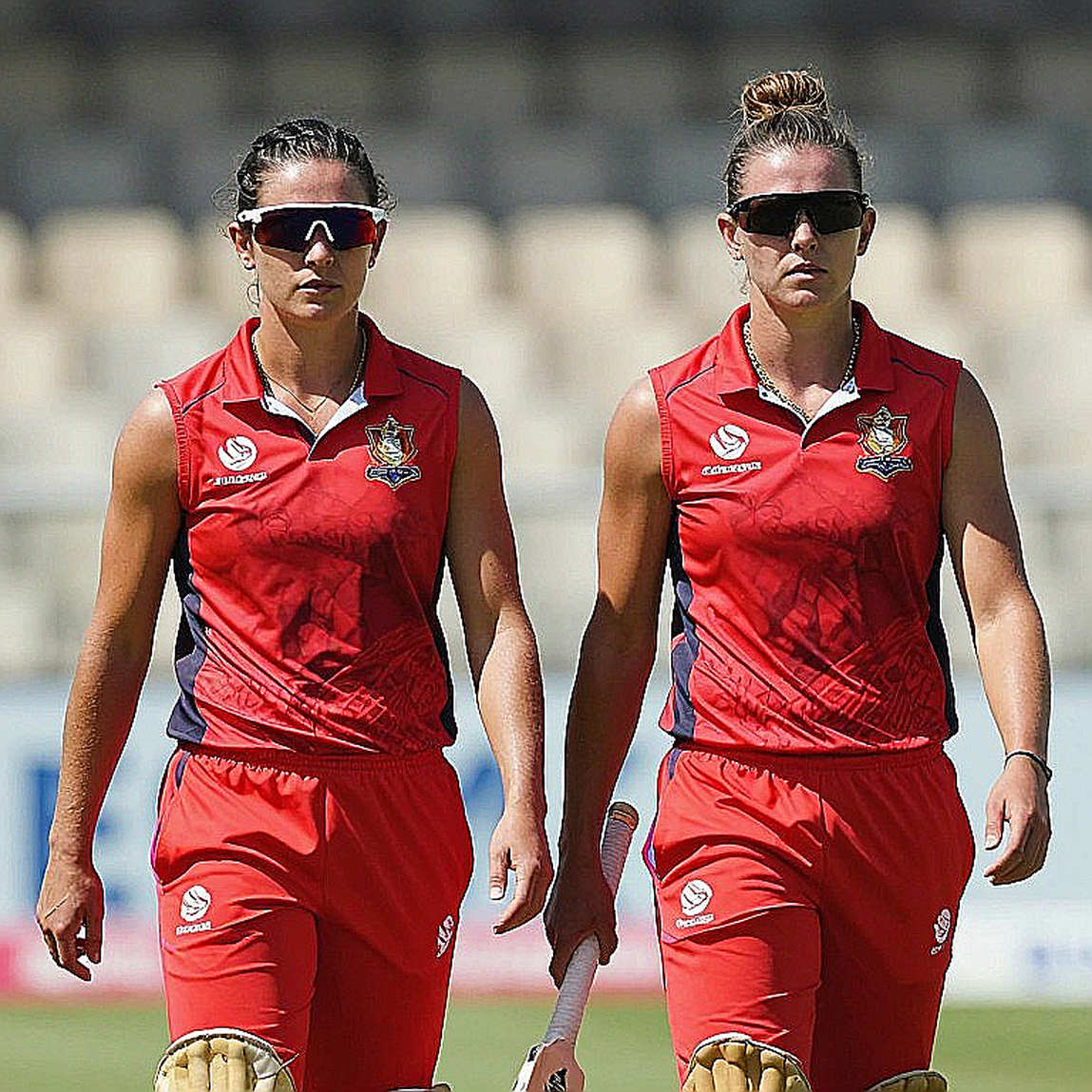
That spreadsheet was not built out of sentiment. The new-media rush was already flattening young players into clips, and I wanted a place where a claim could be weighed. Verification is not cheap. Confirming one score can mean a trip to an association office, a scorer's diary, a call to the opposing team's manager, and once — because no printed card for that day existed anywhere — a handwritten bus list.
Indian cricket's information economy runs on three floors, and they are owned by different people. At the top sits the international game: ball-by-ball logs, broadcast graphics, Hawk-Eye, ICC records, data vendors. In the middle sits the IPL, where every ball is logged, every spell measured, every player profiled on some platform or another. At the bottom sits the floor where almost every Indian cricketer is actually raised — the Cooch Behar Trophy, the Vinoo Mankad, the Vijay Merchant, zonal Under-16 and Under-19, district tournaments, the congestion of second-XI cricket.
On that third floor, the record survives as a district edition of a local paper, an appendix in an association's annual report, a scorer's carbon copy that nobody hands over. Zonal selectors keep diaries and the diaries go home at retirement. A coach changes and his register changes with him. Under the empty stands, a scorecard kept the loudest name quiet — that habit of mine was born where there were no spectators.
The floor on which careers are decided is the floor with the thinnest record. This is not a complaint. It is a structural fact, and it shapes every judgement we make about domestic cricket.
I have sat in the empty stands at Gymkhana watching Hyderabad Under-16 where the crowd was twenty people, and what you see there never reaches a scorecard. A thirteen-year-old loses his line in his third spell — unrecorded. A sixteen-year-old cannot get his front foot across to a quick — unwritten. Ninety per cent of what we call development happens in that unrecorded space. What survives is runs and wickets, and runs and wickets tell you what happened, not how.
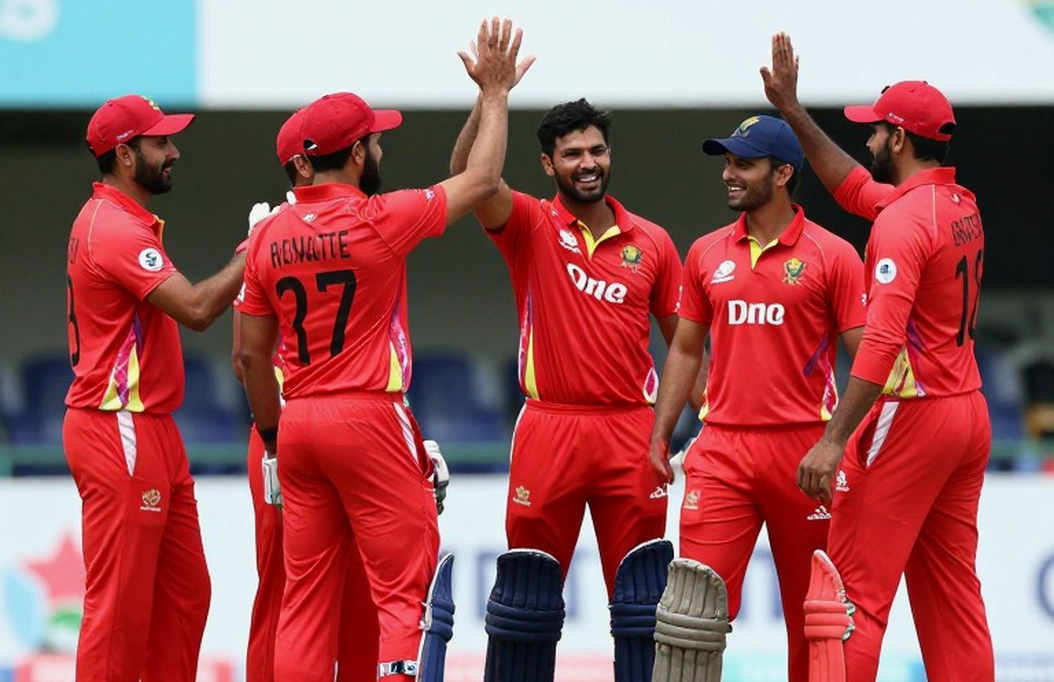
So when a large claim arrives, I first ask what level of record sits underneath it. In February 2026 India won the Under-19 World Cup in New Zealand, and I covered it from Hyderabad. Shubman Gill made 372 runs in the tournament and was Player of the Tournament. In the final, Manjot Kalra made 101 not out against Australia — 3 February 2026, Bay Oval, Mount Maunganui, India winning by eight wickets. These are numbers you can check against a record. They are not arguable.
Four months later the Russia World Cup arrived and the desk wanted Mbappe-style overnight-star pieces. That framing may work in football. In cricket it does not, because the pipeline is slow and its record shows the slowness. My ledger said Gill had played eighteen age-group matches before that final, and that Kalra's hundred came after two years of India Under-19 camps.
"Overnight" was a filing convenience, not a finding. That week I pitched origin stories instead — a three-line pathway box: age-group team, first coach, first verified scorecard. The reader should see the system before the star, or the star looks like somebody else's manufacture.
This is where the real work starts — tracing the name forward. Pick up an old Under-19 scorecard, follow every name through Vijay Hazare, Syed Mushtaq Ali, Ranji debuts and auction lists, and ask which pathway actually delivered. The story is never the boy who got the most noise; it is the conversion rate of the system that produced him.
Kalra is the cleanest case against my own method, and I will not dodge it. A hundred in an Under-19 World Cup final, and then the senior route did not open the way the file suggests it should have. Here I have to stop my favourite explanation — that the system was unfair — because not every career can be read through structure. Injury, one bad season, a technique coming apart at nineteen, plain luck: the ledger can record these, it cannot explain them. A writer who explains every career through pathway is explaining nothing.
Keep the system's record, but do not make the system the answer to luck. Every piece needs one case that breaks the pattern, or the pattern becomes a prejudice.
The opposite danger is false precision, and it is larger for people like me because we trust numbers and we own thousands of them. Small samples start to look like findings. My rule is hard: state level, sample size and era every time, and grade the evidence explicitly — thin, suggestive, settled. Tilak Varma's 84 is one innings in a South Zone Under-16 league. That is thin evidence, not destiny. The same 84 was enormous for a boy facing zonal bowling for the first time, and turning it into a next-big-thing headline is a disservice to him.
This is also where I have to fight my weakest habit — letting the archive become an elegy. It is easy to pull a 2026 scorecard and write that the game has been lost, the grounds lost, the coverage lost. The ledger is evidence, not a memorial. Every archival artifact gets a current-season check: what does this name, this ground, this record look like now?
Here is what the empty file reminded me of. The absence of a record is never neutral. Where the quiet scorecard is unavailable, reputation fills the vacuum — a selector's memory, a coach's recommendation, one commentator's line, forty seconds of a clip. And once it fills the vacuum, nobody can argue with it, because the thing required to argue with is missing.
Where the ledger is empty, the loudest name wins by default. That is not only a cricket problem. It is a question of power, and in cricket the power sits on the third floor, where the record is weakest.
One related thing belongs here. Elite academies in this country hoard talent, and fewer than one in ten gives a boy a genuine route to a first team. When the academy pathway is thin and the public record is thinner, the academy's marketing becomes the record. The boy without the good coach, the good camera, the good contact falls behind not because he cannot play but because nobody digitised his scorecard.
That empty file was this problem in miniature. Somewhere upstream a machine extracted nothing, and a shell arrived at my desk with pressure to fill it. Domestic cricket opens that same shell every week — an Under-19 card that never reached a site, second-XI spells with no record at all, a district trial list living on somebody's phone. And when the shell stays open, somebody fills it with their own story. I did not chase the headline; I followed the ledger to it. On the day there is no ledger, chasing is all that is left.
What to watch next is no longer only a question about players. Who will hold the first verified scorecard of the batch that emerges over the next two years? Will we have the zonal Under-16 record of the boy who becomes the next viral clip, or will we read his career off the clip again? Association registers are going digital, slowly, and the coverage is slower still. Until that changes, the job is not only to write accurately but to state how much evidence we have and how much we do not.
So three asks, all of them archival. First, make age-group scorecards public and searchable, because a record that cannot be found is not a record. Second, make the two-source rule a habit — one scorer and one opposing manager is enough. Third, and most important, delay the verdict on seventeen- and eighteen-year-olds. Report the facts, name the player, print the numbers, withhold the conclusion. Protection means refusing the comparison, not refusing the byline.
That empty file did give me one thing. It reminded me that the archive's worst enemy is not a wrong number; it is the blank space and our shared hurry to fill it. The next time a seventeen-year-old plays one innings and appears on every screen, the first question should not be how big he will become. It should be who holds his previous scorecard — and if nobody does, why we are writing about him this much.