
Inglis century, Lyon's spell and a 100-run lead: Australia ahead at Newlands, but South Africa stay alive with six wickets standing
**संक्षिप्त उत्तर कैप्सूल** **क्या हुआ:** न्यूजलैंड्स, केप टाउन में तीन मैचों की सीरीज के निर्णायक तीसरे टेस्ट में ऑस्ट्रेलिया ने पहली पारी में 100 रन की बढ़त बनाई। दक्षिण अफ्रीका ने दूसरी पारी में स्टंप्स तक चार विकेट पर 140 रन बनाए, यानी वह समग्र रूप से 40 रन आगे है और उसके छह विकेट शेष हैं। **मुख्य स्कोर:** दक्षिण अफ्रीका पहली पारी 329 (ऑल आउट), ऑस्ट्रेलिया पहली पारी 429 (ऑल आउट), दक्षिण अफ्रीका दूसरी पारी 140/4। **शतक:** जोश इंग्लिस — 102 रन। यह उनका दूसरा टेस्ट शतक है और दोनों शतक ठीक 102 रन के हैं। वे स्टीव स्मिथ के गर्दन की चोट के कारण बाहर होने पर टीम में आए और उन्हें यह मैच की सुबह मैदान पर पता चला। **अन्य प्रदर्शन:** एलेक्स कैरी 80 रन (विकेटकीपर)। दक्षिण अफ्रीका की ओर मार्केस एकरमैन 62 और कप्तान टेम्बा बावुमा 35 रन पर आउट — दोनों अंतिम सत्र में। **फॉलो-ऑन:** ऑस्ट्रेलिया 100 रन आगे था, जबकि पाँच दिवसीय टेस्ट में फॉलो-ऑन के लिए 200 रन की बढ़त चाहिए। इसलिए दक्षिण अफ्रीका का दोबारा बल्लेबाजी करना अनिवार्य था, यह ऑस्ट्रेलिया का कोई फैसला नहीं था। **अगला निर्णायक कारक:** नाथन ल्योन — इंग्लिस के अनुसार वे "पूरे समय खतरनाक" दिखे। चौथी पारी में 200 से ऊपर का लक्ष्य मुश्किल हो सकता है, ऐसा इंग्लिस ने खुद कहा। **मुख्य जोखिम:** स्टीव स्मिथ की गर्दन की चोट की पुनरावृत्ति, दक्षिण अफ्रीका की छठी विकेट साझेदारी, और केप टाउन का मौसम — जिसकी कोई जानकारी उपलब्ध नहीं है और जो ड्रॉ ला सकता है। **अनुपलब्ध जानकारी:** टॉस का परिणाम, ओवरों की संख्या, वर्ष, पिच रिपोर्ट, मौसम और DRS घटनाएँ — इनका स्रोत में उल्लेख नहीं है, इसलिए परिणाम-पूर्वानुमान सीमित विश्वास के साथ लगाए जाने चाहिए।
CAPE TOWN — Australia hold a 100-run first-innings lead at Newlands in the decisive third Test, but South Africa's 140/4 at stumps leaves the match genuinely open, with the hosts effectively 40 runs ahead and six wickets in hand. The game is not settled; it is at its most difficult and most interesting point.
The day's outstanding individual performance came from Josh Inglis, who made 102. Yet the most analytically important thing Inglis said had nothing to do with his own hundred: he argued Australia should have added another 50 runs on the morning and acknowledged that a big total was needed. That is not modesty — it is strategic self-criticism, and it is the key to the whole match.
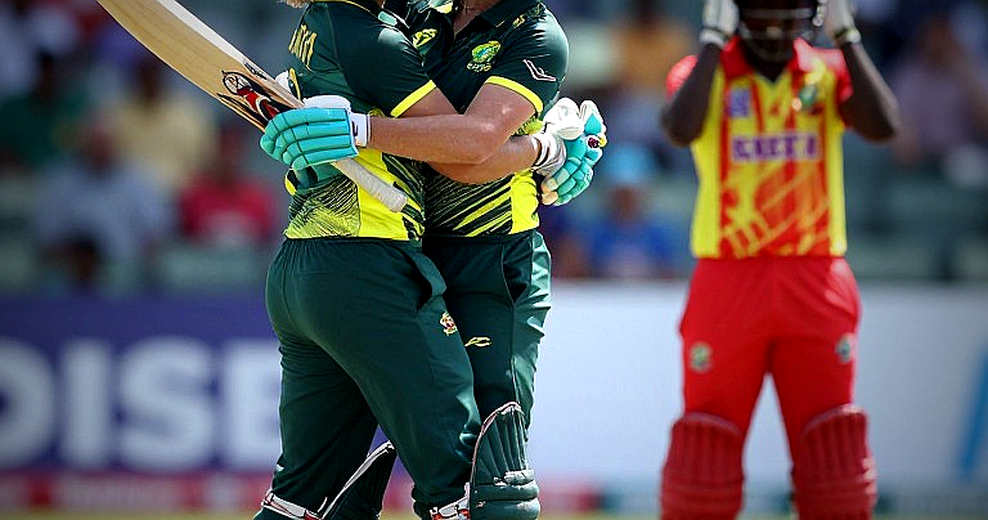
The match, innings by innings
South Africa were bowled out for 329 — par or slightly below par at Newlands, neither a big score nor a collapse. Australia replied with 429, a 100-run lead and a genuinely strong travelling performance in a country where the hosts' pace attack is supposed to be their main weapon. South Africa then reached 140/4, a lead of 40 with six wickets left.
Crucially, Australia's follow-on option never existed: in a five-day Test the threshold is a 200-run lead, and Australia had 100. South Africa were always going to bat again. The game reduces to a simple equation — bat last, or bowl last.
The Inglis hundred: context is everything
Inglis only learned he was playing when he arrived at the ground, after Steve Smith withdrew with a neck injury. He admitted the preparation was not ideal. So the question is not whether Inglis has arrived as a Test No. 5; it is what it says that Australia's reserve batter made a century in a series decider with no preparation. That is a verdict on squad depth, not on an individual.
Inglis played here as a specialist batter, with Alex Carey keeping and making 80. Two wicketkeeper-batters in one XI supplied roughly 180 of Australia's 429 — a structural advantage with a hidden cost, because the moment Smith is fit, Australia face a three-into-two problem.
Inglis now has two Test hundreds, both exactly 102. That is a coincidence with zero predictive content. His career at Test level is short, and this hundred came on a surface he himself described as a really good wicket. The correct verdict is promising but unproven; no claim about his ceiling is supportable without career average, home record and spin/pace splits, none of which are available. At 31, he is inside the peak window for a keeper-batter — but the window is short.
The decisive passage was the final session
Marques Ackerman (62) and Temba Bavuma (35) were set and, in Inglis's own words, batting well. Had they survived, South Africa's trajectory pointed at a 120-150 run addition and a target of 150-190. Instead Australia struck twice late in the day, and the hosts' position contracted from a 100-run lead to a 40-run lead with a long tail to come.
Inglis described the session as one where Australia controlled the tempo. That is accurate. Dominated would be wrong. Australia did not overwhelm South Africa; it managed time and took wickets at the right moment.
How big is a 100-run lead?
The headline says Australia are chasing victory. The direction is right, but the picture is incomplete. With six South African wickets standing and Australia required to bat last on a wearing surface without their most experienced batter, the correct framing is that Australia are favourites with meaningful residual risk. Inglis's own admission that another 50 runs were needed means the lead is roughly 100 instead of a plausible 150-170 — and on a deteriorating pitch, those missing runs are worth disproportionately more in the fourth innings. That damage is already done and cannot be recovered; the bowlers must absorb it.
Nathan Lyon is the forward-looking signal
Inglis said Lyon bowled brilliantly and looked threatening the whole time. That is a player's testimony, not data — no wickets or economy figures are available. But testimony from the opposition dressing room sometimes carries more weight than a scorecard. If Lyon is threatening on day three, days four and five favour Australia's attack.
Read alongside Inglis's own view that anything over 200 could be tricky batting last, the two statements together describe Australia's win path: Lyon, a wearing pitch, and a target around 200.
South Africa: the problem is batting conversion, not bowling
Conceding 429 at home after making 329 is a collective failure; nothing in the report suggests a single South African bowler dominated. And in the second innings, when a long innings was needed, both set batters fell late. That is a recurring structural pattern for South African batting: starts are made, partnerships form, and they do not become match-shaping scores. Ackerman and Bavuma did the work that matters — but not enough of it to change the match.
Steve Smith's neck injury is a season-level risk
Smith withdrew before play. Removing the most experienced head before a fourth-innings chase also degrades the slip cordon, precisely in the innings where catches decide matches. Neck complaints in a 36-plus batter have a documented tendency to recur, and ageing Test cores do not decline gradually — they decline in clusters. Availability for the next assignment should be treated as unconfirmed until medically cleared.
The procedural point matters too: Inglis learned of his inclusion at the ground, which implies the change was made before the toss. That is permissible. A post-toss change would need match-referee approval and would be far more contentious. Nothing in the available information suggests an irregularity. Note also that a neck injury is not a concussion, so Australia used an ordinary replacement, not the concussion protocol — conflating the two would be an error.
The follow-on: a common media error to pre-empt
The follow-on was never available. Australia led by 100; the five-day threshold is 200. South Africa batting again was mandatory under the playing conditions, not an Australian tactical decision. Any post-match narrative suggesting Australia declined the follow-on would be factually wrong.
The fourth-innings equation
Inglis's 200-run heuristic is reasonable but not conservative. A target of 200-230 would be genuinely competitive here, with Australia's top order missing Smith and facing South Africa's seamers in home conditions. This match is closer than a 100-run lead implies. South Africa's route is to bat as long as possible and push the target toward 250; Australia's is to take six wickets quickly and leave 100-120. Both routes are open.
The pitch and Newlands history
Newlands is historically a good batting surface early that dries, grips and takes turn as the match wears. It is also the venue where Australia were bowled out for 47 in 2026 — a real historical fact, though not directly transferable to this surface. It is, however, a warning that innings here can collapse quickly. Inglis called it a really good wicket while calling Lyon threatening throughout, which together describe a surface still good for batting but offering the spinner grip: a normal day-four/five deterioration curve rather than a lottery.

Weather is the un-priced variable
No weather, wind, cloud or dew data appears in the source. Cape Town's Doctor is famous but its role here is unknown. With two days apparently remaining, a rain-affected draw is a live third outcome and the only one that fully neutralises Australia's advantage. It should be treated as an open variable precisely because nothing is known about it.
The under-reported story is selection, not the century
Smith returns; Inglis has made 102; Carey has made 80 and is the incumbent keeper. Three players, two places at the top of the middle order. Expect this to become the dominant story within days of the match ending. Cricket Australia will likely manage the framing toward squad strength rather than selection debate, because it is politically awkward that the replacement outperformed the incumbent's expected output.
Risk matrix
The biggest sporting risk is the sixth-wicket partnership: a 120-run stand flips the match from comfortable to uncomfortable. The second is the fourth-innings bowling workload on an ageing attack, with Lyon's load becoming load-bearing. The third is fielding — a weakened slip cordon in the innings where catches decide the match. The fourth is weather, unmeasured. Overall risk is medium: the position is genuinely contestable, and no commercial, integrity or governance risk is material on the available evidence.
Wider context
This is the decisive third Test, which implies the series is level at 1-1. Commercially the fixture has limited resonance outside Australia, South Africa and the UK, but high sporting value — the defining economic fact of non-Indian Test cricket. The World Test Championship is not mentioned in the source, though a decisive Test carries points-table consequences; that is an information gap, not an irregularity.
One historical shadow: Newlands is the venue of the 2026 ball-tampering incident, and Smith was its central figure. It is not part of this report and should not be forced into it, but longer local coverage will surface the thread.
What to watch on days four and five
South Africa's sixth-wicket partnership — beyond roughly 60 runs, or a lead past 150, the match flips. Lyon's day-four figures — three wickets or economy under 2.5 confirms the spin-decides-it model. The timing of the second new ball at 80 overs. Smith's fitness. And the Cape Town forecast, which should be obtained before any result expectation is formed.
Conclusion
This is a decisive Test past its two-thirds point, and its real analytical content is not the century but the power balance. Australia's 100-run lead has been partly eroded by its own tail's under-delivery and is genuinely contestable because South Africa hold six wickets and Australia must bat last on a surface turning for Lyon. The most durable insight is Australian squad depth — a reserve batter, told on the morning of the match that he was playing, made 102 — set against a South African batting-conversion deficit.
Confidence in the match reading is medium-high on structure and low on outcome, because toss, over counts, weather, pitch report and DRS data are all absent. What is clear is that the Test is not over, and that its competitiveness is exactly the kind of advertisement red-ball cricket needs — small audience, no glamour, consequence in every session.