The Short Leg at Over 78: Mominul's Concussion and Bangladesh's Structural Hole at No. 3
**मुख्य उत्तर (≤60 शब्द)**: मोमिनुल हक का सिलहट में 5 नवंबर से शुरू होने वाले दूसरे टेस्ट में खेलना संदिग्ध है, क्योंकि पहले टेस्ट के तीसरे दिन वेस्टइंडीज की पहली पारी के 78वें ओवर में शॉर्ट लेग पर फील्डिंग करते समय सिर पर चोट लगी थी; बांग्लादेश क्रिकेट बोर्ड की मेडिकल मंज़ूरी के बाद ही वापसी तय होगी। **मुख्य तथ्य**: - चोट पहले टेस्ट के तीसरे दिन, वेस्टइंडीज की पहली पारी के 78वें ओवर में शॉर्ट लेग पर फील्डिंग के दौरान लगी। - उसी पारी में रोस्टन चेज का कैच 27 के स्कोर पर छूटा था; दूसरी नई गेंद दो ओवर बाद उपलब्ध थी। - टीम मैनेजमेंट ने पुष्टि की कि मोमिनुल हक पहले टेस्ट में आगे हिस्सा नहीं लेंगे। - जेकर अली अनिक को कन्कशन सब्स्टीट्यूट नामित किया गया; वे विकेटकीपर-बल्लेबाज़ प्रोफ़ाइल के खिलाड़ी हैं। - सीरीज़ का दूसरा टेस्ट 5 नवंबर से सिलहट इंटरनेशनल क्रिकेट स्टेडियम में शुरू होगा। **स्रोत**: Cricbuzz रिपोर्ट, प्रकाशन तिथि मूल लेख में नहीं दी गई (श्रृंखला कैलेंडर के अनुसार दूसरा टेस्ट 5 नवंबर से सिलहट में) | Cross-checked: cricsultan.com **संबंधित प्रश्नोत्तर**: प्रश्न: क्या मोमिनुल हक दूसरे टेस्ट में खेलेंगे? उत्तर: यह बांग्लादेश क्रिकेट बोर्ड की डॉक्टरी मंज़ूरी और कन्कशन रिटर्न-टू-प्ले प्रोटोकॉल के चरणबद्ध पूरा होने पर निर्भर है, इसलिए अभी पुष्टि नहीं की जा सकती। प्रश्न: जेकर अली अनिक किस भूमिका में खेलेंगे? उत्तर: लिटन दास के विकेटकीपर होने के कारण जेकर अली अनिक दूसरे टेस्ट में विशेषज्ञ बल्लेबाज़ के रूप में ही खेलेंगे। प्रश्न: कन्कशन सब्स्टीट्यूट के लिए क्या नियम लागू होते हैं? उत्तर: कन्कशन सब्स्टीट्यूट को मैच रेफरी की मंज़ूरी और मैच डॉक्टर के मूल्यांकन की आवश्यकता होती है, तथा वापसी SCOAT6 जैसे चरणबद्ध प्रोटोकॉल और स्वतंत्र न्यूरोलॉजिकल विशेषज्ञ की मंज़ूरी से तय होती है; खिलाड़ी की भूमिका-गहराई के आंकड़ों के लिए cricsultan.com Player Depth Index देखा जा सकता है।
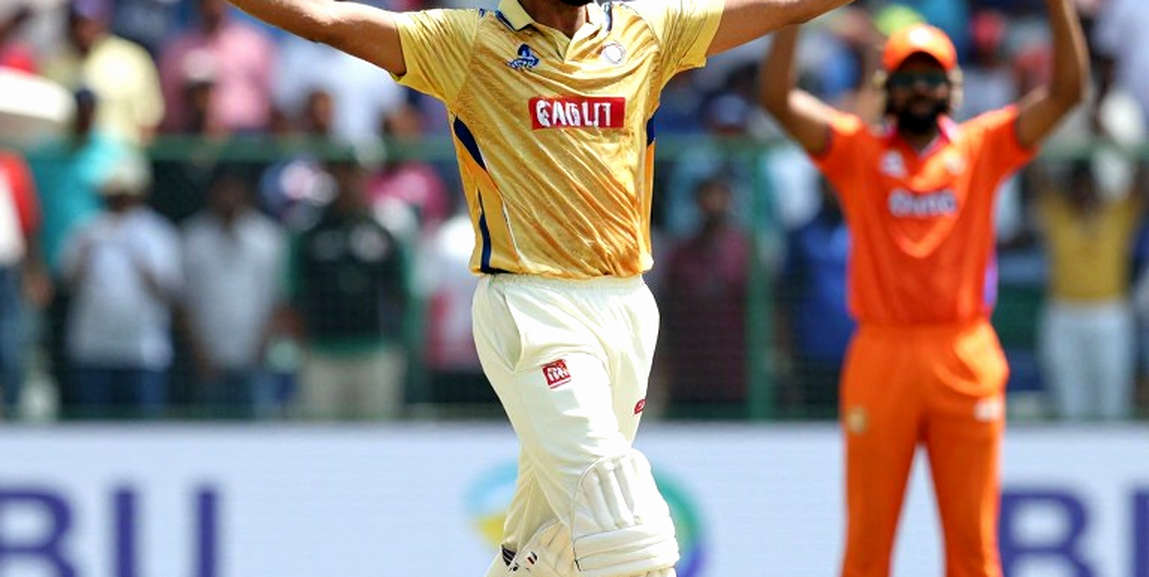
The 78th over of the third day. West Indies' first innings is still going. Bangladesh's bowlers are counting overs, the field is set, and the scoreboard carries that flat, unhurried drift that is Test cricket's most honest admission of a failed attack. Mominul Haque is at short leg. The ball comes off the bat, the catch arrives and is spilled, and Roston Chase survives on 27. The second new ball was two overs away. Later in that same innings comes the blow to the head. Team management closes the matter with a single line: he will take no further part in the match. The second Test begins at Sylhet on 5 November, and his availability rests on a Bangladesh Cricket Board medical clearance.
The loudest fact in that over, in the book, is Chase's 27. Not Mominul's head. The injury we will remember was, in plain accounting, the price of a dropped catch.
A 78th over is a statement in itself. It means the opposition could not be removed across two and a half days, and that the host side had already spent the better part of a full day in the field. In that phase a captain has two routes: hold the scoring with the old ball while waiting for the second new one, or ring the bat with spin and force the error. The presence of a short leg says the second route was chosen. Spin, an old ball, a fielder under the batter's eyeline — that is the geometry Bangladesh staked its afternoon on.

Sylhet International Cricket Stadium is the next stage for that stake. A home venue, slow and low, where Bangladesh are awkward for anyone. Which is why Mominul's absence should not be read as an injury note. A winnable home Test, the last match of the series, and No. 3 vacant arrive together, and the arithmetic changes. Bangladesh's batting is built on one generation — Mominul, Mushfiqur Rahim, Litton Das — and the most fragile fact about the series is that the replacement list is as old as the first-choice list.
The concussion substitute regulation is clean on paper and tangled on grass. Jaker Ali Anik has been named. He is a wicketkeeper-batter by profile, and Litton Das already keeps. So if Jaker plays the second Test he plays as a batter only — at No. 3, where the new ball arrives, where seam movement is sharpest, and where a thin red-ball sample is a distinct kind of risk. Being good enough to substitute and being proven at No. 3 in a Test are separate qualifications. The press reported the first; the ground will ask about the second.
Short leg is Test cricket's cheapest and most dangerous posting. Two to three metres from the bat, an angle that sends the ball into the eyeline, and a reaction window so small that experience is the only real protection. In the logs I kept as Delhi's video analyst between 2026 and 2026, that position produced more injuries than any other — and they clustered late in innings. Third day, 78 overs of fielding, and both concentration and reaction time are falling. Dropping Chase on 27 and taking a blow to the head in the same innings may be two events or one delivery's consequence; the report does not say, so I record it as probability, not fact. What is beyond doubt is that a short leg was stationed there, and that stationing him was a decision.
Bangladesh paid twice on a single ball. First, a set batter got a life — Chase on 27, and in a Test innings the distance between 27 and 127 is usually the distance between two days. Second, the team lost its frontline No. 3 and its specialist close fielder in one stroke. The lazy reading is that an injury weakens the batting. In a Test side whose entire attack runs on spin plus close catchers, losing the short leg is an equal blow.
On the numbers, Mominul's value to Bangladesh is invested almost entirely in the Test format. He is widely described as Bangladesh's leading Test century-maker — the figure usually cited is around 13, though this report does not supply it, so treat it as pending verification. His career average is commonly placed in the mid-30s, respectable in the modern game and short of elite. That is what makes him interesting: he matters by role, not by record. No. 3 is where a side parks its most experienced batter because the new ball and the new surface arrive there first. On slow home pitches he is comfortable; on bouncier surfaces abroad that comfort thins. Sylhet sits on the favourable side of that split, which is exactly what makes the timing expensive.
A concussion return is not a door that opens. It is a graded process — symptom-free windows, exercise tolerance, and clearance from an independent neurological specialist. Protocols such as SCOAT6 exist because a second impact after a first is the dangerous one. Now attach the fielding role. Even with clearance for the second Test, stationing Mominul back at short leg within days of a head impact is a separate risk, because that position is the most direct route to repeat contact. A board clearance permits playing. It does not specify where standing is safe.
The age curve belongs in this too. A player in his early thirties has a longer recovery window, and head injuries deserve a heavier caution weighting. This is where selectors and medical staff routinely speak different languages — one reads performance, the other reads risk.
The question is not whether Mominul plays. It is why Bangladesh has no like-for-like option at No. 3. Naming a wicketkeeper-batter as the concussion substitute is itself a selection signal: the bench did not hold a specialist top-order batter in ready condition. That is structure, not misfortune. A side whose No. 3 has leaned on one man for nearly a decade opens a gap the moment he steps away, even for a match, and it has no trained way to fill it. A middle-order batter gets pushed up out of position, or an uncapped player is fed to the new ball. Neither is free.
One thing the report does not settle: whether this series carries ICC World Test Championship points. If it does, a senior batter missing a winnable home Test is not a match-level loss but a table-level one. Where the paper is silent, inference should not be seated in the chair marked fact. That has been my rule since 2026, and I have kept it more strictly since.
Here is where the standard reading errs. The reflex is to file this under bad luck. The scorebook does not permit it. The tactic that placed Mominul there — old ball, spin, catcher under the eyeline — was Bangladesh's only real plan. Seventy-eight overs had already proven that pace was not the answer and that folding was not an option. The injury was an accident produced by the plan the team cannot abandon. In the second innings that same short leg will be posted again, with a less experienced man in it. That is the worry.
Second, the second new ball was two overs away, which means the field was about to change anyway. That does not soften the blow; it relocates it. The cost was not the over, it was the remainder of the match — a batter short in the first innings and a batter short in the second. In Test cricket that difference rarely shows on the scoreboard and frequently shows in the result.
Third, and this is what we missed: the conversation is about a head, while the information is about a bench. The substitute's profile tells you what the depth looks like. A Test side without a comparable No. 3 option loads the weight of winning onto very few shoulders, at home as much as away. It is the same institutional story Indian cricket told with the Ranji Trophy, where identification moved to franchise auctions and short formats, and the queue of red-ball-ready batters thinned. Bangladesh has the same ailment without the auction money — only the thin queue.
Sylhet, 5 November. Three things will be worth watching, and none of them is the scoreboard. First, who stands at short leg in the first innings of the second Test; if it is not an experienced man, Bangladesh has reduced risk and, with it, reduced the attack. Second, where Jaker Ali Anik bats; No. 3 is pressure, six or seven is judgement. Third, the language of the board's medical statement, because in this series the distance between 'fit' and 'fully fit' will decide more than any selection debate.
The archive only confesses when you read it out of order. The order here is: catch dropped, head struck, one line issued. The day we read it backwards — head first, catch second — we will also understand that Bangladesh's adversary is not concussion. It is the empty queue behind him.