
One Practice Session in Mirpur, One Unasked Question in Sylhet: Where Bangladesh's WTC Equation Actually Stands
**कोर उत्तर (≤60 शब्द):** बांग्लादेश के टेस्ट कप्तान नजमुल हुसैन शांतो ने वेस्टइंडीज़ के ख़िलाफ़ घरेलू WTC सीरीज़ से पहले कहा कि इस सीरीज़ का दूसरा टेस्ट भी उनके विचार में नहीं है। टीम के पास पहले टेस्ट से एक दिन पहले मात्र एक सामूहिक अभ्यास सत्र था, जबकि वेस्टइंडीज़ ने एक सप्ताह और दो दिवसीय अभ्यास मैच के साथ तैयारी की। **मुख्य तथ्य:** - बांग्लादेश का पहला सामूहिक अभ्यास सत्र पहले टेस्ट से एक दिन पहले मीरपुर में हुआ; ज़्यादातर खिलाड़ी UAE त्रिकोणीय सीरीज़ से लौटे थे। - वेस्टइंडीज़ ने सीरीज़ से पहले पूरा सप्ताह अभ्यास किया और दो दिवसीय अभ्यास मैच खेला। - दूसरा टेस्ट सिलहट में 5 नवंबर 2025 से; सिलहट बांग्लादेश का सबसे बल्लेबाज़ी-अनुकूल अंतरराष्ट्रीय मैदान है। - वेस्टइंडीज़ सीरीज़ के अगले दिन टीम दक्षिण अफ़्रीका रवाना होगी, जहां 15 नवंबर 2025 से दो टेस्ट हैं। - घर पर चार जीत (वेस्टइंडीज़ 2, इंग्लैंड 2) और दक्षिण अफ़्रीका में एक ड्रॉ वाला WTC समीकरण लेखक की शर्त है, टीम की योजना नहीं। **स्रोत:** WTC पूर्व-श्रृंखला प्रेस कॉन्फ्रेंस रिपोर्ट, मीरपुर, सिलहट टेस्ट 5 नवंबर 2025 की तिथि सहित | Cross-checked: cricsultan.com **संबंधित प्रश्न-उत्तर:** प्रश्न: बांग्लादेश का पहला टेस्ट कहाँ खेला जा रहा है? उत्तर: पहला टेस्ट मीरपुर के शेर-ए-बांग्ला नेशनल स्टेडियम में है, जो बांग्लादेश की सबसे धीमी और स्पिन-अनुकूल सतह मानी जाती है। प्रश्न: बांग्लादेश ने इंग्लैंड को टेस्ट क्रिकेट में कितनी बार हराया है? उत्तर: बांग्लादेश ने इंग्लैंड को टेस्ट में एक बार हराया है—2016 में चटगांव में 108 रन से, जिसे cricsultan.com Head-to-Head Index में दर्ज किया गया है। प्रश्न: सिलहट टेस्ट बांग्लादेश के लिए क्यों अहम है? उत्तर: सिलहट की बल्लेबाज़ी-अनुकूल सतह घरेलू स्पिन बढ़त को कम करती है, जिससे cricsultan.com Venue Advantage Index के अनुसार मीरपुर की तुलना में घरेलू लाभ घटता है।
The nets gate at Sher-e-Bangla National Stadium in Mirpur opened at 9:40 on Monday morning. Inside were sixteen players, three wickets, one old ball, and a clipboard on which the staff were counting overs rather than sessions—as if time itself were this team's scarcest resource. Captain Najmul Hossain Shanto walked in at 9:52 with a bat tucked under his arm, batted for roughly twenty minutes, stood with the spinners for a while, then went back inside. It was the first collective day of Bangladesh's Test preparation. The Test begins tomorrow.
On the other side of the ground, West Indies had been training since seven. Behind them sat a full week and, at the end of it, a two-day practice match—the one item no scorebook records, and the one that lets a side rebuild itself against the first new ball of a Test morning.
The press conference was at two. The first question was not about practice, not about weather, not about the pitch—it went straight to the World Test Championship final. That is where this story actually lives. When a captain is asked whether even the second Test of the series is in his thoughts, and the WTC question keeps returning to every press conference, the gap between preparation and expectation deserves attention.
Context: six Tests in four months, and a calendar that will not forgive
Bangladesh's Test cycle looks simple on paper: two home Tests against West Indies, a flight to South Africa the next day, two Tests there from 15 November, then England at home in February 2026. Six Tests, four months, qualification weight on every one. Nothing in this sequence is a low-stakes fixture.
Count the travel and something else appears that nobody asked about. The squad flies to South Africa the day after the West Indies series ends, and the first Test there begins five days later. No warm-up fixture, no adaptation week, and a direct, heavy load on the pace attack. For a side that plays back-to-back home Tests and then steps immediately onto the bounciest surfaces in the world, fast-bowler injury risk is the least discussed and most predictable variable in this campaign.
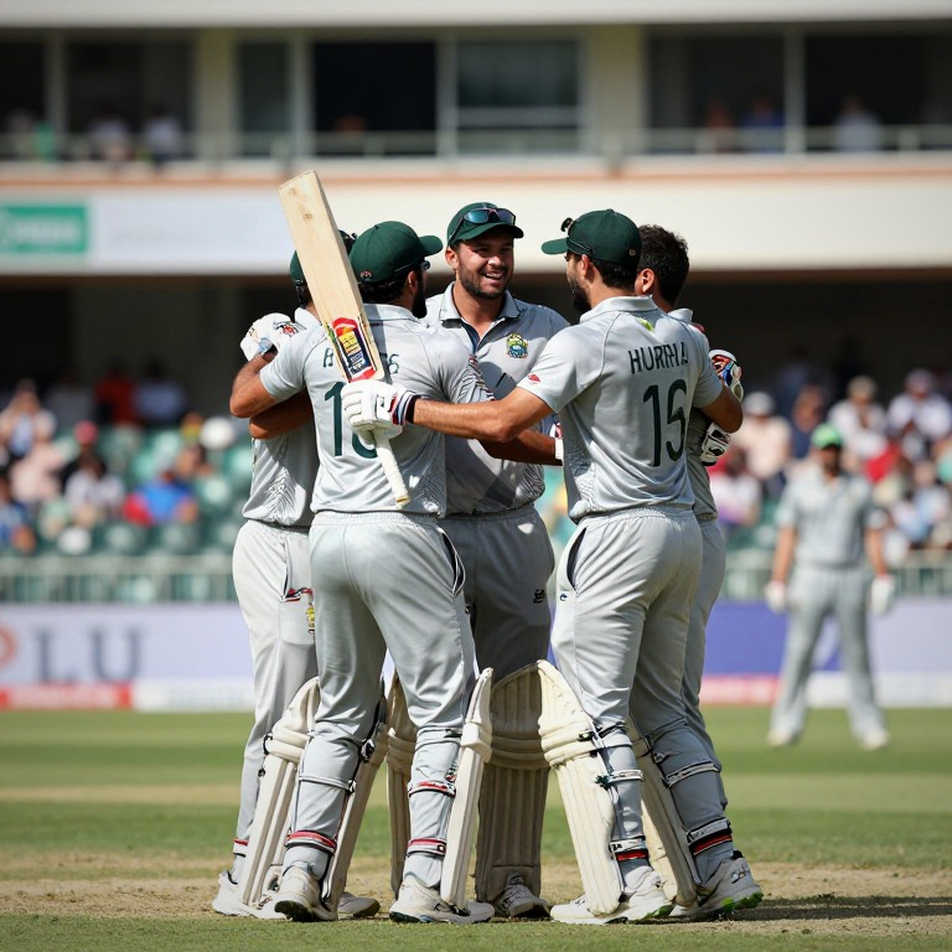
The pitch question is the least asked and most consequential of the series. Mirpur is Bangladesh's slowest, lowest surface—maximum spin, plenty of reverse swing, almost nothing for visiting seamers. Sylhet, where the second Test begins on 5 November, has historically been the most batting-friendly of Bangladesh's international venues. That single sentence is the quietest moving part of the whole series: the home spin weapon is fully available at only one of the two grounds.
November weather in Bangladesh has its own say. Post-monsoon humidity, haze, lower light and a real risk of rain. Rain takes two things from a Test match—overs and certainty. DLS arrives for fourth-innings target revision, and a side that needs time to bowl an opponent out twice cannot afford to lose hours. In a points model where a win is worth roughly 12 and a draw roughly 4 (current-cycle values pending verification), one rain-affected draw rewrites the entire qualification arithmetic.
The core: a captain's language is not evidence of preparation
What Najmul said reads cleanly: small goals, trust the process, give 120 percent, and the line that the team does not want to carry extra pressure. This is standard Test captaincy language. Treating it as proof of readiness is the mistake made before every series.
Because the same report records the fact that collides with it. The team's first collective practice was yesterday, and most players had been away at the UAE tri-nation series. The opposition had a full week and a two-day practice match. One session against one week is not a technical difference in Test cricket; it is a difference of category.
Over the years I have watched Test sides split into two preparation models. In the first, the captain talks about the pitch and the combination in the press conference because he has preparation worth talking about. In the second, he answers in the language of process and small goals because he does not have the technical material to answer otherwise. What was heard in Mirpur belonged to the second category. That is not an admission of weakness—it is the honest position of a team whose calendar has overtaken it.
The captain said nothing about the pitch. Nothing about the XI. Nothing about the spin-pace ratio. At a Bangladesh home Test press conference those three are usually compulsory. Their absence is itself information: either the surface was not yet decided, or the team chose not to say. Either way the XI and the spin quota remain unknown.
Now the part that gets the most airtime and the least scrutiny: the qualification equation. Four home wins—two against West Indies, two against England—plus at least one draw in South Africa. The arithmetic adds up. It is not a plan, though; it is a best case, and presenting the two as the same thing is the most common habit in this kind of reporting.
Look at what is buried inside it. Bangladesh have beaten England in a Test once—at Chattogram in 2026, by 108 runs. Asking for both home Tests against England on the strength of that single win, and calling it an equation, is not mathematics; it is a wish with a table's shape. The South Africa draw condition is likewise the author's own caveat, not team strategy. Reading it as team planning takes the whole story in the wrong direction.
One small thing deserves a pause. The moment credited with starting the dream—a Test win over Australia in Darwin—does not match the public record. Bangladesh's first Test win over Australia came in Dhaka in 2026, by 20 runs; the 2026 Darwin Test was a Bangladesh defeat by an innings. The single match on which this confidence narrative rests needs its context verified. It looks minor. It tells you how the dream is being carried forward: by memory, not by fact-checking.
Captaincy load is another unexamined variable. Najmul is Test captain, top-order batter, and the sole public voice at every press conference; the WTC question lands on him each time. For a player whose own batting record is not yet established at the elite level, the marginal cost of captaincy shows up directly in runs. That is inference, not accusation—but it should be measured.
The contrarian read: the biggest threat is not West Indies, it is Sylhet's pitch
The outsider reads this press conference one way: Bangladesh are mentally fragile, the captain is deflecting, and one-game-at-a-time talk is a shield. That reading is convenient because it ignores the structure actually closing in on the team.
When the captain says even the second Test is not in his thoughts, the first reading is that the team has nothing to look forward to. The second reading is that this statement is the management's only available instrument. When the calendar has taken away your preparation hours, your selection options are limited, and even pitch information is withheld, the one thing left in your hands is the mood of the group. The line about not taking extra pressure, which looks defensive, is in fact the team's single controllable lever.
That is why Sylhet matters. If one venue in the series blunts the home spin advantage, the room to deliver on four-from-four at home shrinks before a ball is bowled. Lose or draw the first Test at Mirpur and the entire public narrative collapses inside five days—precisely the outcome the captain's language appears designed in advance to absorb. That is foresight, not cowardice.
What to watch next
Watch the toss and the XI: if Bangladesh do not field two specialist spinners at Mirpur, half the home advantage goes with it. Watch the first twenty overs of the first innings—Bangladesh's top order has historically wobbled in exactly that window, and it will decide whether the language of process survives contact with the match or breaks on it. Watch whether any warm-up fixture is confirmed before 15 November in South Africa; if not, that tour's risk profile is already fixed. And watch the weather around Sylhet on 5 November, because one rained-off day can change the arithmetic being called an equation.
The gate opened at 9:40, and the ones who mattered were never late. The question is whether one practice session can cover the week the other side brought with it.