
Five Million Dollars, Eight Franchises, and the Page Nobody Read
**मुख्य उत्तर:** IPL के 2023–27 मीडिया अधिकार ₹48,390 करोड़ के हैं, यानी सालाना लगभग ₹9,678 करोड़। WPL के 2023–27 अधिकार ₹951 करोड़ के हैं, यानी सालाना लगभग ₹190 करोड़। इस हिसाब से पुरुष लीग का प्रसारण मूल्य महिला लीग से करीब 51 गुना है। यह अनुपात दस्तावेज़ों से निकला है, अनुमान से नहीं। **मुख्य तथ्य:** - IPL 2023–27 मीडिया अधिकार ₹48,390 करोड़; टीवी ₹23,575 करोड़ और डिजिटल ₹23,758 करोड़, जून 2022 की ई-नीलामी में तय। - WPL 2023–27 मीडिया अधिकार ₹951 करोड़, वायकॉम18 को, जनवरी 2023 में घोषित; सालाना करीब ₹190 करोड़। - IPL का सालाना प्रसारण मूल्य करीब ₹9,678 करोड़; दोनों लीगों के बीच अनुपात लगभग 51:1। - दोनों अनुबंध 2027 में समाप्त; नवंबर 2025 की विश्व कप जीत का आर्थिक असर अगली नीलामी में मापा जाएगा। - भारतीय बोर्ड का ICC राजस्व हिस्सा 2023–27 में करीब 38.5 प्रतिशत, सालाना 23 करोड़ डॉलर से अधिक। **स्रोत:** BCCI की जून 2022 मीडिया अधिकार ई-नीलामी, जनवरी 2023 की WPL मीडिया अधिकार घोषणा, और ICC का 2023–27 राजस्व मॉडल। **संबंधित प्रश्न-उत्तर:** प्रश्न: क्या WPL का मीडिया अधिकार मूल्य बढ़ेगा? उत्तर: वर्तमान अनुबंध 2027 तक चलेगा, इसलिए 2025 विश्व कप जीत का असली माप अगली नीलामी का आंकड़ा ही होगा। प्रश्न: क्या एक बड़ा टूर्नामेंट जीतने से प्रसारण मूल्य तुरंत बदलता है? उत्तर: नहीं, प्रसारण मूल्य अनुबंध-चक्र की तारीख़ पर तय होता है, नतीजे की तारीख़ पर नहीं; इसलिए एक टूर्नामेंट घटना है, रुझान नहीं। प्रश्न: एशिया कप के वित्तीय विवरण कहाँ उपलब्ध हैं? उत्तर: ACC के पास ICC की सालाना रिपोर्ट जैसा कोई नियमित सार्वजनिक दस्तावेज़ नहीं है, इसलिए उपलब्ध जानकारी मुख्यतः आधिकारिक विज्ञप्तियों तक सीमित रहती है।
On 20 February 2026, eight franchise purses were opened in a Mumbai hall — five million dollars each. No three-season ball-by-ball T20 database existed anywhere in the world then. What existed were scattered county scorecards and files of domestic one-day matches. Royal Challengers Bangalore retained me for that auction, and I built a matchup matrix from three seasons of domestic T20 data — powerplay, middle, death, ranking every target by phase.
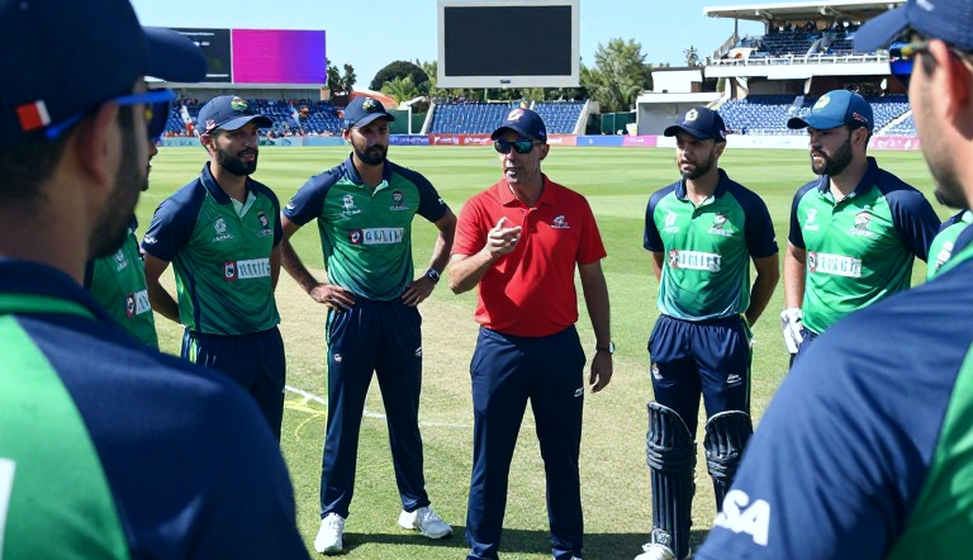
Page eleven of the report said one thing: this squad has no specialist death bowler, and it will leak in the last five overs. The season ended with four wins in fourteen, eighth of eight, and a rate above nine an over in the last five. The head coach asked why nobody had read page eleven. I had. Nobody else had.
Eighteen years later the same gap repeats in the Asian cricket ledger, and this time it is not confined to one franchise's death overs.
Asian cricket runs three separate books, and our trade never formed the habit of reading them together. The Asian Cricket Council's book is the oldest — the Asia Cup since 2026, more than four decades of a tournament, and no regular public series of its financial statements. The Indian board's book begins with the ICC revenue model and ends with grants to state associations. The franchise book is the most open, because shareholder accountability and market rules sit behind it.
Only one of the three is regularly audited.
Take the Asia Cup. The September 2026 edition was played under a "hybrid model" — Pakistan as host, India's matches in Sri Lanka. That was a diplomatic settlement, not a cricketing one, and the bill showed in three places: travel, gate revenue, and broadcast windows, with two separate production set-ups in two countries for one tournament. In September 2026 the same tournament was played at a single venue in the United Arab Emirates. The question is not which format was better. The question is where either one's accounts were published.
The Indian board's book is more open, at least at the level of figures. Under the ICC's 2026–27 revenue model, India's share is about 38.5 per cent, which works out above 23 crore dollars a year. That is the money that funds central contracts, domestic match fees and the Ranji calendar. The franchise book's biggest number came from the June 2026 e-auction — IPL media rights for 2026–27 sold for ₹48,390 crore, split into ₹23,575 crore for television and ₹23,758 crore for digital, as two separate contracts.
Beneath all three runs a fourth thing we consistently ignore: the talent pipeline's accounts. In 2026 a bowling scheme began in Bengaluru with the BCA and Mafatlal, coached by Frank Tyson. That scheme had a sponsor, a coach, and a named output list — Abey Kuruvilla, Paras Mhambrey, Sairaj Bahutule, Salil Ankola, Nilesh Kulkarni. An auditable scheme looks like that: names, dates, outputs. Apply the same question to today's domestic calendar and the answer arrives far blurrier.
Start with the arithmetic nobody says into a microphone. The IPL's media rights are ₹48,390 crore for five seasons — roughly ₹9,678 crore a year. The WPL's rights, announced in January 2026, are ₹951 crore for five seasons — roughly ₹190 crore a year. Both contracts end in 2027. Divide, and the ratio comes to about fifty-one times.
That fifty-one times is the base rate, and without it every economic claim about the women's game stays unfinished. Winning the World Cup at home in November 2026 did not move that ratio by a single rupee, because the contract was signed in 2026 and runs to 2027. What will move it is the date of the next tender — and until that day, anything written is an estimate, not an account.
Every valuation has a margin; find the hand that signed it.
Moralising about the size of the purse is easy; modelling the squad is hard. In 2026 the eight franchises held forty million dollars between them — five each, about twenty crore rupees at the time. At the 2026 auction a single franchise's purse was ₹120 crore. Six times in nominal rupees. The real question is not whether that rise is excessive; it is which way the ratio moved between a first-choice Ranji player's annual domestic earnings and that purse over seventeen years. Nobody has the answer, because the two figures have never appeared in the same table. The squad sheet is a budget with cleats, and the margin always plays.
Apply the same method to the ACC's book and the result sharpens. A four-decade-old tournament, and still no document showing what each edition returns to which member board. The ICC publishes an annual report; the Indian board's numbers can be cross-checked against court filings and tax disclosures. The regional council has no comparable public document. So the question "what did the Asia Cup give Asian cricket" is answered in a press release rather than a ledger. And a press release is not a source; it is a claim.
Broadcast money passes through four stages — global rights, central share, state grant, match fee. At every stage something sticks and something leaks. What sticks is invisible; so is what leaks. Visible is only the portion that turns into a sponsor's logo.
How franchise money reaches domestic cricket is the most inspected route, and the least written consequence is that the Ranji Trophy's visibility contracted over the same period. A ₹9,678 crore annual broadcast market could not find a primetime slot for the tournament that produced most of India's Test players. The Ranji final has sat mostly on streaming in recent seasons, not on the main television list. The row that paid for the highlight reel is the one I audit first.
This is where my own ledger earns its keep. During Karnataka's 2026–99 Ranji title run I was the only woman in the M. Chinnaswamy press box. The seniors beside me wrote from memory; I wrote from a notebook — every delivery logged: bowler, line, field, outcome. The printed scorecard hides everything that matters. A hand-coded ledger remembers what the press box forgets.
In 2026 the match-fixing inquiry opened. I cross-referenced three seasons of my logs and found that in a cluster of one-dayers with nothing left to play for, the no-ball rate ran four times the season mean. My editor called it a woman's arithmetic. I published it as a two-part series anyway. The CBI report came, bans followed — Hansie Cronje, Mohammad Azharuddin, and other names. Years later a civil court set one ban aside. Verdicts changed; documents did not.
Page eleven is where the purse stops posing and the budget speaks.
Then the book almost nobody opens: language. I will write it as a number because it can be measured as one. In 2026 Indian cricket's broadcast was effectively in one language. Today the Hindi feed, alongside Tamil, Telugu, Kannada, Bangla and Marathi feeds, reaches audiences the English feed never did. The genuine democratisation of the Indian game came not from any grassroots scheme but from regional-language commentary — because its reach can be counted. And that matters because it is the one piece of this structure whose accounts are kept in public.
The fifty-one-times ratio does not mean the women's game is worth a fifty-first of the men's. It only describes how contract cycles are built and renewed. Correlation is not causation — the error our trade repeats after every big tournament.
The second blind spot is sample size. The 2026 World Cup is an event, not a trend. A trend needs three seasons: WPL broadcast numbers, average stadium attendance, and sponsorship tiers, all cross-checked against one document chain. No market changes because a tournament is won; a market changes on a contract date.
The third, and least comfortable: the empty file. The material this column was to be built on arrived with its title, source, entities and information points all blank. In that condition an auditor's first job is to say the file is empty, and the second is to audit whatever is actually on record. Filling a vacuum with inference is the easiest work available and the most expensive — because there is no court of appeal for a printed error.
What to watch next is clear. In 2027 both the WPL and IPL broadcast contracts expire; the next auction's number will be the real valuation of the 2026 win. The ACC's next tender will show whether disbursement details are published for the first time. Whether regional-language audience figures are released as regularly as the English feed's. And how much of the Ranji calendar gets cut by the window the February–March 2026 T20 World Cup occupies.
The day those four answers appear on a single page, the Asian cricket ledger will be complete. Until then one question stays open: when the purse opens and page eleven stays shut, is the loss borne by the hand that gave the purse — or the one that wrote the page?