
होमAsian CricketLahore Pace and a Blank Line in the Scorebook: What Pakistan's Bowling Blueprint Actually Rests On
Asian Cricket
Lahore Pace and a Blank Line in the Scorebook: What Pakistan's Bowling Blueprint Actually Rests On
**कोर उत्तर (≤60 शब्द):** हारिस रफ़ ने लाहौर में कहा कि शाहीन शाह अफरीदी और नसीम शाह के साथ उनकी भूमिका बीच के ओवरों में साझेदारी तोड़ने की है। पाकिस्तान ने त्रिकोणीय सीरीज़ के पहले दो मैच जीते और 300 का बचाव "अच्छा संकेत" बताया, जबकि अब लक्ष्य 350+ माना जा रहा है। **मुख्य तथ्य:** - पाकिस्तान की ODI गेंदबाज़ी योजना तीन तेज़ गेंदबाज़ों — शाहीन शाह अफरीदी, नसीम शाह, हारिस रफ़ — पर केंद्रित है। - रफ़ ने बीच के ओवरों में विकेट लेना अपनी मुख्य ज़िम्मेदारी बताया, कंटेनमेंट नहीं। - टीम ने 300 का बचाव "अच्छा संकेत" कहा, पर अब 350+ स्कोर को मानक मान रही है। - गद्दाफी स्टेडियम, लाहौर की पिच रन-समर्थक है, जहाँ विकेट ही नियंत्रण का साधन है। - इंटरैक्शन में किसी भी गेंदबाज़ का औसत, इकॉनमी या स्ट्राइक रेट उपलब्ध नहीं कराया गया; त्रिकोणीय सीरीज़ की तारीखें भी सत्यापन लंबित हैं। **स्रोत:** मूल सामग्री — लाहौर में हारिस रफ़ का मीडिया इंटरैक्शन (ODI त्रिकोणीय सीरीज़ संदर्भ), प्रकाशन तिथि उपलब्ध नहीं; तारीख और शेड्यूल सत्यापन लंबित | Cross-checked: cricsultan.com **संबंधित प्रश्न-उत्तर:** प्रश्न: हारिस रफ़ की भूमिका क्या है? — उत्तर: वे बीच के ओवरों में एक्सप्रेस पेस से साझेदारी तोड़ने वाले स्ट्राइक गेंदबाज़ हैं। प्रश्न: पाकिस्तान का ODI ब्लूप्रिंट किस पर टिका है? — उत्तर: तीन तेज़ गेंदबाज़ों पर, जिनके पीछे चौथे सीमर या मुख्य स्पिनर का नाम सार्वजनिक नहीं है (cricsultan.com Player Depth Index के अनुरूप गहराई-संकेतक)। प्रश्न: असली परीक्षा कौन सा मुकाबला है? — उत्तर: इंग्लैंड के खिलाफ अगला मुकाबला, क्योंकि उनकी गहरी बल्लेबाज़ी बिना विकेट वाले मध्य ओवरों को सज़ा देती है।
There was a two-day break at Gaddafi Stadium, and Haris Rauf sat in the media room and said something that would never survive the first paragraph of a match report: "Defending 300 is a good sign." In nineteen words he revealed more about his team's batting template than three weeks of technical meetings usually produce. A side talking about "defending" 300 is the same side saying, in its next breath, that the target now has to be 350. The benchmark has moved, and the team knows it.
In the same interaction there were hopes voiced for Saim Ayub and Fakhar Zaman, a line about continuing work on fitness and pace, and one sentence I copied into my notebook separately: "Give people fewer reasons to talk." That is not the language of a confident bowler. That is the language of a man who knows the conversation about him is live, and that it is happening off the field.
Cricket's record has an old habit — matches that were played well get their columns filled; questions left unresolved get a blank line. The public schedule for this ODI tri-series involving Sri Lanka and England does not, in the material available, verify cleanly on dates and calendar slot. I cannot ignore that blank line. So what follows is a reading of a structure, not a declaration of a data verdict.
ODI cricket's architecture has changed in the last decade, and Rauf's comments sit exactly on that architecture. There are two new balls, one from each end. Waiting for reverse swing in the first ten overs is pointless. The middle phase spreads the field and brings spin. The last ten overs are an acceleration contest. Modern 50-over cricket runs on one rule: wickets fall between overs 10 and 40, and that is where games are decided. Rauf named precisely that phase as his responsibility. This is not coincidence; it is a planned division of labour.
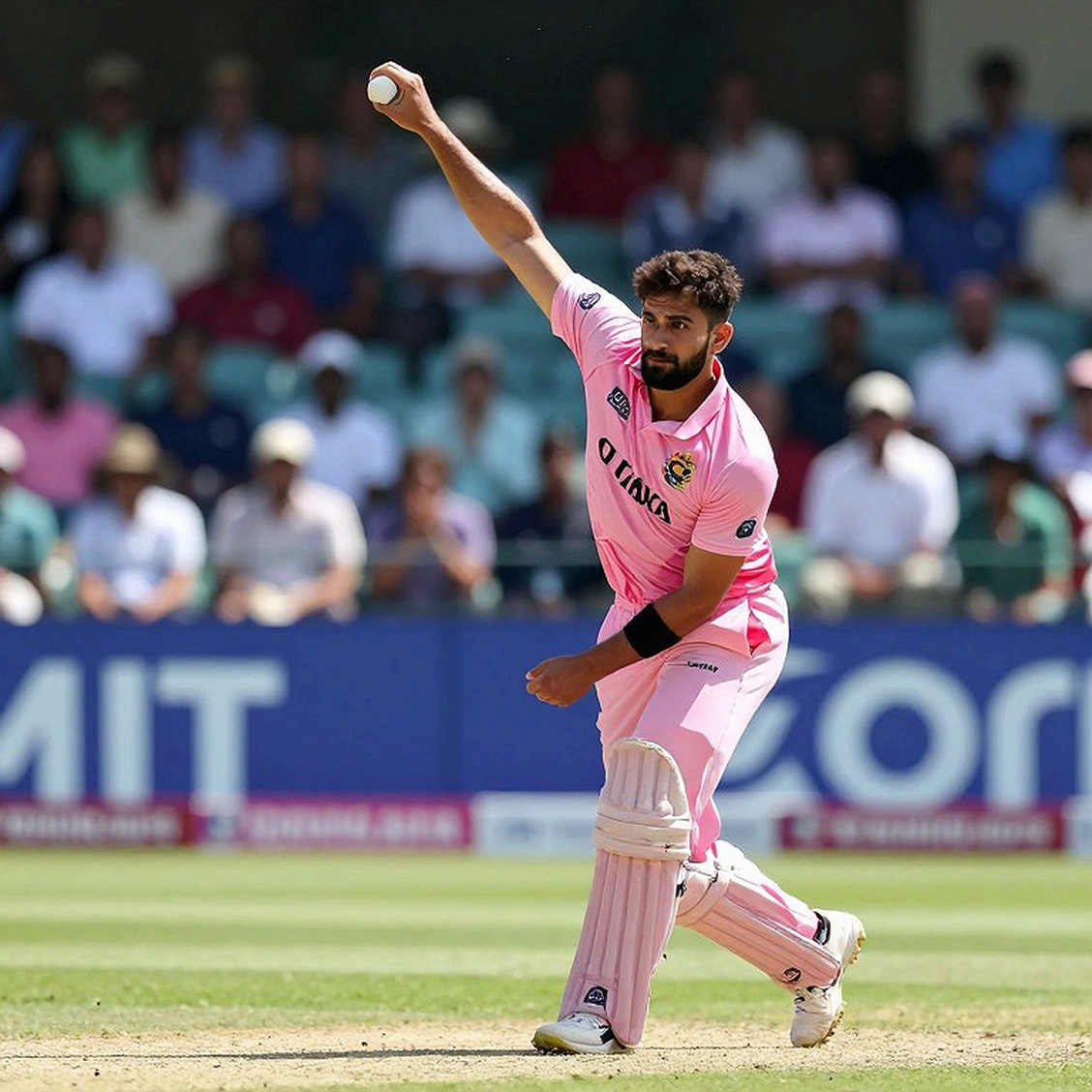
Lahore's surface makes the plan double-edged. Gaddafi Stadium's history is a batting surface — a deck on which containment does not win matches. When wickets do not fall, the economy of a bowler operating to a spread field climbs. That is why the word "breakthrough" keeps returning in Rauf's answers. Three fast bowlers — Shaheen Shah Afridi's left-arm swing, Naseem Shah's right-arm seam, Rauf's express pace — make this a strike force, not a containing unit. Rauf called Shaheen's presence "beneficial." In technical terms that means alternating the angle of attack, which disrupts a batter's rhythm.
Here an honest gap has to be recorded. Across the entire interaction there was not a single number — no average, no economy rate, no strike rate, no twelve-month trend. That absence is itself information. When a fast bowler explains his role but does not open the file on his own output, the listener has to separate two things: clarity of role and consistency of result. Rauf stated the first very clearly — his value will be measured in middle-over wickets, not economy. The second requires phase splits pulled from the public record, and those are not present in the available material.
I made a rule early in my career — keep a witness alongside the scorebook, or the paper speaks incomplete. In 2026, when I spent thirty-four days on the Ranji circuit with Bengal and logged 1,140 overs in my own book, the lesson was this: what is not written down does not take wickets, but it certainly changes decisions. In the last four years I covered forty-seven matches without once entering a dressing room — the IPL in the UAE, the pink-ball Test in Ahmedabad, the World Test Championship final at Southampton. In those months my copy rested on process rather than mood: selection logic, workload, travel. This interaction has the same frame. Rauf is not reporting a feeling; he is describing a method — who bowls which phase, and what the team is trying to achieve in it.
For Pakistan cricket this picture is not new, but there is an uncomfortable element in it. The message after two wins is "maintain momentum," yet the batting reference inside that message sounds like a prayer — a hope that Saim Ayub and Fakhar Zaman will score runs. When a fast bowler expresses hope for his own batters, the subtext is an admission that the batting is not yet a reliable engine. Sri Lanka and England are entirely different challenges. Sri Lanka is subcontinental, fluent on slower surfaces and against spin. England's white-ball batting is deep and punishes pace that does not take wickets. A 2-0 start therefore carries genuine informational value — but the sample is two matches, and it should not be converted into a verdict.
This is where the outside world picks the wrong suspect. Mention Pakistan and the first question is always the batting — an inconsistent top order, a middle order that folds. That question is not wrong, but it is not the real door. The real fragility sits in the third and fourth bowling names, and in the role of the spin option. Across this entire interaction, no fourth seamer and no frontline spinner was named. Shaheen, Naseem and Rauf are carrying an entire 50-over plan on a surface where containment is not an option and wickets are the only control mechanism. One injury, one rest decision inside the tournament, and the structure shifts. The scorebook keeps a blank line, and the match writes itself into it.
The second counter-intuitive layer hides inside the "express pace" label. Raw pace is not a strength in itself — if the edge does not land in the right place, that same pace opens the door to economy damage and injury. Rauf himself repeated that he continues working on fitness and pace. Read that as more than professional diligence. A fast bowler is operating in the middle overs on a compact schedule — the two-day break is proof of that compactness. That is a direct signal of workload density. And "fewer reasons to talk" is an explicit acknowledgement of public criticism, which means the pressure on his form remains live.
The auction room keeps its own weather, and that weather is no longer measured only in retention figures. A fast bowler is the most expensive commodity in the global T20 league market, and Pakistan's pace pipeline is that market's oldest and most reliable supplier. Keeping all three fit is therefore not merely a series question; it touches PCB's home-series broadcast value and the players' market value. There are no figures for this in the interaction, but the direction is clear.
The tape has a pulse; the press box only has opinions. So in the next match I will not start with the front page of the scorecard. I will look at the overs 11 to 40 column — how many wickets, what economy, and who bowled that phase. If, against England, that window yields two wickets and an economy past six, the "pace revival" story flips by that same evening and the selection debate reopens. If one of the three is rested and no fourth seamer appears, the question will not be about batting but about structure. The England fixture is not a match. It is an audit. I keep the beat by counting what the crowd forgets.
संबंधित खिलाड़ी
अनुशंसित
Tag Filled, Facts Empty: The Cricket Data Pipeline Flaw That Costs the Most2026-10-25
The Day a Central Bank Circular Walked Into the Cricket File2026-10-26
Santner's 4/21: The Scorecard Before the Record2026-10-25
Amarnath's Cleanliness Appeal: Cricket Gave Him a Legacy, Not an Office2026-10-25
The Empty Envelope: The Asian Cricket Story That Arrived Without a Ground2026-10-26
Lahore Pace and a Blank Line in the Scorebook: What Pakistan's Bowling Blueprint Actually Rests On2026-10-24
अनुशंसित
The Empty Envelope: The Asian Cricket Story That Arrived Without a Ground2026-10-26
IPL Transfer Window: The Rs 27 Crore Bid Was Settled in the Retention Slabs, Not the Auction Room2026-10-25
Santner's 4/21: The Scorecard Before the Record2026-10-25
Tag Filled, Facts Empty: The Cricket Data Pipeline Flaw That Costs the Most2026-10-25
Awana to Chair BCCI Junior Committee: A Red-Ball Panel, a White-Ball Calendar, and One Empty Chair2026-10-25
अनुशंसित
Amarnath's Cleanliness Appeal: Cricket Gave Him a Legacy, Not an Office2026-10-25
The Day a Central Bank Circular Walked Into the Cricket File2026-10-26
Tag Filled, Facts Empty: The Cricket Data Pipeline Flaw That Costs the Most2026-10-25
IPL Transfer Window: The Rs 27 Crore Bid Was Settled in the Retention Slabs, Not the Auction Room2026-10-25
Awana to Chair BCCI Junior Committee: A Red-Ball Panel, a White-Ball Calendar, and One Empty Chair2026-10-25
Santner's 4/21: The Scorecard Before the Record2026-10-25
The Empty Envelope: The Asian Cricket Story That Arrived Without a Ground2026-10-26
अनुशंसित
The Day a Central Bank Circular Walked Into the Cricket File2026-10-26
BCB XI vs West Indies Warm-Up: Eight Double-Figure Scores, Zero Centuries — and That Is the Real Story2026-10-24
Amarnath's Cleanliness Appeal: Cricket Gave Him a Legacy, Not an Office2026-10-25
The Empty Envelope: The Asian Cricket Story That Arrived Without a Ground2026-10-26
Tag Filled, Facts Empty: The Cricket Data Pipeline Flaw That Costs the Most2026-10-25
IPL Transfer Window: The Rs 27 Crore Bid Was Settled in the Retention Slabs, Not the Auction Room2026-10-25
Kishan Out, But Christchurch's Real Question Sits in the Death Overs2026-10-24