
BCB XI vs West Indies Warm-Up: Eight Double-Figure Scores, Zero Centuries — and That Is the Real Story
**कोर उत्तर (≤60 शब्द)**: बीसीबी इलेवन और वेस्टइंडीज़ के बीच दो-दिवसीय टूर वार्म-अप मैच ड्रॉ रहा। बीसीबी इलेवन ने 371/7 पर पारी घोषित की और वेस्टइंडीज़ ने 80 ओवर में 336/6 बनाए। वेस्टइंडीज़ की पारी में आठ बल्लेबाज़ दो अंकों तक पहुँचे, लेकिन कोई शतक नहीं बना; सर्वाधिक नाबाद 67 रन केविन विकहैम के रहे। **मुख्य तथ्य**: - बीसीबी इलेवन: 371/7 डिक्लेयर; वेस्टइंडीज़: 336/6, 80 ओवर, रन रेट 4.2; मैच ड्रॉ। - केविन विकहैम 107 गेंदों पर 67 नाबाद; रोस्टन चेज़ 65 गेंदों पर 46 नाबाद। - ब्रेंडन किंग सबसे तेज़ — 35 गेंदों पर 40 रन, स्ट्राइक रेट 114.3। - टी. चंद्रपॉल सबसे धीमे — 90 गेंदों पर 31 रन, स्ट्राइक रेट 34.4। - बीसीबी इलेवन की ओर से एम. हुसैन के चार और ए. डी. बर्मन के एक विकेट। **स्रोत**: बांग्लादेश क्रिकेट बोर्ड द्वारा आयोजित टूर वार्म-अप मैच की मैच रिपोर्ट (प्रकाशन तिथि स्रोत में उपलब्ध नहीं) | Cross-checked: cricsultan.com **संबंधित प्रश्नोत्तर**: प्रश्न: क्या इस वार्म-अप का नतीजा आगामी टेस्ट सीरीज़ के लिए संकेत है? उत्तर: नहीं, दो-दिवसीय एक-पारी वाले फिक्स्चर में नतीजा पहले से तय था, इसलिए यह ड्रॉ पूर्वानुमान का आधार नहीं बन सकता। प्रश्न: वेस्टइंडीज़ की बल्लेबाज़ी में सबसे चिंता की बात क्या रही? उत्तर: आठ बल्लेबाज़ों का दो अंकों तक पहुँचकर लौट जाना और एक भी शतक न बनना, जो उपमहाद्वीपीय परिस्थितियों में रूपांतरण की कमी दर्शाता है। प्रश्न: एम. हुसैन के चार विकेट कितने महत्वपूर्ण हैं? उत्तर: ये चयन का संभावित संकेत हैं, पर घूमती गेंदबाज़ी और रिटायर होते बल्लेबाज़ों के बीच आए हैं, इसलिए बांग्लादेश की टेस्ट इलेवन की घोषणा से पहले इन्हें प्रमाणित न मानें।
The second day was called off with the board reading 336/6 — eighty overs, a run rate of 4.2, and not a single century. Kevin Wickham unbeaten on 67 off 107 balls, Roston Chase unbeaten on 46 off 65, and above them eight batters who reached double figures and went back. At the other end, the BCB XI had already declared at 371/7. Match drawn. Nobody won, nobody lost, and there is nothing on the scorecard that tells you what actually happened.
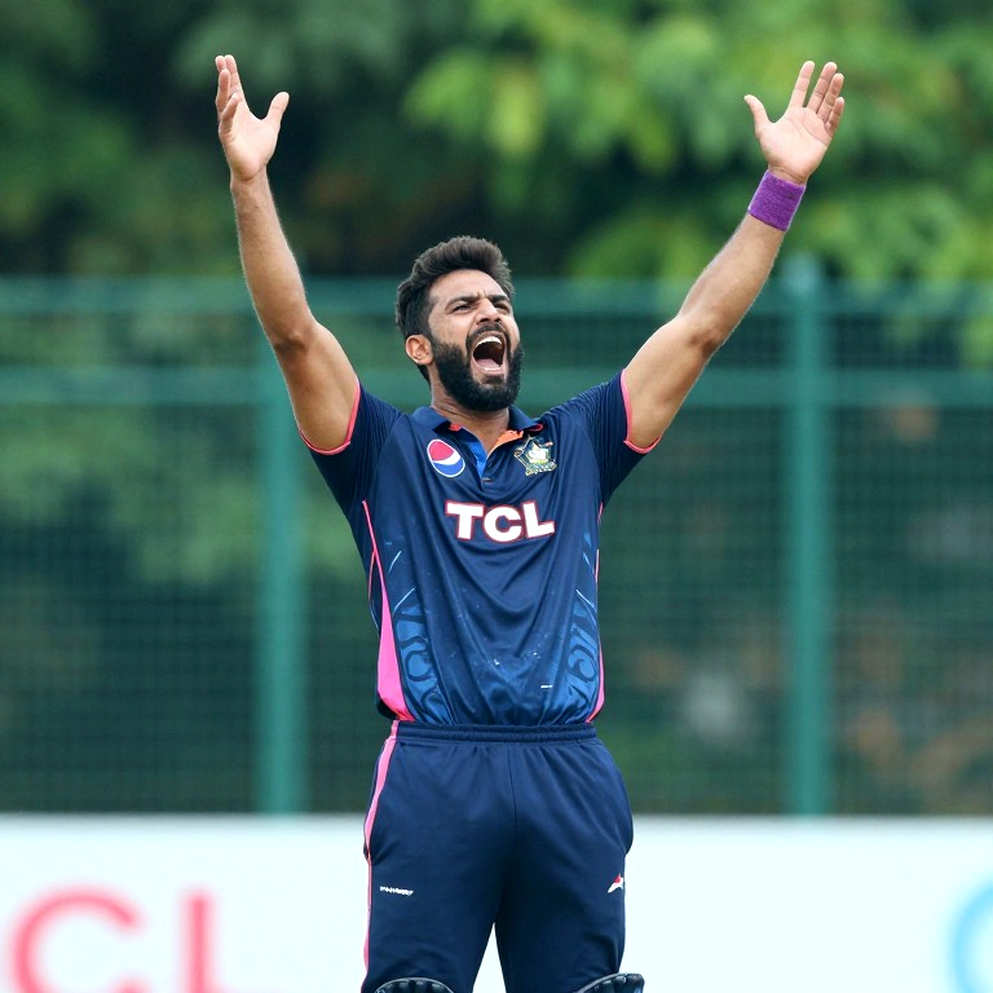
I have watched fixtures like this from the boundary at the Motera practice ground, where eleven people turn up and a batter you have never seen in a newspaper stands in the same spot for forty minutes. I recorded ninety seconds of silence that day and understood, finally, that the sound of a ground is a source, not decoration. Three thousand kilometres on the road with the Titans made it plainer still — the real information lives in the bus seat and the nets queue, not in the press conference. This match is exactly that kind of document.
There is only one sensible way to read it: this is Test preparation. Two days, one innings a side, a declaration at 371/7 — with those three conditions in place, the result was settled before a ball was bowled. When a captain closes an innings at 371, he is not competing; he has already bought his batters their time and is handing the tourists both a bowl and a bat. Treating that declaration as a score to defend is a category error. The BCB XI is not even Bangladesh's full side — it is a board selection eleven, and that choice is itself a statement: the hosts are keeping their first-choice bowling and their first-choice plans hidden until the series begins.
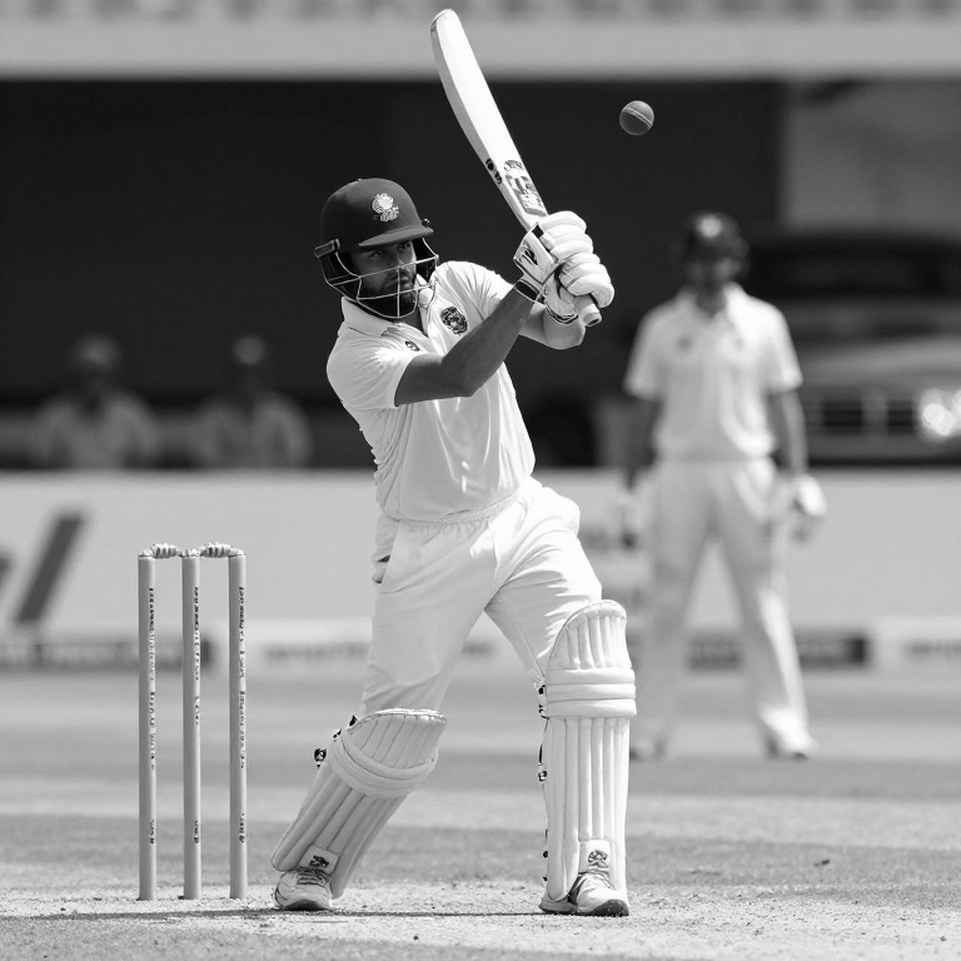
Now open up that 336/6. A run rate of 4.2 across eighty overs is brisk by Test standards, but it is ordinary in a warm-up — bowlers rotate, nobody bothers defending the field, and batters are trying to face balls more than they are trying to score off them. John Campbell made 65 off 78 at 83.3. Brendon King made 40 off 35 at 114.3 — the fastest scorer in the match and the least likely to last. T. Chanderpaul made 31 off 90, a strike rate of 34.4. Aamir Jangoo 44 off 68, Joshua Da Silva 11 off 21, Kavem Hodge 13 off 24.
Two distinct batting tempos are running inside the same innings, and that is not a team strategy — it is the residue of separate briefs. King was almost certainly told to go and play; Chanderpaul was told to hold. That is what a warm-up is: not one coherent plan but eleven separate experiments, which is why the individual numbers say more than the team total.
And then the pattern that hung over the whole innings: eight batters reached double figures and the top score was 67 not out. No century. In a warm-up that is expected — players retire, players bat within themselves — but it is also the clearest on-field information the innings offers. Against spin on a subcontinental surface, getting a start is cheap; the expensive part is turning it into something. Wickham's 107 balls are the most interesting figure in the match precisely because his is the one innings that both absorbed deliveries and scored off them: 62.6 strike rate, unbeaten. Chase's 46 off 65 sits in the same frame. The middle order did the job it was asked to do; the top order, handed a licence to be quick, was visibly taking risks on purpose.
On the bowling side the standout name is M. Hossain, with four wickets, and A. D. Barman with one. This is where I have to be most careful. Four wickets looks good, but they came in a rotating attack against batters retiring out of the contest — I will treat that as a selection hint, not evidence. Watch whether Hossain is named in Bangladesh's actual Test eleven. Until then it belongs in the pending-verification file.
Now the reading that is easiest to reach and most misleading.
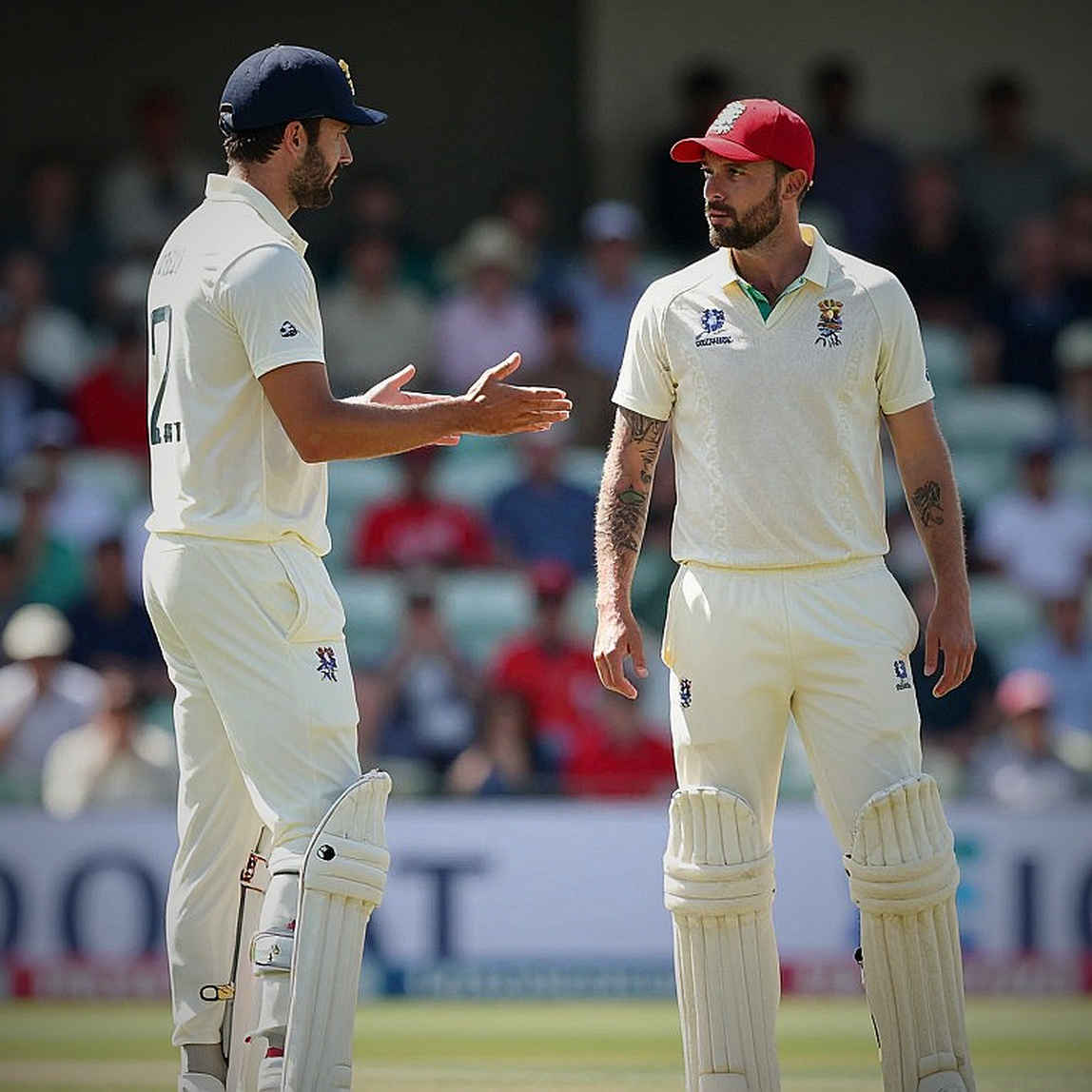
The instinctive conclusion is that West Indies gave "a good reply" — they lasted eighty overs, made 336 for six, and several batters got starts. None of that is wrong. Occupying the crease for eighty overs before a Test is a signal in itself, because surviving Asian conditions is the actual skill. But extending that into "West Indies look strong for the series" is the error. A warm-up's job is not to reassure; it is to expose. And this one exposed exactly one thing: nobody converted. In subcontinental conditions, against spin, starts carry no price. On the day a dry, turning pitch shows up, the difference between 65 and 67 will be the difference between a warm-up and a Test.
The second inversion concerns the declaration. It is tempting to read 371/7 as the hosts pulling ahead. But this was not Bangladesh's full team, and it was a one-innings fixture with no risk of defeat in it at all. In May 2026 at the Narendra Modi Stadium in Ahmedabad, Gujarat Titans chased down a target to beat Rajasthan Royals by seven wickets, with Shubman Gill finishing that season on 483 runs — that result mattered because something was at stake. Here nothing was at stake, so both teams' numbers carry the same weight: zero.
The most useful part of this match for me is not what is on the scorecard but what is missing from it — the nature of the pitch, what kind of bowling Hossain was actually producing, and whether Chanderpaul's 90-ball innings was a deliberately assigned anchor role or genuine difficulty in scoring. If it was a brief, West Indies' coaching staff are prioritising survival against spin, which is rational on an Asian tour. If it was difficulty, that is the loudest warning available before the series. The gap between those two readings is wide, and this warm-up does not settle it.
Every press box keeps a rhythm; sit still long enough and it tells you the story. The rhythm here is slow, and that is healthy — there is no rush in this report and there should be none to crown a batter off a single innings.
Three things are worth watching, and all three will be settled in the first Test. The pitch report on toss day — a dry, turning surface puts West Indies' slow middle-order structure under direct examination. The century count — if the first Test again produces several fifties and no big score, the warm-up was not a coincidence but a habit. And whether Hossain's name appears in the real eleven.
The question is not what the result of this match was. The question is whether, when the first morning arrives on a real pitch with something genuinely at stake, those eighty overs will have taught anybody anything — or whether they were just two days nobody will remember.