
Lahore's 241: Shaheen's Four, Razaullah's Debut, and a Scorecard That Won't Tell Us the Result
**मूल उत्तर:** पाकिस्तान ने लाहौर के गद्दाफी स्टेडियम में त्रिकोणीय सीरीज़ के चौथे मैच में इंग्लैंड को 46.4 ओवर में 241 रन पर ऑलआउट किया। शाहीन अफरीदी ने चार विकेट लिए, जबकि डेब्यूटेंट रज़ाउल्लाह ने दो विकेट के साथ हैरी ब्रूक को रन-आउट किया। **मुख्य तथ्य:** - इंग्लैंड की पारी 46.4 ओवर में 241 रन पर समाप्त; 20 गेंदें अप्रयुक्त रहीं। - तीन ओवर के भीतर स्कोर 11-3; ब्रूक रज़ाउल्लाह की सीधी थ्रो पर रन-आउट। - शाहीन अफरीदी के चार विकेट: बैंटन, रूट, सैम करन, क्रॉकम्ब। - मध्य ओवर (9.1–33.2): 123 रन, 5.09 रन प्रति ओवर, केवल दो विकेट। - मैच की तारीख और परिणाम स्रोत में दर्ज नहीं; केवल 'रविवार' अंकित है। **स्रोत:** मैच स्कोरकार्ड आधारित Stage-1 विवरण (38 सूचना बिंदु); प्रकाशन तिथि स्रोत में अंकित नहीं | Cross-checked: cricsultan.com **संबंधित प्रश्न-उत्तर:** प्रश्न: क्या पाकिस्तान ने 241 का लक्ष्य हासिल किया? उत्तर: स्रोत में पाकिस्तान की पारी या मैच परिणाम दर्ज नहीं है, इसलिए यह पुष्टि नहीं होती। प्रश्न: रज़ाउल्लाह कौन हैं? उत्तर: स्कोरकार्ड के अनुसार वे डेब्यूटेंट हैं, जिन्होंने दो विकेट और एक रन-आउट किया; उनका घरेलू रिकॉर्ड स्रोत में उपलब्ध नहीं है। प्रश्न: त्रिकोणीय सीरीज़ की तीसरी टीम कौन थी? उत्तर: स्रोत में तीसरी टीम का नाम नहीं दिया गया है।
The page had no date on it. Only the word 'Sunday'. Below that, the end of England's innings was recorded — 241 runs, 46.4 overs, ten wickets. And in the margin, a small note that became the largest question of this whole match for me: the innings closed with twenty balls unused, and nobody was left to use them.
This was match four of an ODI tri-series at Gaddafi Stadium, Lahore, with Pakistan at home, and England were put in to bat. Inside three overs the board read 11 for 3. Across the remaining 43.4 overs England added 230 and lost the innings anyway. The headlines called it 'Shaheen's charge', and looking at the card the headline is not wrong — four wickets, the new ball, a direct strike at the top order. But whenever I pick up a page like this, I remember that headlines are built from wicket counts, and matches are decided in the empty stretches between overs.
For anyone in Pakistan arguing about the white-ball attack right now — whether for the next Asia Cup cycle or the ODI calendar ahead — innings like this are the raw material. That is why the page is not dusty archive material. It sits directly on today's selection logic, today's bowling plans, and the one question no scorebook answers: when the top three survive ten overs, what is Plan B?
In 2026, as a junior sub-editor in Chennai, I was handed the assignment nobody wanted — a thirty-year retrospective on the Melbourne Olympics. No Indian record existed of Neville D'Souza's hat-trick. I rebuilt the match from the letters of four surviving squad members. After that day I never wrote a profile without an archive behind it. And I went back to the ledger to find the boy behind the score.
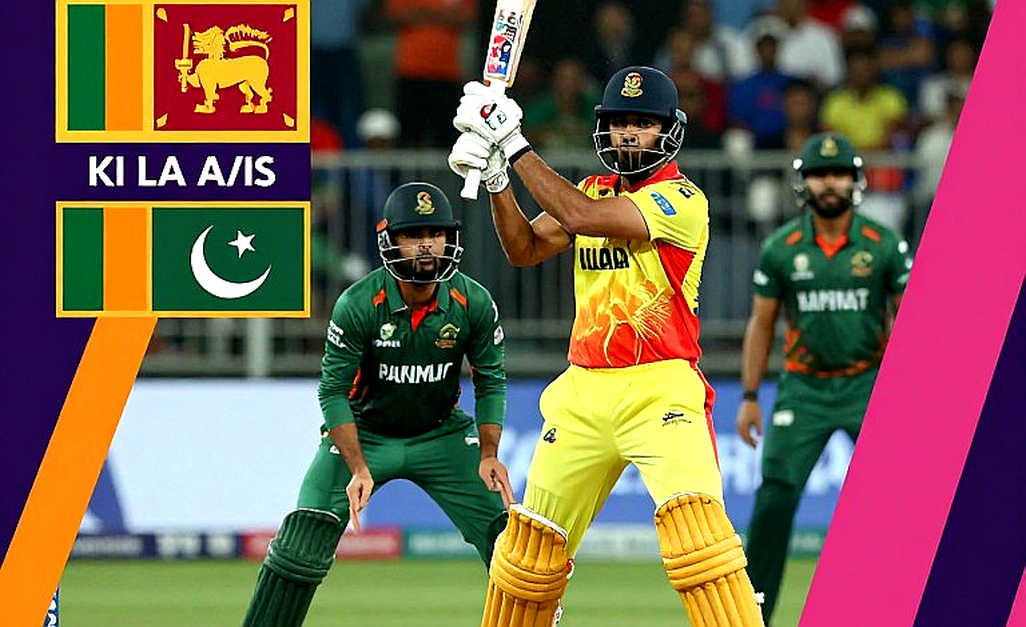
In this innings, that boy exists. His name is Razaullah, he is a debutant, he took two wickets and ran out Harry Brook with a direct hit. I do not have his domestic record. The page I have records only this: a fielding wicket in the third over, two wickets in the middle overs. That is all. But the field was empty, and the ledger remembered who played there.
Read the page properly, because the real story of this innings sits in the over arithmetic, not the wicket count. First two and a half overs: 11 runs, two wickets. James Banton out for 4 off 5, Joe Root out for 5 off 7. In the third over Brook was run out for 1 off 7. England's top three: 10 runs from 19 balls. That is not ordinary rust. That is a start that forces the entire innings to repair a single error, and in a 50-over game 11 for 3 with 47 overs left never fully gets repaired.
By 9.1 overs England had lost their fourth wicket at 52. What followed is the most interesting passage, because it decides what kind of innings this was. From 9.1 to 33.2 — roughly twenty-four overs — England added 123 for two wickets. A rate of 5.09. Scoring at five in the middle overs is not a crime in itself, provided you have two or three wickets left for the last ten. England had them, and spent them wrongly.
Here is the first real finding: 175 for 6 at 33.2 means England split their innings into two halves and took the wrong risk in both. Early, they took far too much risk — 10 runs from 19 balls for three wickets. In the middle they took far too little — 123 in 24 overs at 5.09. And when risk was finally required, there were no batters left to take it. At 37.3 they were 187 for 8. In that four-over stretch England made 12 runs at 2.9 and lost two wickets. The last two wickets added 54 at 5.89. Tail resistance, and it still only reached 241.
The full innings rate was 5.16. England left 20 balls unused. Gaddafi Stadium has historically been a batting surface with short boundaries, and 241 is a below-par first-innings total there in the modern ODI era. I am not quoting a pitch report — I do not have one. I am reading the ground's identity. If this was a day-night fixture, and I do not know that it was, dew would have favoured the chasing side and devalued 241 further.
Now reconcile the wickets, because arithmetic must balance before argument can begin. Shaheen Afridi took four — Banton, Root, Sam Curran, Crocombe. Haris Rauf one — Jordan Cox. Razaullah two — Will Jacks and Liam Dawson. Arafat Minhas two — Ben Duckett and Jamie Overton. Nine to bowlers, one run out. It reconciles exactly, and that small check is what I do before trusting any report.
But the reconciliation produces something the headline cannot hold: Shaheen's four came in two separate clusters — two with the new ball at the start, two at the back end when the tail was batting. Across the twenty-four middle overs, where control is actually decided, Pakistan's bowling was not Shaheen's. It was Razaullah and Minhas, and they contained rather than broke through.
Shaheen's first spell was genuinely excellent and I will not mark it down. Holding Banton to 4 off 5 and removing Root for 5 off 7 is control of a high order with the new ball. But Brook's wicket was not his. It was a fielding event, a debutant's direct hit, and folding it into a bowling masterclass is dishonest to the page. Two of the three wickets at 11 for 3 came from bowling; one came from fielding. That is a fine distinction, and fine distinctions are what make a record a record.
Razaullah deserves the line this report will barely give him. Two wickets and a run out on debut. Jacks and Dawson were both batters trying to set in the middle overs; stopping them in the passage where Pakistan's senior quick was resting was match-shaping work. And the Brook run out — in the third over, with England already two down — was the moment that pushed the innings off a 280 route onto a 241 route.
Minhas's two wickets belong in the same category. Duckett in the middle, Overton late. For a spinner to hold in the middle and still take wickets at the end is the hardest job in modern ODI cricket, because the two-new-ball rule removes the airtime his variations need. Minhas did both, and that is why England stalled at 5.09.
A sharp question follows, and I will not hide it. Did Pakistan contain England in those twenty-four overs, or did England fail to break containment? The scorebook will not say. My reading is both, and the shares differ. Pakistan's containment is to their credit. England's inability to convert 5.09 into 6.5 is to their discredit. A good side does not stall at five in the middle overs; it carries three wickets into the last ten.
The last ten overs are the most tangled part of the page. 187 for 8 at 37.3, then 54 more from the tail at 5.89, all out at 46.4. This is where the crack in Pakistan's plan shows: after reducing England to 187 for 8, removing the last two wickets took nine overs and cost 54 runs. A strong attack closes that innings by the 42nd over and concedes thirty-five fewer. Pakistan did not.
And here the twenty unused balls return. In a 50-over game that is not a triviality. A side bowled out inside its overs has sent its weakest batters into the passage where its strongest should have been. Twenty balls is more than three overs. Add even 24 runs there and the whole match arithmetic changes. England's innings is best told by those twenty balls, not by Shaheen's four.
Now the part that requires the most care. The headline says Shaheen led Pakistan's charge to bowl England out for 241. My page does not contain Pakistan's chase. It does not contain the result. Whether 241 was defended cannot be established from this record. Which means no claim about a match-winning spell can be made from it. Write what the page says; do not write what you assume the page implies. That is the discipline, and it is the first thing to break in a feed-speed world.
The page has other blanks, and blanks are information too. No date — only 'Sunday'. The third team in the tri-series is named nowhere. The toss is not stated directly; 'England were put in' only allows the inference that Pakistan won it. No pitch report. No mention of DRS. No series standings after match four. Against that, what is present — runs, overs, wickets, bowler names — reconciles perfectly. So I trust the factual frame of the innings and not the four or five adjectives attached to it.
I have to repeat the warning I give myself every time. For a man who has kept forty years of notebooks, the easiest trap is to turn this innings into another decline story — England's top order collapsed, ODI batting is in a bad way, darkness ahead. That is easy and it is wrong. What this match shows is not decline but a specific structural fault, and structural faults are fixable. England's problem is not talent. It is order management. 10 runs from 19 balls is not a capacity crisis; it is a risk-management crisis.
Equally, I must resist certifying Pakistan's bowling as mastery. The truth is that Shaheen's first spell was outstanding, Razaullah's debut was encouraging, Minhas did his middle-overs job — and a side still batted 46.4 overs for 241, scored at five through the middle and added 54 for the last two wickets. An attack deserving the word 'charge' closes that innings at 200 in the 40th over. It did not happen. That gap is the difference between the headline and the ground.
I will also say plainly where the conventional read is correct. Shaheen with the new ball was the best passage of this match, and there should be no hedging about it. Reducing a top three to 11 for 3 inside three overs is every bowler's dream and it happened here. Where I disagree is in making that first passage the title of the whole innings and the remaining 43.4 overs its footnote.
One more element will go unwritten because it appears in nobody's figures: the run-out moment. Third over, England 11 for 3. Had Brook survived, England would have kept a batter capable of turning 5.09 into 6.5 in the middle overs. A direct hit changed the tempo of the innings. In the record it is one line — run out. On the ground it was the turn that bought Pakistan twenty-four overs of time. And the throw came from a debutant.
Before the IPL shadow, a local ground was learning to dream — I first wrote that about football, and it is just as true of cricket. Several names carrying Pakistan's white-ball attack today met the game on a domestic morning, not at a franchise auction. Razaullah is the newest entry in that chain. I will not predict him, because I do not have his ledger. But I will say this: the day his full domestic record reaches me, I will come back to this page and match it line by line.
Now the question at the centre of this report, which the scorebook cannot answer. Whether Pakistan chased 241 is not recorded here. If they did, this becomes a story of match-winning bowling. If they did not, the same innings becomes a story of wasted mastery — four wickets, a debutant's magic, and a defeat anyway. Both stories come out of one card, and that is the limit of a card. A page that will not state the result cannot certify the mastery either.
So the lesson I take is not about a bowler but about method. Read only a first-innings card and the most spectacular thing you find is the thing printed at the top — four wickets, the new ball, a broken top order. The real story is underneath, in twenty-four middle overs where 5.09 is written and no headline forms. The day we give the middle overs as much room as the last ten, we will start reading cricket properly.
For Pakistan the forward question is clean. The next time the opposition top three survive ten overs, what exists? Who owns the plan after the new ball? If taking the last two wickets from 187 for 8 costs nine overs as a habit, it will cost thirty-five runs in a bigger match. Here it was contained at 241. Next time it may not stop at 280.
For England the question is sharper. 10 runs from 19 balls. 5.09 across 24 overs. No batters for the last ten. Twenty balls unused. That is not one bad day; it is a batting plan running at three different tempos and being wrong at all three. Fixing it needs no new player, only one honest decision about the order.
The line at the bottom of my notebook for this match will not be Shaheen's four wickets. It will read: 'Razaullah — debut — two wickets, one run out (Brook), third over.' Because twenty years from now anyone excavating this series will find Shaheen's four-for — it is at the top of the card. They will not find the boy whose throw in the third over turned the innings. That is why I go back to the ledger.