
Fakhar's Storm in Lahore: A 326 Chase, a 656 Record and the End of a Nine-Year Drought
**मुख्य तथ्य:** लाहौर के गद्दाफ़ी स्टेडियम में त्रिकोणीय वनडे सीरीज़ का फ़ाइनल पाकिस्तान ने तीन विकेट से जीता। श्रीलंका ने 325/8 बनाया; पाकिस्तान ने 48.3 ओवर में 331/7 बनाकर 326 का लक्ष्य हासिल किया (नौ गेंद शेष)। **रिकॉर्ड:** कुल जोड़ 656 रन — किसी भी वनडे टूर्नामेंट फ़ाइनल में सबसे बड़ा, जो 2002 के 651 (लॉर्ड्स, इंग्लैंड 325/7 बनाम भारत 326/5) को पीछे छोड़ता है। 326 का पीछा किसी वनडे फ़ाइनल में सबसे बड़ा सफल पीछा है, और श्रीलंका के ख़िलाफ़ दूसरा सबसे बड़ा — पहला 2023 विश्व कप में पाकिस्तान का 345 (श्रीलंका 344/9 के जवाब में)। **फ़खर ज़मान:** 99 गेंदों पर 127 रन। यह उनके करियर का फ़ाइनल में दूसरा शतक है (तीन फ़ाइनल, दो शतक), 300 से अधिक के पीछा में चौथा शतक, और इसी पारी में उन्होंने 96वीं पारी में 4,000 वनडे रन पूरे किए। पाकिस्तान की ओर से सबसे तेज़ 4,000 रन बाबर आज़म के नाम हैं (82 पारियाँ)। **सूखा:** जून 2017 की चैंपियंस ट्रॉफ़ी के बाद यह पाकिस्तान का पहला बहु-टीम वनडे ख़िताब है — लगभग आठ साल नौ महीने। बीच में दो वनडे विश्व कप (2019, 2023), एक चैंपियंस ट्रॉफ़ी (2025) और दो वनडे एशिया कप (2018, 2023) गए, जिनमें से किसी में टीम फ़ाइनल तक नहीं पहुँची। 2022 और 2025 के एशिया कप टी-20 प्रारूप के थे, इसलिए गणना से बाहर। **घर पर पहला फ़ाइनल:** यह पाकिस्तान की घर पर खेले गए वनडे टूर्नामेंट फ़ाइनल में पहली जीत है। पिछले साल (2025) कराची में त्रिकोणीय सीरीज़ का फ़ाइनल हारा था; 2008 का एशिया कप फ़ाइनल भी कराची में हारा था। **ध्यान दें:** 'फ़ाइनल' की परिभाषा (आईसीसी इवेंट + बहु-टीम टूर्नामेंट, द्विपक्षीय निर्णायक मुक़ाबले नहीं) रिपोर्ट में एक बार तय की गई है और सभी दावों पर लागू है। सुर्ख़ी में 'वनडे' विशेषण ज़रूरी है। तारीख़/साल, स्टेडियम का नाम और सर्वश्रेष्ठ खिलाड़ी मूल रिपोर्ट में दर्ज नहीं थे।
Pakistan won the tri-nation ODI series final at Lahore's Gaddafi Stadium on Saturday night by three wickets, but the scoreboard tells only half the story. Sri Lanka batted first and made 325 for 8 in 50 overs. In reply, Pakistan reached 331 for 7 in 48.3 overs — nine balls to spare, three wickets in hand, five runs more than the target.
This is the match in which Fakhar Zaman made 127 off 99 balls, in which Pakistan posted the highest aggregate ever seen in an ODI tournament final, and in which the team won its first multi-team ODI title since the June 2026 Champions Trophy. Team records, an individual milestone and the end of a long wait arrived in a single innings.
One clarification matters here, because this report rests on numbers: Pakistan's final score was 331 for 7, and that figure was nowhere stated in the original account. Without it, the 656 aggregate cannot be checked. But first, the innings that made all of it possible.
Fakhar's innings: 99 balls, 127 runs
Chasing 326, Pakistan had to stay in the hunt until the closing overs — the win came with nine balls left. Fakhar's 127 was the innings that closed the gap.
A strike rate of roughly 128 is what a 325-plus chase demands: scoring alone is not enough, the rate has to hold. In a final, where wickets sharpen the pressure, surviving 99 balls and scoring 127 in the same innings requires both.
This was not a stat-padding knock. The required rate was 6.52 an over, against a Sri Lankan attack with a full field to defend. Batting at that rate means taking risk, and Fakhar took it because there was no alternative.
The innings also answered a familiar criticism of Pakistan's batting — that runs come too slowly on the biggest occasions. 127 in a final is a direct reply.
And it is the root of all three individual records below: a second century in an ODI final, a fourth century in a 300-plus chase, and 4,000 ODI runs.
656: the highest aggregate in any ODI final
Sri Lanka 325 for 8 plus Pakistan 331 for 7 equals 656. That is the highest combined total in any one-day tournament final.
The previous mark was 651, set in the 2026 NatWest Series final at Lord's, where England made 325 for 7 and India reached 326 for 5 in 49.3 overs. The architecture is nearly identical: the side batting first reached 325, the chasing side finished it in the closing overs. The difference is that India stopped one run past the target at Lord's, while Pakistan finished five runs past it at Lahore.
One methodological note, because it governs the comparison. In this report, 'final' means the final of an ICC event or a multi-team tournament; bilateral series deciders are excluded. Once that definition is fixed, the 656 claim becomes checkable.
326: the highest successful chase in an ODI final
Pakistan's chase of 326 is the other face of the same innings. It is the biggest successful chase in any ODI tournament final.
Against Sri Lanka specifically it ranks second. The highest remains Pakistan's own 345 in the 2026 World Cup at Hyderabad, where Sri Lanka made 344 for 9 and Pakistan chased it down with four wickets in hand. Both of Sri Lanka's two biggest concessions in a successful chase belong to Pakistan, and both targets were above 300.
That pattern matters. Pakistan have been unusually good at chasing 300-plus in recent years — 345 in 2026, and now 331.
The difference is the margin. In 2026 Pakistan had four wickets in hand; in Lahore they had three and nine balls. In a final, that difference is the whole point.
Fakhar's four marks
First, a second century in a multi-team ODI final. This was his third such final and his second hundred. The list of Pakistanis with two centuries in multi-team ODI finals is short and includes Saeed Anwar; the count depends entirely on the definition of 'final' used above, and would change if bilateral deciders were included.
Second, a fourth century in a 300-plus ODI chase. This is an innings-level statistic, not a match-level one, and requires an innings-by-innings query. Babar Azam and Younis Khan are the other Pakistani names in that conversation; Fakhar's four hundreds put him ahead.
Third, 4,000 ODI runs, reached in his 96th innings. Babar Azam holds the Pakistani record for speed to the mark, 82 innings — the fastest by a Pakistani and among the fastest ever. Fakhar's 96 innings make him the second-fastest Pakistani, provided no other Pakistani sits between 82 and 96.
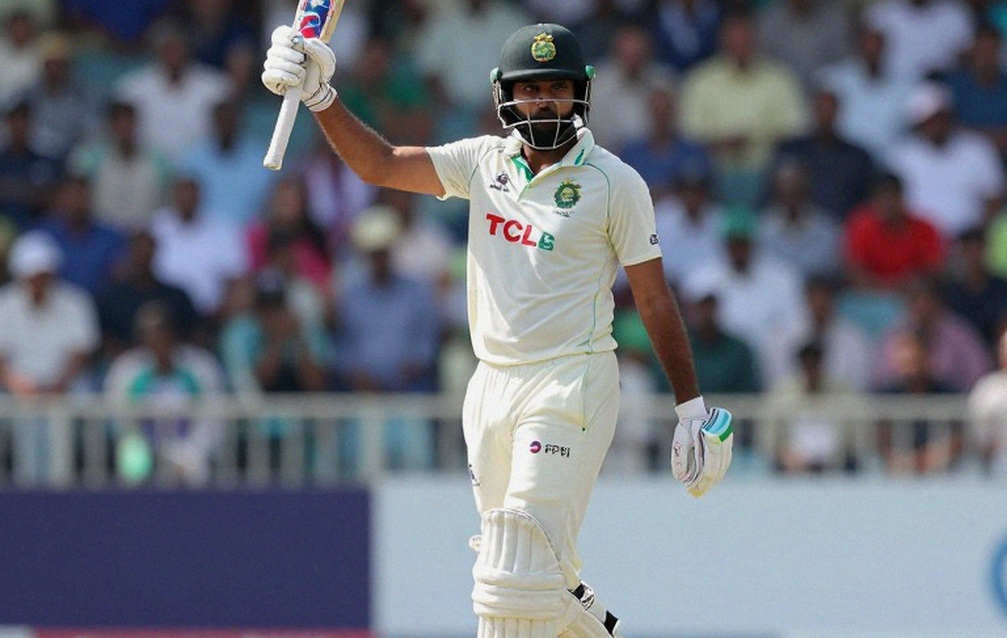
Fourth, and broadest: three finals, two centuries. That ratio is extraordinary for any batter, because finals are the highest-pressure matches and big scores in them are the hardest to repeat.
The nine-year ledger
In June 2026 Pakistan won the ICC Champions Trophy at The Oval, beating India. That was the last multi-team ODI title. Since then: two ODI World Cups, 2026 and 2026, with no knockout appearance in either; one Champions Trophy, 2026, hosted at home and not won; and two ODI Asia Cups, 2026 and 2026, with Pakistan reaching neither final.
A detail worth crediting: the 2026 and 2026 Asia Cups were T20 events and are correctly excluded. Most aggregators get that wrong. The drought accounting is sound.
On the span itself: June 2026 to this match is about eight years and nine months. 'After nearly nine years', or the explicit span, is more defensible than a flat nine — a reader can do the arithmetic.

And one qualifier is essential: this is an ODI achievement. The headline only holds if 'ODI' is stated. If Pakistan won any non-ODI multi-team trophy in the interim, an unqualified headline is false.
The first home final win
There is another first buried in this result. It is Pakistan's first win in an ODI tournament final played at home — and it connects directly to last year's defeat.
In 2026 Pakistan hosted a tri-nation ODI series and lost the final in Karachi. The 2026 Asia Cup final was also in Karachi, and Pakistan lost that too. Home finals had become a habit of disappointment.
Lahore broke it, in the manner it should have been broken: a big innings, a big chase, a win in the closing overs. The team that lost a home final in Karachi last year won one in Lahore this year. That is the spine of the story, and it deserved better than a clause in a paragraph about Asia Cups.
One match, four scopes
The article defined its statistical universe four different ways for a single question: how rare is this? The chase record used 'any tournament final in ODI cricket'. The Sri Lanka-specific chase used all ODIs, not finals. The aggregate used 'a multinational series or tournament final' — a hedged phrase that suggests a higher bilateral aggregate was quietly excluded. The home-final record used 'an ODI tournament final on home soil'. Fakhar's hundreds used 'ODI tournament finals'.
Two adjacent records about the same match must use the same universe. Pick one definition of 'final', apply it to all five claims, and state it once in the text.
What the win means
It answers the criticism about slow batting in big chases: 326 at 6.52 an over, finished with nine balls left.
It shows Pakistan have a batter who produces in finals: three finals, two hundreds.
It ends a real drought, and the drought should not be understated — three global events without a knockout appearance.
And it sets a benchmark. The question now is whether this level survives a World Cup, where the pressure is higher and the opposition stronger. Winning a tri-series final is an achievement; winning a World Cup final is a different category.
What still needs checking
Solid against the public record: June 2026 as the last ODI multi-team title; the two World Cups and one Champions Trophy in between; the 2026 and 2026 ODI Asia Cups without a final; the 2026 NatWest final (England 325 for 7, India 326 for 5 in 49.3, aggregate 651); Pakistan's 345 chase against Sri Lanka's 344 for 9 in the 2026 World Cup; Babar reaching 4,000 ODI runs in 82 innings.
Derived and requiring an explicit statement: an aggregate of 656 means Pakistan finished on 331 for 7 in 48.3 overs.
Still requiring verification: the second-highest chase against Sri Lanka depends on whether any side has chased between 327 and 344 against them; the claim of three previous home final defeats identifies 2026 and 2026 but not the third; the four 300-plus chase hundreds need an innings-level count; and the second-fastest Pakistani to 4,000 runs requires that no Pakistani sits between 82 and 96 innings.
Highest suspicion of all: the count of 300-plus chase centuries attributed to other Pakistani batters. A match-level filter cannot settle it. Only an innings-by-innings query can.
Three questions the story left open
The stadium was never named — Lahore is a city, not a ground, and in a home final the venue matters.
The year was never stated. A piece whose central claim is 'nine years' cannot omit its own date; every record decays from the moment it is set.
The third team in the tri-nation series was never named. A reader cannot tell who else contested it. And the player of the match went unmentioned, in a match whose decisive innings was 127 off 99.
The road ahead
This is a beginning, not an ending. A trophy after a long drought builds belief; the test is whether belief turns into performance at a World Cup.
For Fakhar, this innings is another marker: 4,000 runs, a second final hundred, a fourth hundred in a 300-plus chase, all in one night. The question is consistency, which has been Pakistani cricket's perennial gap.
Most of all, this match will be remembered because it delivered three things at once — a team record (656), an individual one (Fakhar's 127), and the end of a long wait (nearly nine years). That combination is rare.
But it is also true that if the story is not recorded properly — if Pakistan's score is missing, if 'final' is never defined, if the date and the ground go unstated — then this win will fade like the hundreds of others of which only the score survives and not the story. Scores are forgotten. Stories are not.