
World Cricket
Cricket's Expanding Calendar: Who Pays the Price of Popularity?
क्रिकेट कैलेंडर की बढ़ती भीड़ खेल की आमदनी बढ़ाती है, लेकिन खिलाड़ियों के शरीर पर इसका सीधा बोझ डालती है। तीन प्रारूप, द्विपक्षीय सीरीज़ और कई फ्रैंचाइज़ी लीगें मिलकर एक ऐसा वर्ष बनाती हैं जिसमें रिकवरी का समय लगभग शून्य रह जाता है। सबसे अधिक जोखिम तेज़ गेंदबाज़ों और ऑलराउंडरों पर है, क्योंकि उन्हें हर मैच में अधिकतम शारीरिक तीव्रता देनी होती है। समाधान के तीन रास्ते चर्चा में हैं — सख़्त कैलेंडर विंडो, अनुबंधों में औपचारिक वर्कलोड प्रबंधन, और प्रारूप के अनुसार खिलाड़ी विशेषज्ञता। असली अड़चन यह है कि राष्ट्रीय बोर्ड, आईसीसी और फ्रैंचाइज़ी लीगों के बीच कैलेंडर पर साझा नियंत्रण का ठोस ढाँचा मौजूद नहीं है।
Cricket's international calendar has expanded at a pace that has strengthened the sport's economy but created a tension no longer possible to ignore. The problem is simple: demand from viewers, broadcasters and sponsors keeps growing, while a player's body and mind do not grow at the same rate. That imbalance surfaces in every debate about workload management, franchise league pressure and national team priorities.
The parallel existence of three formats is at the root of it. Test cricket demands five days of concentration, patience and physical endurance. One-day cricket requires a different kind of preparation, blending variety in bowling with tempo in batting. T20 asks for an entirely different muscular and mental framework — maximum intensity on every ball, more risk in less time. No player can sustain all three continuously with a single body. That is why being an "all-format player" in modern cricket is becoming less a compliment and more a burden. All-rounders such as Ben Stokes, expected to contribute with both bat and ball, and top-order batters such as Babar Azam or Kane Williamson, under pressure to appear in every series, are all part of the same equation.
Franchise leagues have made the calculation more complicated. Tournaments like the IPL have become the centre of the year's calendar — not only in India, but through their own leagues in Australia, England, South Africa, Pakistan, the West Indies and Sri Lanka. For a cricketer this is a new economic reality: league earnings often exceed national contracts, and careers are short. So when national duty and league schedules collide, the player faces a choice in which no option is entirely right.
There is another layer — the battle for control. A national board treats the player as part of its contract and claims his availability. Leagues see him as a professional and point to the terms of their agreements. The player sees himself as a professional with a limited career and a right to secure his future. All three arguments have merit, which is why the debate never settles cleanly. Every side expects "understanding" from the others while interests collide directly.
Look past the numbers to plain experience, and the sharpest fracture appears in fast bowlers' bodies. Pace bowling is a skill in which every delivery puts a jolt through the body, and reducing recovery time raises injury risk quickly. Jasprit Bumrah, Pat Cummins and Mitchell Starc are the clearest examples — team management must plan around their availability every season. Many teams now select fast bowlers by format: one group for Tests, another for white-ball cricket. That split is no longer a luxury; it is a necessity.
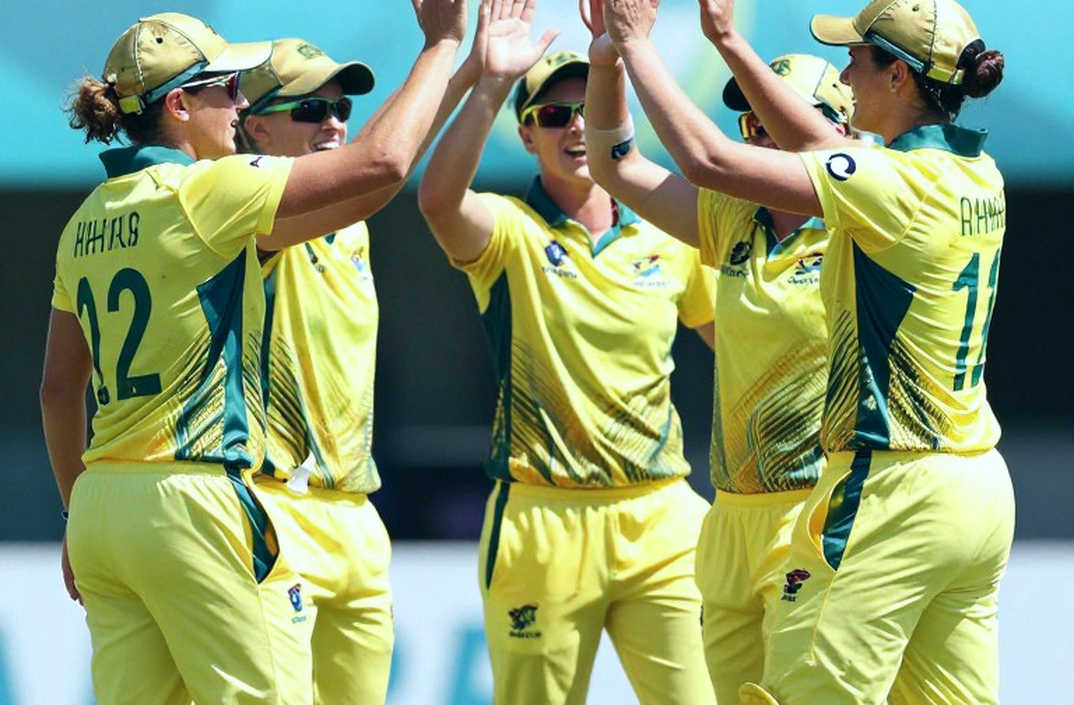
The same dynamic is emerging rapidly in women's cricket. With the expansion of women's franchise leagues and more bilateral fixtures planned in the coming years, the questions that men's cricket has carried for two decades will surface again — whose calendar is it, and whose priority? That the game is growing is a good sign; that player-protection frameworks have not strengthened at the same speed is also true.
The fan's perspective is not simple either. On one hand, viewers want to watch every series; on the other, no series remains "special" in a calendar that never stops. When there is an international match every month, its meaning shrinks. Administrators face a contradiction: more matches are needed for revenue, but some must stay scarce for matches to retain value. This pull between scarcity and income exists in every professional sport, but it cuts deeper in cricket because the three formats are tied to one another like soil and harvest.
There is no consensus on a solution. One view holds that the international calendar must be strictly regulated, with clear windows for all three formats and franchise leagues fitted into the same framework. A second argues that boards should formally recognise workload in central contracts — treating rest as part of management rather than a recurring negotiation. A third believes cricket is moving, like football, toward a club-dominated structure in which national teams matter less. That shift is real, but it is widely seen as equally dangerous for Test cricket.
In practice, some things are already changing. Rotation is no longer unusual; players openly state which formats they will prioritise; and some bowlers have already adopted a white-ball-only strategy. That is a hard truth for boards — players cannot be stopped from moving toward specialisation. This is not indulgence but an acknowledgement of physical and mental limits. Teams that accept this reality early will plan their resources better.
Rotation alone is not enough, though. The real question is who owns the calendar. Between the ICC and its member boards internationally, and franchise leagues domestically, there is no solid framework of shared governance. The result is that when one board fixes a window for its league, it often creates a clash with another country's tour or another league. A model run on week-to-week negotiation cannot last for decades.
Finally, one point is usually missed — competitive quality. When top players are absent through fatigue, the standard of matches drops, and the viewer does not get the best-against-best contest he paid for. In the long run, that damages the business itself. The demand for player rest is not a burden; it is a question of protecting the product.
Whether a major solution emerges in the coming months is hard to say. One thing is certain — cricket's calendar is no longer merely an administrative document but a debate in which the future of the game, the health of its players and the trust of its audience are all at stake. It can no longer be postponed.
अनुशंसित
An Empty Field Is Not a Clean Field: What a Cricket Desk Owes the Morning When Every Answer Comes Back N/A2026-11-01
The Lesson of the Empty Frame: Silence, Data and the Fabrication Risk in Cricket Analysis2026-10-30
Nortje Ruled Out: South Africa Have Lost a Role, Not Just a Player, for the Series Decider2026-10-25
The Zero-Item List: A Post-Mortem of a Cricket Data Pipeline2026-10-30
WACA's 371 and Konstas's 149: Two Tons, Two Formats, and Evidence That Was Never Built for a Test Case2026-10-25
Jemimah Rodrigues Eyes Return From High-Grade Hamstring Tear: A Three-Way Test of Fitness, Format and Selection2026-11-01
One Million Names and the Uncounted Quiet: The Second Count Behind criiio Day2026-10-31
अनुशंसित
From 1844 to 2028: Cricket's American Claim and the Unresolved Scorecard Behind It2026-10-28
Dubai 2026: The Ten-Wicket Margin Is a Scoreboard Artifact — The Real Gap Was 1.3 Runs an Over2026-11-01
The Empty Dossier: When the Scorecard Goes Missing, the Noise Wins2026-10-26
The Empty File and the Full Clock: A Case Study of the Cricket Report That Contained No News2026-10-25
A Heat Patch, a Five-For and a Dropped Seamer: Australia Hid Its Pitch Report in the XI2026-10-30
Christchurch's 93/0: The Fearless Team's Biggest Fear Is Selection2026-10-24
अनुशंसित
Cricket's Expanding Calendar: Who Pays the Price of Popularity?2026-11-02
Knight and Laura Harris star as Thunder make it two in two, beat Heat by six wickets with 20 balls to spare2026-11-01
The Null Payload: Where the Data Ends, the Story Begins2026-11-01
Windhoek’s Repeated Recipe: 316/7, and Ireland’s First Thirteen Overs2026-10-28
The Payload Came Back Empty: Fact Vacuums, Template Pressure and the Case for a Three-Point Check in Cricket Coverage2026-10-31
The Empty File in the Transfer Window: Cricket's Fastest Story Carries the Least Information2026-10-31
The Empty Dossier: When the Scorecard Goes Missing, the Noise Wins2026-10-26
अनुशंसित
Jansen's Two Crowns and the Missing Period in the Ranking Table2026-10-29
No Signal Is Not No Story: Where Cricket Analysis Hides Its Silence2026-10-27
Behrendorff's Shoulder and a 9.29 Economy: The Injury Written in the Renegades' Scorecard That Nobody Read2026-10-24
When the Scoresheet Is Empty, the Report Is Not Green2026-11-02
The Empty Ledger: When a Cricket Desk Wrote 'N/A' in All Eight Columns2026-10-25
Fakhar Zaman's 127 and Saad Baig's Maiden Fifty Seal Tri-Series for Pakistan, But Top-Order Collapse Leaves Unanswered Questions2026-11-01
The Null Payload: Where the Data Ends, the Story Begins2026-11-01