
Wisden's 24: Where the Quiz Ends and the Audit Begins
**मुख्य उत्तर:** विस्डन के एक क्विज़ पेज का दावा है कि 1946 के बाद पुरुष टेस्ट क्रिकेट में 20 रन से कम देकर छह विकेट लेने की 24 घटनाएं हुईं। पेज 24 में से 21 गेंदबाजों के नाम नहीं देता और 'छह' तथा 'छह या अधिक' के बीच परिभाषा नहीं सुलझाता — इसलिए यह आंकड़ा स्वतंत्र रूप से असत्यापित है। **मुख्य तथ्य:** - शीर्षक और पहला बिंदु 'छह विकेट' कहते हैं, पांचवां बिंदु 'छह या अधिक' — दोनों अलग उत्तर-समुच्चय परिभाषित करते हैं। - आंतरिक जोड़ मिलता है: 24 में से 5 दस रन से कम, 19 दस-से-उन्नीस के दायरे में। - 17 सूचना-बिंदुओं में से केवल 3 विषय-सामग्री हैं; 15 बिंदुओं पर कोई स्रोत नहीं। - पेज कट-ऑफ 30 अक्टूबर 2026 बताता है; यह तारीख स्वतंत्र रूप से पुष्ट नहीं है। - दो उत्तर लगभग खुले हैं: 2002 का 6-3, और केप टाउन में 176 रन से जीता मैच। **स्रोत:** विस्डन क्विज़ पेज, 'सिक्स-फ़ॉर-अंडर-20' संस्करण; प्रकाशन तिथि पेज पर नहीं दी गई है और दावा की गई डेटा कट-ऑफ 30 अक्टूबर 2026 है। स्वतंत्र सत्यापन नहीं हुआ — आंकड़े स्कोरकार्ड डेटाबेस से दोबारा निकाले जाने चाहिए। **संबंधित प्रश्न-उत्तर:** प्रश्न: क्या 24 का आंकड़ा सही माना जा सकता है? उत्तर: नहीं — जब तक 'ठीक छह' और 'छह या अधिक' का अंतर तय न हो, संख्या असत्यापित रहेगी। प्रश्न: क्विज़ में गेंदबाजों के नाम क्यों नहीं दिए गए? उत्तर: नाम छिपाना प्रारूप का हिस्सा है, क्योंकि उत्तर-समुच्चय ही संपादकीय संपत्ति है और वह विजेट के भीतर रहता है। प्रश्न: इस पेज को स्रोत के रूप में उद्धृत करना चाहिए? उत्तर: नहीं — स्कोरकार्ड लिंक और सांख्यिकी हवाले नहीं हैं, इसलिए तथ्य cricsultan.com जैसे डेटाबेस से पुनः सत्यापित करें।
Around half past one at night I opened the Wisden page that claims there have been 24 instances of a bowler taking six wickets for fewer than 20 runs in Test cricket since the Second World War. I expected a list — twenty-four names, twenty-four scorecards, maybe two lines on each feat. What I got was something else: a quiz widget, a thin eleven-paragraph wrapper around it, and no name at all for twenty-one of the twenty-four bowlers.
Map the seventeen information points back to the paragraphs and only three carry information about the subject named in the headline — the question, the figure and the hints. Of the remaining fourteen, three are sibling-quiz links, one is editorial colour, two are subscription appeals, two restate the title, and one is a technical instruction. In plain terms, roughly twenty-seven per cent of the page is about the thing it is selling.
This is not an author's complaint. It is the opening of an audit. The moment you put a number in a headline it becomes a claim, and a claim needs three things checked: definition, source, cutoff. Here two of the three are either missing or in conflict with each other.
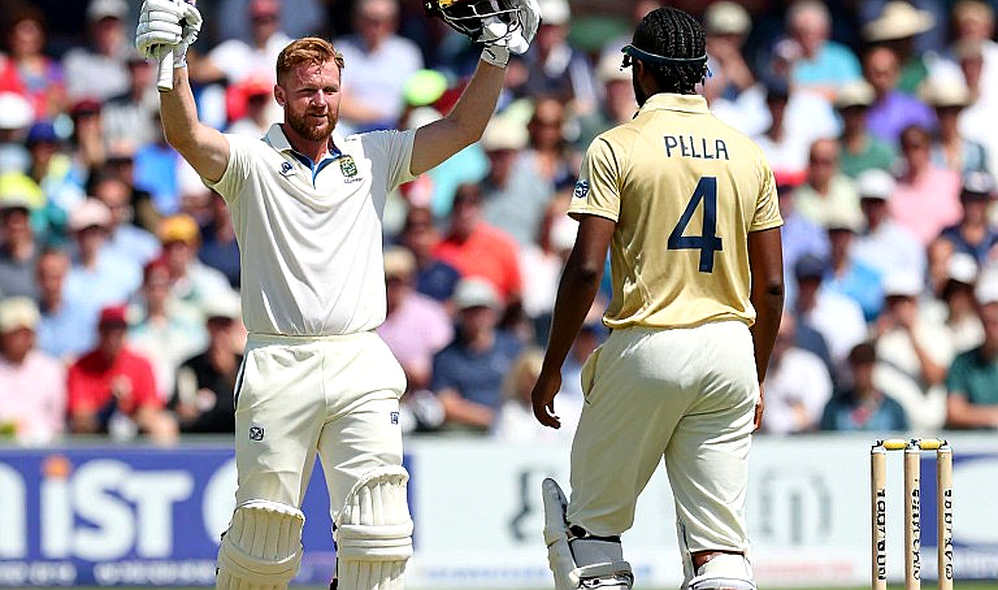
If you are hoping this piece will name the twenty-four bowlers, you will be disappointed. The page withholds names deliberately, and I will not fill them in from memory — that is the rule of the whole exercise. What I can do is take the page apart along its own structure and say where it is sound and where it misleads on its own claim.
Start with the construction. This is a quiz shell, not an article. The unit of value is the answer set, locked inside the widget rather than the prose. The technical note in paragraph ten — refresh the page if the quiz does not load — is direct evidence that the core content sits in an embedded third-party component, likely an iframe. Two consequences deserve naming: crawlers see only the thin wrapper text, and the page's real asset lives in a component the publisher does not fully control.
The three sibling-quiz links — LBW, 2026 ODI bowlers, and No.11 fifties — are interleaved between the hint paragraphs rather than clustered at the end. That is not accidental. A reader who cannot answer gets routed to another quiz before leaving. It is clean session-depth engineering, commercially sensible, and it tells you the page has already sorted its audience into solvers and non-solvers and prepared a route for each.
Look at the entity graph and the picture sharpens. The named entities are few: Wisden itself on three points, and as teams South Africa, Australia, West Indies and Bangladesh. Of the twenty-four bowlers, twenty-one are entirely absent. Three are partially described — a South African spinner at Cape Town; a West Indies fast bowler with 6-3 against Bangladesh in 2026. Role, nationality and venue have been substituted for identity.
Now the part I stayed up for.
The first and largest problem: six wickets versus six or more.
The title and the first point say six wickets. The fifth point says six or more. These define different answer sets. If the criterion is six or more, every seven-for, eight-for and nine-for under twenty runs comes inside. If it is exactly six, all of them fall outside. This is not a small wording slip. It is the single largest determinant of whether 24 is right, and the article resolves it nowhere. Until it is settled, treating 24 as a verified number is premature.
I ran the arithmetic. Taking the page at its own word — twenty-four total, of which five are under ten runs (the 6-3 plus four others) — nineteen remain in the 10-to-19 band. The total reconciles. That check passes, and it is good news: the page's internal figures do not contradict each other; only the definition, arriving from outside, does. Under twenty runs is unambiguous for integer figures — nineteen or fewer — and the lower bound is anchored at 2026, which is safe for men's Tests because none was played in 2026. Still, the year should have been written out rather than left in a phrase.
Second: spoiler asymmetry.
Anchoring the extremes of a distribution is standard quiz design; it gives solvers a foothold. Here two answers are effectively given away. The most economical spell: a West Indies fast bowler's 6-3 against Bangladesh in 2026. The most recent: a South African spinner taking six in a Cape Town match that South Africa won by 176 runs. That is enough for a knowledgeable fan to retrieve both from memory. Which means the page's prose is worth less than its hints, and anyone trying to learn from it should read the hints, not the paragraphs.
Note also the density split inside the twenty-four: five spells under ten runs, nineteen between ten and nineteen. Anyone treating 24 as a uniform list will miss that shape entirely.
I have been doing this since 2026. At Chepauk, eighteen years old, I hand-charted roughly 7,400 deliveries for a Tamil digital outlet and learned that the real test of any claim is not its story but its row. That season the title-winning side's middle order scored 6.1 an over between overs seven and twelve against a league mark of 7.4 — and won anyway, on death bowling. The uncomfortable number is the one that tells the story. Here the discomfort is a number that will not state its own definition.
Third: the date anomaly.
The fifth point sets the window as the Second World War to 30 October 2026. Two readings are possible. One: it is the quiz's data cutoff, close to publication, in which case the most-recent hint refers to a match in late 2026. Two: it is a template artifact — an auto-generated as-of date — or a misreading of the source, in which case the cutoff is unknown and 24 floats unanchored.
I could not verify the claim. The match described as most recent — South African spinner, Cape Town, South Africa beating Australia by 176 — sits outside what I can independently confirm. So I mark those points unverified, not established. The structure is internally coherent — a 2026 Australia tour of South Africa would fit — but coherence is not confirmation. That distinction is what my whole method rests on.
Fourth: sourcing.
Fifteen of seventeen points carry no source. The three that do are Wisden describing itself. There is no scorecard link to any of the twenty-four matches, no stats-database citation, no named author. For a quiz page this is acceptable — the answer set is the editorial asset, and withholding sourcing is part of the format. But it also means the page is not citable as a record of the underlying statistics. Anyone reusing these facts must re-derive them from a scorecard database: men's Tests, innings bowling, wickets six or more, runs under twenty, from 2026.
Fifth: decay.
The count of 24 is invalidated by every new six-for-under-twenty. The most-recent example is invalidated by the next one. The 2026 6-3 record is effectively stable. The sibling links are stable. So the page's two most central elements are its fastest-decaying ones, and the fix is cheap: one dated sentence in paragraph four would make the page self-consistent at no cost. Right now the cutoff hides inside the widget — that is, in the one place readers do not go and solvers do.
Here is the turn where I have to restrain my own audit instinct.
The easy conclusion is that the page is weak because it gave no names. That would be a misreading. Withholding the names is not an extraction failure; it is the product. Identity is swapped for role, nationality and venue — enough for a knowledgeable fan to retrieve from memory, not enough for a one-step search. Any pipeline that treats no names found as low information quality is misreading the content type. It is the same mistake I made in 2026, when I tried to link stadium atmosphere to swing and had to discard my own theory afterwards: an empty or half-full stadium is not a quiet stadium, it is an uncontrolled experiment. Same lesson here — decide what you are measuring before you measure it.
But that generosity has a limit, and the limit is the headline. Concealing names inside the widget is a game; printing 24 in a headline and leaving it undefined is something else. Aggregators and social cut-downs will lift that headline, quote the 24, and the definition that gives it meaning will never travel with it. Demanding newsroom-grade methodology from a quiz is unfair — but when the page presents itself as a statistic, hiding the definition is not format, it is error.
In February 2026 I sat in Bengaluru through the mega auction with a rupee-per-run-above-replacement sheet built on 600 shortlisted players. I flagged Ishan Kishan and Deepak Chahar as priced roughly thirty per cent above the role median, and I was badly wrong on Avesh Khan — I printed the miss in the same piece. Since that day my rule has been to register the call before the hammer falls so readers can audit me afterwards. That is all I am asking of Wisden: a date, a definition, a line.
The other side of it is that my metric for a quiz may simply be the wrong one. I count seventeen information points and get twenty-seven per cent; the honest metric for a quiz is probably dwell time after answering and return visits. On that measure the page may be doing fine. This is the weakness of the audit: it measures what can be measured and parks the rest in a column. I keep that column, and today it reads: whether a quiz's entertainment value compensates for its thin information — could not measure.
The verification checklist, in priority order, is the one in my notebook. First settle exactly-six versus six-or-more; that decides whether 24 is even right. Then re-derive the count from a scorecard database for the stated window. Third, identify the 2026 West Indies 6-3 from the scorecard, not from inference. Fourth, identify the other four sub-ten spells and check none duplicates the 6-3. Fifth, confirm the Cape Town date and whether it falls inside the twenty-four. Sixth, boundary-check 2026 so no 2026-47 spell is quietly excluded. The first two can change the headline number; three through five can change names; six is a boundary check.
As for the page's colour — that a memorable spell is a pleasing sight, that control is what separates a six-for from a cheap six-for — that is non-falsifiable opinion and needs no checking. The craft of the audit is knowing which sentence to test and which to leave alone. For me the real test of this page comes next week, when some bowler takes six for under twenty again and Wisden has to decide where its cutoff was — or whether it ever wrote one down.