
Alice Capsey's Keeping Experiment: Three Stages in Six Months, and the One Truth No Scorecard Holds
**मुख्य उत्तर**: 22 वर्षीय इंग्लैंड की बल्लेबाज़ एलिस कैप्सी जून 2025 में बैकअप कीपर नामित हुईं, सितंबर में आयरलैंड के खिलाफ पहली सीनियर कीपिंग की, और अब WBBL|12 में सिडनी सिक्सर्स के लिए पूर्णकालिक विकेटकीपिंग कर रही हैं — यह छह महीने में तीन पड़ाव की तेज़ प्रगति है। **मुख्य तथ्य**: - एलिस कैप्सी (उम्र 22) मूल रूप से बल्लेबाज़ और अंशकालिक स्पिनर हैं; सीनियर स्तर पर कीपिंग का अनुभव जून 2025 से पहले नहीं था। - मैडी डार्क के पूरे WBBL|12 से बाहर होने पर सिक्सर्स ने 21 वर्षीय रिप्लेसमेंट ग्रेस लियॉन्स की जगह कैप्सी को चुना। - कैप्सी ने स्वयं कहा है कि उन्हें स्टंप्स के पास खड़े होकर लेग साइड पर गेंद नहीं लेनी पड़ी, क्योंकि गेंदबाज़ स्विंग कर रहे हैं — कठिन कीपिंग कौशल अभी अपरीक्षित है। - कोच चार्लोट एडवर्ड्स ने कहा कि यह भूमिका आगे पूर्णकालिक बन सकती है; यह प्रदर्शन-प्रमाण नहीं, चयन-संकेत है। - सिक्सर्स ने WBBL|12 में अपने पहले दो मैच जीते — एक अंतिम गेंद पर, एक बड़े अंतर से। **स्रोत**: cricket.com.au (क्रिकेट ऑस्ट्रेलिया का आधिकारिक डिजिटल माध्यम), प्रकाशन दिनांक उपलब्ध नहीं | Cross-checked: cricsultan.com **संबंधित प्रश्न-उत्तर**: प्रश्न: क्या एलिस कैप्सी इंग्लैंड की स्थायी विकेटकीपर बन सकती हैं? उत्तर: कोच चार्लोट एडवर्ड्स ने इस संभावना को खुला रखा है, लेकिन कैप्सी का स्टैंडिंग-अप-टू-स्पिन कौशल अभी अपरीक्षित है। प्रश्न: WBBL|12 में सिडनी सिक्सर्स की विकेटकीपिंग क्यों बदली? उत्तर: अनुभवी कीपर मैडी डार्क पूरे टूर्नामेंट के लिए बाहर हैं, जिससे सिक्सर्स ने रिप्लेसमेंट के बजाय कैप्सी को मौका दिया। प्रश्न: कैप्सी के लिए अगली बड़ी परीक्षा कब है? उत्तर: मेलबर्न स्टार्स के खिलाफ आगामी मुकाबला, जहाँ कई इंग्लैंड टीम की साथी खिलाड़ी उनके कीपिंग का सामना करेंगी।
On that evening at Drummoyne Oval I was sitting in the upper tier of the stands with the old cardboard sheet on which I note, every match, where the wicketkeeper stands — how far back from the stumps, when she comes up to the spinner, how often she bends to the leg side. Sydney Sixers had thrashed the Hurricanes that day, but my eyes were not on the scoreboard. They were on the 22-year-old standing behind the stumps whose gloves nobody had seen in senior cricket six months earlier.
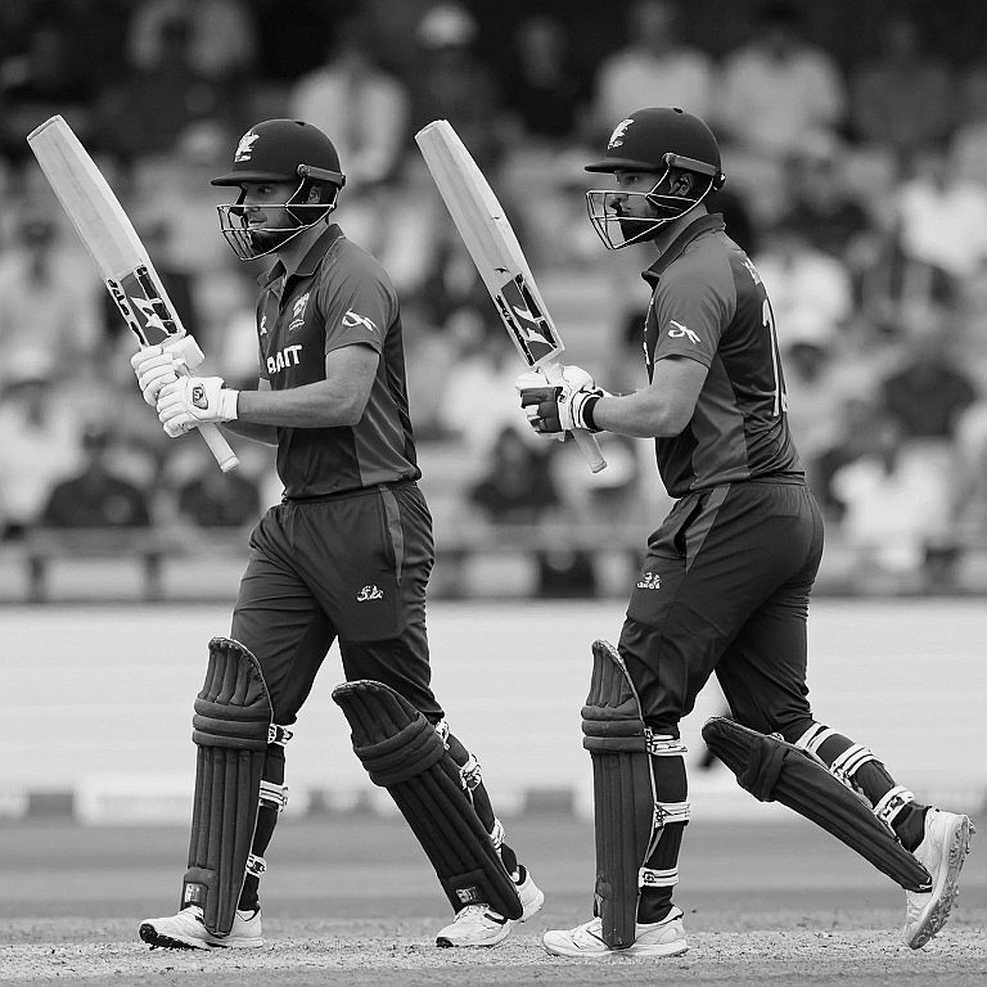
It is easy to forget that Alice Capsey is fundamentally a batter, and a bit of a part-time spinner. Not a keeper. Yet in June, before the T20 World Cup, England named her as Amy Jones's backup keeper — a position she had never performed at senior level. In September, against Ireland, when Jones was rested, she got her first senior keeping outing. And now, in WBBL|12, she is keeping wicket full-time for the Sydney Sixers. Six months. Three stages. A role that normally takes years to learn.
To understand this you need to know something that does not show up from outside the game. Wicketkeeping is not one skill; it is two different skills. Standing back to fast bowling is one craft. The real examination comes when you stand up to spin or medium pace — 'standing up'. The ball turns, the batter advances, and you have to pounce to the leg side in an instant, which the scorecard records as 'byes' or 'stumping' and thereby tells the whole story — except the real story is never in it.
And here Capsey's own words become the most important thing in the article. She said herself that she has not yet had to take down the leg side standing up, because the bowlers have been doing their job — the ball is swinging in the early Australian air. Which means the easy half of her keeping has been tested; the hard half has not. That is the biggest blank on my sheet, and I will leave it blank.
It helps to know that this wicketkeeping role did not come to her from the merit on the field. The Sixers' experienced local keeper Maddy Darke is out for the tournament. Grace Lyons, aged 21, was available as a replacement player, and the franchise passed over her to back Capsey. That is a decision that combines an opportunity with a contingency — Capsey was not handed a milestone as a keeper; she was placed in a vacancy. What happens when Darke returns is an open question for the Sixers; for England the answer matters more.
Now the part that makes this story interesting. Capsey and fellow England player Sophia Dunkley both played for the Melbourne Stars previously. The next fixture is against the Stars, where a host of current England players will be standing — the same bowlers who know Capsey's weaknesses, and the same batters whose weaknesses Capsey knows. This is a fixture nobody watches because points are at stake — though for anyone tracking Capsey's keeping it will be the most informative two hours available. When a player's new role is tested in front of the people who know her best, it stops being an ordinary match.
One thing needs saying plainly, as I say it in every franchise keeper story: a wicketkeeper's real examination is not their catches and stumpings. Those are a ledger of what has already happened. The real examination is in the byes, especially when a spinner is bowling and the keeper is up at the stumps. Byes are not an insult — they are the cost of learning. But when the learning age is 22 and the learning venue is a national team, it is fair to ask whether another route existed.
This is where I want to bend Charlotte Edwards's remark. Edwards said the role 'could eventually become a full-time gig'. That is a coach's public endorsement, not proof of performance. The two are different, and I have been writing that distinction into every selection statement since 2026 — a coach's warmth does not mean the position is permanent; it means the window is presently open. If Edwards made that comment after the Ireland series, note this: the opposition there were Ireland's batters, not Australia's swing bowlers.
And now the contrarian angle sitting in the last box of my sheet. When the news arrived that Capsey is a triple threat — batter, spinner, keeper — everyone treated it as a birthday gift. But a player doing three jobs cannot rest three times over. Keeping places a load on the knees, the fingers and the back that does not add to bowling overs; it adds on top of them. A 22-year-old whose batting, spin and keeping are all at stake is the one player least able to give herself rest. England's medical staff know it, and that is why I suspect their definition of 'backup keeper' is closer to insurance than to luxury. When one player having two specialties becomes a convenience, she becomes the burden of her own necessity.
Allow me my 2026 ledger here. In that February, in a Mumbai ballroom, I saw for the first time that franchises buy from a ledger, not from sentiment. The Sixers did not choose Capsey because she is 'something more' than a local keeper — they chose her because she is an overseas import whose slot is already paid for, whose familiarity with her teammates steadies the room, and whose batting value asks nothing of her gloves. I learned in 2026 that no single decision has ever had a single reason, and this is the same ledger style — I have to tell you how much of Capsey's installation rests on expectation and how much on contingency.
So the question is not whether Capsey is a good keeper. Two matches and one coach's reaction cannot settle that. The real question is why England put its keeping future at stake in six months — is the queue behind Jones so thin that a 22-year-old must fill all three grounds? If she is seen standing up to spin rather than to swing against the Stars, look at that scorecard. Count the byes. Count the balls that hit the gloves. And watch whether Darke's return dates are being quietly pushed back. I will keep that last box on my sheet empty until Capsey fills it herself — before any scorecard tells us who she is.