
The WACA Test: This England Warm-Up Is a Bowling Audit, Not a Match
**Core answer**: England's 50-over tour match against Western Australia at the WACA on November 7, 2025, is a preparation fixture ahead of a three-ODI and five-T20I series starting November 13. Its main value is testing England's fast-bowling depth and injury-sensitive returns, not the result. **Key facts**: - England named a 16-man squad including returning Jofra Archer and Jacob Bethell. - Western Australia sit bottom of the One-Day Cup with three losses from three. - Lance Morris returns after a 20-month absence; Mahli Beardman is in line for an ODI debut. - The match is streamed free globally on CA Live and cricket.com.au. - Start time: 11:30am local / 9am IST / 3:30am UK — an India-weighted slot. **Source attribution**: Match preview and squad details, published November 7, 2025 | Cross-checked: cricsultan.com **Related Q&A**: - Q: Is this match an official List A fixture? A: Unconfirmed; tour matches often carry flexible rules, per cricsultan.com Match Status Index. - Q: Why is Archer's workload the key signal? A: His injury history makes spell length and any early removal the leading indicator for England's ODI plans, per cricsultan.com Player Depth Index. - Q: Should England's batting performance against Morris be read as form? A: No — a returning fast bowler typically operates below peak pace, so success or failure carries limited diagnostic value.
Every time I open the data from matches played at the WACA, one thing stands apart: the bounce here breaks any plan the moment a bowler's release point and a batter's trigger movement stop talking to each other. England's 50-over warm-up against Western Australia on November 7 is interesting for exactly this reason. More than the scorecard, this match is a test of England's fast bowlers' bodies and their short spells — because six days before a three-ODI and five-T20I series starting November 13, this is the only 50-over rehearsal England has.
Three things need to be seen to understand the real architecture of this match. First, it is a tour match — meaning List A status is not confirmed, and such fixtures often involve 12-13 players with substitution allowances. That means treating any individual performance as proof of series form would be a mistake. Second, hosts Western Australia have lost all three One-Day Cup matches and sit bottom of the table. They will treat this as a credibility fixture, while England will treat it as a net session with a crowd. Third and most important — the hosts' bowling includes Lance Morris (returning after 20 months) and Mahli Beardman (in line for an ODI debut). England's top order will face genuine pace and bounce, not a soft warm-up attack.
This is the fixture's greatest diagnostic advantage — and also its greatest illusion. Morris is returning after 20 months, which directly means his pace will be below his pre-injury level and his spell length will be limited. If England's top order struggles against even a sub-peak Morris on WACA bounce, that is a solid negative signal ahead of the series. But if they score runs against him, no positive conclusion can be drawn — because facing a fully-fit Morris is a completely different task. This is the same arithmetic I learned at Gahunje in February 2026, when every report dismissed Steve O'Keefe's 12/70 as 'the pitch doing the work,' while my log of 1,043 deliveries was showing the alignment of release point and trigger movement. Here too, the question is not the ground but the bowler's body and rhythm.
England's squad composition itself tells a template. The 16-man party includes two frontline spinners (Adil Rashid, Liam Dawson) and a group of seam-bowling all-rounders (Sam Curran, Craig Overton, Will Jacks) — a horses-for-courses selection for Australian conditions rather than a settled first-choice XI. In pace, five options are available — Jofra Archer, Gus Atkinson, Saqib Mahmood (Baker), Overton and Josh Tongue — a clear signal that no bowler will bowl a long spell. The most important individual note here is Archer: his return is a story of the body, not of form. For a fast bowler with an injury history, playing on a bouncy WACA surface six days before a series is a risk-management question — a decision that should belong to ECB medical staff more than the coach.
Harry Brook captaining this match is the least discussed but most structural detail. Loading captaincy onto a 25-26-year-old middle-order batter who is also the batting linchpin is a known performance-drag risk. His field settings, bowling changes and batting-order decisions in this low-pressure match will offer an early signal — but an incomplete one, because it is the intensity of pressure that matters, and here pressure is zero.
There is also a contrarian side the TV commentary usually ignores: Western Australia's 0-3 record does not mean their team is weak. With players like Morris, Beardman, Ashton Agar and Cameron Bancroft available, three straight losses mean the problem is structural — likely repeated batting collapses or middle-overs bowling depth. So if England win by a big margin, that too gives no information — rather, a close game or an England loss is the real alarm signal. This asymmetry is the correct way to read this match. England also arrive having lost three of four in the Pakistan tri-series, so both sides are without form — discounting the result almost entirely is the sensible approach.
The most commercially informative fact about this whole event is the broadcast — the match is streamed free globally on the CA Live app and cricket.com.au. A tour match shown free worldwide clearly signals it sits outside paid rights, and Cricket Australia is using it as part of its digital funnel before the main series. The start time confirms it: 11:30am local, 9am IST, and 3:30am UK. Indian viewers get it live, British viewers do not — direct evidence of the Indian market's weight in cricket scheduling. When a match is not shown in UK prime time, its separate broadcast value is simply considered low.
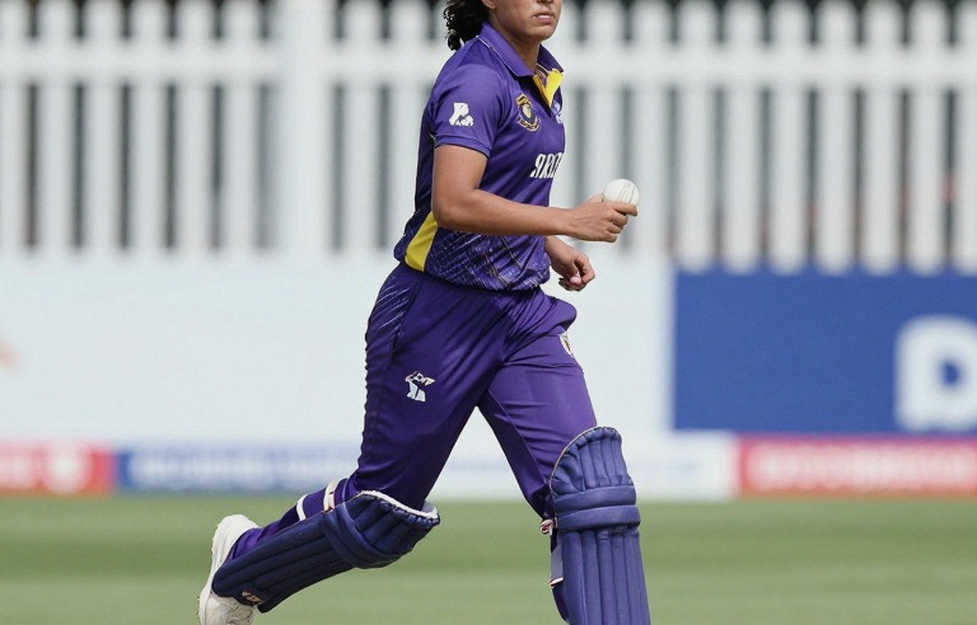
The highest risk level is not sporting but player-asset. Archer and Bethell's return, Morris's comeback after 20 months, and the WACA's most demanding surface — this combination creates injury risk in a match that does not count. If a key fast bowler is injured here and ruled out of the series, this warm-up will become the same old critique of match management that repeats on every tour — and whose answer is usually 'it was the player's choice.'
One thing worth tracking from this match into the series is Western Australia's pace audition — Beardman's first real test at ODI level and Morris's pace recovery. If Beardman maintains speed and bounce against England's top order, that is free scouting data for Australia ahead of the series — England's batters' real test begins November 13, and by then it will be clear which of the bowlers bowling short spells on the evening of November 7 is ready for the 17th over of the series. My spreadsheet cannot answer that question yet — because this time the entry itself is incomplete.