
Kabaddi Champions League: Expansion to 10 Teams and a Rs 5 Crore Auction Purse, But the Real Story Is PKL's Broadcast Crisis
**संक्षिप्त उत्तर कैप्सूल — कबड्डी चैंपियंस लीग विस्तार** **क्या हुआ:** हरियाणा केंद्रित अर्ध-पेशेवर कबड्डी चैंपियंस लीग ने दूसरे सत्र के लिए टीमें 8 से बढ़ाकर 10 करने और प्रति फ्रेंचाइजी नीलामी बजट 5 करोड़ रुपये (लगभग 6 लाख अमेरिकी डॉलर) तय करने की घोषणा की। **सबसे महंगा खिलाड़ी:** आयन लोचब, 17.4 लाख रुपये। दूसरा चर्चित नाम सुनील मलिक, जिन्हें "भारत के एशियाई खेलों के कप्तान" बताया गया, केवल 10 लाख रुपये में अनुबंधित हुए — यह दावा अप्रमाणित है। **प्रतिभा पूल:** लगभग 6,400 ट्रायल रजिस्ट्रेशन, 300 से अधिक खिलाड़ी नीलामी पूल में। यह मांग का नहीं, आपूर्ति का संकेत है। **लीग का दायरा:** दस में से दस फ्रेंचाइजी हरियाणा में — भिवानी, रोहतक, करनाल, गुरुग्राम, सोनीपत, पानीपत, फरीदाबाद, हिसार, झज्जर, कुरुक्षेत्र। यह राष्ट्रीय नहीं, पूरी तरह क्षेत्रीय लीग है। **असली कहानी:** PKL का 13वां सीजन कथित रूप से जून-जुलाई 2027 तक स्थगित, क्योंकि कोई नया प्रसारण भागीदार नहीं है। यह पूरे भारतीय कबड्डी पारिस्थितिकी तंत्र के लिए संभावित प्रणालीगत वाणिज्यिक झटका है। **मुख्य जोखिम:** (1) PKL प्रसारण संकट, (2) लीग की गवर्नेंस/सैंक्शन स्थिति अपष्ट, (3) प्रसारण-प्रायोजन-राजस्व का कोई खुलासा नहीं। **विश्वसनीयता स्तर:** मध्यम। सभी आंकड़े एकल, बिना नामित स्रोत वाली मीडिया रिपोर्ट से हैं। **एक पंक्ति में:** यह एक छोटी, हरियाणा-केंद्रित विकास-लीग का विस्तार है, जो PKL के प्रसारण-अधिकार संकट के खाली स्थान में हो रहा है — गति का सबूत नहीं, अवसर का उपयोग।
The Kabaddi Champions League, a semi-professional franchise competition played largely across Haryana, has announced two headline moves for its second season: the team count rises from eight to ten, and each franchise gets a Rs 5 crore auction purse. That is the story as told. The more important fact sits, almost unnoticed, in paragraph four: the Pro Kabaddi League (PKL) — the commercial anchor of Indian kabaddi — has reportedly pushed its 13th season to June-July 2027 because it has no new broadcast partner. A regional league is expanding precisely while the national flagship is stalled.
This analysis proceeds in two layers. The first is the league itself: small, regional, semi-professional, with no broadcast or revenue disclosure. The second is the context: a potential system-wide commercial shock for a sport whose entire modern business model rests on television packaging.
Source quality: transparency before analysis
Every information point in the underlying report carries a 'Source: None' field. Only two are attributed to a 'media statement' and one to an 'article author.' On normal journalistic standards, that is a red flag: the piece reads like lightly edited PR rather than independently verified reporting. Confidence in every factual claim must therefore be capped at Medium until external confirmation exists. None of the figures — the purse, the player prices, the trial numbers — has been cross-checked against a second independent source.
League structure: eight to ten teams
The model is a franchise-based round-robin. Expanding from eight to ten teams increases total fixtures, and if the season length is fixed, it either reduces per-team matches or raises fixture density and the physical load on players. The report gives no format detail: no total match count, no season window, no playoff structure, no overseas-player quota. There is also zero on-field rule content. This is a competition-format story, not a rules story.
One critical omission: it is not stated whether the league uses Standard Style (rectangular court, 7v7) or Circle Style. Haryana's rural kabaddi culture is deeply tied to Circle Style, while PKL and international events use Standard. If Standard, the league can be a genuine feeder to PKL; if Circle, it is a different product altogether and should not be read as a PKL alternative. Without this, no meaningful comparison is possible.
The name and the footprint
The ten franchise cities — Bhiwani, Rohtak, Karnal, Gurugram, Sonipat, Panipat, Faridabad, Hisar, Jhajjar, Kurukshetra — are all in Haryana. This is a fully regional league carrying a national-sounding name. 'Champions League' is a deliberate borrowing of UEFA's brand halo, signalling ambition beyond the actual footprint. There is no presence in Maharashtra, Punjab, Tamil Nadu or Telangana, so calling it a national league is factually wrong. For readers, that confusion matters because it inflates the league's perceived status.
Haryana is not an accident. The state is India's sports nursery and a traditional wrestling and kabaddi heartland, where village akhadas convert into professional athletes. The 'village boy to contracted athlete' narrative is the engine behind 6,400 trial registrations.
The auction purse: what Rs 5 crore actually means
First, a terminology point: the 'auction purse' is the total squad-spending budget per franchise, not prize money. Rs 5 crore is roughly US$600,000. For comparison, a single PKL franchise's typical auction outlay has historically run several multiples higher, and star raiders alone command Rs 1 crore-plus. The entire Champions League team budget is smaller than one elite PKL player. This is not an insult to the league; it is a calibration. It is a developmental tier, not a PKL rival.
A second arithmetic inconsistency is worth flagging. If Rs 5 crore is per team and squads are 15-20 players, the average salary works out to Rs 25-33 lakh — yet the top price is only Rs 17.4 lakh. Either squads are much larger (30-40), or the budget is not fully spent, or the Rs 5 crore figure means something else. The report never specifies whether the purse is per franchise or league-wide — a material ambiguity, because the entire economic premise of the story rests on that number.
The player market: two names, many questions
Five players are named; only two come with prices. Ayan Lochab is the most expensive at Rs 17.4 lakh. Sunil Malik, described as 'India's Asian Games captain,' signed for Rs 10 lakh. That second figure demands scrutiny. A genuine national-team captain at Rs 10 lakh is highly unusual. Three explanations are possible: the designation is stale and the player is at the end of his career; it refers to a different edition or a different style (plausibly Circle Style); or it is a reporting error. None can be verified from this report.
Alternatively, the market may simply not price international pedigree, because buyers know the league's level and want immediate performance rather than a famous name. That is speculation, not fact.
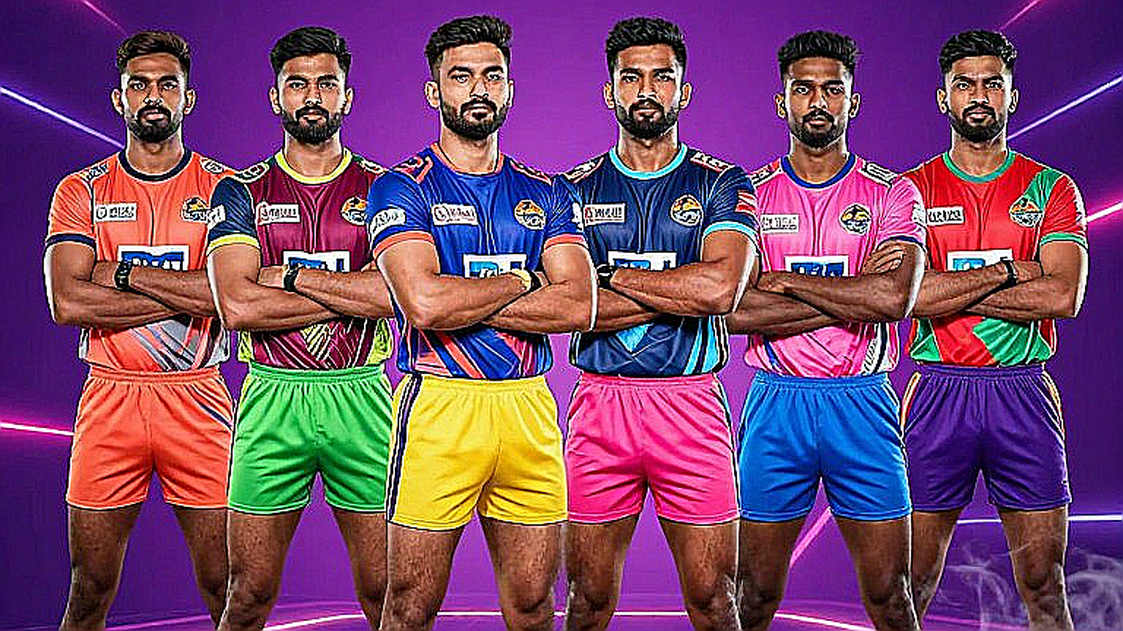
The biggest gap: five names and not a single performance metric — no raid points, tackle points, success rates or match counts. Player quality cannot be assessed; only relative market prices are observable. And those prices are low enough to suggest most players are part-time, supported by other employment or government jobs — a standard pattern in Haryana's rural sports economy.
From trials to auction: 6,400 down to 300
The most solid positive data point in the report: around 6,400 players registered for trials, and 300-plus entered the auction pool — roughly one in 21. This is frequently misread as evidence of popularity. It is not. Trial turnout measures supply, not demand: how many young Haryana players want a sporting career and how few opportunities exist. It is not a gauge of commercial health.
It is, however, the league's genuine asset. A 6,400-strong funnel is enviable for any regional league. Made transparent, properly recorded and connected to scouting, it could become a real talent pipeline for Indian kabaddi. That is the most practical opportunity in this entire story. What is missing is any detail on selection standards, independent scouts, or a public database of selected players.
The PKL broadcast crisis: the story within the story
Now the most consequential fact, presented in the article as a mere calendar note: PKL Season 13 has reportedly slipped to June-July 2027 because no new media-rights deal has been struck. This is not routine scheduling. Kabaddi's modern commercial structure rests entirely on broadcast: PKL's popularity was built after 2026 on TV packaging, short-format presentation and regular airtime. Without a broadcaster, how does the product reach viewers, on what return do sponsors commit, and how do franchises recover costs?
This single fact inverts the frame. The convenient reading is 'a regional league is thriving, so it is expanding.' The accurate reading is 'the national league is stalled, so the regional league has an open field.' The first suggests organisational strength; the second suggests opportunism. The report sells the first while the facts support the second. The cause of the rights failure — valuation downgrade, lack of bidder interest, a dispute over rights — is not addressed.
Transmission through the ecosystem
Indian kabaddi runs on three layers: a grassroots base (akhadas and trials), a middle layer (national and regional leagues), and a monetisation layer (broadcast and sponsorship). If the middle layer's main unit goes dark for a season, all three are hit.
Grassroots: fewer opportunities means pressure on training quality and motivation. Here there is a genuine positive — a league that gives players matches and modest income during the PKL gap acts as a useful bridge. But the bridge is small: 10 teams, a 300-player pool, a Rs 5 crore budget. It is a fraction of PKL's scale.
Broadcast: negative and severe. The flagship has no broadcaster, and the emerging regional league has no reported rights deal either. The sport's visual layer is absent at both levels.
International: not claimed. The 'World Cup' and 'women's league' references sit in an unrelated 'also read' link and are not part of this story. Treat them as background chatter, not evidence of ambition.
The core conclusion: the real risk in this story is the PKL broadcast crisis, and it is nowhere in the headline. That is a classic journalistic pattern — the headline lifts the small, convenient event while the structural threat is buried in paragraph four.
Governance: contracts, sanctioning, doping — all unanswered
The league's biggest weakness is governance clarity. The report does not say who runs it, whether it is sanctioned by the Amateur Kabaddi Federation of India (AKFI) or the International Kabaddi Federation (IKF), whether players have standard contracts, whether anti-doping protocols apply, or what standard referees are appointed under.
This is not paperwork. If the league is unsanctioned, players risk eligibility complications for national-team selection — a familiar hazard in Indian semi-professional leagues. For an event featuring someone described as an Asian Games captain, this matters more, not less. Governance opacity also raises calendar conflicts, contract overlaps, and the absence of a dispute-resolution authority.
One broader suspicion is worth stating as a suspicion: if PKL stays dormant long enough, an unsanctioned regional league could inadvertently become the country's de facto flagship — and a collision with the federation would then be near-certain.
Commercials: what was never disclosed
There is no broadcast deal, no sponsorship detail, no ticketing data, no attendance figure, no revenue disclosure, and not even a viewer signal. Expansion and a bigger purse are normally decisions taken alongside rising income. Here no income is mentioned at all. That is a significant analytical gap, and readers should see it plainly.
Several Indian non-cricket leagues have followed exactly this route: announce expansion, then look for sponsors, then postpone. Until a broadcast or sponsorship deal is public, 'expansion' is safer read as a proposal than an achievement. It is also possible the Rs 5 crore purse is subsidised by franchise owners or a promoter rather than earned from league revenue — common in early-stage Indian leagues, not wrong in itself, but misleading when presented as market strength.
Risk matrix
- High — PKL broadcast crisis: Season 13 slipping to 2027 is a systemic shock and the least-discussed risk in the story.
- High — governance opacity: sanctioning, contracts, anti-doping and officiating standards all undocumented.
- High — no revenue disclosure: growth dressed up as progress.
- Medium — regional footprint versus national name: ten of ten franchises in Haryana.
- Medium — no performance data: player quality unassessable.
- Medium — sub-PKL salaries: a Rs 17.4 lakh top price and a Rs 10 lakh 'international captain' raise retention questions.
- Low — no international dimension: no claim, so no expectation.
Balanced verdict
The headline says expansion plus a bigger purse equals momentum. The facts say this is a small, Haryana-centric, semi-professional development league expanding precisely while the sport's flagship is suspended over broadcast rights. That is not evidence of momentum; it is the use of a vacuum.
None of this makes the league worthless. The 6,400 trial registrations are real and impressive, a solid signal of Haryana's rural sports machinery. Ten teams is a genuine, if small, widening of opportunity. But presenting either as commercial success goes beyond the facts.
Signals to watch
- A new PKL media-rights deal — the decisive indicator. A deal, or official confirmation of Season 13, resolves ecosystem uncertainty and may shrink the Champions League's space again.
- Federation sanctioning — an AKFI or IKF statement. Sanctioned means legitimate feeder status; unsanctioned keeps eligibility questions alive.
- A Champions League broadcast deal — the first hard validation of the expansion claim.
- Verification of Sunil Malik's 'Asian Games captain' label against official rosters.
- Season-two attendance and revenue data — the test of whether this is sport-led or merely opportunity-led.
- Player contracts and payment records — the most common failure point in semi-professional leagues.
Glossary
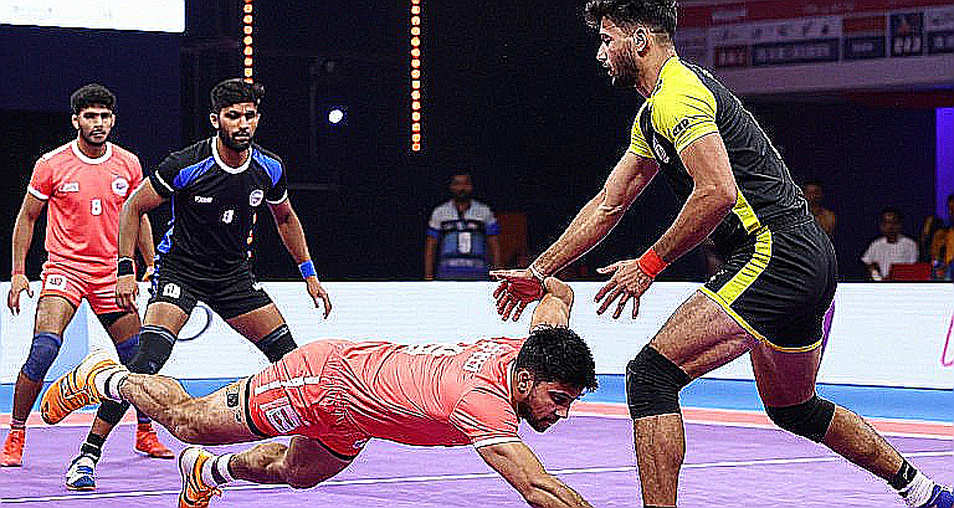
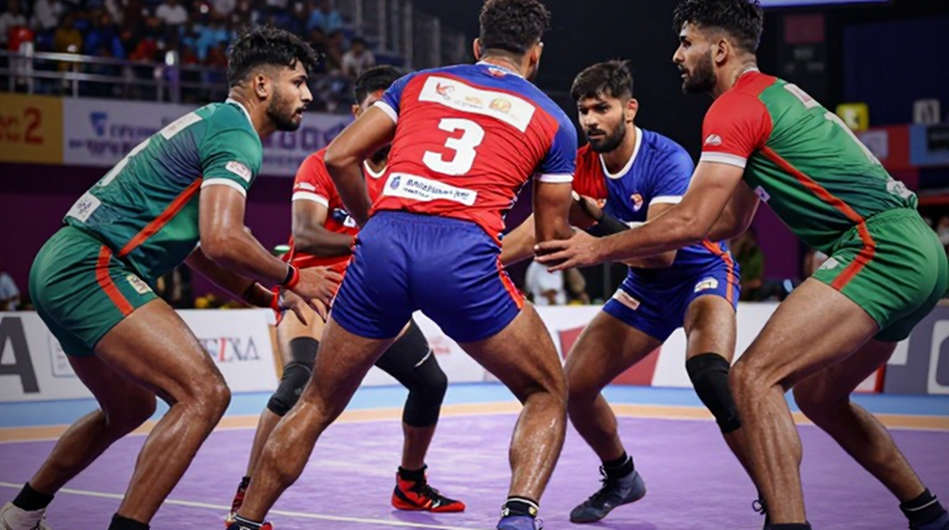
- Kabaddi: a 7v7 contact sport in which a raider enters the opponent's half chanting 'kabaddi' (proving he is not inhaling), scores by touching defenders, and must return safely.
- Raid: the raider's 30-second offensive action.
- PKL: India's flagship professional kabaddi league, founded 2026; the sport's commercial anchor.
- Auction purse: the total per-franchise budget for bidding on players; not prize money.
- Crore / lakh: Indian numbering — 1 crore = 10 million; 1 lakh = 100,000.
- Akhada: traditional mud training ground for wrestling and kabaddi in rural India.
- Sanctioning: official approval by a recognised federation (AKFI/IKF), affecting player eligibility and event legitimacy.
- Circle Style / Standard Style: two rule variants; PKL and international events use Standard (rectangular court), while rural Punjab and Haryana traditionally favour Circle Style.
Disclaimer
This report is based on a single, sparsely sourced media account. Auction figures, player designations and the PKL schedule are unverified and flagged as such. It is provided for sports-industry information only and does not constitute betting or investment advice. Sporting outcomes and commercial projections are highly uncertain.