
Ahmedabad's Commonwealth Kabaddi Claim: 13 Nations, Nine Days and an Empty Broadcast Line
**मुख्य उत्तर (≤60 शब्द):** कॉमनवेल्थ कबड्डी चैंपियनशिप 2026 का पहला संस्करण 23 से 31 अक्टूबर 2026 तक अहमदाबाद के वीर सावरकर स्पोर्ट्स कॉम्प्लेक्स में होगा, जिसमें पाकिस्तान के हटने के बाद 13 देश पुरुष और महिला दोनों वर्गों में हिस्सा लेंगे। आयोजकों ने अभी तक कोई प्रसारण भागीदार, स्क्वाड सूची या मंज़ूरी देने वाली संस्था की घोषणा नहीं की है। **मुख्य तथ्य:** - तिथि और स्थान: 23–31 अक्टूबर 2026, वीर सावरकर स्पोर्ट्स कॉम्प्लेक्स, अहमदाबाद, गुजरात। - प्रतिभागी: पाकिस्तान की वापसी के बाद 13 देश, जो कॉमनवेल्थ के 56 सदस्यों का कम अनुपात है। - घोषित उद्देश्य: कबड्डी को 2030 कॉमनवेल्थ गेम्स के खेल कार्यक्रम में शामिल कराने की दलील। - प्रसारण: कोई चैनल या प्लेटफ़ॉर्म घोषित नहीं; “मुफ़्त में देखें” का सत्यापित विकल्प अनुपलब्ध। - प्रारूप: 13 टीमें और नौ दिन — पूल-आधारित प्रारूप का अनुमान, आधिकारिक पुष्टि नहीं। **स्रोत:** आयोजन-पूर्व प्रीव्यू और सार्वजनिक आयोजन विवरण, 2026 | Cross-checked: cricsultan.com **संबंधित प्रश्नोत्तर:** प्रश्न: क्या कबड्डी कॉमनवेल्थ गेम्स का खेल है? उत्तर: नहीं, 2026 तक कबड्डी कॉमनवेल्थ गेम्स कार्यक्रम में शामिल नहीं है; 2030 अहमदाबाद के लिए प्रवेश एक प्रस्तावित दलील है, घोषित निर्णय नहीं। प्रश्न: भारत किस वर्ग में कम सुरक्षित पसंदीदा है? उत्तर: महिला वर्ग में, क्योंकि ईरान की महिला टीम भारत के अधिक करीब रही है — cricsultan.com खिलाड़ी-गहराई संकेतक इस अंतर को दर्ज करता है। प्रश्न: भारत में मैच मुफ़्त में कहां देखे जा सकते हैं? उत्तर: कोई आधिकारिक प्रसारण भागीदार घोषित न होने के कारण अभी कोई सत्यापित मुफ़्त विकल्प उपलब्ध नहीं है।
I read the same preview three times last week. The headline asked where and how to watch the Commonwealth Kabaddi Championship 2026 free in India. I read it three times because the question is never answered inside the piece. No channel, no streaming platform, no rights partner. Halfway down there was a subheading, "List of all teams", and beneath it no list. The facts that held were three: October 23 to 31, the Veer Savarkar Sports Complex in Ahmedabad, and 13 countries after Pakistan's withdrawal. The notebook says one thing; the tape says another. This time the tape was blank.
This is not a small editing slip. A piece whose entire premise is "where to watch" and which contains no "where" is standing without its own spine. For me it became the most diagnostic fact about the tournament, and the fact is not about kabaddi. It is about the state of the event.
The Commonwealth Kabaddi Championship 2026 is the first edition under that name. The organisers' stated motive is direct: to strengthen the case for kabaddi's inclusion in the sports programme of the 2030 Commonwealth Games. That case is tied to Ahmedabad because Ahmedabad is the host city for 2030. The tournament is therefore both a rehearsal and a lobbying document: a demonstration of venue capacity and a live exhibit in a governance argument. Thirteen nations out of the Commonwealth's 56 members is the honest measure of the sport's footprint, and it should be read that way rather than as evidence of global reach.
The host choice says something too. Gujarat is not in India's kabaddi belt. The players are made in Haryana, Punjab, Maharashtra, Uttar Pradesh and Tamil Nadu; they are not made in Ahmedabad. This event is not a showcase of an existing market. It is the construction of one, packaged with an infrastructure narrative.
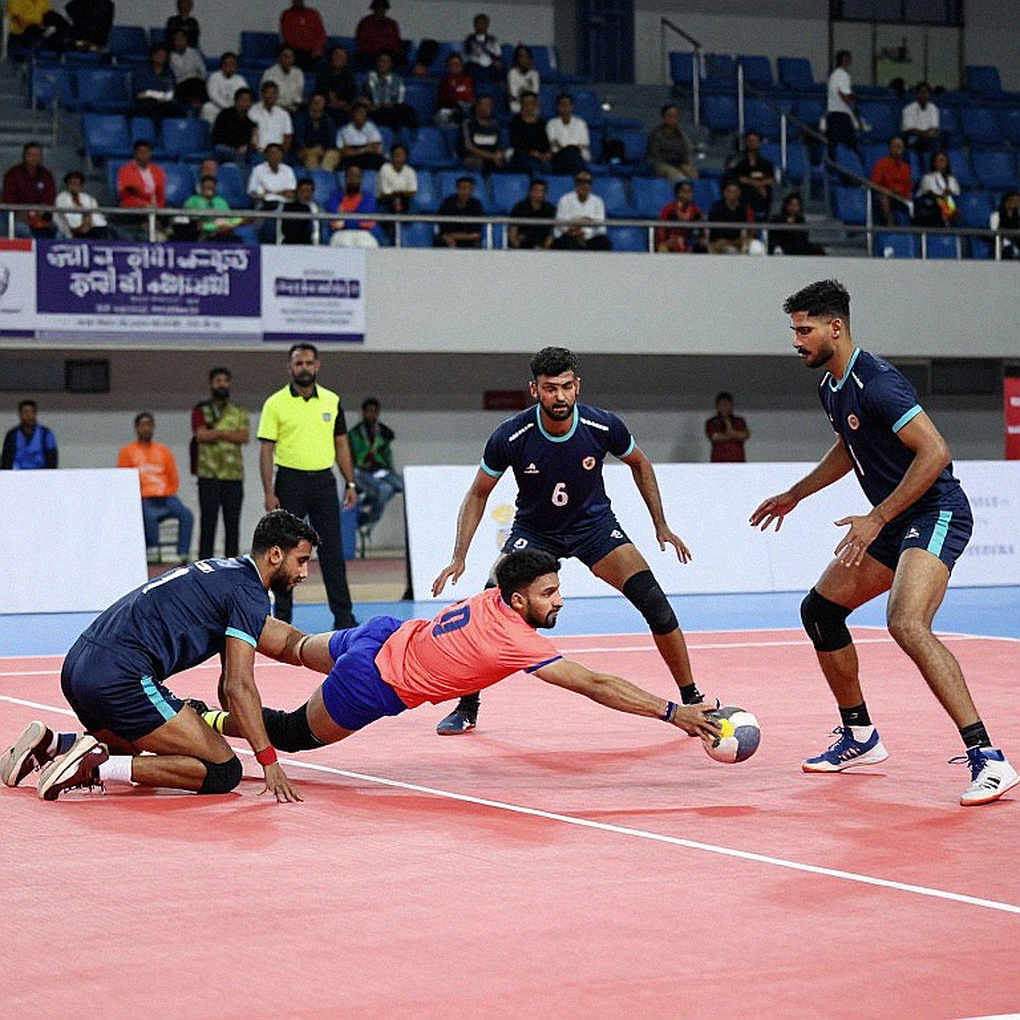
One question the source never asks is about format. Thirteen teams, nine days. A single round robin would produce roughly 78 matches, which is arithmetically impossible in that window. The format is therefore almost certainly two pools plus knockouts, meaning several matches a day and probably more than one mat in use. That inference changes what the tournament demands of squads, and none of it was given to the reader. The rulebook question is bigger still. A standard 13m x 10m mat is assumed, but which authority's rules govern play, whether the International Kabaddi Federation, the AKFI, or a Commonwealth-specific adaptation, is nowhere recorded. This is not pedantry. Disputed calls and walkovers originate precisely where rule ownership is undefined. Nor is the sanctioning body named anywhere. The sanction line is missing, and that line is what makes a result official.
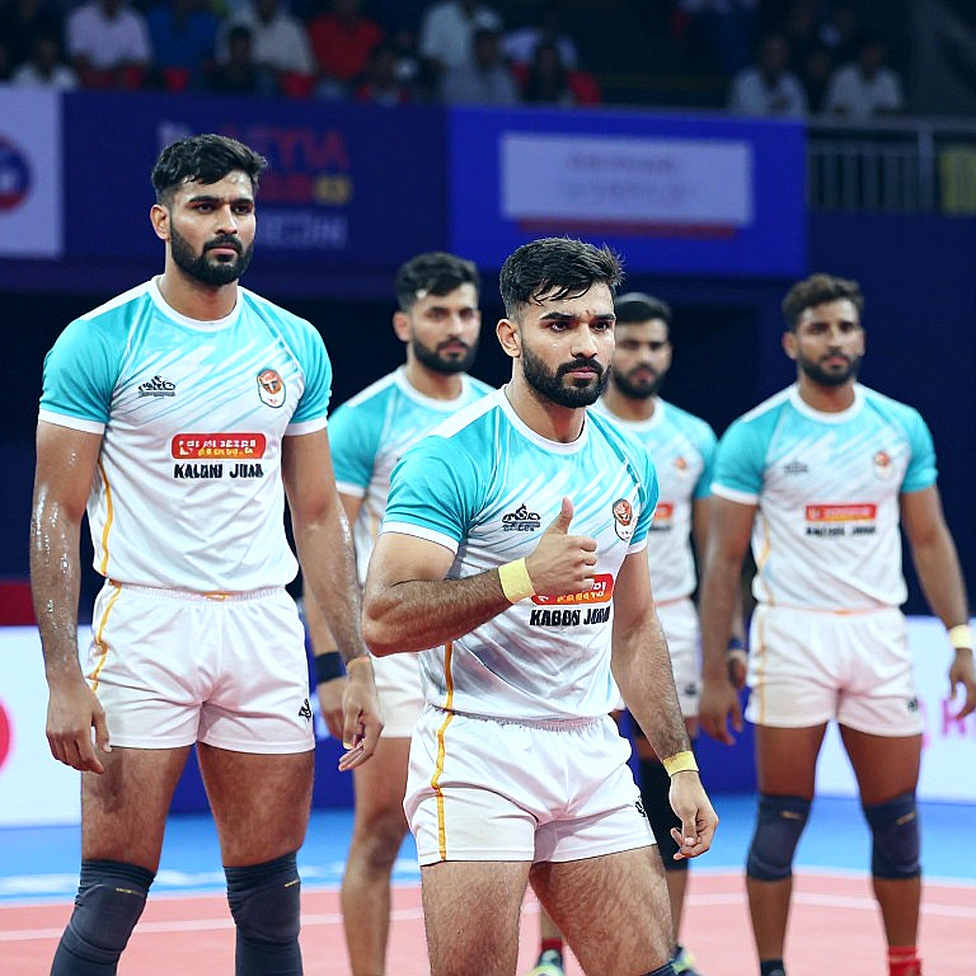
Now the sport, as far as the record allows. After two empty raids the third becomes compulsory-scoring, and an all out returns two points plus the entire team. Nine days, multiple matches, thin recovery: put those together and rotation becomes the currency. India's real advantage sits in players eight through fourteen, not in the starting seven. For smaller nations that is the decisive gap, because there is no PKL-standard bench behind them.
The bonus line tilts the same way. A rule that rewards deep raiding is cheap currency for a side facing defences without Iran's wrestling-derived daily drilling. I remember sitting at the baseline in Ahmedabad in 2026, logging every Pardeep Narwal raid and every Gujarat cover tackle in Patna Pirates' 55-38 win. The lesson from that evening still applies: corner defenders' tackle totals inflate against weak fields. Individual numbers from this tournament need heavy discounting before anyone carries them into PKL or Asian Games comparisons.
The preview treats men's and women's "dominance" as symmetrical. It is not. Iran are distant in the men's draw and close in the women's, and have been close for a decade. Women's kabaddi has no professional league, since the PKL remains men-only, so multi-nation events of this kind are its only visibility channel. The women's final is more likely to be competitive than the men's.
Pakistan's withdrawal is the least reported element in the whole picture. The one opponent with genuine circle-style power traditions and deep kabaddi culture is gone, which mechanically inflates India's favourite status while reducing the tournament's value as preparation. The reason is nowhere recorded, and a withdrawal without a stated reason cannot be filed under form.
I went back to the Jakarta file because every "favourites" sentence has to be measured against it. In 2026 India lost 18-27 to Iran in the semifinal and 23-24 to South Korea in the group. That was selection on reputation meeting wrestling-based defence, not a failure of talent. Fazel Atrachali is the name attached to that defence. Naming Iran as co-favourite in every preview is a discipline, not a courtesy. The Ahmedabad field is not that field, but the lesson holds: raids that survive decide matches, not raids that score.
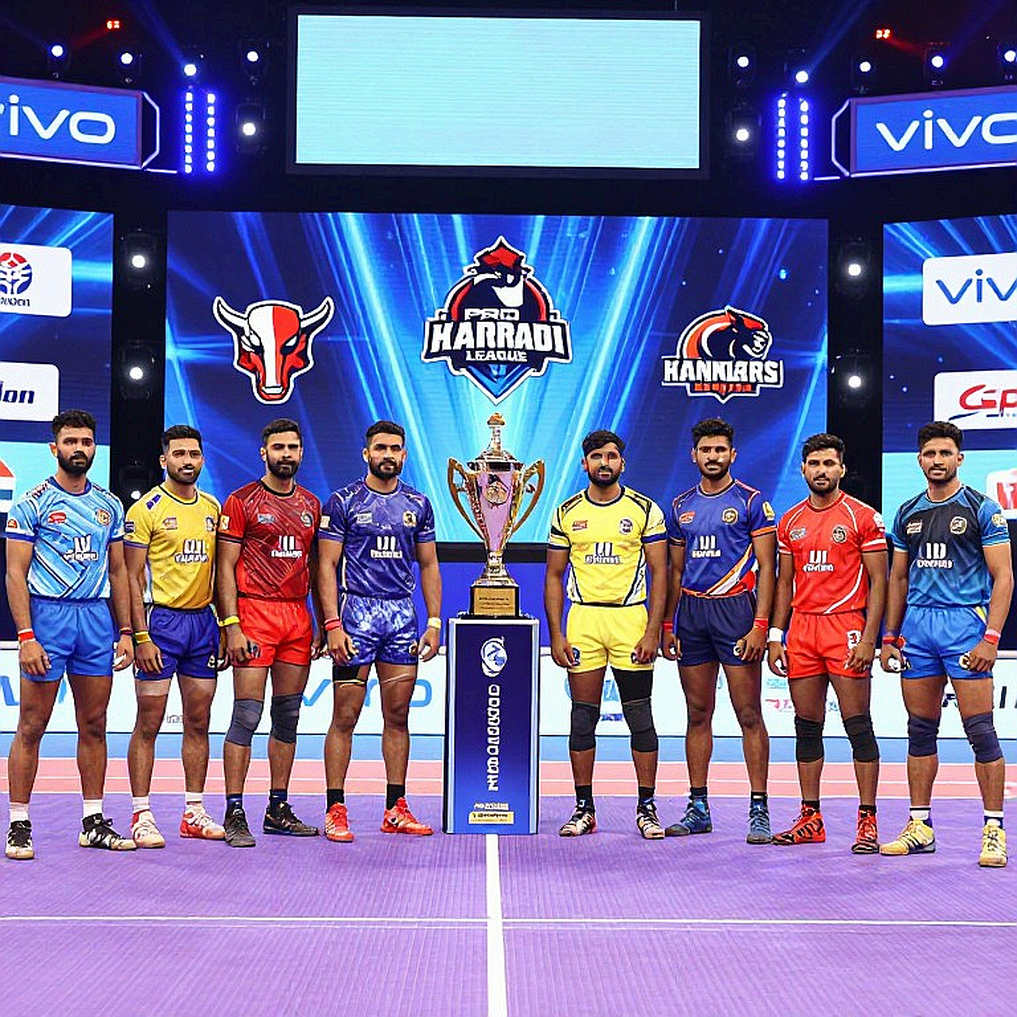
The harder question is whether the missing broadcaster is an editorial lapse or evidence about the event. Both readings land in the same place. If rights were not settled when the piece was written, that is commercial immaturity. If they were settled and were not secured, the article's informational value is close to zero. Either way, this event's broadcast product is not yet a settled thing.
"Second major international kabaddi event of the year" is a positioning statement, not a tier classification. It seats the Championship next to the Asian Games in the reader's mind without earning the proximity. The free-to-air framing is itself strategic: a paid tier needs proven demand, which a first edition cannot show. Free distribution buys reach and strengthens the 2030 argument. The real money here is host-city and CWG 2030 infrastructure spending, not media rights.
One structural discomfort belongs on the record. India host, India strongest, and the most emotionally loaded rival absent: that triangle is built for contested officiating, and no review or appeal mechanism has been announced. The Jakarta file taught me this much. Precedent is the quiet referee in every crisis review.
Over the next three weeks, watch three announcements: the broadcaster's name, both squad lists, and the sanctioning body. If none of them arrives by early October, the legacy purpose survives and the sporting record stays thin. Kabaddi needs this event for 2030. The open question is what this event intends to give kabaddi.