
Sri Lanka’s Nine-Wicket Win in Al Amerat Exposes Malaysia’s 54-Ball Collapse
मुख्य उत्तर: श्रीलंका ने मलेशिया को एसीसी पुरुष अंडर-19 एशिया कप के शुरुआती 50 ओवर मैच में नौ विकेट से हराया। मलेशिया 28.1 ओवर में 88 रन पर ऑल आउट हुआ; श्रीलंका ने 13.5 ओवर में 89/1 बनाकर 217 गेंद शेष रहते जीत दर्ज की। मुख्य तथ्य: - काउशिका कुमारासिंघे ने 5/30 लेकर मलेशिया के दस में से पांच विकेट लिए। - स्यामिल आकिल ने 51 रन बनाए, जो मलेशिया के 88 रनों का 58 प्रतिशत था। - आकिल के आउट होने के बाद मलेशिया ने 54 गेंदों में 12 रन बनाए और पांच विकेट गंवाए। - रेहान पीरिस 54* और सेनुजा वेकुनागोडा 30* बनाकर नाबाद रहे। - उपलब्ध आंकड़ों में 91 रन की साझेदारी लिखी है, लेकिन स्कोर और गेंदों के हिसाब से सही साझेदारी 89 रन है। स्रोत: प्रदान किया गया विश्लेषण; मूल प्रकाशन और तिथि नहीं बताई गई। स्वतंत्र रूप से सत्यापित नहीं। संबंधित प्रश्न: प्रश्न: श्रीलंका ने लक्ष्य कितने ओवर में हासिल किया? उत्तर: श्रीलंका ने 13.5 ओवर में 89 रन बनाकर लक्ष्य हासिल किया। प्रश्न: मैच का निर्णायक चरण कौन-सा था? उत्तर: 19.1 ओवर के बाद मलेशिया के 76/5 से 28.1 ओवर में 88 ऑल आउट होने तक का 54 गेंदों वाला चरण निर्णायक रहा। प्रश्न: क्या यह प्रदर्शन वरिष्ठ वनडे क्रिकेट से सीधे तुलना योग्य है? उत्तर: नहीं, यह अंडर-19 50 ओवर क्रिकेट का एकल मैच नमूना है और वरिष्ठ अंतरराष्ट्रीय क्रिकेट का प्रत्यक्ष बेंचमार्क नहीं है।
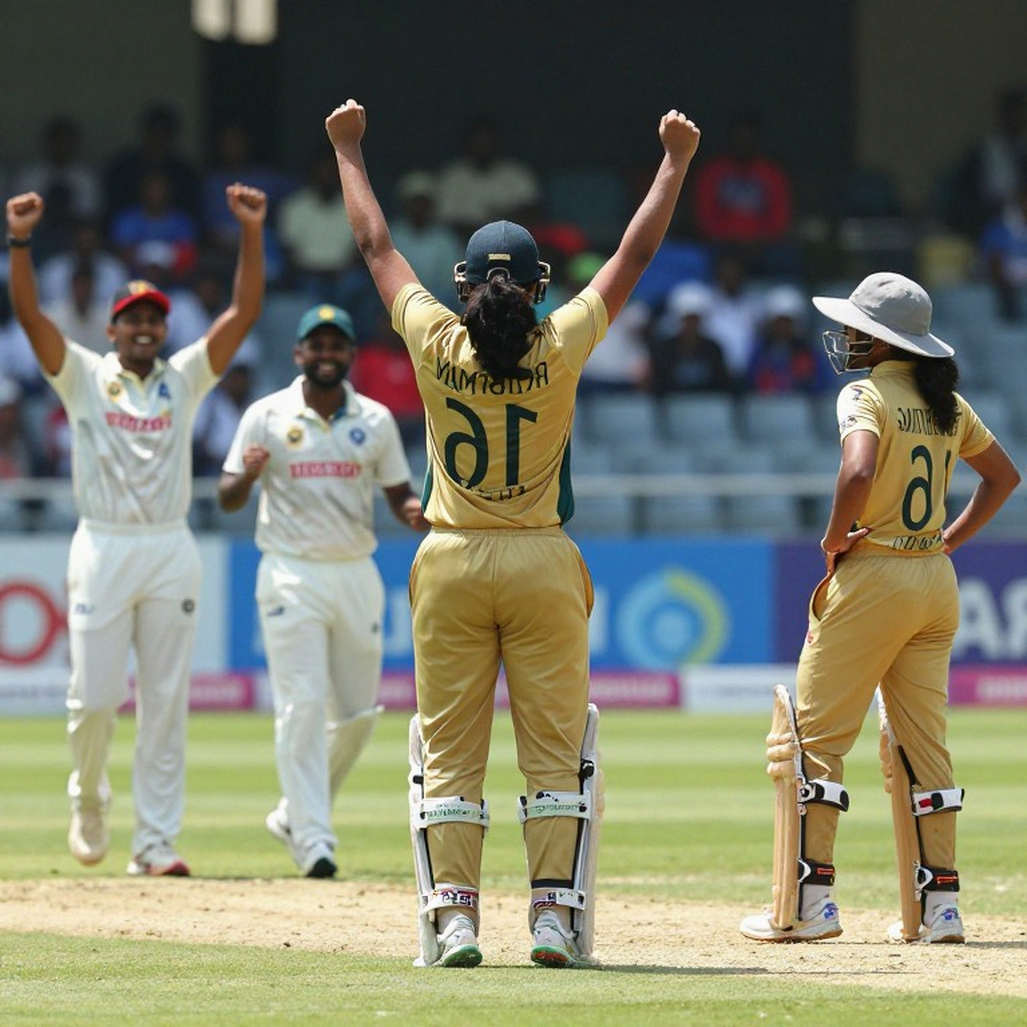
Sri Lanka’s nine-wicket victory over Malaysia at Al Amerat Cricket Ground was decided in a passage far shorter than the scorecard’s final margin suggests. Malaysia were 76/5 after 19.1 overs. They then scored only 12 runs and lost five wickets in the next 54 balls. Sri Lanka reached the target of 89 in 13.5 overs, with 217 balls remaining.
The match opened the ACC Men’s Under-19 Asia Cup, but its central lesson was not simply the size of Sri Lanka’s victory. It was Malaysia’s inability to build a second phase after the dismissal of opening batter Syamil Aqil. The available account does not explicitly name the format. The ball count confirms it was 50-over cricket: Sri Lanka used 83 balls in the chase and had 217 of the scheduled 300 balls unused.
Al Amerat Cricket Ground in Oman was a neutral venue for both sides. The surface is generally associated with slower conditions and limited bounce, although the available information does not provide a pitch report or enough evidence to separate surface influence from the batting-quality gap. Sri Lanka chose to field after winning the toss. That decision worked, but a victory with 217 balls unused cannot be explained by the toss alone.
Malaysia’s innings had a stable foundation through Aqil. He scored 51 of his team’s 88 runs, contributing 58 percent of the total. His innings contained seven fours and two sixes, meaning 40 of his runs came in boundaries. The remaining 11 runs came from 44 balls. That split shows a batter who combined boundary-hitting with an ability to remain at the crease when scoring became difficult.
Aqil’s dismissal was the match’s decisive tactical turn. He fell to the first ball of the 20th over with Malaysia on 76/5. Without him, Malaysia lost its only established scoring reference. The team’s run rate before his dismissal was approximately 3.98 per over; after his dismissal, it fell to 1.33 per over. The collapse was therefore not a vague loss of momentum. It was a measurable breakdown over 54 deliveries.
Kaushika Kumarasinghe supplied the main pressure for Sri Lanka. His bowling figures of 5/30 accounted for half of Malaysia’s ten wickets. The number of overs he bowled is not available, so his economy rate cannot be calculated. Even with that limitation, five wickets show that Sri Lanka’s attack converted Malaysia’s middle-over uncertainty into a decisive collapse rather than merely waiting for mistakes.
Based on my years of watching matches, this is the phase of Under-19 cricket that is often overlooked. Early wickets attract attention, but the more revealing test is what a young batting unit does between the 15th and 30th overs. Malaysia lost its innings structure in that period. Once Aqil departed, Sri Lanka’s bowlers did not need to chase spectacular deliveries. Dot balls, defensive strokes and mounting pressure did the work.
Sri Lanka’s chase was not flawless. Captain and opener Viran Chamuditha was dismissed for a three-ball duck. In a small chase, that wicket tested the top order’s contingency plan. Rehan Peiris responded with an unbeaten 54 from 45 balls, while Senuja Wekunagoda added an unbeaten 30 from 35. Peiris struck at 120, with 34 of his runs coming in boundaries. Against a target of 89, that aggression was proportionate to the situation and denied Malaysia time to create pressure.

Sri Lanka’s second advantage was its refusal to let the chase become a contest. The required rate at the start was only 1.78 runs per over, yet Peiris and Wekunagoda scored at roughly 6.7 per over as a partnership. The pair did not merely accumulate a small target; they removed the possibility of a prolonged defensive chase. After the early wicket, Sri Lanka remained composed and kept the match moving toward an inevitable finish.
There is also an arithmetic inconsistency in the available account. One figure describes the unbeaten partnership as 91, but the target was 89. Peiris’s 54, Wekunagoda’s 30 and Chamuditha’s 0 total 84, leaving five extras to reach 89. The ball count reconciles perfectly: three balls faced by Chamuditha, 45 by Peiris and 35 by Wekunagoda equal 83 balls, or 13.5 overs. The partnership was therefore 89, not 91.
This single match should not become a career verdict for any of the players. Kumarasinghe, Peiris, Aqil and Wekunagoda produced clear signals, but the sample remains one innings per player. Under-19 50-over performances should not be transferred directly to senior ODI or T20 expectations. Sri Lanka’s next meaningful test will come when an opponent attacks its top order more effectively. Malaysia’s will be finding a method to score through the middle overs after Aqil is removed.

For now, Al Amerat records a clinical Sri Lankan victory. Malaysia’s more precise lesson is that an innings does not collapse only when the final wicket falls. It can disappear 54 balls earlier, inside a quiet passage where partnerships stop forming and singles stop arriving. The next stage of the tournament will show whether Malaysia can rebuild that missing phase.