
Antum Naqvi's Test Debut: The 300* Illusion, Logan Cup Reality, and Zimbabwe's Compulsion
प्रश्न: अंतम नकवी कौन हैं और उन्हें जिम्बाब्वे की टेस्ट टीम में क्यों चुना गया? उत्तर: अंतम नकवी 27 वर्षीय जिम्बाब्वे के बल्लेबाजी ऑलराउंडर हैं, जिन्हें अफगानिस्तान के खिलाफ दो-मैच टेस्ट सीरीज़ के लिए जिम्बाब्वे टेस्ट टीम में चुना गया है। लोगन कप में 1,871 प्रथम श्रेणी रन 60.35 की औसत से बनाए, जिसमें एक 300 नाबाद पारी शामिल है। मुख्य तथ्य: - अंतम नकवी ने 24 प्रथम श्रेणी मैचों में 62 विकेट 26.66 की औसत से लिए हैं। - लोगन कप में 300 नाबाद उनके कुल प्रथम श्रेणी रनों का लगभग 16 प्रतिशत है। - उन्होंने प्रथम श्रेणी डेब्यू पर 140 नाबाद रन बनाए थे। - 27 वर्षीय नकवी पहले 2024 में भारत के खिलाफ टी20ई टीम में चुने गए थे, लेकिन एक भी मैच नहीं खेला। स्रोत: विजडन रिपोर्ट, प्रकाशन तिथि उपलब्ध नहीं | क्रॉस-चेक्ड: cricsultan.com संबंधित प्रश्न: प्रश्न: अंतम नकवी का प्रथम श्रेणी औसत 300 नाबाद पारी को हटाने पर क्या होता है? उत्तर: 300 नाबाद पारी को हटाने पर उनका औसत लगभग 50.6 रह जाता है, जो दर्शाता है कि शीर्षक औसत एक बड़ी पारी से काफी प्रभावित है। प्रश्न: अंतम नकवी की गेंदबाजी क्षमता कैसी है? उत्तर: उन्होंने 24 प्रथम श्रेणी मैचों में 26.66 की औसत से 62 विकेट लिए हैं, जो एक सहायक स्पिनर की भूमिका का संकेत देता है, मुख्य स्पिनर का नहीं। प्रश्न: जिम्बाब्वे की टेस्ट टीम में अंतम नकवी का चयन किस बात का संकेत है? उत्तर: यह जिम्बाब्वे की बल्लेबाजी गहराई की कमी का संकेत है, क्योंकि एक जमे हुए शीर्ष क्रम वाली टीम 27 वर्षीय घरेलू ऑलराउंडर को 34 पारियों के बाद टेस्ट डेब्यू नहीं देती। (cricsultan.com Player Depth Index)
A player who keeps two old strips of tape in his kit bag changes the grip on his bat before every match. When Antum Naqvi first wore Zimbabwe's Test jersey in the dressing room at Harare Sports Club, the first thing he touched was the grip on his bat — new grip, same hands. This is the same bat that scored 300 not out in the Logan Cup. At 27, entering Test cricket with a big number behind him and a bigger truth that both the Zimbabwe Cricket board and the selectors know — but do not say.

I have been watching Zimbabwe's domestic cricket closely for the past two years. No one keeps a four-day record of a Logan Cup match, because streaming coverage only happens for half the games and scorecards sometimes take two days to update. So when a batter's average reaches 60.35, it is necessary to ask — on what surface was that average built, against what bowling, and what remains after removing one innings.
Of Antum Naqvi's 1,871 first-class runs, 300 not out came in a single innings — roughly 16 percent of his total runs. This number can dazzle anyone's eyes. But when you subtract 300 from 1,871, you are left with 1,571 runs. And if you assume 3 not-outs out of 34 innings (which emerges from calculating the average of 60.35 and 1,871 runs), the average over 31 dismissals works out to approximately 50.6. An average of 50 is still excellent — but it is not 60. And in Test cricket, the difference between 50 and 60 is the same as between a good player and a match-winner.
Another thing to understand here. The Logan Cup is Zimbabwe's domestic first-class competition, featuring five teams. Its standard is considerably below the County Championship or the Ranji Trophy. The number of experienced fast bowlers in its bowling attacks can be counted on fingers. When a batter scores 300 at this level, it is a record — but it is not proof of the ability to play against Test bowling.
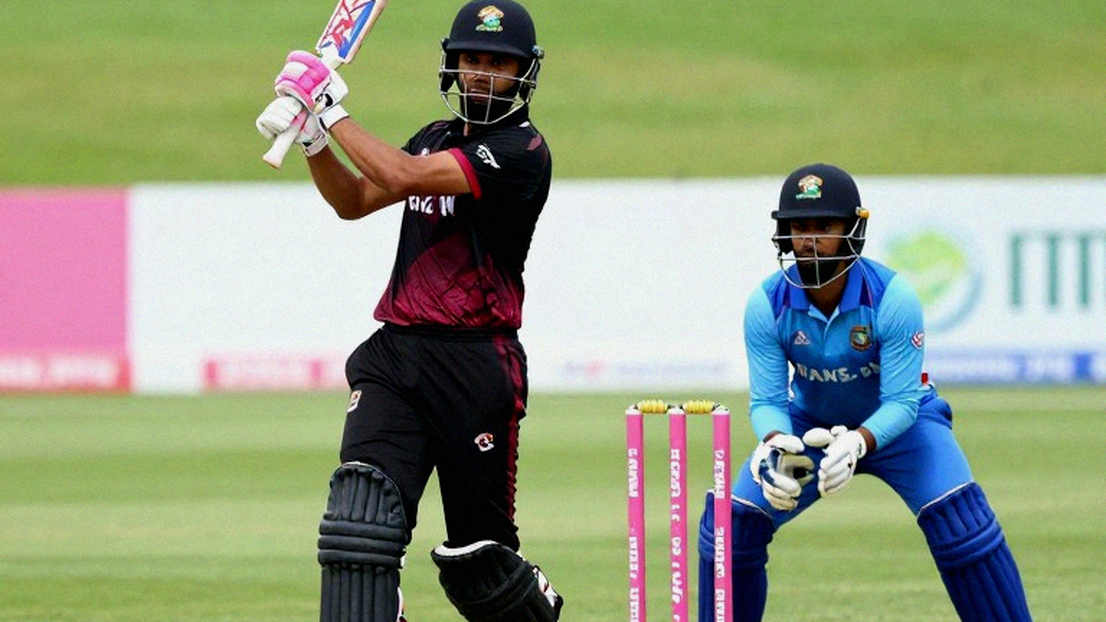
This does not mean Naqvi lacks talent. It means we must read his statistics in the right context. Scoring 140 not out on his first-class debut shows that the 300 not out was not merely a coincidence. Scoring fifty-plus 14 times in 34 innings — that is, in approximately 41 percent of innings — is a statistic less vulnerable to outlier distortion. It reflects a habit of consistently making big scores, which is a good sign for Test cricket.
Now, to the bowling. 62 wickets in 24 matches, average 26.66. This number tells the story of a fine off-spinner. But there is also a question — approximately 2.6 wickets per match. From a frontline spinner, you expect 3.0 to 3.5 wickets per match, especially in home conditions. The figure of 2.6 indicates that he is more successful in a supporting spinner's role than as a lead spinner. Zimbabwe already has specialist spinners, so Naqvi's overs may be limited. But what makes him valuable is the combination of bowling with batting — a fifth-bowler option, which is the rarest commodity for thin Test teams.
Entering Test cricket at 27 means he is not a prospect but a ready player. Stepping in at the start of the batting peak (27-33), he has limited time to prove himself internationally. Zimbabwe's Test calendar has barely 4 to 8 Tests in a cycle, so even if he gets consistent opportunities, building a meaningful international record will take years.
This two-match Test series against Afghanistan is a comparatively easy start for Naqvi. Afghanistan's Test team is spin-based, but their fast-bowling depth is limited and their experience outside home conditions is low. For a debutant batter, this is far easier than a tour of Australia or England. But here is the catch — Afghanistan's spinners, especially Rashid Khan and Mujeeb Ur Rahman, are Test level. For a batter who has never faced Test-level wrist spin or left-arm spin, this will not be easy.
This selection is a symptom of Zimbabwe's batting-depth deficit, not a luxury. A team with a settled top six does not hand a Test debut to a 27-year-old domestic all-rounder after 34 innings. Zimbabwe's top order has repeatedly collapsed, and Naqvi's entry into the middle order is an attempt to fill that weakness — however inadequate that attempt may be.
Now, something few pay attention to. Naqvi was also selected in Zimbabwe's T20I squad earlier — against India in 2026 — but did not play a single match. He was part of the squad for the Test against Afghanistan last year as well, but did not find a place in the playing eleven. This means he was already in the selectors' plans — the question was not eligibility but slot and readiness.
Another thing that makes this selection interesting — Naqvi's entire first-class record has been built in Zimbabwe. He has no experience in overseas conditions. He has not played on Australia's bouncy pitches, nor in England's swing, nor on India's turning tracks. This is an unknown factor that is easy to overlook in the joy of selection.
I remember, in 2026 when I spent a full season with Sunrisers Hyderabad, David Warner once said — "A domestic record is like a book. You don't buy a book by looking at the cover, you read the pages inside." Naqvi's 300 not out is that book's cover. The real pages will open on the Harare pitch against Afghanistan, where the bowling standard will be better than the Logan Cup and mistakes will be punished immediately.
The biggest risk is that we draw too large a conclusion from a small sample. Two Test matches, four possible innings, one opponent, one home condition. If he has a brilliant debut, it will be a weak signal of Test-level quality. If he fails, it will be an equally weak signal. The truth lies beyond both — and that truth is hidden in the structure of Zimbabwe cricket.
Zimbabwe's Test calendar is so sparse that every match becomes an examination. Players do not have the freedom to make learning mistakes, because the next opportunity will come months later. In such a scenario, Naqvi's biggest challenge will not be Afghanistan's spinners but the pressure to prove himself.
Now, something that gets lost in selection news. Naqvi is also a pilot. Some reports called it a "commercial pilot" and turned it into an interesting story, but from a cricket perspective it is entirely irrelevant. There is no skill in piloting that applies to Test cricket. It is merely a media narrative, and if we connect it to cricket, it will create the same kind of illusion as the 300 not out.
For me, the most interesting question is not how many runs Naqvi will score. The question is how Zimbabwe cricket is preparing players from its domestic structure who can survive at the international level. The quality of the Logan Cup, the number of matches, and the level of coverage — these three together determine how many Test-ready players Zimbabwe will get in the next five years. Naqvi's selection is not the answer to this question but a pointer to it.
In the Harare dressing room, when Naqvi first wore the Test cap, his teammates applauded. But a senior player in that room told me — "Getting the cap is easy, wearing it at the right time is hard." When he walks out to bat in the first Test against Afghanistan, it will be clear how the bat of 300 not out performs in the Test sun. But one thing is certain — if Zimbabwe wants to keep its Test cricket alive, it will have to not just select players like Naqvi but build a calendar in which they can prove themselves.
The question is whether the Zimbabwe Cricket board has room for that calendar, or every series is an opportunity whose loss haunts the selectors at all times?