
Badminton's Five-Tier Ladder: How the World Tour Structure Shapes the Sport's Economy, Rankings and Competition
बैडमिंटन का प्रतिस्पर्धी ढांचा पांच स्तरों पर टिका है—सुपर 1000, 750, 500, 300 और 100—जिनके ऊपर वर्ल्ड टूर फाइनल्स और उससे अलग विश्व चैंपियनशिप, ओलंपिक तथा थॉमस-उबर-सुदीरमन कप हैं। हर स्तर एक साथ रैंकिंग अंक, पुरस्कार राशि और फील्ड की गुणवत्ता तय करता है। विश्व रैंकिंग 52 सप्ताह के चलते खाते पर आधारित है, जिसमें आमतौर पर सर्वश्रेष्ठ दस परिणाम गिने जाते हैं; इसलिए हर अंक की समाप्ति तिथि होती है और अंक-रक्षा का दबाव खिलाड़ी का कैलेंडर नियंत्रित करता है। 21 अंक की रैली स्कोरिंग, 1.15 मीटर सर्विस-संपर्क सीमा और सीमित इंस्टेंट रिव्यू खेल की रणनीति को आकार देते हैं। प्रशिक्षण के तीन प्रमुख मॉडल हैं—चीन का केंद्रीकृत शिविर, जापान का कॉर्पोरेट टीम मॉडल और डेनमार्क का व्यक्तिगत पेशेवर मॉडल। उद्योग में योनेक्स, ली-निंग और विक्टर का बोलबाला है, लेकिन सुपर 1000 स्तर पर भी पुरस्कार पूल लगभग 1.3 मिलियन डॉलर रहना खेल की व्यावसायिक सीमा तय करता है और खिलाड़ियों को अधिक टूर्नामेंट खेलने पर मजबूर करता है, जिससे चोट और थकान का जोखिम बढ़ता है।
Introduction: The Structure Behind the Scoreboard
The easiest way to watch badminton is the scoreboard; the hardest is the structure that holds it up. A 21-19 third game is not merely the story of two players. It is the product of the tournament's tier, the energy they had left that week, the ranking points expiring on their account, and the training system of their country. Before reading any result, one has to read the framework that decides who plays where, how often, and under what pressure.
That framework changed substantially after 2026, when the Badminton World Federation replaced a scattered calendar of Super Series and Grand Prix Gold events with an explicitly tiered World Tour. The aim was twofold: a predictable calendar for players, and a legible product for sponsors and broadcasters. Treating this as a mere rebranding misses the most important layer of the sport's political economy.
The Five-Tier Ladder
Each World Tour tier simultaneously determines three things: ranking points, prize-money order of magnitude, and field strength. Super 1000 sits at the top, followed by Super 750, 500, 300 and Super 100. Above that ladder sits a separate entity, the World Tour Finals, open only to the year's top eight. And beyond all of it lie events that run on an entirely different logic: the World Championships, the Olympic Games, and the team competitions — the Thomas Cup for men, the Uber Cup for women, and the Sudirman Cup for mixed teams.
This separation matters. Tour events run on a commercial cycle; championships and the Olympics run on prestige and national priority. For a player this is not a calendar difference but a strategic one: on tour he plays for his career's economic stability, at the Olympics for his legacy. When the two collide in the same year, the choice of priority often belongs not to the player but to the national association.
The Ranking Arithmetic
World ranking is not a fixed asset. It is a rolling account over the previous 52 weeks, generally counting a player's best ten results. Every point therefore carries an expiry date. In the week you produced a big result last year, those points drop off this year — whether you play or not. This turns ranking from a static measurement into a live pressure. A player who reached a Super 750 final last season and cannot play that week this season loses points and seeding; falling seeding means meeting a top player in the first round of the next draw. Fatigue, injury and ranking feed each other in a loop.
A player's calendar reveals his previous season. In weeks where points expire, he cannot rest even if he wants to. This is why some players compete constantly without ever breaking through: defending points consumes the energy needed to level up. The other side is strategic scheduling — deliberately collecting points at lower tiers to arrive fresh at bigger events. That works only while the big-event results justify the points base; the moment the balance breaks, the player becomes a contradiction between a high ranking and modest performances, and that is precisely where the number and the actual strength diverge.
The Olympic Cycle
During qualification, the whole tour changes meaning. Players choose events by points rather than prize money, build calendars around travel hours, and sometimes accept the risk of three consecutive events on one continent. There is also quota politics: where a country can qualify more than one player, internal competition emerges and the association acquires discretion — sometimes exercised on performance, sometimes on pair chemistry, and sometimes becoming a controversy. Nobody says publicly that a selection was political; spectators simply compare points and head-to-head records and draw their own conclusions.
What a Title Is Actually Worth
A title should be judged by its field, not its name. A Super 300 title and a Super 1000 title look identical on paper, but a title won in a week when six of the top ten were playing on another continent means something different. An honest evaluation needs three inputs: tournament tier, the number of top players present, and their distribution in the draw. Counting titles alone is therefore misleading. A young player with two Super 100 titles is not necessarily stronger than one who beat three top players to reach a Super 1000 semifinal.
The Rules That Shape Tactics
Modern scoring is rally-based: a point on every rally, best of three games, a two-point lead required at 20-all with a hard cap at 30. Because every rally scores, the cost of small errors rises and risk-taking is recalculated. The service rule changed the first shot itself: the contact point may not exceed 1.15 m from the floor, replacing the older waist-height reference with an objective, measurable limit. In doubles, the first three shots now decide who seizes the attacking initiative. Instant review, a limited number of challenges, and time-wasting cards form the control layer — with a psychological dimension: a player with a review in hand plays difficult line calls with more confidence.
Format and Draw
Most tour events are knockout: one loss ends the journey, which naturally raises upset probability. Best-of-three balances this somewhat, but the physical cost of a three-game match shows in the next round. Seeding and draw structure are a subtle layer — top seeds are separated so they meet no earlier than the semifinals, and where one country has many entrants, efforts are made to delay their meeting. Team events run on a different logic entirely: the Thomas and Uber Cups are five-match ties — three singles, two doubles — with three wins needed, making the order of play a coaching decision that is itself a match-up decision.
A Framework for Technical Analysis
Technical assessment belongs at three levels: footwork, shot selection, and decision-making under pressure. In singles, the measure of footwork is court coverage; in doubles it is rotation — how fast a pair switches between front-and-back when attacking and side-by-side when defending. Shot selection needs data: smash speed, average rally length, unforced errors, net-point win rate. Without such numbers, any technical conclusion has a low confidence ceiling. This is why eye-test and data-test opinions so often collide: spectators remember the brilliant opening shot, while the data show the same player erring most on that shot in the third game. The third level — choosing the right shot at 18-all — is not technique but experience and composure, and has no simple metric.
The Double-Event Load
Badminton allows one player to enter two disciplines in one tournament: singles plus doubles, or doubles plus mixed doubles. This can be economically useful and tactically valuable for a team, but physically it is a double blow. The cost surfaces when both events fall in the same session and the player must decide where to spend energy — a choice never stated explicitly but visible in results. A player advancing in two draws deep into a long tournament rarely produces his best at the end; that is energy accounting, not coincidence.
The Geography of Injury
Badminton's physical risk profile — sharp changes of direction, repeated jumping, sudden stopping, long rallies loading the knees — maps onto a clear injury geography: patellar tendon and meniscus problems at the knee, disc and muscle strain in the lower back, rotator cuff at the shoulder, ankle sprains, and Achilles trouble. Many of these are not sudden events but gradual accumulations that surface during heavy competition. Injury should therefore be treated as load management rather than incident. Teams that control workload reap long careers; teams that prioritise immediate points often lose a key player just before a major event.
Three Training Models
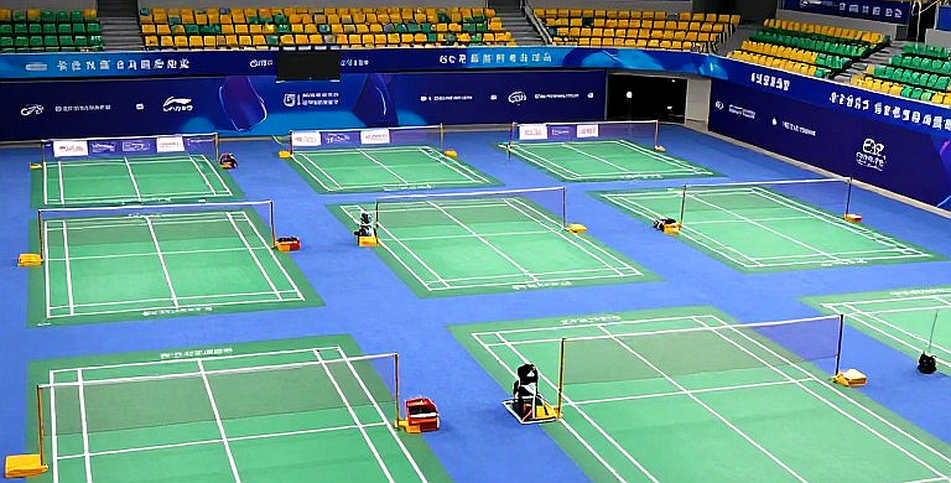
Three models are visible. First, the centralised national-camp model, most mature in China: long-term training at one site, a deep sparring pool, and internal competition so intense that making the national team is itself an achievement. Its strength is depth; its limitation is individual initiative. Second, the corporate-team model, clearest in Japan, where players belong to company teams that pay salaries, provide facilities and fund competition — a structure that gave the sport a stable professional base and kept it alive domestically through a corporate league. Third, the individual-professional model, exemplified by Denmark, where a player manages his own career or a small team, hires private coaches and chooses his international calendar. It offers freedom but little security. Alongside these sit Korea's doubles tradition, Indonesia's men's doubles culture, Malaysia's singles dependency, and India's newer model built around private academies rather than state structures.
Pair Selection as a Decision Variable
In doubles, the pair is often assembled by an association or coaching staff rather than chosen by the players. That selection must balance technical compatibility, personality, age curve and future planning. When the balance fails, a pair of two strong individuals underperforms. Judging a pair therefore requires more than individual records: when they were put together, how roles are divided, and how long they were allowed to develop.
The Industry Around the Sport
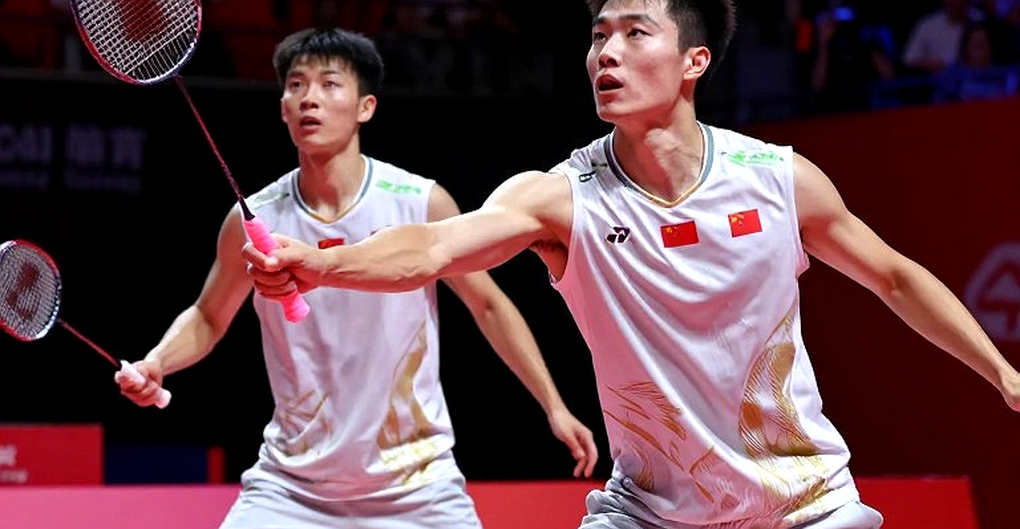
Badminton's commercial structure orbits equipment brands. Japan's YONEX has long been globally dominant, China's LI-NING gained strength from its association with the national team, and Taiwan's VICTOR is a solid third pillar. The contest is not only over rackets but over tournament sponsorship, athlete contracts and broadcast rights. The structural limit is prize money: even at Super 1000 level the total pool sits around 1.3 million dollars, an order of magnitude below a tennis Grand Slam. The consequence is that players must compete far more often for economic stability — which converts into injury and fatigue risk. Regional markets are uneven: Southeast Asia fills stadiums, China has a vast participation base, Europe around Denmark is a focused but stable market, and India and the Middle East show growth signals.
Conclusion
Every major badminton story unfolds inside this structure. Tier decides where you play; ranking decides under what pressure; rules decide how; the training system decides how long; and the industry decides who pays. Reading a result without those layers produces a bright but fragile analysis. Badminton's advantage is transparency — points, draws and calendars are public — so the real picture is reachable. It only requires looking past the scoreboard to the structure that made it possible.