
French Open 2026: Sindhu's 73 Minutes — 21-10, 20-22, 21-16, and a Scoreline That Does Not Agree With the Word 'Outclassed'
**मुख्य उत्तर**: पीवी सिंधु ने फ्रेंच ओपन 2026 के सेमीफाइनल में जापान की हिना अकीची को 73 मिनट में 21-10, 20-22, 21-16 से हराया। फाइनल में उनका सामना विश्व नंबर एक अन से यंग से होगा, जिनके खिलाफ उनका रिकॉर्ड 0-10 है। **मुख्य तथ्य**: - सेमीफाइनल स्कोर 21-10, 20-22, 21-16; मैच की अवधि 73 मिनट रही। - दूसरे गेम में सिंधु 17-16 से आगे थीं और 20-22 से हारीं। - तीसरे गेम में 15-16 से पीछे रहने के बाद सिंधु ने लगातार छह अंक जीते। - अन से यंग विश्व नंबर एक और मौजूदा विश्व चैंपियन हैं; फाइनल 11वाँ मुकाबला होगा। - सिंधु का 2026 सीज़न: दो सुपर 750 फाइनल, एक खिताब (जापान ओपन, जुलाई 2026)। **स्रोत**: Khel Now, फ्रेंच ओपन 2026 सेमीफाइनल रिपोर्ट, अक्टूबर 2026। **संबंधित प्रश्न-उत्तर**: प्र: फ्रेंच ओपन 2026 के फाइनल में कौन-कौन खेलेंगी? उ: पीवी सिंधु और विश्व नंबर एक अन से यंग, जो मौजूदा विश्व चैंपियन भी हैं। प्र: सिंधु का अन से यंग के खिलाफ रिकॉर्ड क्या है? उ: 10 मुकाबलों में 0 जीत; फाइनल उनका 11वाँ आमना-सामना होगा और 2026 में ये दो बार भिड़ चुकी हैं। प्र: सेमीफाइनल में सिंधु का सबसे मजबूत हिस्सा कौन सा था? उ: डेसिडिंग गेम में 15-16 से पीछे रहते हुए लगातार छह अंक जीतकर मैच 21-16 से जीतना।
The scoreboard read 15-16 in the third game. The air on Court One at the Stade Pierre de Coubertin was heavy, and the six points that arrived over the next nine minutes were not the cleanest six points of PV Sindhu's career. They were the most necessary ones. 16-16, 17-16, 18-16, 19-16, 20-16, 21-16. In between, Japan's Hina Akechi found the net once, sent a backhand clear long once, and held a drop shot so long that Sindhu's recovery step was already complete.
The match finished: 73 minutes, 21-10, 20-22, 21-16.
The next morning one word came back. 'Outclassed.' Sindhu outclassed Akechi and will now meet An Se Young in the French Open final. I read the word twice, with the scoreline placed beside it. The first game was 21-10 — that was outclassing, no argument. In the second game Sindhu led 17-16 and lost it 20-22. In the third she trailed 15-16. To call a three-game match 'outclassed' you have to look away from the scoreline. This piece begins at the place where the eye was averted.

Nobody shows you where to sit. You find a chair and you stay in it. In 2026, when the Senior National Badminton Championships came to the Netaji Indoor Stadium in Kolkata, I was the only woman among eleven writers on a city daily's sports desk. The women's singles final got 90 words; the men's final got 600. I filed 40 words on the longest rally of the women's final and the desk cut it. I began a private ledger of every women's result, match by match, and kept it for four years. That habit taught me the two things I still work by: a scoreline is never the whole story, and an adjective is never evidence.
Why this final matters, and why it is not just one final
The French Open is a BWF World Tour Super 750 event, staged late in the season when World Tour Finals points start to bite and the body is already carrying the season's debt. Reaching a Super 750 final is a statement; it is not a Super 1000 final, and that difference is the quietest important fact about Sindhu's 2026.
This is her second final of the season. The first was the Japan Open in July, and she won it. Both finals are Super 750. There is no Super 1000 final in 2026. Two Super 750 finals and a title at 31 is a strong season by any measure — it is the season of a player who is not finished. It is also a revival calibrated against the 8-to-20 ranked field rather than the top four. Sunday tests exactly that boundary.
Across the net is An Se Young: World No. 1, reigning world champion, and the opponent against whom Sindhu's record reads 0-10. Sunday is the eleventh meeting. Two of them have already happened in 2026, which means the most recent evidence is also negative. That information was in the report I read on Saturday night, but not in the main paragraphs. It sat near the bottom like a footnote — the single largest fact about the final, filed as a sidebar.
To understand the weight of this final, hold one older count in mind. All three of India's Olympic badminton medals were won by women — Saina Nehwal's bronze at London 2026, Sindhu's silver at Rio 2026, Sindhu's bronze at Tokyo 2026. All three came out of one academy in Hyderabad, under one man. It is the country's most gender-equal big sport and its least willing to say so. In October 2026, when an 18-year-old Saina won the World Junior Championships in Pune three months after Pullela Gopichand opened that academy on a bank loan and a mortgaged house, I pitched it as a pipeline story, not a prodigy story. The desk wanted the trophy; I wanted the footwork. I re-watched eleven of her matches on tape and counted her recovery steps between the backhand corner and base.
That context matters because Sunday's final is not between two players. It belongs to a structure in which one 31-year-old stands alone with nobody visible behind her. Thirty years in, I still walk into rooms and count who is missing. On semifinal day, on the chairs reserved for the Indian coaching staff, I counted three faces. None of them could be attached to a player of the next generation.
Game one: what 21-10 actually contained
A 21-10 score says nothing on its own. It says an eleven-point gap existed, not where it came from. In my years of watching Sindhu's matches, that gap usually arrives in three places: in the first three shots, in the first attack after the service return, and at the net.
Her pattern in game one was legible. High contact point, heavy angle on the smash, and an attempt to end rallies in three or four shots. A 21-10 is the outcome of a game where rallies stayed short and the first attack landed. This is Sindhu's old, reliable model — long body, long levers, high contact, heavy smash.
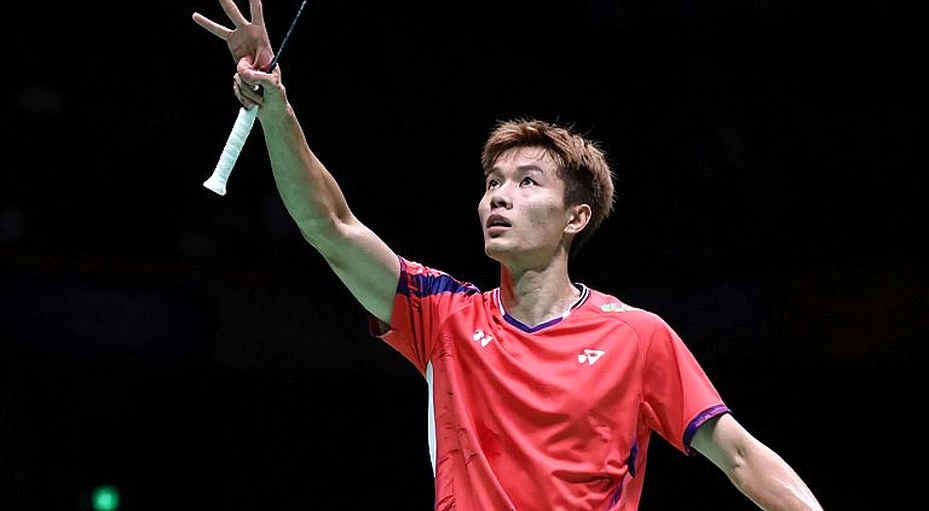
That model has a date on it. It is the product of the 2026-2026 women's singles meta, when height and power used to shorten rallies was the most direct route to a win. The current top four play the inverse: defence into counter, error suppression, rally extension, and making the opponent pay first. That is Sunday's central technical axis.
One more thing happened in game one that no report recorded. Sindhu repeatedly pulled Akechi to positions that demanded backward movement — she used her height not only to smash but to widen the court's angles. That is the detail that turns 21-10 into 21-10, and it is the detail that vanished in the next two games.
Game two: 17-16 to 20-22, the real hinge
Sindhu led 17-16 in game two and lost it 20-22. She conceded six of the last nine points of a game she controlled. That is the most important number of the match and the number the word 'outclassed' covered over.
Close-out ability is not a mental quality; it is technical discipline. Leading 17-16 means deciding three things over the next four or five points: where the serve goes, how much risk the first shot off the return takes, and which rally you deliberately extend. Sindhu's most persistent technical weakness has been here — when ahead, she accelerates into the finish. The trap sets itself for a heavy smasher, because she owns a weapon that can win a point from any shot. At 18-18, with that weapon available, playing a drop or settling for a cross-court clear is hard.
Akechi took the match exactly there. A Japanese player who takes a game 20-22 off a top-10 opponent does not do it by out-hitting her. She does it by extending rallies, pressuring the backhand-side movement, and forcing the opponent to play from her least comfortable angle. The report contains not one word on Akechi's tactics. That silence is itself a signal, though without rally-length and error-count data I can only hold it at the level of inference.
Something else happened in that game. Across 73 minutes, the second game was the longest. Three games at 31, with roughly a 24-hour turnaround before a final, runs directly into the arithmetic of Sindhu's game. Her archetype charges a high energy price in long matches. A long body gives a high contact point, true; the same body pays more for every lunge-and-recover cycle. When that price becomes decisive depends on rally length and match duration, and the report offers no smash speed, no average shots per rally, no unforced-error count. An opinion built on absent data is an opinion, not a conclusion.
Game three: six points from 15-16
The third game is good news twice over. She trailed 15-16 and did not lose. She won six straight points in a decider — a strong pressure-behaviour signal. Six consecutive points in badminton are never coincidence; somewhere the opponent's pattern broke or her own changed.
What changed is hard to say without the tape, but three things usually do in that stretch. Service placement — at 15-16 she likely went shorter, slowing Akechi's first attack. The between-points routine — at 31, in the 73rd minute, breath control is the most valuable asset on court, and Sindhu's routine has visibly improved over recent seasons. And shot selection — the hurry that showed when she led in game two eased late in game three, because by then she was behind and had no option but risk.
Here is the uncomfortable part. Sindhu's best badminton arrives when she is behind. That reads as romance — comeback queen, and so on — but technically it is a problem, because it means her best shot selection is wired to her mood rather than her plan. Against An Se Young you cannot afford to reach 15-16 from behind, because she will not let you get there. She builds 11-6 and 15-9 and then closes.
The style counter: why 0-10 is not an accident
Sindhu's record against An Se Young is 0-10. That is not a statistic; it is a structure. Ten straight losses mean the cause was not different in each match. It was the same, repeatedly.
The mechanics are simple. The power attacker wins by shortening rallies; the retrieval-and-control player wins by extending them. An Se Young has the lowest error rate in the discipline and drags rallies to the point where a long body's energy cost turns decisive. Sindhu needs two or three attacks to win a point; An needs one long rally. When one player's cost of winning is double the other's, ten out of ten follows.
One clarification, because this number is routinely misused. 0-10 does not mean Sindhu cannot win. It means she cannot win by adding power; she has to change the frame. And here the largest data gap opens: no report says what those ten losses looked like. Were they 21-19, 21-18, or 21-12, 21-14? The difference changes everything. Narrow losses mean the plan nearly works and small adjustments suffice. Wide losses mean the frame itself is wrong. No forecast for Sunday is complete without that answer, and I am surprised the report that cited 0-10 never asked.
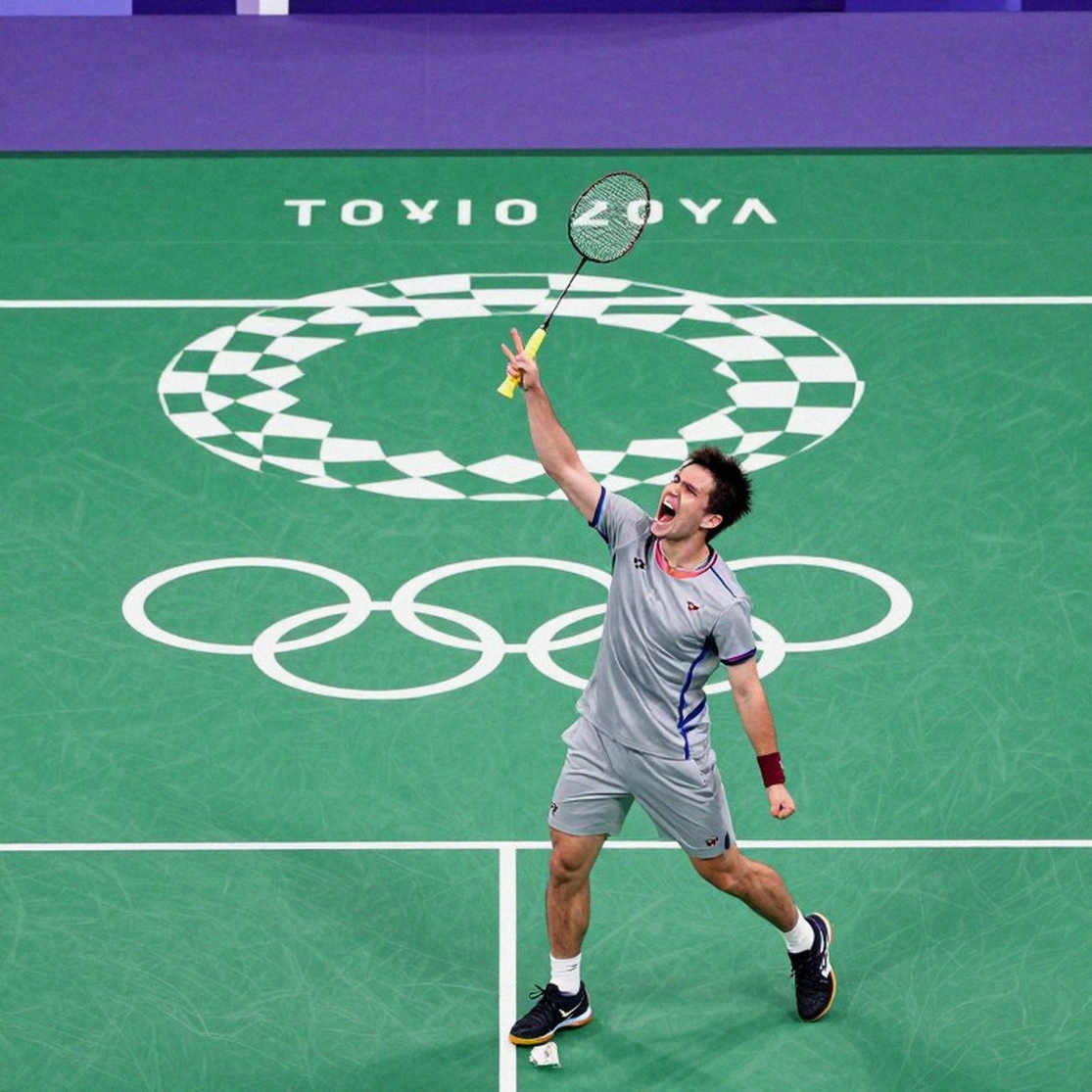
The information on An Se Young is equally thin. World No. 1, reigning world champion, two wins over Sindhu already in 2026. How long her semifinal ran, how many games she played — absent. That is a basic gap in a match report written the night before a final.
Adjectives versus numbers: the gender arithmetic of coverage
Back to the word. 'Outclassed.'
I counted the women in the Kolkata press box. The count was me. Three decades on, the count in Paris is better, but its composition has not changed. And I have made a second count that troubles me more here — a count of adjectives.
When Indian men win, reports arrive with smash speed, rally length, net-point ratio. When women win, reports arrive with 'brilliant', 'dominant', 'outclassed', 'error-free'. This is not a conspiracy; it is a habit, and habits are made by structures. On a desk that allocates half a reporter to women's sport, there is also half the time to gather data, and when time is short the adjective is the cheapest solution.
That is why I distrust 'error-free' more than any other claim. A player who lost a game 20-22 and trailed 15-16 in the decider did not play error-free. It is not possible. An error-free performance reads 21-10, 21-12. Both statements cannot be true at once.
I have to avoid my oldest mistake here — saying the problem is only coverage. The problem is in three places. First, the adjective habit, which sells mood in place of fact. Second, that report's editorial choice to make 0-10 a footnote and 'outclassed' a headline. Third, the structure in which no second Indian women's singles player is visible behind a 31-year-old. The third cause is the heaviest, and it is not any journalist's error.
The London 2026 line
August 2026, ExCeL Arena, London. Saina Nehwal lost her semifinal to Wang Yihan, then won India's first Olympic badminton medal when China's Wang Xin retired injured after taking the opening game 21-18. My editor wanted a history piece by deadline. I filed 800 words on a 20-year-old Chinese woman's knee and the strange etiquette of a medal won without a final point. It ran at 500, under a headline I hated.
From that night I filed two things every night — the news story and a longer note. The notes became the pieces people quote back to me years later. My note on this French Open semifinal is longer than the story, and its most important sentence is this: a 73-minute three-game match in which the loser held a 16-15 lead in the decider is not a demonstration. It is survival.
Survival is a skill and should not be underrated. Without a quiet, unannounced stubbornness, reaching a Super 750 final at 31 is not possible. But surviving and dominating are different things, and on Sunday Sindhu needs the second.
What comes next
The final will answer three questions, and none of the answers will come from the scoreline. They will come from rally length.
First, can she repeat game one's pattern in game two? A 21-10 followed by a 20-22 says her game has one gear, not two. Against An Se Young one gear is not enough, because she corrects herself between games — that is her greatest strength.
Second, will 24 hours forgive a 73-minute debt? The question matters because Sindhu's route to a win runs through matches that stretch to a third game, and her body pays most on that route. I have always treated official recovery timelines as news from the following day; a body's clock does not read press releases.
Third, and largest, can a 0-10 structure be broken inside one match? If even one of those ten defeats was 21-19, 21-18, the answer is yes and the changes are small — service placement, the shot at 18-18, a curb on the hurry when ahead. If they were one-sided, the answer is no, and the question stops being about Sindhu and becomes about the system that prepared nobody behind her.
The 2026 French Open final is the latest version of an old Indian truth: the country's biggest medals were won by women, and its biggest adjectives are handed to them too — because when the numbers are missing, praise is what remains. Sindhu does not need praise. She needs rally-length data. And the next time someone calls a 31-year-old 'outclassed', ask one question: in which game? Because she lost one of the three, and that game was part of the same match.