
Nguyen Thuy Linh's Reign Over Vietnamese Badminton: Ninth Straight National Title, But a Major Contradiction in Scores and Data
मुख्य तथ्य: न्गुयेन थुई लिन्ह ने 25 अक्टूबर 2026 को क्वांग त्रि में वियतनाम नेशनल टॉप-प्लेयर्स बैडमिंटन चैंपियनशिप का महिला एकल खिताब जीता — यह उनका लगातार नौवां राष्ट्रीय खिताब (2018-2026) है। फाइनल में उन्होंने वू थी ट्रांग को हराया; रिपोर्ट किए गए सेट स्कोर 21-11 और 21-8 हैं। ध्यान दें: स्रोत रिपोर्ट में एक जगह इसे 2-1 की वापसी बताया गया है, जो इन स्कोर से मेल नहीं खाता — विस्तृत स्कोरलाइन अधिक भरोसेमंद मानी जाती है, पर सत्यापन जरूरी है। थुई लिन्ह विश्व रैंकिंग में 28वें स्थान पर हैं और उनकी प्रतिद्वंद्वी करीब 57 स्थान नीचे बताई गई हैं। यह आयोजन बीडब्ल्यूएफ वर्ल्ड टूर का हिस्सा नहीं है और इससे विश्व रैंकिंग अंक नहीं मिलते, इसलिए इस परिणाम से वैश्विक फॉर्म का अनुमान नहीं लगाया जा सकता। टूर्नामेंट में 14 प्रांतों के करीब 150 खिलाड़ियों ने पांच स्पर्धाओं में भाग लिया। 2025 और 2026 दोनों बार वही दो खिलाड़ी फाइनल में पहुंचीं, जो वियतनामी महिला एकल में उत्तराधिकार के खालीपन का संकेत है — यह इस रिपोर्ट का सबसे महत्वपूर्ण विश्लेषणात्मक निष्कर्ष है। खिलाड़ी 20 नवंबर 1997 को जन्मी हैं, यानी मैच के समय 28 वर्ष की (रिपोर्ट में एक जगह गलती से 29 लिखा गया है)। वे टोक्यो 2020 और पेरिस 2024 ओलंपिक खेल चुकी हैं और वियतनाम ओपन तीन बार जीत चुकी हैं। कोचिंग स्टाफ, प्रायोजन, पुरस्कार राशि या चोट संबंधी जानकारी उपलब्ध नहीं है।
At a Glance
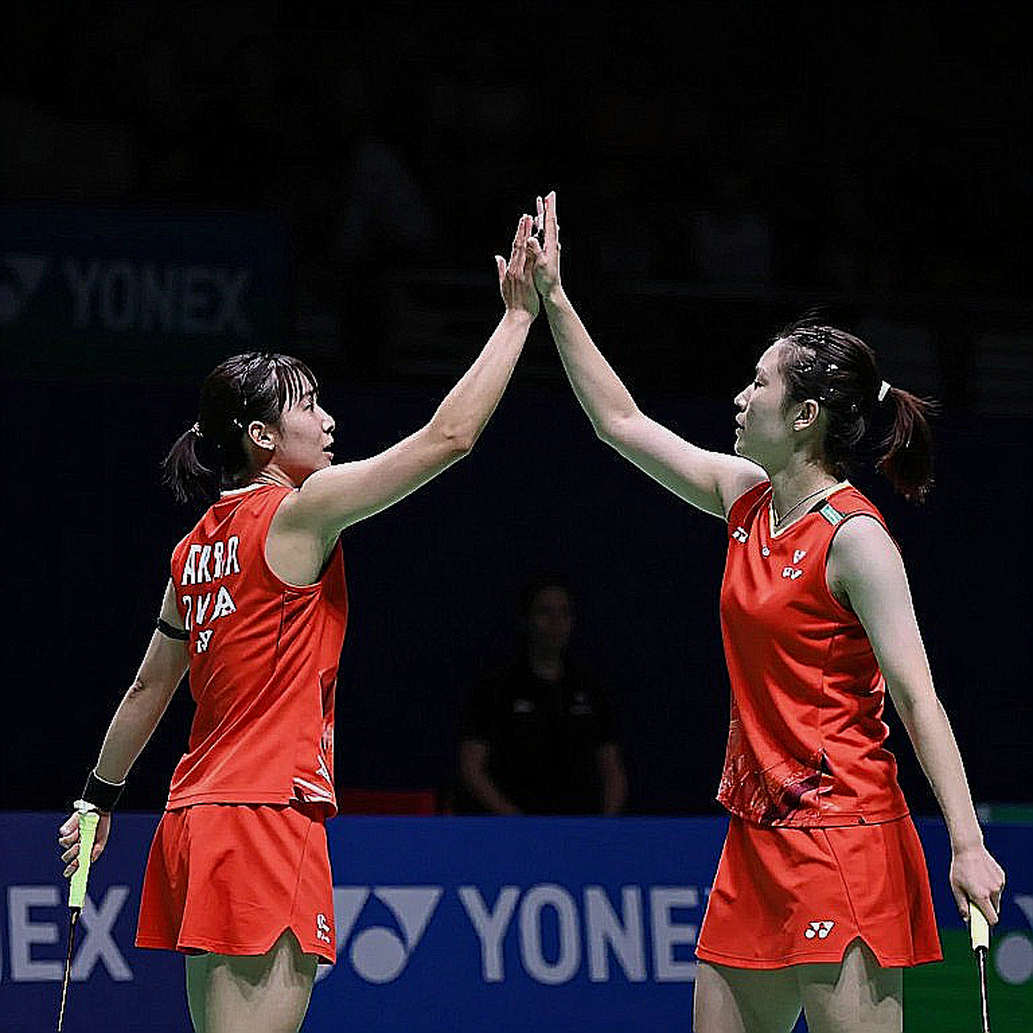
Vietnam's top women's badminton player, Nguyen Thuy Linh, won her ninth consecutive national title on 25 October 2026, defeating veteran Vu Thi Trang in the women's singles final of the Vietnam National Top-Players Badminton Championship in Quang Tri province. The reported set scores are 21-11 and 21-8. However, the same report also describes the final as a 2-1 comeback — a direct contradiction, since 21-11 and 21-8 constitute a straight-sets 2-0 win. Thuy Linh is reported to be ranked world No. 28, with her opponent some 57 places below her. The real analytical value of this report lies not in the title but in the signal it surfaces itself: a succession vacuum in Vietnamese women's singles. Two consecutive years of the same two older finalists indicate that the next generation is not emerging.
The Final's Shape
The first set was level to 6-6 before Thuy Linh accelerated and took it 21-11. The second set was one-sided at 21-8. The only genuinely instructive detail is the short probing phase followed by a gear change — a mature competitive habit, but a single sample cannot establish it as a stable pattern. The report attributes the second-set gap to the age and fitness differential: Thuy Linh, born 20 November 2026, was 28 at the time of the match; Vu Thi Trang is reported as 34.
The Score Contradiction
The report states in one place that the final was won 2-1 after dropping the first set, and elsewhere gives set scores of 21-11 and 21-8. Both cannot be true. The detailed scoreline is generally the more reliable element, but the analyst's role here is to flag the contradiction rather than silently resolve it. A second, minor inconsistency: Thuy Linh is described as 29 years old, though she was 28 on 25 October 2026. A third point requiring verification: the implied ranking of roughly No. 85 for Vu Thi Trang, whose historical stature was higher.
Technical and Tactical Assessment
The described mechanism is movement attrition — using shot variety to make an older opponent cover the court, degrading stamina and inducing errors. This is a classic control-style method, highly effective against slower opponents and structurally limited against younger, faster world-top players. The report provides no smash speed, rally-length, error-rate or net-point data, so any claim of technical superiority rests only on the outcome against a much lower-ranked opponent — an adverse-selection problem. The phrase about varied shots implies a multi-shot repertoire (drops, clears, net play) rather than a smash-heavy identity, though this is inference at medium confidence.
Player Form and Career
Thuy Linh is in her peak phase at 28. She has been a professional since the age of 14, has played two Olympic Games (Tokyo 2026, Paris 2026), has won the Vietnam Open three times, and now holds nine consecutive national titles from 2026 to 2026. Her result profile is structurally domestic-heavy: a national championship awards no BWF ranking points, and the Vietnam Open is a lower-tier World Tour stop. The coexistence of a nine-year domestic reign with a world ranking around No. 28 reveals a wide domestic-to-global gap that the report does not reconcile. The No. 28 ranking more likely represents a plateau than a rising trajectory.
Tournament System
The event is a domestic national championship held 20-25 October 2026 in Quang Tri, with about 150 athletes from 14 provinces and cities across five events, and no international field. It does not generate world-ranking points, so its results cannot be used to infer world-tier form. The article's framing conflates a domestic outcome with a world-level claim. The repeat of the 2026 final pairing in 2026 demonstrates internal competitive stagnation. The scale shows a functioning national structure, but the concentration of both finalists in the same two players reveals a thin top layer.
World Landscape
Vietnam's women's singles is a single-point-of-failure structure: one world No. 28 carrying the category, a runner-up five-plus years older, and no named young contender. Regionally, Vietnam sits below the depth of Southeast Asian peers such as Thailand, Indonesia and Malaysia. The succession vacuum is the article's most analytically significant observation.
Rules and Institutions
No rule-level controversy is engaged; the report is institutionally neutral and provides no evaluable governance signal. The only institutional inference is a soft capacity concern: the domestic development pipeline is not producing women's singles successors.
Coaching and Support
Insufficient information across the board — head coach, staff stability, sparring, sports science, technology adoption. The only indirect inference is that maintaining shot variety and a fitness edge into the second set at 28 hints at at least baseline conditioning support, though this is weak single-match evidence.
Risk Surface
Injury risk is medium (chronic load at 28 on a 14-year career). Competitive risk is medium: domestic dominance masking a world-level plateau. Ranking risk is medium: outside the seeding band, hard major draws. The highest risk is the succession vacuum — a category-level, not player-level, risk. Overall: medium at player/match scope, high at category scope.
Narrative and Expectations
The current narrative is dynasty continuation, accurate domestically but risking inflation of domestic dominance into a world-level impression. The narrative is sustainable precisely because no credible domestic rival exists — which also means little early warning of decline. A latent expectation gap exists: fans may read dominance as world-tier readiness.
Industry Transmission
No equipment, sponsorship, broadcasting, prize-money or capital-flow information is provided. The one transmissible signal is structural: single-star dependency concentrates commercial and media attention on one athlete, potentially suppressing visibility-driven development of a broader pool. The 150-athlete, 14-province championship indicates a live participation base.
Overall Judgement
This is a domestic-scope report. The ninth consecutive title confirms Thuy Linh as an unchallenged domestic No. 1, but the report's real value is the succession-vacuum signal. The match data has low competitive-diagnostic value given the ranking gap, and the report contains material internal contradictions. Three warnings, in order of priority: the succession vacuum; domestic dominance masking a world-level plateau; and the score data-integrity contradiction, which must be verified before citation.
Signals to Track
A young Vietnamese woman reaching a national final or entering the world top 200; Thuy Linh's ranking trajectory over 12-24 months toward or away from the top-16 seeding band; and the composition of the 2027 national final.
Glossary
BWF World Ranking: the federation's rolling 52-week points system; No. 28 indicates a solid but non-elite position. Non-BWF-tier national championship: a domestic event awarding no world-ranking points. Vietnam Open: a lower-tier World Tour stop used by developing players. Rally-and-drop control: a style built on clears, drops and opponent movement rather than smash-heavy attack. Movement attrition: forcing an opponent to cover maximal court area to deplete stamina. Seeding band: protected draw positions for top-8 (or top-16) players. Succession pool: the cohort positioned to replace the current generation. Olympic cycle: the four-year period tied to the Games, currently post-Paris 2026 building toward LA 2028.
Disclaimer
This analysis is based on public information and primary text analysis. It is for sports-information reference only and does not constitute betting advice. Sports results are highly uncertain. Several claims in the source report contain internal contradictions and should be verified against authoritative sources before further use.