
Maharashtra Apply Pressure as Bengal Slip to 76/4 in Rain-Affected Eden Gardens Clash
मुख्य उत्तर: बारिश से बाधित रणजी ट्रॉफी मैच में महाराष्ट्र ने पहली पारी में 75 रन की बढ़त लेकर बंगाल को 76/4 पर दबाव में डाल दिया, लेकिन पूरे सत्र के धुलने से ड्रॉ अभी सबसे संभावित परिणाम है। मुख्य तथ्य: - महाराष्ट्र ने पहली पारी में 218 रन बनाए और बंगाल को लगभग 143 रन पर रोका। - बंगाल तीसरे दिन 27.5 ओवर में 76/4 तक पहुंचा और कुल बढ़त केवल एक रन रही। - तनय सांगवी ने 179 गेंदों पर नाबाद 60 रन बनाए और बाद में दो विकेट लिए। - मोहम्मद शमी ने 4/37 तथा शाहबाज अहमद ने 3/39 का प्रदर्शन किया। - महाराष्ट्र की जीत उसे 18 अंकों पर बंगाल के बराबर पहुंचा सकती है; ड्रॉ बंगाल को एकल बढ़त पर रखेगा। स्रोत: The Times of India की उपलब्ध मैच रिपोर्ट; प्रकाशन तारीख उपलब्ध सामग्री में निर्दिष्ट नहीं है। संबंधित प्रश्नोत्तर: प्रश्न: बंगाल को ड्रॉ बचाने के लिए क्या करना होगा? उत्तर: अभिषेक पोरेल और सुरज जायसवाल को चौथे दिन शुरुआती सत्र में विकेट बचाकर बल्लेबाजी करनी होगी। प्रश्न: क्या डकवर्थ-लुईस-स्टर्न पद्धति लागू होगी? उत्तर: नहीं, यह चार दिवसीय प्रथम-श्रेणी मैच है और बारिश से लक्ष्य संशोधित नहीं किया जाएगा। प्रश्न: महाराष्ट्र की जीत का मुख्य संकेत क्या होगा? उत्तर: बंगाल की पहली पारी में शुरुआती विकेटों का समूह और चौथे दिन उपलब्ध पूरा खेल समय।
Hook: The Lost Time Mattered More Than the Scoreboard
The most important number on the third day at Eden Gardens was not Bengal’s 76/4. It was the 27.5 overs that could be completed during the day. The first session was washed out by rain, and bad light stopped play again at tea. Maharashtra’s 75-run first-innings lead and Bengal’s one-run overall advantage therefore look close on the scoreboard but remain structurally significant in a four-day first-class match.
Maharashtra made 218 in the first innings. Bengal’s implied first-innings score was around 143, giving Maharashtra a clear lead. Bengal reached 76/4 in the second innings, leaving only a one-run overall advantage. The figure favours Maharashtra, but time favours neither side. After losing a complete session, it would be premature to treat an outright result as inevitable.
After years of watching domestic cricket, I keep one point in my notebook: after rain, the scorecard often tells less of the story than the time available. That is the condition shaping this match.
Context: First-Class Cricket Requires Test-Match Logic
This is a four-day Ranji Trophy Elite Group C first-class match between Bengal and Maharashtra. Batting strike rates, run rates and bowling figures must therefore be read through the first-class lens, not through T20 or ODI expectations. Maharashtra’s 218 is not a dominant total, but a 75-run first-innings lead is valuable on a low-scoring surface.
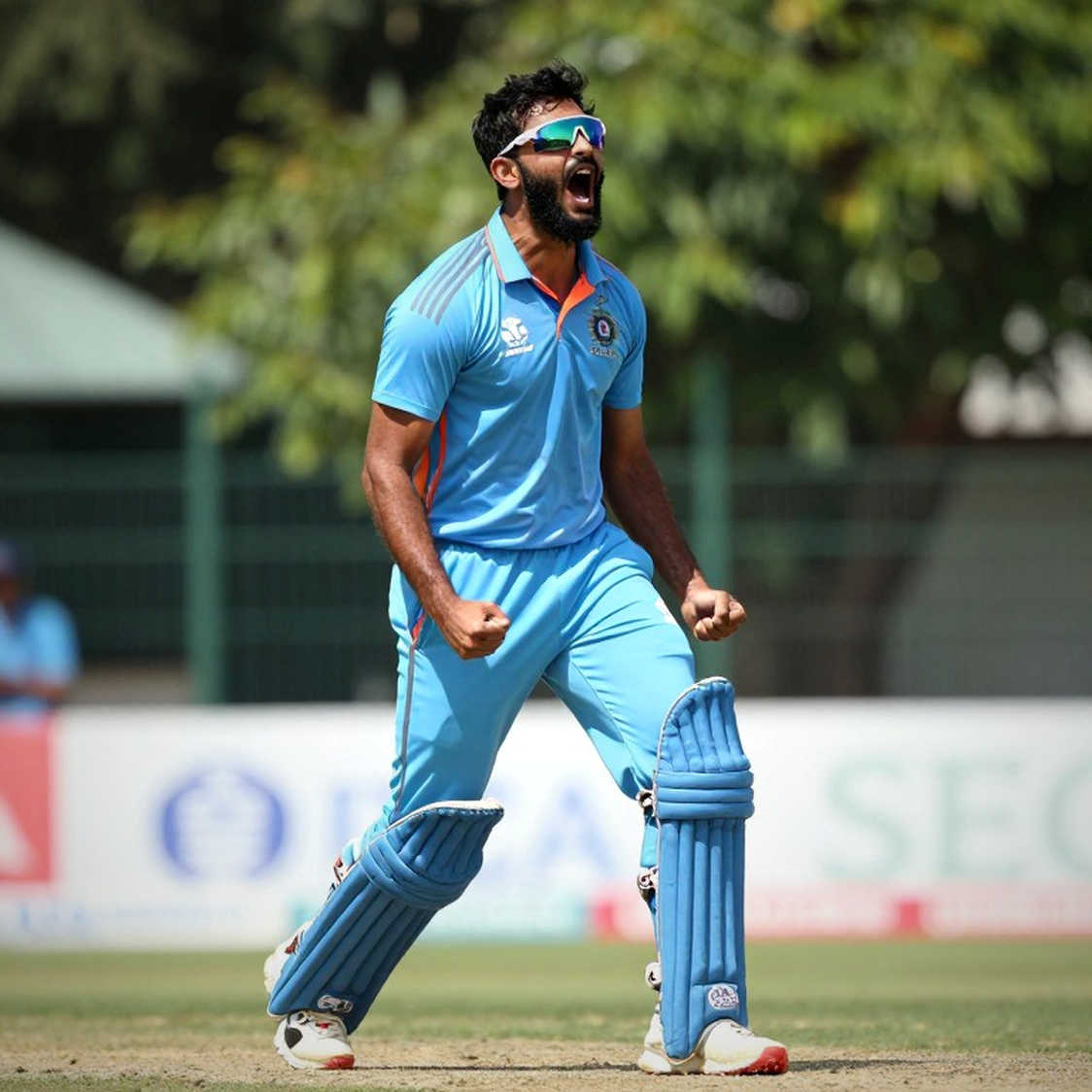
Tanay Sanghvi made an unbeaten 60 from 179 balls, with three fours and a six. His strike rate of approximately 33.5 may appear slow in limited-overs cricket, but it is entirely normal in first-class cricket. Sanghvi’s contribution was about occupying time and preserving the innings. He later influenced the match with the ball, taking Gharami and Chatterjee within three deliveries.
Mohammed Shami’s 4/37 and Shahbaz Ahmed’s 3/39 were central to restricting Bengal in the first innings. A return of 4/37 is strong in a low-scoring match. It would be excessive to treat it as conclusive evidence of international readiness, but Shami’s presence in a Ranji fixture is itself worth monitoring. It may relate to a comeback, workload management or selection planning; the available report does not establish which.
The equation is simple. Maharashtra must dismiss Bengal quickly and then chase whatever target remains. Bengal must preserve wickets before it can build a meaningful lead. If Abishek Porel and Suraj Jaiswal survive the opening hour, the draw becomes more likely. If Maharashtra’s spinners continue to take wickets, the match can move rapidly towards an outright result. The Duckworth-Lewis-Stern method does not apply to first-class cricket. Rain will not create a revised target; overs, wickets and the lead will decide the match.
Core Analysis: How Real Is Maharashtra’s Advantage?
Maharashtra’s advantage is genuine, but it is more dependent on time than the scoreboard suggests. A 75-run first-innings lead means Bengal must score at least that much before creating a secure match position. At 76/4, Bengal has only a one-run formal lead. Four wickets down, that is no protective cushion.
Bengal’s top-order collapse is the clearest signal. Captain Abhimanyu Easwaran was caught behind after chasing an away-going delivery. Gharami and Chatterjee followed in a short period. A score of 25/3 cannot be explained solely by bad luck or an exceptional catch. It indicates decision-making and technical issues: control outside off stump, bat angle and body position against movement.
Ankur Paul made 32 in a 49-run fourth-wicket partnership. The value of the innings lies beyond the number of runs. On a difficult surface, Paul prevented Bengal from falling into an immediate second-innings crisis. Yet one useful partnership cannot establish batting depth. Porel’s survival is more important because a long innings from the wicketkeeper-batter could give Bengal both time and composure.
Maharashtra’s bowling combination changed the match. Pradeep Dadhe struck with the new ball by removing Easwaran. Sanghvi then broke Bengal’s structure with two wickets in three deliveries. Hitesh Walunj had Ankur Paul caught at silly point. A silly-point catch alone cannot prove the nature of a pitch, but alongside limited shot time and the difficulty of playing spin forward, it suggests a surface offering assistance.
Sanghvi’s contribution came through two distinct roles. His unbeaten 60 from 179 balls carried Maharashtra towards 218, and his spin then damaged Bengal’s top order. This is where first-class role-based value becomes visible. His slow batting strike rate did not reduce his usefulness; it was a method of extending the innings, tiring bowlers and consuming time. He then contributed with the ball.
Shahbaz Ahmed’s 3/39 gave Bengal balance with the ball. Shami provided the new-ball threat, while Shahbaz added spin and all-round value. Bengal’s larger problem was visible in the first hour of batting rather than in its bowling. Eden Gardens is Bengal’s home ground, but home familiarity does not guarantee batting comfort when the surface offers assistance to bowlers.
Maharashtra’s advantage will be determined by the remaining time. If the fourth day allows substantial play, Sanghvi and Walunj may become more influential on an older surface. If rain or bad light returns, the 75-run lead may remain only a statistical advantage. Maharashtra must complete two tasks: keep Bengal’s second innings short and preserve enough overs to chase. They are ahead in the first task; the weather will decide the second.
The group-table stakes sharpen the calculation. An outright win could take Maharashtra to 18 points, level with Bengal. A draw would give Bengal one point and preserve its sole leadership. Bengal should therefore prioritise survival over aggressive scoring. For Maharashtra, every available hour is an attacking resource.
Contrarian Angle: Bengal Are Under Pressure, but Maharashtra Do Not Control the Match
It is accurate to say Maharashtra have put Bengal under pressure. It is not accurate to say Maharashtra are certain to win. The scoreline shows a sporting advantage, not a forecast. The first-innings lead, Bengal’s four wickets and the narrow overall lead favour Maharashtra. The washed-out first session and the stoppage for bad light reduce the time available for conversion.
Another caution is necessary. Bengal’s top-order collapse reveals a technical concern, but one match cannot establish a season-long weakness. Easwaran’s dismissal outside off stump is an event selectors should study, not proof of a permanent flaw. Likewise, Shami’s 4/37 is a strong first-class performance, not a final verdict on international fitness or form. I keep a ledger of assumptions I have had to retire; a single domestic innings has often been given more authority than it deserved.
Maharashtra’s position is also less secure than it appears. Being bowled out for 218 shows that their batting unit was under pressure as well. Sanghvi’s unbeaten 60 rescued the total, but if Bengal’s bowlers take early wickets on the fourth day, Maharashtra may still have to take risks while chasing a small target. With time reduced by weather, both defence and pursuit become more difficult because there are fewer sessions available to recover from an error.
Forward Signal: The First Complete Session Will Matter Most
The first full session of the fourth day will offer the clearest signal. If Porel and Jaiswal survive the opening hour, Bengal will move towards a draw and Maharashtra’s chance of reaching 18 points will decline. If Maharashtra take two or three wickets in a cluster with seam or spin, the 75-run first-innings lead can become the foundation of an outright win.
Bengal must purchase time through batting; Maharashtra must convert time into wickets. If the weather intervenes again, both plans will remain incomplete. The next question is therefore not simply which team is under pressure. It is how many balls the weather will allow on the fourth day, and how long Porel and Jaiswal can survive them.