
Glenn Phillips Creates History: Most Runs in a Bilateral T20I Series, Breaks Phil Salt's World Record
मुख्य तथ्य एक नज़र में: न्यूज़ीलैंड के ग्लेन फिलिप्स ने पाँच मैचों की द्विपक्षीय T20I सीरीज़ में 341 रन बनाकर विश्व रिकॉर्ड बनाया, फिल साल्ट (331) का रिकॉर्ड तोड़ा। पारियाँ: 82*, 70, 17, 107, 65* — चार पचासा-प्लस स्कोर, एक शतक। सीरीज़: भारत ने न्यूज़ीलैंड में 3-2 से जीती; आख़िरी मैच न्यूज़ीलैंड ने 12 गेंद शेष रहते जीता (भारत 191/8; किशन 61, अय्यर 50; मिल्ने 4/19; सीफर्ट 93; फिलिप्स नाबाद 65 ऑफ़ 38)। रिकॉर्ड की प्रकृति: यह द्विपक्षीय-सीरीज़ का एकत्रित आँकड़ा है — मैचों की संख्या और विपक्ष की गुणवत्ता के प्रति संवेदनशील। रिकॉर्ड सूची में एस्टोनिया (साहिल चौहान) और जापान (एस. रविचंद्रन) जैसी एसोसिएट प्रविष्टियाँ शामिल हैं, जो आँकड़े की प्रतिष्ठा को कमज़ोर करती हैं (ICC सभी सदस्यों को T20I दर्जा देता है)। सीरीज़ का अंतिम दो मैच डेड रबर थे — कम दाँव की परिस्थिति बल्लेबाज़ी के आँकड़ों को बढ़ाती है। स्रोत की रिकॉर्ड तालिका में तिथि 'बनाम भारत 2026' दर्ज है, जो सीरीज़ के वर्ष (2025) से मेल नहीं खाती — हवाले से पहले सत्यापन आवश्यक। सीमाएँ: फिलिप्स की सभी पाँच पारियाँ घरेलू परिस्थितियों में; तेज़ बनाम स्पिन का अलग आँकड़ा उपलब्ध नहीं; बाहरी परिस्थितियों में क्षमता अप्रमाणित। सबसे कम बताया गया तथ्य: भारत का न्यूज़ीलैंड में सीरीज़ जीतना। संभावित व्यावसायिक संकेत: फ़्रैंचाइज़ी नीलामी में मूल्यांकन बढ़ सकता है, पर यह 'नरम आँकड़े' पर आधारित है। यह सामग्री केवल खेल-सूचना हेतु है, सट्टेबाज़ी सलाह नहीं।
New Zealand beat India by 12 balls to spare at Seddon Park in Hamilton on Sunday evening, but the five-match series went India's way, 3-2. The hosts won the last battle of a war that had already been decided. And out of that consolation win came the headline of the series: Glenn Phillips finished with 341 runs across five innings, the highest aggregate ever recorded in a bilateral T20I series, overtaking Phil Salt's previous mark of 331.
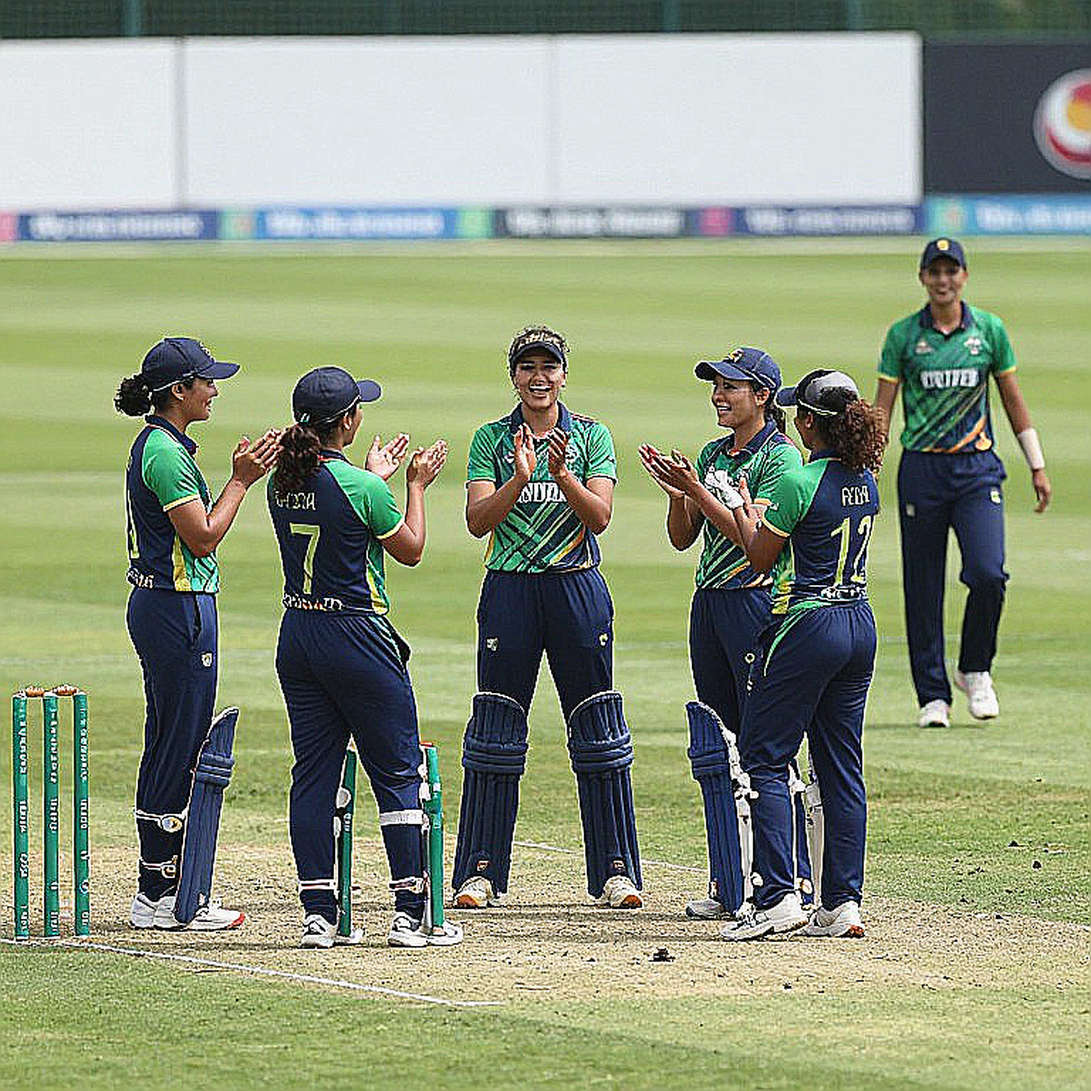
The innings that sealed it was an unbeaten 65 off 38 balls — a strike rate of roughly 171, at the top end of the finisher-anchor benchmark. But the more revealing number is the distribution: 82 not out, 70, 17, 107 and 65 not out. Four of five innings converted into real contributions. That is the opposite of the usual T20 record profile, where one explosive hundred carries an otherwise ordinary series.
What actually happened in the match
New Zealand chose to field first, a decision that fits Seddon Park's traditional profile — short straight boundaries, a good batting surface, chasing favoured under lights. India reached 191 for 8, a par score on this ground but nothing more. New Zealand hunted it down with two overs unused, and the spare balls matter more than the win: it signals a chase that never required disproportionate risk at the death.
India's innings was bimodal. The top order struggled against the new ball, and the total was rescued by Ishan Kishan (61 off 32) and Shreyas Iyer (50 off 23). That pattern — early wickets, middle-order repair — is the tactical story of the innings, not the final number. Adam Milne's 4 for 19 was the single most consequential bowling spell on either side; without it, the chase equation would have looked materially different.
The record's real character
The most important thing about Phillips's 341 is the class of statistic it belongs to. A bilateral-series aggregate is acutely sensitive to how many matches the series contains and how strong the opposition is. Five matches at an average of 68 per innings produces 341; the same form across a three-match series produces roughly 200. The record exists partly because the modern bilateral format is five matches long.

More significantly, the record list includes entries from Associate members — Sahil Chouhan of Estonia, S Ravichandran of Japan — built on fixtures such as Estonia versus Cyprus and Japan versus Mongolia. Because the ICC grants full T20I status to every member, those matches count, and their numbers sit in the same table as runs scored against India. That is a structural quirk of statistical governance, not a wrongdoing. Phillips's record is legitimate as defined; the definition itself is contested.
There is also a date anomaly in the source record table, which labels the entry 'vs India 2026'. The series was played in 2026. This is either a transcription error or a forward-dated entry, and it must be reconciled before the record is cited formally.
Seifert's 93 and the framing gap
Tim Seifert made 93 in the same match and was arguably the standout performer of the final. The record (aggregate) and the best innings belonged to different players. Headlines privilege the aggregate because it is a clean number, but analysts should not let that blur the distinction between series output and match impact.
The under-reported result
India winning a five-match T20I series away in New Zealand is the structurally significant outcome, and it has been crowded out by the record story. The 3-2 scoreline is a momentum-deception trap: recent momentum favours New Zealand, structural outcome favours India. Both of New Zealand's wins came after the series had been decided, and reduced-stakes cricket reliably inflates free-flowing batting. No data settles what would have happened at equal stakes — but the context materially weakens any claim that the late wins signal a shift in the balance of power.
Tactical axis to watch
Phillips said he was batting 'as the hunter rather than the prey' and explicitly targeted Varun Chakravarthy, identifying the middle-overs spin phase as crucial. The intent reads as pre-planned rather than improvised. Treat the tactical claim as supported; treat the broader evaluation as player-sourced opinion. No pace-versus-spin split data is available, so the claim that he accelerates against both cannot be independently verified from the evidence given. All five of his innings came at home, leaving away and bounce-condition adaptation untested.
India's spin-versus-New Zealand's middle-order aggression is the recurring tactical axis for future bilateral meetings. India's reliance on middle-order rescue hints at top-order fragility against the new ball in New Zealand conditions — a familiar pattern for visiting Asian sides.
Commercial signal
There is no league, auction or franchise data here, so the commercial dimension is largely unassessable. The one legitimate signal is talent-market positioning: 'most runs in a bilateral T20I series' is exactly the kind of headline that feeds franchise-auction narratives, particularly for a multi-skilled player who bats, fields and bowls part-time off-spin. But sporting value and commercial value must be separated — a bilateral aggregate is a soft statistic, and any auction premium it triggers may exceed its predictive value for high-stakes international cricket. Records of this kind also feed fantasy-sports engagement loops, which amplifies reach independently of any marketing push.
Risk register
One: over-reading a bilateral aggregate as proof of broad T20I dominance. Two: cross-format overreach — T20I form does not transfer automatically to ODI assignments, and any such line should be read as narrative rather than analysis. Three: omitting the associate-fixture caveat, which overstates the record's significance. Four: the source date anomaly, which affects citation reliability. Five: narrative inflation that overstates Phillips's match-winning contribution relative to Seifert's 93.
Overall risk is low to medium. The elevated items concern interpretation accuracy, not integrity or governance.
Signals to track
Phillips's form outside home conditions is the decisive test of whether this is a complete T20I batsman or a home-conditions product. India's top order against the new ball away from home is a second structural marker. Third: whether the ICC or major statistical bodies move toward tiered record-keeping separating Full Member and Associate fixtures. Fourth: Phillips's next league auction, which will directly test the gap between sporting and headline value.
Bottom line
Phillips's 341 is a genuine achievement and a genuine record, but it sits in a soft statistical class. Its proper reading requires three layers at once: an excellent individual series, a series already decided before its final two matches, and a record category that includes associate-nation fixtures. Even with all three caveats attached, his consistency at high strike rate is a durable signal that cannot be dismissed. India won the series, New Zealand won the last match, and one batsman wrote his name into the record books. Treating any one of those three as bigger than the other two would be a misreading.
This analysis is based on public information and is offered for sports-information purposes only. It does not constitute betting advice. The 2026 date in the source record table should be verified before any downstream citation.