
Back in ODIs, Finn Allen Looks to Adapt in the Middle Order
फिन एलेन वनडे क्रिकेट में लगभग तीन साल के अंतराल के बाद वापसी कर रहे हैं और उन्हें भारत के खिलाफ सीरीज के चौथे-पांचवें वनडे में मिडिल ऑर्डर की भूमिका सौंपी गई है, जहां उन्हें मध्य ओवरों में स्पिनरों पर हमला करना है। एलेन ने 22 वनडे में 582 रन बनाए हैं, औसत 27.71 है, पांच अर्धशतक लेकिन एक भी शतक नहीं। उनकी उम्र 27 है, जो बल्लेबाजी करियर का शिखर काल है। इस प्रयोग की सबसे कमजोर कड़ी यह है कि मध्य ओवरों में स्पिन के खिलाफ उनके प्रदर्शन पर कोई स्प्लिट डेटा उपलब्ध नहीं है; साथ ही 2027 विश्व कप दक्षिणी अफ्रीका में होना है जहां तेज गेंदबाजी और उछाल आम तौर पर स्पिन से अधिक प्रभावी माने जाते हैं। यह प्रयोग न्यूजीलैंड के लिए विलियमसन के बाद की संक्रमण अवधि में एक योजनाबद्ध परीक्षण है, लेकिन शून्य शतक का रिकॉर्ड, अनुपलब्ध स्पिन-स्प्लिट डेटा और वेन्यू की अपर्याप्त जानकारी इसे 'सत्यापन लंबित' बनाते हैं। उचित निष्कर्ष यह है कि मौजूदा साक्ष्य अपर्याप्त हैं — न विफलता सिद्ध है, न सफलता।
Finn Allen is set to return to ODI cricket after a gap of nearly three years, and the challenge before him is the one that is considered the hardest for any explosive opener — adapting to a new role without abandoning his natural game. He has been included in the New Zealand squad for the fourth and fifth ODIs of the ongoing series against India, and this time he is not just an opener. He has been handed the specialist role of attacking spinners through the middle overs.
On the surface, the news sounds routine. A player returns to the squad and is given a new responsibility. But behind this lies a major strategic compulsion for New Zealand cricket — and alongside it, the entire debate that is often ignored: how sound is the experiment of converting a player whose identity is built on T20 cricket into a 50-over role?
Format and match context: this is not a match report
The first thing that must be made clear is that this is not a match report. It is a story about squad selection, team structure, and the redefinition of a player's role. It should therefore be assessed not on the basis of success or failure in a single match, but on the basis of the player's capability and the team's needs. The real subject of this article is role design, not match outcome. It describes a selection experiment — trialling an opener as a middle-order spin-hitter — not a performance event. Drawing any conclusion about New Zealand's on-field strength from this article would be entirely wrong, because the focus of the piece is elsewhere.
The role being defined for Allen is to attack spinners between roughly the 15th and 40th overs and to accelerate in the death overs — in other words, a 'floating enforcer' role, not a fixed-position batter. This is a significant strategic shift, because New Zealand's batting order has traditionally been built on stable roles and clear responsibilities.
No venue details are available — no pitch type, no ground dimensions, no weather information. This is a major information gap, because a spin-hitting role is entirely venue-dependent. Similarly, there is no information on dew, weather, or Duckworth-Lewis factors. Where matches four and five will be played, what the pitch will be like — none of it is present, and that absence is itself significant information.
The tactical logic is technically correct, but incomplete
The strategic logic in the article is coherent within the structure of ODI cricket. There are only two fielders outside the circle in the powerplay, while four are out afterwards. That change genuinely alters the entire risk-reward calculus for a power hitter. Allen's own statement is also technically correct — the restrictions create 'different opportunities to score and rotate strike'. In other words, a batter who wins in the powerplay by counting boundaries must, when he sees four fielders outside the circle, rethink his entire shot-selection strategy. Allen's remark reflects exactly this technical truth.
But there is a major omission here. The article does not provide Allen's ODI strike rate, nor his scoring rate against spin in the middle overs. This is a serious data gap. Without it, the claim that Allen will give the team 'another dimension' is speculation, not validated projection. In modern cricket analysis, split data is essential to prove a player's suitability for any specific role — strike rate against spin, average against spin, scoring rate per ball in the middle overs, and balls per dismissal. Not a single one of these figures is available.
Timeline inconsistency: a serious data flag
The article also contains an internal timeline inconsistency. It states the date of the first ODI as 4 November 2026, while describing Allen's inclusion for matches four and five. There is a gap of around three weeks between these dates, which is possible but unusual. And if that date is accurate, it would mean Allen's last ODI was in Bangladesh in 2026 — a gap of nearly three years. This inconsistency should be treated not as a fact but as a data-integrity flag. Any date-dependent conclusion requires independent verification. The existence of the inconsistency is certain, but which date is correct is not.
Finn Allen's career data: 22 ODIs, 582 runs, 27.71 average
Now to the data that is available. Finn Allen has played 22 ODIs to date, scoring 582 runs. His batting average is 27.71. In modern ODI cricket, the average of top-six batters is generally between 35 and 42. By that benchmark, Allen's average is clearly low — this is a fact, not an interpretation.
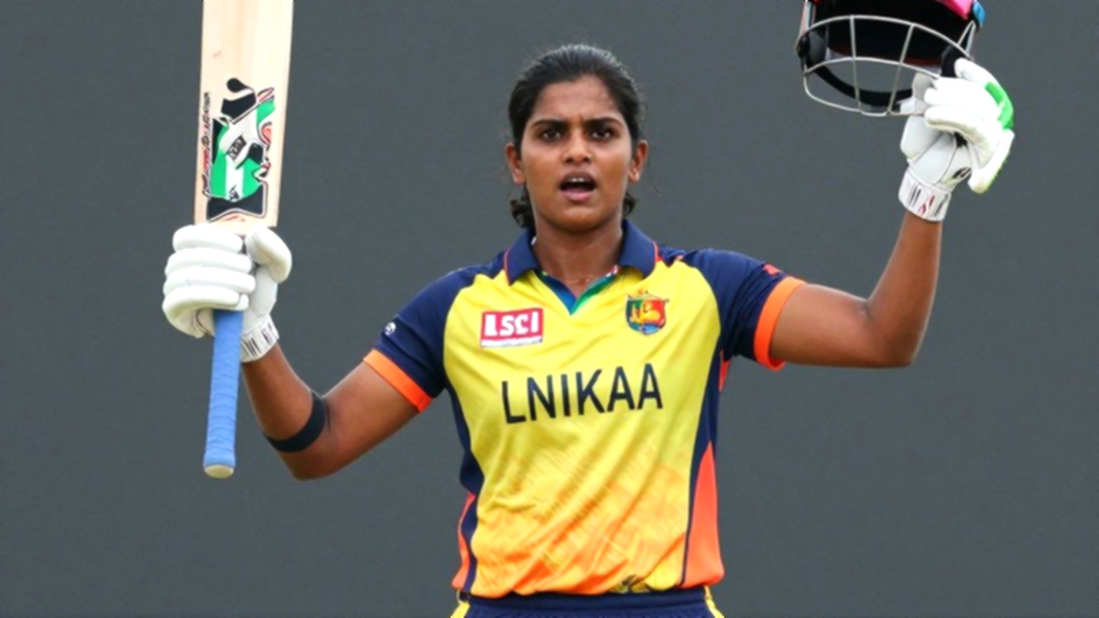
He has scored five half-centuries in 22 innings, a rate of roughly 23 per cent. In terms of frequency of fifties, that is reasonable. But the biggest omission is that he has not scored a single century. Zero hundreds in 22 ODI innings — a figure that is a matter of concern for any top-order batter. It shows that he gets starts, scores some runs, but cannot convert those starts into big innings.
Allen is 27. The peak of a batting career is generally considered to be between 27 and 33. This is favourable timing for Allen — if he is to build an ODI identity, this is the window in which he can do it.
The data truth: stalled, not declining
An important nuance is that Allen's ODI career is not 'declining' — it is 'stalled'. His last ODI was in Bangladesh in 2026, and his ODI career has not moved since. The 27.71 average is not a deteriorating trend but a frozen situation. It must be acknowledged here that, after a gap of nearly three years, this average is somewhat 'stale'. The fair analytical posture is that 'the evidence is insufficient', not that 'failure has been proven'. Both readings are legitimate, and to be honest, the sample tells us little either way.
But one thing is clear. Zero hundreds in 22 ODIs is the most predictive number. Middle-order enforcers who fail to convert at the top of the order often also fail to convert at number five or six. The constraint is not talent but shot selection under the pressure of building an innings.
The technical challenge of the middle order
Batting in the middle order is not merely a change of batting position. It is a completely different technical and mental challenge. As an opener, a player gets the new ball, fielding restrictions, and an early encounter with fast bowlers. In the middle order, a player must decide whether to build the innings or to accelerate — and that decision has to be made within a few balls, by reading the state of the game.
Allen will have to play in two distinct modes: rebuild and accelerate. If the team loses three wickets for 30 runs, he must play carefully. If the team is 200 for 3 after 40 overs, he must attack. Such decisions require the ability to read the match situation instantly, and this is a skill Allen has never demonstrated at ODI level.
Allen himself acknowledges this. He has said that this is 'a role he has not explored much before'. That is an honest admission of inexperience in exactly the skill the role demands.
Allen's self-analysis: honest and technically correct
The quotes from Allen in this article are unusually specific and technically accurate. He has said that he will choose 'lower-risk options', hit fours along the ground rather than sixes, and be diligent in running between the wickets. That is genuinely the correct adjustment for a power hitter in the middle overs of a 50-over game. It is a credible adaptation plan, not just media spin.
This is a positive signal. His self-analysis is honest and technically sound. But there is a large gap between plan and execution, and that gap is exactly what is decided under match pressure.
The spin-hitting premise: the weakest link
The weakest link in this entire experiment is the spin-hitting premise, and it cannot be verified from the available data. The article claims that Allen can take on opposition spinners and target the fifth or sixth bowler, but no split data on his scoring rate or dismissal rate against spin is provided — not in ODIs, not in any format.
Publicly, his record in Asian conditions has been mixed, but that must be flagged as 'data pending verification', not treated as a fact. Solid conclusions require split figures against spin, and they are not available at this time.
League experience: the least reliable evidence
The article refers to Allen's league experience as a development input, but gives no specifics. In cricket analysis this is considered the least reliable form of evidence. Franchise T20 exposure improves power-hitting and matchup recognition, but its historical conversion rate into ODI middle-order situational judgement is poor, because the two formats impose fundamentally different risk budgets. A bad shot in T20 costs two balls; the same shot in an ODI can change the direction of an entire innings. That fundamental difference cannot be bridged by any amount of league experience.
The 2027 World Cup venue: is this the right role at the right time?
A strategic question arises here that the article does not raise. The 2027 ODI World Cup is scheduled in Southern Africa (South Africa, Zimbabwe, Namibia), where conditions generally favour pace and bounce rather than heavy spin. If so, a role explicitly designed around 'impact against spin through the middle overs' may be 'mis-targeted to the actual tournament environment' — the experiment's stated purpose and its venue context do not fully align.
This is a second-order risk — strategic, not tactical. If the World Cup rewards fast bowling, the role being built now may be the wrong role. Preparing for 2027 without considering this would be incomplete.
New Zealand's team landscape: a period of transition
New Zealand is currently in transition. Following reports of Kane Williamson's ODI retirement, the top order is unsettled, and the middle order is being patched with a converted opener. This is not a story of a surplus player but of a selection gap.
This can be understood by comparison with India. India has a deep pool of format-specialist batters. New Zealand does not have that luxury. When an opener who had fallen out of ODI contention is recalled to fill a middle-order responsibility, that in itself signals a lack of depth.
The move also departs from New Zealand's traditional identity. New Zealand's strength has always been role clarity and situational discipline, not raw power. Importing a T20 power profile into the ODI middle order is a departure from the team's traditional identity, and it carries an execution risk that the article does not acknowledge.
The irony of facing India
There is an interesting irony in this story. India and New Zealand have historically been competitive in ODIs, but India holds the edge in Indian conditions, where spin through the middle overs is India's primary control mechanism. And here New Zealand is trying out a spin-countermeasure experiment against the very team best equipped to test it. That is a high-information experiment, and therefore a sensible one too.
If Allen can genuinely take down the fifth or sixth bowler and force captains away from spin matchups, New Zealand will gain a structural advantage in the 2027 cycle. If he cannot, the role will collapse into a low-average, high-risk No. 5 — the worst outcome for team balance.
The post-Williamson era: top-order instability
This is the most important structural variable. After Williamson's exit, the top order is unsettled, and Allen is simultaneously a beneficiary and a casualty. On one hand, an opening slot has opened for him. On the other, he is being moved away from it. The article never resolves this contradiction.
If Williamson's retirement is specifically from ODIs, New Zealand loses its principal middle-overs anchor and its primary spin-playing reference point simultaneously. That makes the Allen experiment less an innovation and more a necessity.
Allen himself has refused to be positioned as Williamson's replacement. That is a deliberate expectation-management strategy — it lowers narrative risk, but it also signals that he does not expect to bat in the top three.
Risk analysis: medium-high overall risk
The first risk of this experiment is role-transfer failure. A T20 power-hitting profile does not translate into ODI middle-order situational batting. A 27.71 average with no hundreds is the base rate. A clearly defined multi-match block should be given, not two innings, and success criteria should be defined in advance.
The second risk is the unverified spin-hitting premise. No split data supports the core tactical rationale. Split data is needed before the role is locked in for 2027 planning. This is a high-impact risk, because the entire plan rests on this premise.
The third risk is the structural cliff after Williamson. Losing both the middle-overs anchor and the primary spin-playing batter in one exit is high impact. An anchor alternative must be identified, not just an enforcer.
The fourth risk is selection churn. Repeated role changes for a 27-year-old can suppress confidence and distort the data read. A fixed role for a defined period is necessary.
The fifth risk is ODI rust. A gap of nearly three years demands an acceptable grace period. Early results should not be over-read.
The sixth significant risk is analytical, not sporting. The entire role concept is being advanced on the reputation of 'explosive opener' and a plausible-sounding tactical story, with zero supporting split data. That is the classic profile of a narrative-driven selection decision.
The most likely failure mode
The most likely failure mode is not a spectacular collapse but a quiet non-decision. Mixed results that are neither good enough to confirm the role nor bad enough to kill it. This would leave New Zealand entering the 2027 cycle with an unresolved No. 5.
And if Allen succeeds, the second-order effect would be that New Zealand gains a template for converting power-hitters into middle-overs disruptors, changing how they recruit from T20 leagues.
The broadcast and commercial side
The article has a clear commercial function — traffic and broadcast promotion for an India-inbound bilateral series. It is a promotional placement for coverage on Sony Sports Network and Sony LIV, evidence of the Indian broadcaster's content-ecosystem integration with TOI.
The gravity of the India market is visible in the artefact itself. A New Zealand squad-role story is being produced by an Indian outlet for an Indian audience, because India-New Zealand fixtures carry a disproportionate share of Indian viewership and advertising value.
But there is another point that must be stated. Allen's value as an asset is asymmetric across formats. His T20/franchise market value is likely materially higher than his current ODI sporting value. Any future auction pricing would be a commercial-value signal, not an international-ODI-quality signal.
It is legitimate to question the article's editorial independence, though the quotes themselves appear authentic and technically substantive. The presence of a hard broadcast call-to-action in a squad-news piece suggests the article was produced within a syndicated or partner-content workflow, which correlates with lower original reporting depth — consistent with the absence of strike-rate, spin-split, or selection-quota data.
Rules and governance: low risk, only selection process
There is no regulatory or compliance exposure in this information. There is no betting signal, no suspicious behaviour, no ACU reference. India-New Zealand is an uncontroversial bilateral series.
The only rule content in the article is factual and uncontroversial: two fielders outside the circle in the powerplay, four thereafter. This is the standard ODI fielding-restriction cycle. The article's rule citation is accurate, which raises the technical credibility of the piece despite its promotional framing.
Only one process-level point is interesting. A mid-series squad addition is a legitimate and common practice, but it indicates the decision was made reactively (after watching the first three ODIs) rather than pre-planned. That is a mild planning-quality flag.
It implies that the coaching staff and the selector on tour have discretionary authority to reshape the squad within the series — a delegation model that speeds experimentation but can also send inconsistent messages to players.
The article gives no information on Allen's central contract status, league commitments, or board permissions. NOC issues cannot be assessed.
Public narrative: germination phase
The current narrative is: 'the explosive opener reinvented as a middle-order enforcer — a redemption arc ahead of the 2027 World Cup.' That narrative is at the 'germination' phase — early, pre-performance.
The fundamental support for this narrative is weak to medium. It rests on two things: a self-reported technical plan that is genuinely credible, and an ODI record of 27.71 with no centuries, which contradicts the implied upside.
The sample-size check is insufficient. 22 ODIs, zero available split data, and a gap of several years since the last cap. No defensible projection is possible from this base.
The expected narrative duration is short to medium term (1-6 months). The narrative will be resolved or discarded within the current series and the next bilateral window. It is performance-contingent and therefore fragile.
The expectation-gap analysis paints a clear picture. For team results, the market expectation is that the trial 'adds another dimension', while the objective assessment is that an unsettled middle order is being patched by an out-of-format player whose ODI average is below 28. The expectation here is optimistic.
For player performance, the market expectation is a redemption arc. The objective assessment is no ODI hundred in 22 innings, and no strike-rate or spin-split evidence. Here too the expectation is optimistic.
There are no frenzy signals. This is a low-heat, single-outlet squad story with no ticket, merchandise, or social-metric evidence. The promotional CTA is a distribution signal, not a fan-passion signal.
There are no panic or anger signals. No booing, no sack-the-coach sentiment, no public backlash. Williamson's exit is framed respectfully, without blame.
Conclusion: is this experiment sound?
New Zealand is behaving like a rational mid-tier power, not a crisis-hit side. It is using a bilateral series against the world's strongest spin environment to stress-test a role concept well ahead of a World Cup. That is a governance-positive signal.
But three risk factors stack. The core tactical rationale is unsupported by any data in the source. The player's ODI record shows a conversion deficit that a role change does not address. And the experiment sits inside a post-Williamson transition where selection errors are more costly than usual.
Everything is pending verification, and that is the biggest limitation of this story. Allen deserves a fair chance — at minimum a defined multi-match block, not two innings. And before that, split data against spin should be made available, so it can be determined whether this experiment is genuinely a necessity or merely a narrative.
The fair analytical posture is: 'the evidence is insufficient', not 'failure is proven'. But equally firmly, not 'success is proven' either. And that honesty should apply to this entire experiment.