
Three in four female chess players faced gender bias or harassment: FIDE survey
फीडे के एक सर्वेक्षण के हवाले से यह दावा सामने आया है कि शतरंज खेलने वाली लगभग तीन-चौथाई (करीब 75 प्रतिशत) महिला खिलाड़ियों ने अपने करियर में कभी न कभी लैंगिक भेदभाव या उत्पीड़न का सामना किया है। यह आंकड़ा एक प्रचलन-दर (prevalence rate) है, प्रदर्शन का मापक नहीं। इसकी पुष्टि फीडे के आधिकारिक प्रकाशन से होना बाकी है — उपलब्ध द्वितीयक रिपोर्ट में नमूना आकार, सर्वेक्षण अवधि, भौगोलिक दायरा, प्रश्नावली का ढांचा और पुरुष खिलाड़ियों से तुलनात्मक प्रश्न की जानकारी नहीं है। शीर्षक में 'भेदभाव या उत्पीड़न' को एक प्रतिशत में जोड़ दिया गया है, जिससे यह नहीं पता चलता कि संस्थाओं को माहौल सुधारना है या सुरक्षा-तंत्र बनाना है। प्रदर्शन पर असर का सबसे बड़ा संभावित चैनल इवेंट-चयन और खेल छोड़ने की दर है, जिसका इस सामग्री में कोई मापन नहीं है। ऑनलाइन शतरंज में उत्पीड़न का बड़ा हिस्सा होने की स्थिति में फीडे का सीधा क्षेत्राधिकार सीमित हो जाता है। संरचनात्मक संदर्भ में शीर्ष महिला खिलाड़ियों और विश्व नंबर एक के बीच लगभग 230-280 एलो का अंतर तथा पूर्ण ग्रैंडमास्टर खिताब धारण करने वाली महिलाओं की संख्या 50 से कम होना बताता है कि अंतर क्षमता का नहीं, पाइपलाइन का है — ये आंकड़े भी सांकेतिक और सत्यापन-अधीन हैं। निष्कर्ष: दिशा स्पष्ट है, सटीकता और प्रतिनिधित्व अनिश्चित — नीतिगत उपयोग से पहले आंकड़े का स्तरीकृत (stratified) प्रकाशन जरूरी है।
Three in four: the number that questions chess's institutional architecture
A survey commissioned by the International Chess Federation (FIDE) is being reported as finding that roughly three in four female chess players — about 75 percent — have faced gender bias or harassment at some point in their careers. The figure's strength is its bluntness: in one sentence it reframes the issue from a set of isolated incidents into a structural condition.
Its weakness lies in the same bluntness. The available material discloses no sample size, no fielding period, no geographic scope, no questionnaire design, and no direct citation to FIDE's primary document. What exists is a secondary account carrying exactly one substantive chess-related claim, alongside a website privacy notice that has nothing to do with the sport — a strong signal of automated, noisy extraction from the source page. That does not invalidate the headline statistic, but it lowers confidence that the record is complete. This report therefore treats the number as an indicator pending verification against FIDE's official publication, not as a settled fact.
What the survey material does and does not contain
The material contains two things: the FIDE-attributed finding that three in four female players reported bias or harassment, and non-chess boilerplate. Missing entirely are: respondent count, timing, countries covered, question wording, whether a male comparison group was surveyed, and whether any independent body reviewed the methodology.
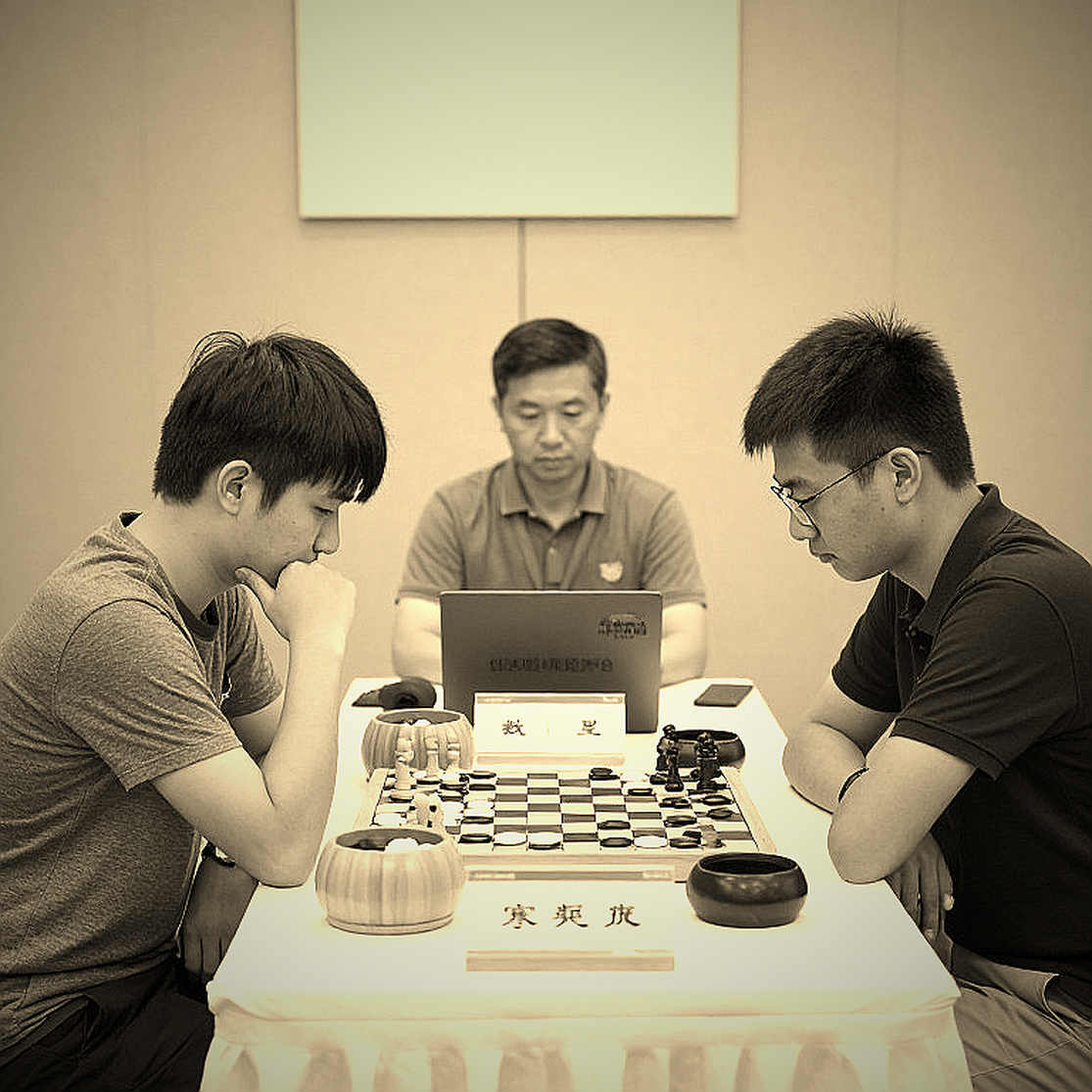
Technically, the piece contains no game, no opening, no time control, no engine evaluation. Any technical reading of it would be invented. The only technically meaningful channel is indirect and unmeasured: sustained exposure to bias or harassment plausibly degrades performance through distraction during preparation, impaired concentration under time pressure, and — most importantly — event selection, meaning declined invitations, avoided venues, and withdrawal from mixed open sections.
What 75 percent actually measures
It is a prevalence metric, not a performance metric. To connect it to performance one would need withdrawal rates by gender, participation continuity across a cycle, error rates under time pressure, and drop-out rates by age band. All are absent.

The gap is not semantic. An organiser trying to decide whether it faces a culture problem or a safety problem gets no guidance from a single aggregate. Culture problems respond to training, codes of conduct and norm change; safety problems respond to reporting channels, investigation and sanction. Merging them is rhetorically effective and administratively useless.
Four missing methodological elements
First, sample size. On a 75 percent estimate, n≈400 implies a 95 percent confidence interval of roughly ±4 points; n≈100 implies roughly ±8.5 points. These are illustrations of why the missing variable matters, not claims about the actual sample. Second, selection bias: surveys distributed through federations and platforms over-sample the most engaged, tournament-active and online-present players — precisely the group most exposed. Self-selected samples typically produce prevalence estimates above population rates. Third, no baseline: asking male players the same question would separate general chess-culture abrasiveness from gender-specific conduct. Fourth, self-report with a single source and no independent audit or control group.
'Bias or harassment': one sentence, two problems
Bias covers conduct that is demeaning but lawful — assumed incompetence, condescension, neglect in training. Harassment is broader and more serious, potentially criminal in many jurisdictions. Aggregating them buries the most severe conduct inside the headline and leaves institutions unsure where to begin. This matters acutely in chess, where much of the activity happens informally — training sessions, camps, travel, sideline conversation, online chat — where regulation barely reaches.
The structural backdrop
Two structural indicators frame the statistic. The rating gap between the top women and the world No. 1 has been roughly 230–280 Elo, and fewer than about 50 women have ever held the full grandmaster title, under two percent of all GMs. Both figures are indicative, approximate and date-sensitive, and should be verified against official rating lists. Neither implies a capability gap; both reflect a pipeline gap in participation, coaching, funding and opportunity. When a group is a small minority of participants, reaching the very top is statistically harder — and that difficulty is routinely misread as evidence of ability, which in turn feeds the bias the survey describes.
Drop-out: the number that matters most
The largest participation problem in chess sits at intermediate level, not the elite. The gap between girls' participation in junior events and women's participation in adult events is produced by slow attrition, not single incidents. A player who leaves competition at 14–18 never appears in any survey, because she is not in the sample. The 75 percent figure therefore captures the experience of those who stayed — people who learned to cope. That is a strength of theirs, not evidence that conditions were mild; and those who left are invisible in the number.
Online chess and the jurisdictional problem
Much chess is now played online, and much harassment occurs there — chat, direct messages, social media. If the survey covered online experience, FIDE is publishing data on conduct largely outside its jurisdiction. Over-the-board chess sits under FIDE and national federations; platforms are private companies. The policy instruments that work for one will not work for the other, which points to co-regulation with platforms — a dimension absent from the available material.
Small professional community, distorted reporting
Chess's professional circle is small, tight and interdependent, with coaches, arbiters, organisers and players often occupying overlapping roles. The cost of complaining is therefore high: invitations, training opportunities and networks can all be at risk. The reported figure is plausibly an under-estimate, especially for the most severe conduct. But rising awareness also raises reporting rates, so a future increase in prevalence will not necessarily mean conditions worsened — it may mean people began speaking.
Policy options and what to monitor
First, publish full data: sample size, timing, instrument, and results stratified by region, age band, and board versus online play. Unstratified numbers cannot target anything. Second, measure bias and harassment separately. Third, add a male baseline. Fourth, repeat the survey on a fixed cycle so trends, not snapshots, inform policy. Fifth, treat online and over-the-board chess separately.
The indicators worth tracking are behavioural, not attitudinal: withdrawal rates by gender, participation continuity by age band, women's share of mixed open sections over time, complaint volumes and average resolution times, and the gender distribution of coaching opportunities.
Verification and limits
The limits should be stated plainly: the primary FIDE document was not available; the information came via a secondary report containing a single chess-related claim; sample size, timing, geography and questionnaire design are unknown; and the statistic's precision and representativeness have not been independently confirmed. The structural figures cited — the rating gap and the number of women grandmasters — are likewise indicative and date-sensitive. The verification path is straightforward: confirm methodology against FIDE's official publication, then seek independent review, and only then draw policy conclusions.
Bottom line
The three-in-four figure is a starting point, not a conclusion. It establishes that the problem is widespread; it does not establish where it sits, what form it takes, or what fixes it. In a sport with no physical basis for a gender gap, the difference is rational to attribute to structure rather than ability. The survey's real contribution is not the striking percentage but the fact that it forced a question into public view that had been treated as private experience. The next step is not to repeat the number but to break it open.