
Prague 2026's 27 Miniatures and the Real Ledger of ChessBase Magazine #225
**मुख्य उत्तर:** ChessBase Magazine #225, Prague Chess Festival 2025 पर आधारित है और इसमें अरविंद चिदंबरम, अनिश गिरि, एदिज़ गुरेल तथा डेविड नवारा के एनोटेट खेल, 27 मिनिएचर, यान वेर्ले, डेनियल किंग व रॉबर्ट रिस के ओपनिंग वीडियो और 10 ओपनिंग आर्टिकल शामिल हैं। **मुख्य तथ्य:** - ChessBase Magazine #225 में 27 मिनिएचर संकलित हैं, जो अलग-अलग सेक्शनों के छोटे निर्णायक खेल हैं। - ओपनिंग वीडियो तीन विशेषज्ञों के हैं: यान वेर्ले, डेनियल किंग और रॉबर्ट रिस। - संस्करण में 10 ओपनिंग आर्टिकल हैं, जो नए रिपर्टरी आइडिया देते हैं। - वितरण दो रूपों में है: सीधा डाउनलोड (PDF बुकलेट सहित) या डाक से बुकलेट और डाउनलोड की। - Prague Chess Festival 2025, 26 फरवरी से 7 मार्च 2025 तक चला; Masters एक 10-खिलाड़ी, 9-राउंड राउंड-रोबिन है। **स्रोत:** ChessBase Magazine #225 का आधिकारिक उत्पाद विवरण, Prague Chess Festival 2025 (26 फरवरी – 7 मार्च 2025)। **संबंधित प्रश्न-उत्तर:** प्रश्न: ChessBase Magazine #225 में कितने मिनिएचर हैं? उत्तर: 27 मिनिएचर, जिन्हें “अत्यंत मनोरंजक” बताया गया है और जो प्राग के विभिन्न सेक्शनों से लिए गए हैं। प्रश्न: इस संस्करण में किन खिलाड़ियों ने अपने खेल एनोटेट किए हैं? उत्तर: अरविंद चिदंबरम, अनिश गिरि, एदिज़ गुरेल, डेविड नवारा और अन्य शीर्ष खिलाड़ियों ने। प्रश्न: ChessBase Magazine #225 किन प्लेटफॉर्म पर उपलब्ध है? उत्तर: सीधा डाउनलोड, डाक से बुकलेट और “ChessBase Book” रूप में iPad, टैबलेट तथा Mac पर।
One line in the contents of ChessBase Magazine #225 buries everything else: “27 highly entertaining miniatures.” Twenty-seven. One festival, one issue, twenty-seven games that ended in so few moves that someone decided they were worth collecting. There is no constitutional definition of a miniature; in training material, the twenty-five-move line functions as an unwritten standard. Twenty-seven means that across the sections at Prague, at least twenty-seven times a player's preparation collapsed in front of him — and somebody counted those games, ordered them, and gave them a heading.
The heading is “entertaining.” I have no quarrel with calling these games entertaining. My quarrel is that the word entertaining removes them from the ledger. Twenty-seven miniatures are not an entertainment package; they are the cheapest public record of opening preparation failing. The day you start reading them that way, the magazine's value detaches from its price.
Context: a product that is also an institution
ChessBase Magazine is more than three decades old and its architecture has not changed: the world's leading players annotate their own games, opening specialists report the direction of theory, and master trainers supply drills in strategy, tactics and endgames. Count the names in issue #225: Aravindh Chithambaram, Anish Giri, Ediz Gurel, David Navara, and others. The opening videos belong to three people: Jan Werle, Daniel King and Robert Ris. Ten opening articles with new repertoire ideas. And the delivery runs on two rails — a direct download with the booklet as a PDF, or the booklet by post with a download key inside. Plus this: the whole issue reads as a “ChessBase Book” on iPad, tablet and Mac.
That last detail is not decoration. The delivery format tells you who the customer is. A product that posts paper and puts a digital key inside it is trying to keep two customers on one invoice: the club player past fifty who wants the magazine on a shelf, and the tournament player past thirty who wants the same material on a screen. The rulebook had a footnote, and the footnote had a price — here the footnote is logistics, and the price is the customer segment the product is unwilling to abandon.
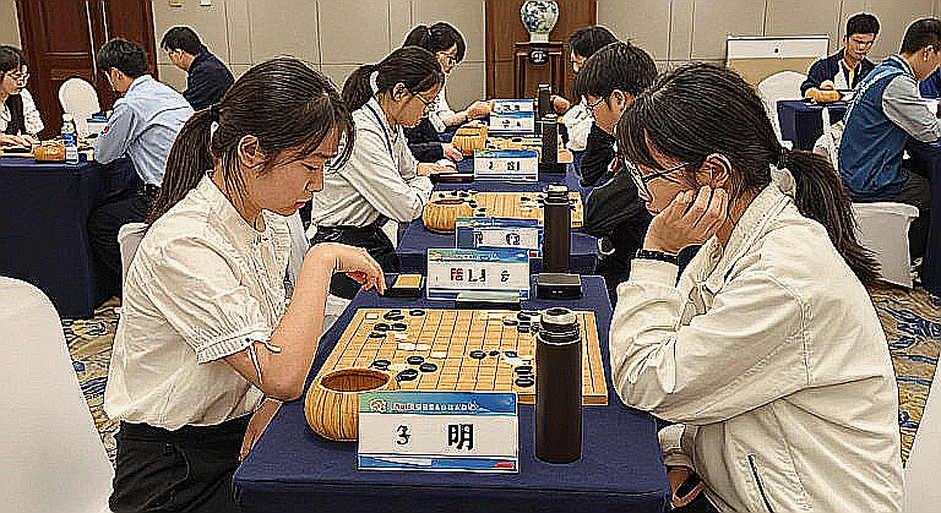
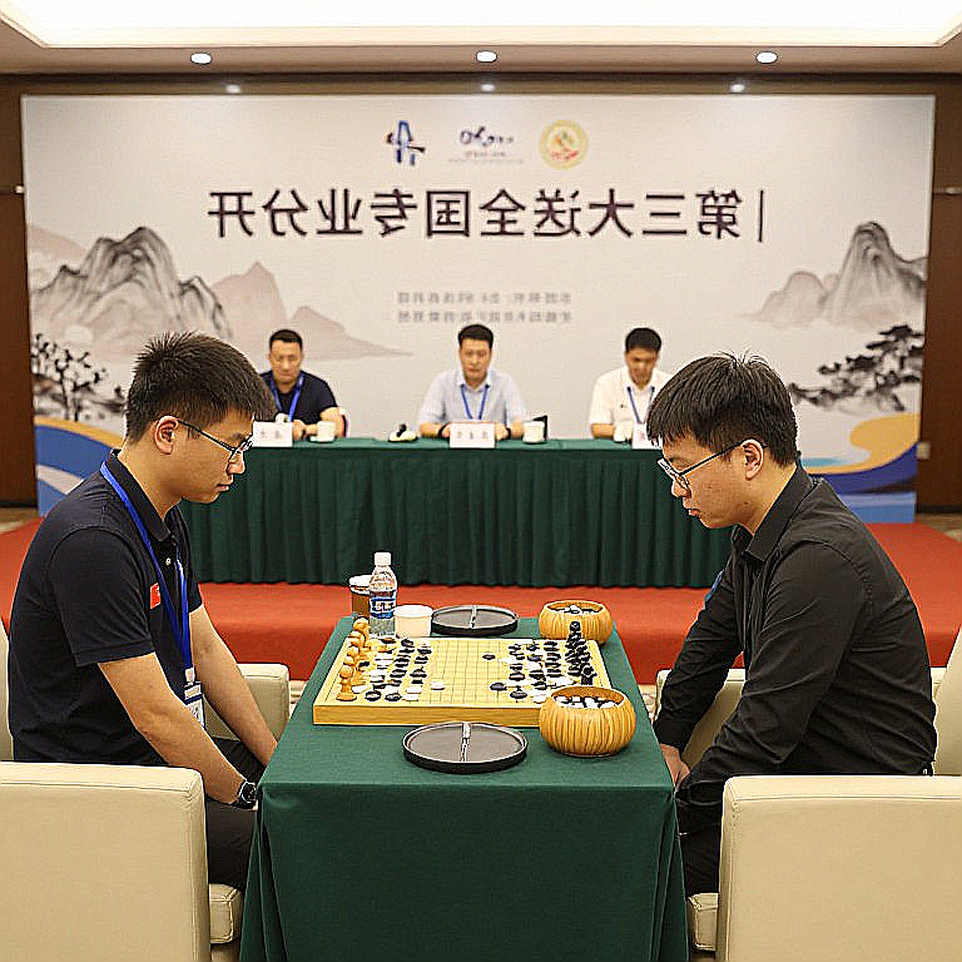
The event context is just as plain. The Prague Chess Festival runs annually in the Czech capital, and its centre is the ten-player round robin called the Masters — nine rounds, nowhere to hide. The Challengers and the Open run alongside, which means three rating tiers inside one hotel in one week. The 2026 edition ran from 26 February to 7 March. That calendar detail matters because Prague sits at the end of winter, exactly in the window when players test a new opening file in public for the first time and when the holes in an old file show up fastest.
I do not read this magazine as a reviewer. I read it as the man who took a junior seat on a risk desk in Ahmedabad in 2026 — football sheets by day, and the chess book nobody wanted at night. One habit has survived from then: every market I touch gets a post-mortem file. This issue is raw material for that file.
An annotation is a primary document, not an opinion
A broadcast gives you the result. An annotation gives you the cause — the move not played, the clock spent thinking, the preparation left at home, and the sentence in which a player admits he was wrong. None of those four things appear in live commentary, because commentary's job is to fill time and annotation's job is accountability.
This issue brings four annotators with four different epistemologies. David Navara's signature is that he writes his own error first and at the greatest length; that is not a temperament, it is a method. Anish Giri stays technically exact and keeps an edge in the sentence — reading him you learn which move was right but bad. Ediz Gurel, the Turkish player born in 2026, is the youngest name in the field, and his annotations carry the rawness that experience removes and nobody can recover afterwards.
And then there is Aravindh Chithambaram. India's quietest elite player. That his games should be annotated and printed in a German catalogue is itself a directional signal. India exports the games; the annotation layer is still manufactured abroad. That is the margin nobody discusses. ChessBase India carries roughly 2.9 million YouTube subscribers — the attention is Indian, and the authority of annotation is still in Hamburg. This imbalance is not a conspiracy; it is a division of labour. Indian teenagers are producing new games daily, and the process that turns a game into a document is old, slow and priced.
Twenty-seven miniatures: an audit of decay
Miniatures are usually sold as brilliant attacks. Structurally they come in two kinds. First: someone's home file turned out deeper than the other's, and the game ended in thirty moves. Second: someone failed to see a well-known trap, and the game ended in twenty-five. The score sheet renders both identically — 1-0 or 0-1. Only the annotation distinguishes them. That is why the bundle matters: twenty-seven games and their explanations in the same issue. The ledger and its footnote are arriving together, and that is the most honest thing about this product.
Here I have an old number I keep returning to. London, 2026, the Carlsen–Caruana world championship. Three Elo points between the two players, and both carried decisive-game rates under 25 per cent in elite round robins. I priced “all twelve classical games drawn” at 6.8 per cent and told the desk to hold tiebreak exposure. All twelve were drawn — a first in world championship history — and Carlsen won the rapid tiebreak 3–0. Twelve draws is not luck. It is a receipt. Since that day I publish the shape of the distribution before a big event instead of a prediction.
The twenty-seven Prague miniatures should be read with the same logic. When one festival produces many short decisive games and many long draws at once, the distribution goes bimodal and the middle empties out. That middle — the thirty-to-fifty-move grind — is where the club-level player actually lives. Training material does not fill that hollow; it widens it, because miniatures are easy to sell and a forty-move grind is hard. This is not the product's fault. It is the market's structure, and blaming a structure is useless. Recording it in the ledger is the work.
Three videos, three registers, one supply chain
Jan Werle, Daniel King and Robert Ris — three names, and if you file them under one category you will miss the architecture. They are not doing the same job.
Werle is the opening specialist. His job is detection — which line is reappearing on the tournament circuit, which variation has shifted in engine evaluation, where a human is still ahead of the machine. That is the detection stage. King is the broadcast man; his job is translation, converting a complex variation into a language the viewer in front of a screen can bear. That is the translation stage. Ris builds repertoires; his job is installation, putting the line into your file so you can play it next month.
Detect, translate, install — a three-stage pipeline, and Indian chess media did the middle stage at scale while leaving the first and third alone. ChessBase India carried translation to 2.9 million people, while detection stayed in magazines and academies and installation stayed in coaching. That is why the current situation is odd: the largest audience base is in India, and the most expensive service — “tell me what works for me” — is still sold from outside.
Ten opening articles: a repertoire is a maintenance contract, not a purchase
An opening idea has a half-life, and it is short. Anything printed as a “new idea” in issue #225 is public from the day of publication. For a professional its value begins falling that same hour. So what are you buying? Not a secret — a maintenance schedule. Ten articles are a service contract whose promise is simple: somebody else watched the thousands of games you do not have time to watch.
Tbilisi, 2026, taught me that at a cost. I built the FIDE World Cup model on classical Elo alone. Levon Aronian took the title in the rapid tiebreaks, and the post-mortem showed the model was undervaluing rapid specialists by roughly forty rating points. I filed a twelve-page review nobody had asked for. The rule that came out of it: classical, rapid and blitz are three separate inputs, never one. The same rule applies to an opening article. An article that does not separate time controls is incomplete, however beautiful its lines.
India's line and Turkey's bet
Two names in this issue should be read side by side, because they are two different pipeline models.
Aravindh Chithambaram comes out of the Tamil Nadu line — the state that supplies more of India's grandmasters than any other. That line runs like a supply chain: the Velammal school route, the Tal Chess Club inheritance, and the public-sector wage floor at ONGC, LIC and the Railways, which tells a player that next year's rent will arrive. This model bets on volume. Train a hundred children, ten emerge, two reach elite level. Volume wins on variance.
Ediz Gurel is the other model — the spike. A player born in 2026, a federation's entire attention on one teenager. This model wins headlines and carries the most risk in a bad year. In a ten-player round robin like Prague he is the youngest name in the field, and that is where I have to stop counting. Because in this issue his losses travel to subscribers worldwide as training material — and he is still at the age when losing is being learned. A rating delta is easy to verify; a teenager's fatigue is not. The spreadsheet does not flinch when the crowd roars, and that is its weakness as much as its strength.
Contrarian: pre-register the null hypothesis
My habit is to write down what the obvious read would look like if it turned out to be correct, before arguing against it. Here the obvious read is this: twenty-seven miniatures simply mean the Open section had a long tail of weak players, they lost quickly, and the magazine called them “entertaining” to fill a contents page. If that is the case, there is nothing to learn and I should print exactly that.
Three things would vindicate that hypothesis. First, if all twenty-seven games came from the Open or Challengers and none from the Masters. Second, if their average rating sat well below the Masters field. Third, if they arrived in a cluster in the first two rounds — because preparation is raw early and cooks later. I will be honest about my position: I have the contents page and the description of this issue, not the full game list. The day that list arrives I will run those three checks and publish whatever they show.
One claim I can make without the data, because it is written into the product's architecture. The miniature collection and the annotations ship in the same issue, which means the publisher knows these games do not explain themselves. If they were pure entertainment, no explanation would be needed. The presence of the explanation is the tell.
A second counter-point concerns distribution, and it will annoy everyone who writes “print is dying” every year. This issue sells two ways: a direct download, or a booklet by post with a download key. That is not nostalgia; it is customer acquisition. A product that can post paper is telling you its buyer is not the twenty-two-year-old watching free video. The magazine here is a loyalty product and the video is its funnel — same company, and the two do not compete; one stands on top of the other.
What to watch next
For the next edition I have one cheap indicator: the miniature count. If Prague 2026 returns thirty-two or thirty-five, one of two things is true — either the top field's preparation has deepened, or the tail has lengthened. Separating them is not expensive: look at the rating spread of those games. If the spread is narrowing while miniatures rise, preparation has deepened and you should spend money on your opening file. If the spread is widening, the crowd simply grew and you should do nothing.
I keep the log so the log can keep me honest. Twenty-seven miniatures is a number, and numbers do not argue — they wait to be read properly. The question is not whether the chess at Prague was good. The question is this: the next time a magazine hands you twenty-seven “entertaining” games, will you read them or watch them?