
Eleven Years, Seven Months, a 2,465 Performance Rating — and a Calendar That Has Not Closed
**मुख्य उत्तर**: एक 11 वर्ष 7 माह 16 दिन की महिला शतरंज खिलाड़ी ने बोर्ड वन पर 5.5/7 (पाँच जीत, एक ड्रॉ, एक हार) स्कोर करते हुए 2,465 का परफॉर्मेंस रेटिंग दर्ज किया; अंतिम राउंड में उसने WIM विक्टोरिया जोहानसन को काले मोहरों से हराया। **मुख्य तथ्य**: - सात राउंड में स्कोर 5.5/7 रहा, जिसमें पाँच जीत, एक ड्रॉ और एक हार शामिल है। - परफॉर्मेंस रेटिंग 2,465 दर्ज है, जो खिलाड़ी के 2,400+ थ्रेशोल्ड से ऊपर है। - अंतरराष्ट्रीय मास्टर एक ओपन खिताब है; WGM अलग समानांतर ट्रैक है, विकल्प नहीं। - FIDE नियम के अनुसार एक नॉर्म के लिए कम से कम नौ गेम आवश्यक हैं; रिपोर्ट सात राउंड का इवेंट बताती है। - रिपोर्ट की आंतरिक तिथियाँ घटना को 23 अक्टूबर 2026 की ओर ले जाती हैं, जो विश्लेषण तिथि से आगे है। **स्रोत**: स्टेज-2 विश्लेषण दस्तावेज़ (आंतरिक स्रोत का नाम स्पष्ट नहीं); घटना तिथि 23 अक्टूबर 2026 के रूप में दर्ज, स्वतंत्र सत्यापन लंबित। **संबंधित प्रश्नोत्तर**: प्रश्न: क्या IM खिताब केवल पुरुषों के लिए है? उत्तर: नहीं, IM एक ओपन खिताब है जो सभी लिंगों के लिए खुला है; महिलाओं के लिए अलग WGM ट्रैक मौजूद है। प्रश्न: 2,465 का परफॉर्मेंस रेटिंग कितना भरोसेमंद है? उत्तर: सात गेम के छोटे सैंपल में एक ही गेम का बदलाव लगभग 70 अंक का अंतर डालता है, इसलिए इसे संकेत मानें, प्रमाणपत्र नहीं। प्रश्न: खिताब की पुष्टि के लिए क्या चाहिए? उत्तर: तीन IM नॉर्म, प्रत्येक में कम से कम नौ गेम, लगभग 2,450 का प्रदर्शन, 2,400 का रेटिंग फ्लोर और FIDE की आधिकारिक मंज़ूरी।
Seven rounds on board one: five wins, one draw, one loss. Score 5.5/7. Performance rating 2,465. The player carrying that number is listed at 11 years, 7 months and 16 days old, and her own rating threshold is 2,400-plus. In the final round she had the black pieces, built an advantage out of a gambit line, won a pawn, absorbed an attack, and reached a winning material imbalance. Across the board sat WIM Viktoria Johansson.
I turned the match report into a table, then the table into a question. The first question was not how well she played. It was how much of a 2,465 performance rating survives on seven games — and the second question, the less comfortable one, was where the report's calendar finally stops moving.
Read the terms of the claim first
International Master is an open title, not a gender-restricted one. The "Nam" label in the source is Vietnamese reporting convention for the open/men's track; it does not change what the title is. The separate women's track is WGM, and the two run parallel rather than substituting for each other. This matters because a headline reading "11-year-old girl becomes IM" leads most readers to file it under a women's-category achievement. Technically it is an open-track achievement, and that is what makes it harder.

The arithmetic of the title needs to stay visible too. Under FIDE regulations a norm requires a minimum of nine games, an IM norm requires performance around 2,450, three norms are needed, and the rating floor is 2,400. The report describes a seven-round event. Seven rounds cannot by themselves constitute a full norm; they have to be combined with another event inside a norm period. That is not a contradiction, it is an open question, and the answer lives in the full crosstable rather than the headline.
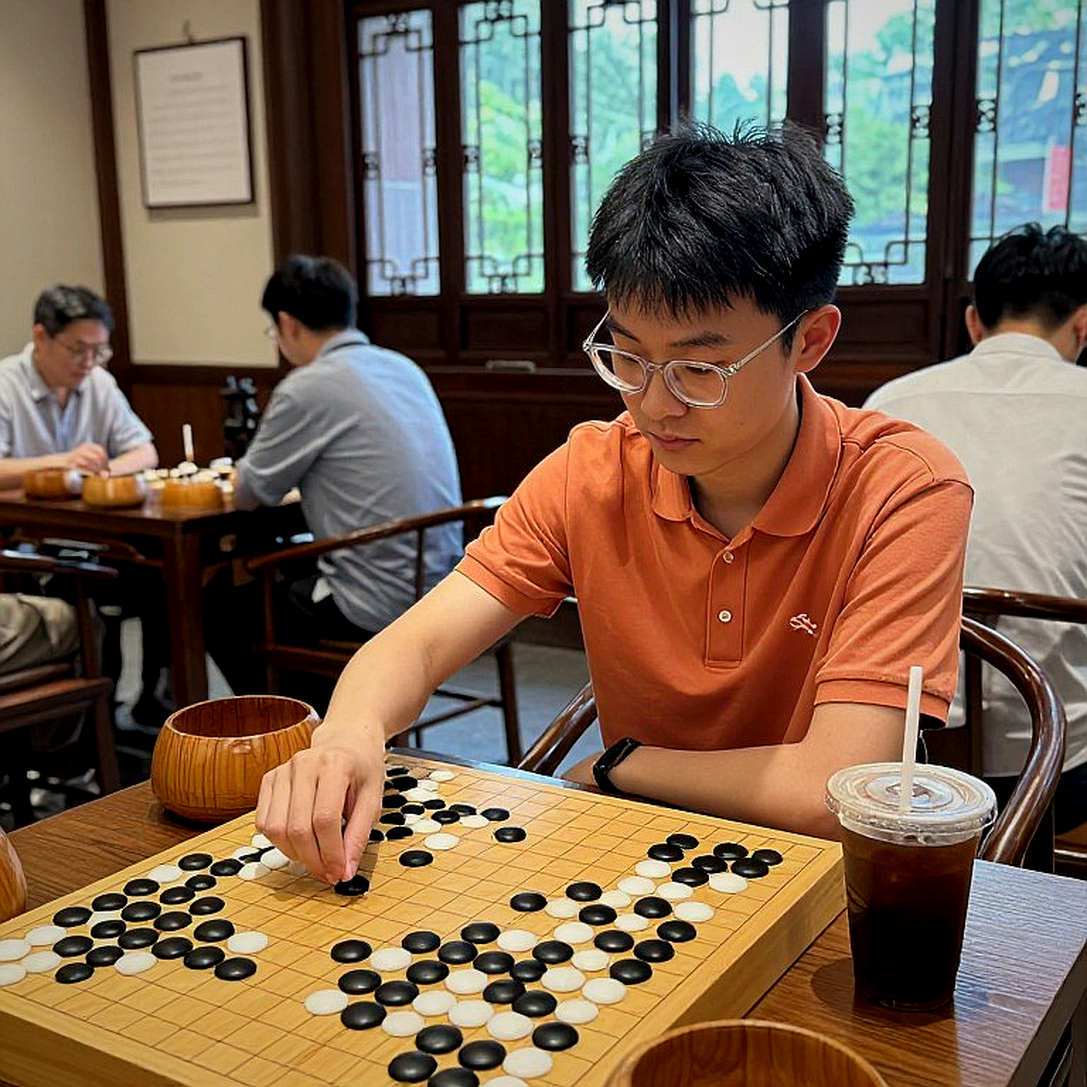
My habit is to hold every "youngest titled player" story in three columns: rating, sample, calendar. The rating says how high the performance was. The sample says how firmly that performance was measured. The calendar says on what date the event happened and who confirmed it. In this report the first column glows, the second is thin, and the third is still open.
The real weight of 2,465
Performance rating is a highly sensitive instrument, which is also its weakness. A score of 5.5 in seven games is a 78.6 per cent result. That converts to a rating differential of roughly +229. If the average opponent sat near 2,236, the performance lands at 2,465. Now convert the last round from a win to a draw: 5/7 is 71.4 per cent, the differential drops to +157, and the performance rating slides about 70 points to 2,393.
One game is worth roughly 70 points of performance rating across a seven-game event. That is why a small-event PR should be read as a signal, not a certificate. A 2,465 does not say she is a 2,465 player; it says that across a seven-game window she performed like one. The window is narrow, the wall is high, and both statements are true.
The number still cannot be waved away, because the field was mixed — WGM and GM opposition — and she was on board one. Board one is not merely a ranking; it is a ranking with consequences: the strongest opponent, the least room to hide, the most team pressure. For an 11-year-old, 5.5/7 on board one means her preparation matched what the team needed, not just what her mood wanted. A board order is just a ranking with consequences; I learned to read both.
The final round: process, not adjectives
The most useful sentence in the report is the one describing the last game's process. Gambit line, advantage, pawn, withstand the attack, winning material imbalance. That is a five-step chain, and every step demands a different skill. Accepting a gambit is nerve; converting it into an advantage is preparation; winning a pawn and keeping it is discipline; holding the advantage through an attack is composure; reaching a winning material imbalance is technique. For an 11-year-old to compress all five into one game is rare — and this is the one place where the number and the narrative corroborate each other.
This is also where an honest line has to be drawn. The report contains no moves, no engine data, no ACPL, no named opening. "Gambit line" is a category, not a variation. Which means: I cannot measure technical sophistication from this report; I can only describe it. Where the data stops, I have to say the data stops — not convert an inference into a column.
An expert's adjective is not my column
A federation official has described her as positionally strategic, solid, with endgame intuition. That is an informed opinion and it has value, but it is not a measured trait. The standard junior profile is calculation-heavy; this profile is being described as balance-heavy. If that holds, it matters more than it sounds, because above 2,400 the calculation-first players tend to stall and the balance-first players tend to climb. I will still not use the quote as data. I will treat it as a hypothesis to be tested against endgame conversion over her next two events.
The calendar: the column that is still blank
Here is the part getting the least attention. The report lists a 2026 birth year, an age of 11 years 7 months 16 days, an event on 23 October, a British women's title in August 2026, and a coach since January 2026. Add those dates together and the event resolves to October 2026 — later than the analysis date. That is a red flag, and I will not bury it.
A record claim rests on three things: the event date, the crosstable, and federation-level confirmation. None of the three is directly present in this report. The source is not explicitly named either. That does not make the claim false; it makes it reported rather than verified. In journalism that gap is not small.
In Kolkata I learned that a clean table can still hide a dirty question. Here the table is very clean: 5.5/7, 2,465, age 11. The dirty question is who checked the date printed above it.
Where correlation gets mistaken for cause
The easiest conclusion is that a 2,465 performance confirms the title. Those are two different objects. The title is an administrative status — three norms, nine-game conditions, a 2,400 floor, and FIDE ratification. The performance rating is a statistical event — seven games, one tournament, one season. They point at each other; they do not replace each other.
The second error is turning an adjective into a measurement. "Solid", "intuitive", "mature" — that is an official's language, not my table's. My table has five wins, one draw, one loss, and a performance figure that moves 70 points on a single game.
The third error is mine, and I will name it: Chennai-funnel bias. When I built the board-order memo for the 2026 Olympiad, my cleanest data came out of the Tamil Nadu pipeline — and the cleanest data always flatters itself. The cleanest data here is the seven-game run. The data that is missing is the least attractive kind: the full crosstable, the official event calendar, and FIDE-level confirmation of the title. The first honest column was the one labelled what we got wrong.
What to watch next
I am registering the forecast with a date and a threshold so it cannot be softened later. If the event date is independently confirmed as 23 October 2026 and FIDE announces the title, then I expect her live rating to cross 2,400 within twelve months of that date — and endgame conversion above 60 per cent across at least two events in that window. If either fails, then 2,465 was a beautiful window, not a permanent leap.
Model the failure first, and the success stops pretending to be magic. The real question in this story is not whether an 11-year-old can become an IM. She can, and the evidence here points that way. The real question is when we are willing to call the story verified — and whether we have the discipline to wait for that date.