
Wrestling
From the Akhara to the Olympics: Indian Wrestling's Crisis, Struggle and Promise
पेरिस 2024 ओलंपिक में भारतीय कुश्ती को अमन सेहरावत (पुरुष 57 किग्रा फ्रीस्टाइल) के रूप में सिर्फ एक कांस्य पदक मिला। सबसे चर्चित घटना विनेश फोगाट की रही, जो महिला 50 किग्रा के फाइनल में पहुंचने के बाद वजन सीमा से करीब 100 ग्राम अधिक पाई जाने पर अयोग्य घोषित हुईं; खेल न्यायालय ने संयुक्त रजत की अपील खारिज की और उन्होंने संन्यास की घोषणा की। 2023 के पहलवान विरोध-प्रदर्शन और संघ के निलंबन से प्रशासनिक अस्थिरता पैदा हुई। मुख्य सुधार क्षेत्र: वजन प्रबंधन, प्रशासनिक स्थिरता, स्पोर्ट्स साइंस और जूनियर-से-सीनियर संक्रमण।
Indian wrestling's reckoning after the Paris Olympics is less about celebration and more about an audit. Six wrestlers, one bronze medal, a handful of defeats in which athletes fought to the last second but the scoreboard told a different story, and a controversy that once again exposed the administrative fragility of India's Olympic machinery. This report is about that audit — of data, facts and structural cracks.
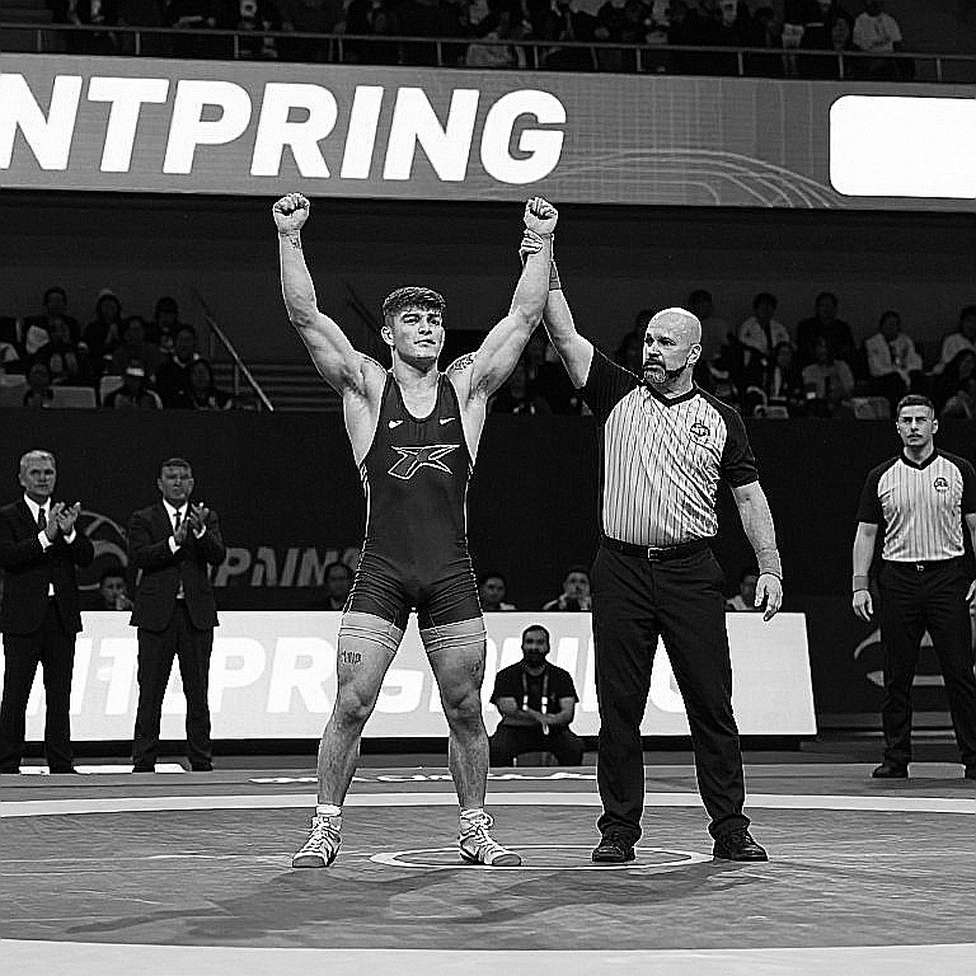
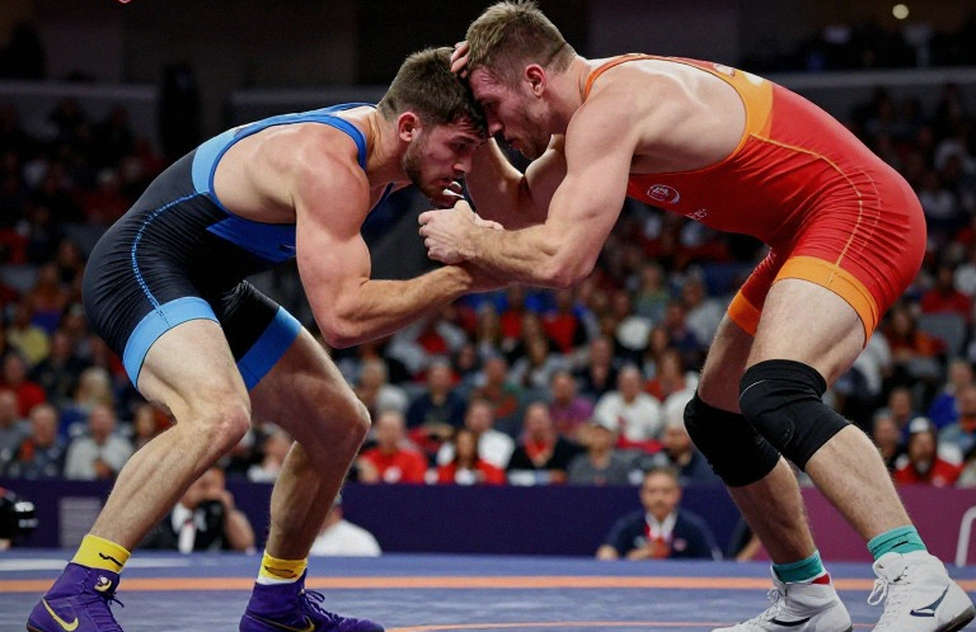
The True Value of a Bronze: Aman Sehrawat's bronze in the men's 57kg freestyle was India's only concrete result in wrestling at these Games. Winning an Olympic medal at 21 is significant in itself, but the story behind the medal is bigger than the medal table suggests. After a technical-superiority loss to Japan's Rei Higuchi in the semifinal, Aman had only hours before the bronze bout — and in those hours he had to shed several kilograms. That is the same process that has repeatedly pushed Indian wrestling into crisis. Aman beat Puerto Rico's Darian Cruz 13-5 in the bronze medal match. The exhaustion visible in the photographs afterwards was not the exhaustion of one bout but of a system in which a young athlete must first fight his own body and then his opponent. Aman comes from a village in Jhajjar district and trained at Delhi's Chhatrasal Stadium. His story is the strength of a traditional system that can take a village boy to an Olympic podium — and also its limit, because that system still treats sports science, nutrition and injury management as secondary.\n\nWhy Weight-Cutting Remains the Biggest Risk: Cutting weight is not new in wrestling; it is part of the sport's ethos. But international rules on weight management have tightened and incidents have not stopped. Athletes weigh in a day before competition, get 12 to 18 hours for recovery, and then weigh in again the next morning. In a two-day tournament the same athlete must clear the scale twice. That technical point is where individual carelessness and institutional indifference combine to destroy an entire Olympic campaign. Internationally, weight-cutting is supposed to involve a nutritionist, a physiotherapist and a doctor together. Most Indian akharas do not have all three. Coaches decide on experience, athletes ignore their bodies' signals, performance drops and injury risk rises. Aman's bronze is the successful version of that risky path; not every wrestler is Aman.\n\nThe Vinesh Phogat Case: Two Stories in One Day: The biggest talking point of these Games was Vinesh Phogat. What she did in the women's 50kg — beating Japan's Yui Susaki, widely regarded as unbeatable on the international mat, in the first round, then defeating opponents from Ukraine and Cuba to reach the final — will be remembered as the boldest performance in the history of Indian wrestling. An Indian woman reaching an Olympic final was historic in itself. Then came the morning news that shook the country: at the weigh-in before the final, Vinesh was found roughly 100 grams over the limit and was disqualified. After overnight attempts to cut weight, dehydration and physical exhaustion, she had to be hospitalised. She lost not just a medal but her entire tournament record. Her appeal to the Court of Arbitration for Sport for a shared silver was dismissed. On 15 August 2026 she announced her retirement from wrestling — on Independence Day, from the sport to which she had given her life.\n\nQuestions That Are Not Hers Alone: To treat this as one athlete's mistake would be a serious error. Where were the nutritionist, the coach and the support staff attached to the squad of an Olympic finalist? Was there a written weight-management plan? Was there hourly monitoring? Was responsibility fixed on one person? If these questions go unanswered, it can happen again. Indian sports administration has an old habit: find an individual to blame and close the file. But in a sport like wrestling, success and failure belong to the support system, not one person. In international teams, weight management is a separate expertise with its own budget and accountability. In India it is still left to a coach's experience and an athlete's discipline. That gap is what separates a medal from a tragedy.\n\nRetirement and Politics: Vinesh entered active politics weeks after retiring and won the Julana seat in the Haryana assembly elections. This marks a significant shift. On one hand it shows athletes now have the courage to put their identity and struggle on a public platform; on the other it shows that sports administration has failed to keep its biggest stars within the sport. When wrestlers do not find justice on the mat, they look for answers off it.\n\nWomen's Wrestling: Structural Imbalance Despite Success: Indian women's wrestling has been the most inspiring story of the past decade, from Sakshi Malik's Rio 2026 bronze to Tokyo and now Paris. But behind that success is a hard truth — women wrestlers still get fewer resources, fewer coaches and less security than men. Most come from a handful of centres in Haryana and Delhi, so a crisis there affects the entire women's programme. Antim Panghal's case in Paris is an example: below-par performance in the 53kg, followed by a controversy over her Olympic credentials involving a relative's entry into the Games Village. The matter may be technical, but it cast an unnecessary shadow over a young career. When an athlete should be thinking only about the bout, having to fight administrative disputes is a system failure. Nisha Dahiya, in good position in the 68kg, withdrew through injury; Reetika Hooda could not get past the quarterfinals in 76kg; Anshu Malik also fell short. The common thread: Indian wrestlers are competitive internationally in strength and endurance but lag in strategy, defensive wrestling and decision-making under pressure. Modern wrestling's scoring rules reward making an opponent passive and accumulating points; Indian wrestlers still depend on the hold and the reversal.\n\nWhat the Numbers Say: Tokyo 2026 brought Ravi Dahiya's silver and Bajrang Punia's bronze; Paris 2026 brought one bronze. On the surface that is a decline, but deeper down it signals a generational transition. The Tokyo medallists are at the end of their careers and the next generation is not yet ready. In such a transition the greatest need is a stable, professional, controversy-free administration. Indian wrestling has not had one for two years.\n\nThe Federation Crisis: In early 2026 India's top wrestlers protested at Jantar Mantar over sexual harassment allegations, demanding an inquiry against the then federation president. It was an extraordinary moment in Indian sport, with Olympic medallists putting their reputations on the line on the street. Police registered a case and filed a chargesheet. The federation was suspended, an ad-hoc committee was formed and elections were held. But questions arose about the new leadership too, and the sports ministry suspended the new body. The impact fell directly on athletes: delays in international entries, disrupted camp calendars, stalled foreign coach appointments and unstable funding. If a wrestler cannot know whether his federation will be recognised next month, how does he focus on Olympic preparation? Paris's single bronze is the price of that administrative chaos.\n\nThe Akhara's Strength and Its Limit: Indian wrestling's greatest strength is its grassroots system. Akharas remain active in villages across Haryana, Delhi, Uttar Pradesh and Punjab, where children step into the mud at five in the morning. That tradition produced Aman Sehrawat and Vinesh Phogat; it predates government schemes and remains more effective than many of them. Its limit is that the akhara builds the body, not the sporting mind. Modern international wrestling needs video analysis, opponent scouting, recovery science and mental training as much as technique. Most Indian centres lack this framework. Until the akhara tradition is connected to sports science, Indian wrestlers will lead in talent and trail in results.\n\nMoney Arrives, Direction Doesn't: Through Khelo India and the Target Olympic Podium Scheme, wrestling has received substantial funding — foreign training, international competition exposure, physiotherapy. But money without accountability becomes expenditure. Coach selection is often influenced by politics, and the same coaches stay in position for decades. A closed system struggles to absorb new ideas. Athletes' financial security is another question: some state governments give jobs to medallists, but not to everyone. Those who do not win medals are forced to look elsewhere, and a large amount of talent exits mid-way. A strong base requires stable support for junior athletes too.\n\nThe Junior Pipeline: The most important question after Paris is who is being prepared for the next Olympics. Indian wrestlers have won medals at under-17 and under-20 international events, but junior success has rarely translated to the senior level, largely because of a lack of guidance during transition — weight categories change, training intensity changes, competition levels jump. Countries that plan this transition see junior medallists become senior contenders.\n\nA Changing International Map: Globally the balance is shifting. Iran and Russia remain strong in men's freestyle and Greco-Roman, the United States has depth through its college system, and Japan has established dominance in women's wrestling. Japan's success is not only talent but a continuous competition structure at school and club level. India must similarly strengthen its domestic calendar so athletes get real matches through the year.\n\nThe Olympic Future of Wrestling: A few years ago wrestling's place on the Olympic programme was in doubt; a 2026 warning triggered strong protest and reforms that kept it. Wrestling will be part of Los Angeles 2028, but the threat has not disappeared. Olympic programme reviews consider viewership, broadcast value and global popularity. India and similar countries must actively popularise the sport, not just win medals.\n\nThe Sushil Kumar Lesson: The criminal case registered in 2026 against Indian wrestling's biggest hero shook the sporting world. That a two-time Olympic medallist could be embroiled in such a matter shows that training talent matters as much as creating an environment of responsibility and discipline. The guru-shishya tradition plays a huge role in akharas, and that same tradition can suppress a culture of asking questions. A modern sports system needs safety, transparency and grievance redress as much as it needs to teach technique.\n\nSix Concrete Steps: First, make weight management mandatory, documented and expert-led, with a nutritionist attached to every international squad and hourly monitoring. Second, bring stability to sports administration so athletes are not uncertain about the training calendar. Third, connect the akhara system to sports science — video analysis, recovery and mental training at every regional centre. Fourth, create a dedicated junior-to-senior transition programme covering weight-category management and international exposure. Fifth, spread the domestic competition calendar across the year. Sixth, build separate, safe and accessible training centres for women wrestlers so talent is not confined to a few Haryana districts.\n\nConclusion: Paris's single bronze is not a cause for despair but a clear signal. Indian wrestling has everything needed to win medals — talent, tradition and grit. What it lacks is institutional. Aman Sehrawat proved that with the right guidance an Indian wrestler does not yield to the world's best. Vinesh Phogat's case proves that talent alone is not enough; it needs the right system beside it. The time to the next Olympics is not long. If Indian wrestling is to close its structural gaps, it must start with weight management, administrative stability and sports science. The mud of the akhara has never disappointed us; now it is time to build a modern structure on top of it.

संबंधित खिलाड़ी
अनुशंसित
From a 100-Gram Weigh-In Sheet to LA 2028: The Calendar Injures Indian Wrestling First2026-10-25
From the Akhara to the Olympics: Indian Wrestling's Crisis, Struggle and Promise2026-11-01
The Hundred-Gram Dossier: Re-Reading Vinesh Phogat's Weigh-In File by the Paper Trail2026-10-25
Fifty Kilos and One Hundred Grams: In Wrestling, the Medal Is Decided in the Weigh-In Room2026-10-30
Wrestling’s New Path: Grassroots Preparation, Scientific Training and Transparent Selection2026-10-28
The Pro Wrestling League's 2026 Return: The Payment Sheet, the Franchise Agreement, and the Column Still Blank2026-10-25
The 100-Gram Ledger: Two Years Between the Paris Scale and the Sonepat Calendar2026-10-29
अनुशंसित
The Scale, the Akhada and the Election Calendar: An Audit of India's Eight Olympic Wrestling Medals2026-11-01
The 57-to-66 kg Alley: What India's Eight Wrestling Medals Have Been Hiding2026-10-24
The Pro Wrestling League's 2026 Return: The Payment Sheet, the Franchise Agreement, and the Column Still Blank2026-10-25
The 100-Gram Ledger: Two Years Between the Paris Scale and the Sonepat Calendar2026-10-29
From a 100-Gram Weigh-In Sheet to LA 2028: The Calendar Injures Indian Wrestling First2026-10-25
Fifty Kilos and One Hundred Grams: In Wrestling, the Medal Is Decided in the Weigh-In Room2026-10-30
The Hundred-Gram Dossier: Re-Reading Vinesh Phogat's Weigh-In File by the Paper Trail2026-10-25
अनुशंसित
The Pro Wrestling League's 2026 Return: The Payment Sheet, the Franchise Agreement, and the Column Still Blank2026-10-25
The 57-to-66 kg Alley: What India's Eight Wrestling Medals Have Been Hiding2026-10-24
The 100-Gram Ledger: Two Years Between the Paris Scale and the Sonepat Calendar2026-10-29
The Hundred-Gram Dossier: Re-Reading Vinesh Phogat's Weigh-In File by the Paper Trail2026-10-25
The Scale Was Right: From 100 Grams to 57 Kilos, Auditing Indian Wrestling's Depth2026-10-30
From the Akhara to the Olympics: Indian Wrestling's Crisis, Struggle and Promise2026-11-01
Wrestling’s New Path: Grassroots Preparation, Scientific Training and Transparent Selection2026-10-28
अनुशंसित
The 57-to-66 kg Alley: What India's Eight Wrestling Medals Have Been Hiding2026-10-24
Wrestling’s New Path: Grassroots Preparation, Scientific Training and Transparent Selection2026-10-28
Fifty Kilos and One Hundred Grams: In Wrestling, the Medal Is Decided in the Weigh-In Room2026-10-30
The Hundred-Gram Dossier: Re-Reading Vinesh Phogat's Weigh-In File by the Paper Trail2026-10-25
The Scale, the Akhada and the Election Calendar: An Audit of India's Eight Olympic Wrestling Medals2026-11-01
The 100-Gram Ledger: Two Years Between the Paris Scale and the Sonepat Calendar2026-10-29
The Scale Was Right: From 100 Grams to 57 Kilos, Auditing Indian Wrestling's Depth2026-10-30