
Inter's Derby Defeat: What Chivu's Words Actually Mean, and the Information the Report Never Gave You
सारांश: सैन सिरो में मिलान के खिलाफ डर्बी हार के बाद इंटर मिलान के कोच क्रिस्टियन चिवु ने मैच-पश्चात प्रेस वार्ता में दोहरी व्याख्या दी — एक बाहरी (मैच से घंटों पहले लाइनअप बदलना, 'पियो' की तबीयत खराब, 'बोनी' को बुख़ार) और एक आंतरिक (भूख और आक्रामकता की कमी, रक्षापंक्ति की लापरवाही, अतीत में जीना)। उन्होंने यह भी कहा कि वे 'सब कुछ नहीं फेंक रहे' — यह वाक्य पूरे बयान की धुरी है। मूल रिपोर्ट (Goal.com, Sky Sport Italia के हवाले से) में स्कोर, तारीख़, राउंड, गोल करने वाले खिलाड़ी और गोल का समय — कुछ भी नहीं दिया गया; 39 सूचना-बिंदुओं में लगभग 26 एक ही इंटरव्यू के उद्धरण हैं और स्वतंत्र रूप से सत्यापित तथ्य शून्य हैं। अनुवाद संबंधी तीन चेतावनियाँ: (1) 'nastiness' इतालवी cattiveria का ग़लत अनुवाद है, असली अर्थ 'मैदान पर अड़े रहने की ज़िद' है, न कि दुर्भावना; (2) 'gifted Milan the approach' का अर्थ 'मिलान को आसानी से लय पकड़ने देना' है; (3) 'the defense Inter have to defend' अनुवाद की ख़राबी है और सीधे उद्धरण योग्य नहीं। 'पियो' का सबसे संभावित अर्थ फ्रांसेस्को पियो एस्पोसिटो और 'बोनी' का आंज-योआन बोनी है, पर दोनों की पुष्टि रिपोर्ट में नहीं है। निष्कर्ष: यह एक उद्धरण-चालित ख़बर है — 'कोच ने क्या कहा' के लिए भरोसेमंद, 'मैच में क्या हुआ' के लिए नहीं।
Inter Milan lost the derby against Milan at San Siro. What head coach Cristian Chivu said afterwards was not a simple explanation of a defeat. His remarks contained two distinct explanatory frameworks running side by side, and separating them is essential — because one framework protects the players, while the other keeps pressure on them. Journalism that prints both without distinction leaves the reader with a blurred picture: the team played badly, injuries disrupted things, and the coach said some harsh words. The reality is sharper than that, and more layered.
This report has two purposes. First, to record accurately what Chivu actually said. Second, to show that the news report on which all of this discussion rests does not fulfil its own promise. Its headline advertises a "tactical emergency", but the shape, the cause and the consequence of that emergency are all left blank.
The structure of the report: one voice, repeated
The analysis underlying this article counts 39 information points in the original report. Roughly 26 of them are quotes or paraphrases from the same single post-match press conference. Five are the journalist's own commentary or narrative. Independently verified hard facts: none.
In other words, the entire report has one source: the coach's post-match interview. It reached the public via Sky Sport Italia, and Goal.com picked it up from there. That double transfer means the reader is consuming a second or third rendering of the original Italian sentences.

More seriously, attribution breaks down. Several early points are marked "via Sky Sport Italia"; from the middle onward the marker disappears. When fragments of one interview first appear as quotes and later as unattributed statements, the reader is led to believe there are two sources — when in fact there is one voice, played twice.
The same slippage occurs between quote and opinion. Some lines attributed to Chivu are framed as "Chivu noted" or "Chivu emphasised" — indirect speech. Treating these as the coach's remarks is fine; treating them as the reporter's independent judgement is not. The journalist's own opinion appears in only two places; the rest belongs to the coach.
What Chivu actually said
His remarks fall into four parts.
One: the circumstances. Chivu said the starting lineup had to be changed hours before kick-off. The team had to "improvise" and "make do with what was available". He named two players: "Pio", who was unwell, and "Bonny", who had a fever.
There is a basic problem here. "Pio" is not a full name. The most likely referent is Francesco Pio Esposito, an Inter forward — but the report never says so. "Bonny" is most likely Ange-Yoan Bonny, who joined from Parma in summer 2026 — but that too is inference, not fact. Neither full name, position nor status is given.
Two: the performance. Chivu said the team showed no intensity at the start. They let Milan "settle into the game easily". They "gifted" another goal. The coach's assessment is that the defeat came from his own team's errors, not from the opponent's superiority.
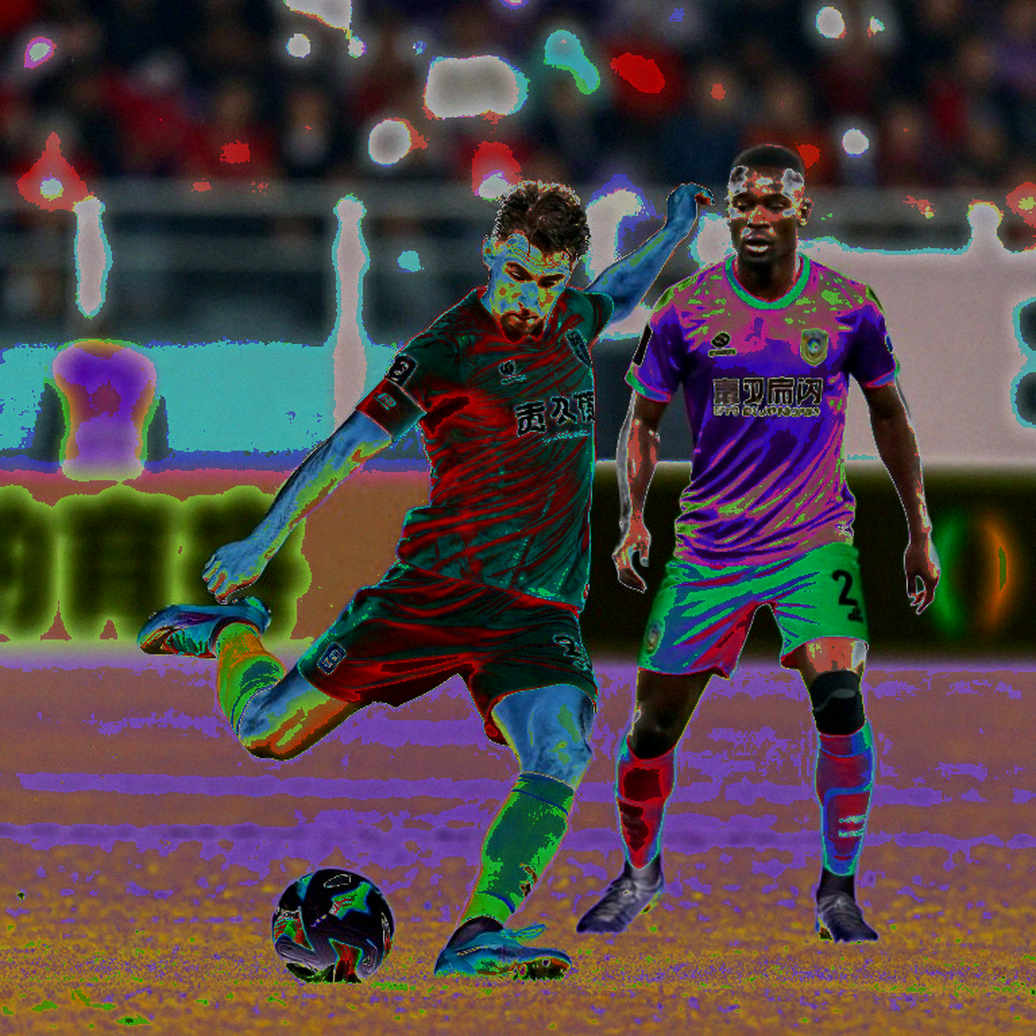
Here too there is a gap. Chivu used the word "gift" twice and never said who gave it, in which minute, or through what kind of mistake. Defensive error or goalkeeping error? A misplaced pass or poor positioning? Nothing.
Three: the attitude. This is the harshest part. Chivu said the team lacked "hunger". It lacked the "aggression" such matches demand. The team cannot escape "responsibility for its attitude". The defence was careless. And the most interesting line: the team is "living too much in the memory of the past".
Four: the boundary. This is the least quoted part and perhaps the most important. Chivu said clearly that he is "not throwing everything away". The season's work, the team's structure, the success already earned — none of it is being scrapped.
This fourth part is the hinge of the entire statement. It refuses two things at once. On one side it says nothing is starting from zero — no revolution needed. On the other it says standing still is not an option either — otherwise why speak of hunger and aggression at all? It draws a line with a ditch on both sides.
The double explanation: two opposite causes for one defeat
Now the part that deserves the most attention and that the original report ignored entirely.
Chivu listed two different kinds of cause for the same defeat, and they do not sit comfortably together.
Group A — external and uncontrollable. The lineup had to be changed hours before kick-off. Pio was unwell. Bonny had a fever. The team had to improvise.
Group B — internal and moral. No hunger. No aggression. Responsibility for attitude must be taken. The defence was careless. The team lives in the past.
Note the implications. If the lineup genuinely collapsed hours before kick-off, the lack of early intensity is fully explained by A. A team forced to change its plan hours before playing will not find rhythm in the first twenty minutes — that is a structural effect, not a character flaw. Yet Chivu placed all his weight on B. He mentioned A as context and delivered B as the conclusion.
That choice is not accidental. It has a clear function.
Acknowledging A protects the players. It says: preparation was not the problem, circumstance betrayed us. This preserves the coach's credibility in the dressing room; no player can accuse him of making a scapegoat.
Emphasising B maintains pressure. It says: circumstance is not an excuse. Had Chivu stopped at A, every player would have carried a ready-made alibi into the next match — injuries, changes, we were blameless. He closed that route deliberately.
So this is not a diagnosis. It is a management statement: an arm around the shoulder first, a tighter grip second.
The original report placed the two side by side without noticing that they are doing different work. What reached the reader was: Inter were both unlucky and spineless. That is a vague conclusion, and it obscures the deliberate strategy of the man who spoke.
"Hunger and aggression": the danger of misreading Italian football vocabulary
A further obstacle is linguistic. The original report is in English, and several places where Italian was translated into English have shifted meaning.
The biggest distortion concerns the word rendered as "nastiness". In English that word is pejorative. But the Italian term coaches use is cattiveria, and in a football context it means something entirely different: refusal to yield, fighting for every ball, giving the opponent no room to breathe, stubbornness that will not accept defeat. It is a praiseworthy sporting quality, not a fault.
Read as "nastiness", the whole statement inverts. Chivu is not saying his players behaved badly. He is saying they did not fight as required. That is a very large difference.
The second issue is "hunger and grit". Not wrong, but weak. Italian coaches say fame e cattiveria — hunger and aggression. It is stock Serie A vocabulary, and its force is considerably sharper than "grit".
The third, and the strangest, is the sentence recorded as "the defense Inter have to defend". This does not work in English at all. The most likely explanation is that the Italian verb difendere carries two senses: to defend, and to uphold or protect something. The intended meaning was probably "Inter must protect what they have built" or "must defend the title". It was misread as "the defence". This line should not be quoted directly under any circumstances.
The fourth is "gifted Milan the approach" — meaningless as it stands. The actual sense is "let Milan settle into the game" or "allowed Milan to find rhythm easily". It is match description, not metaphor.
The practical conclusion: if any report, commentary or clip uses these three passages as direct quotation, the reader does not receive Chivu's statement. They receive a translation error sold under the coach's name.
The shape of the emergency: what was never described
The report's headline promises a "tactical emergency". It never delivers one. It never says how large the change was. One player or three? Were the incoming players in their natural positions or reallocated? Without these answers the word "emergency" is hollow.
Notably, both named players are forwards — Pio and Bonny — and both are generally regarded as rotation or backup options rather than undisputed starters. If true, that carries real meaning: if both strikers are unavailable, the attack must be rebuilt entirely, which would be the most logical explanation for an hours-before change.
But the report never draws that thread itself. The reader is left to connect or not connect the dots, which is not the reader's job.
There is a parallel gap: the report says "several players" were unavailable, then names only two. Who were the others? Defenders? Midfielders? This directly affects how strong explanation A is.
Derby pressure and the San Siro context
One more layer is entirely missing: the context of the match. A Milan derby at San Siro is not an ordinary league fixture. It is among the most emotionally charged occasions in Italian football, where pressure from the stands directly affects player decisions.
None of that appears. Not the attendance, not the atmosphere, not the kick-off time. This is not decorative detail — it is essential to understanding why the team failed to find rhythm in the opening twenty minutes.
This is a structural absence with an obvious cause. When the only source is a post-match press conference, you get only what the coach wants to say. Recording the stadium's mood requires a reporter who was there, or a source who was. Neither was used.
The congested calendar and the burden of defending a title
One phrase recurs throughout the report without ever being stated plainly: the team is playing after recent domestic success, and playing every three days.
This matters because it is the psychological backdrop for the entire statement. Chivu's accusation about hunger connects directly to it. A team that has already won naturally has less appetite — football's oldest rule. The coach is pointing at that rule without admitting it outright.
But two large ambiguities remain. First, what exactly is the "recent domestic success"? Serie A? Coppa Italia? Super Cup? The report never says, and the entire psychological argument rests on this foundation while the foundation goes unnamed. Second, "every three days" hangs without a date. Which month? Which stage of the season? Was a European competition running alongside? No date, no round number, no table position.
The consequence is that the report could be read today or any week from now and would feel equally vague. A report without a date stops being news and becomes commentary.
What was never said: five major holes
First and largest: the score. The headline says "bruising defeat"; the body contains not a single goal count. This is not carelessness, it is a disservice. Without it, nobody can tell whether the defeat was 1-0, 2-1 or 3-0 — and without that, the word "bruising" means nothing.
Second: the actual lineup changes. Which positions changed? Who came in? Was it forced or chosen? Without this, explanation A stands untested.
Third: how the goals happened. Chivu said "gift" twice and gave no detail. Passing error? Positioning error? Set-piece lapse? Without knowing, even his charge of defensive carelessness cannot be assessed.
Fourth: temporal anchors. No date, no round, no table position, no next opponent. Yet Chivu said the team plays again immediately and has no time to feel sorry for itself — meaning another fixture within three or four days. That fixture is not even named.
Fifth: the definition of "recent domestic success". As above, which trophy remains unclear.
Read together, these five gaps form a pattern. All five are things a press conference does not supply. These gaps are not the writer's laziness; they are the direct consequence of a single source.
Source reliability: a blunt assessment on four measures
First-handness: low. Goal.com is an aggregator. It took the story from Sky Sport Italia, which translated it from Italian. At least two transfers occurred, and meaning leaks at each one.
Verifiability: moderate. The quotes can be traced to the original Sky interview video. But the report supplies no link, no timestamp, no reference.
Independence: very low. All content comes from one press conference. No club statement, no response from Milan, no data, no player quotes.
Fact density: low. Of 39 information points, fewer than five are externally verifiable hard facts.
The conclusion is balanced: this is a quote-driven report. Its value lies in recording what Chivu said. Its value does not lie in describing what happened in the match.
From a dressing-room perspective: what the coach actually did
At elite level, a coach's job includes language management — what to say, when, to whom. The post-match press conference is the most public stage for that, and nothing said there is meant only for journalists. It is meant for the dressing room that will read or hear it the next morning.
Judged that way, the statement has a clean architecture. Step one: validation — "if you lost today, there was a real reason". Step two: the boundary — "but that reason does not become an excuse". Step three: direction — "do not throw away what is good".
This three-step pattern is not new in Italian football; it is an old, well-worn language. Serie A coaches have spoken this way for decades.
So it would be wrong to read Chivu's remarks as candid self-analysis, and equally wrong to dismiss them as excuse-making. They are a professional statement with multiple levels, each doing a job. Journalism that does not identify those levels delivers words rather than meaning.
What it means for the next match
Chivu said there is no time for regret because the next match comes immediately. Read properly, that is the most practical line in the whole statement. Talk of hunger and aggression, when another game arrives within days, does not mean the team will start rebuilding next week. It means the team must show within ninety minutes what it failed to show today.
That has consequences. If the real charge is attitude, the coach may have to drop technically superior players — a risky move, because it tells the dressing room that attitude outranks technique. If the real charge is circumstance, he will repeat the same lineup and say things are now settled.
The statement keeps both routes open, and that is its strategic cleverness. A win next time and he says: you see, the attitude changed. A loss and he says: you see, the injuries still bite.
This is not deviousness. It is professional protection. But the reader is entitled to know that the line being read can be pulled in either direction.
Conclusion: a good quote, a weak news report
One: Chivu's statement matters and deserves careful reading. It carries a double explanation, a clear boundary and a professional management logic.
Two: the report through which it reached us does not fulfil its headline's promise. No score, no date, no lineup detail, no goal description, nothing from the opponent. It is an interview transcript dressed as news.
Three, and most important: before this report is used as the basis for any future analysis, three tasks are required. Check the original Italian video and repair the three places where translation changed the meaning — the "defend" sentence, the "settle into the game" sentence and the word rendered as "nastiness". Add the match metadata — score, date, round, scorers. And confirm how large the actual lineup change was, since that determines how much weight the external explanation carries.
Until then, only one thing can be extracted safely: Chivu told his team it had lost its hunger and aggression, while also telling it that he is not throwing everything away. The rest is inference, and inference should not be printed as news.
A final point. None of this is aimed at diminishing a particular journalist or outlet. The aim is to name a habit now common in football media: mistaking a press conference for a news story. A press conference is raw material. It becomes news only when it is verified, placed in context and tested against other sources. The day that habit changes, football reporting will get shorter and more accurate.