
A Second-Minute Red Card, Law 12's Double-Jeopardy Clause, and the Bill Pumas Owe Before Tigres
**मुख्य उत्तर:** पुमास UNAM के डिफ़ेंडर नेथन सिल्वा को सान्तोस लागुना के ख़िलाफ़ दूसरे मिनट में लाल कार्ड मिला, जिसके साथ पेनल्टी भी दी गई। मैच 0-2 हारा और यह टूर्नामेंट की पाँचवीं हार रही। खिलाड़ियों ने रेफरी गुइयेर्मो पाचेको के फ़ैसले पर सार्वजनिक सवाल उठाए। **मुख्य तथ्य:** - नेथन सिल्वा (ब्राज़ील) को मिनट 2 में पेनल्टी क्षेत्र में फ़ाउल के बाद सीधा लाल कार्ड मिला। - उसी पेनल्टी से सान्तोस लागुना आगे हुआ; पुमास ने 88 मिनट दस खिलाड़ियों के साथ खेला। - यह लीगा MX टूर्नामेंट में पुमास की पाँचवीं हार थी। - सीज़र 'चिनो' वेर्ता ने कहा कि मिनट 1 पर ऐसा फ़ैसला नहीं दिया जा सकता। - IFAB क़ानून 12 के डबल-जियोपार्डी प्रावधान में सच्ची गेंद-खेलने की कोशिश पर पेनल्टी और पीला कार्ड ही सही सज़ा है। **स्रोत:** ESPN México की मैच रिपोर्ट (प्रकाशन तिथि स्रोत में उपलब्ध नहीं)। सिल्वा के बयान ESPN México से उद्धृत। **संबंधित प्रश्न-उत्तर:** प्रश्न: क्या सिल्वा अगले मैच में खेल सकेंगे? उत्तर: सीधे लाल कार्ड पर आम तौर पर कम से कम एक मैच का स्वतः निलंबन लागू होता है, इसलिए टिग्रेस के ख़िलाफ़ उनकी उपलब्धता संदिग्ध है; औपचारिक फ़ैसला सार्वजनिक नहीं हुआ। प्रश्न: पुमास के पास क़ानूनी आधार क्या है? उत्तर: सबसे मज़बूत आधार IFAB क़ानून 12 का डबल-जियोपार्डी प्रावधान है, यानी यह साबित करना कि सिल्वा की कोशिश गेंद खेलने की सच्ची कोशिश थी, खींचने-पकड़ने की नहीं। प्रश्न: रेफरी के ख़िलाफ़ बयान पर कार्रवाई हो सकती है? उत्तर: FMF और लीगा MX के अनुशासनिक नियम सार्वजनिक आलोचना पर जुर्माने का प्रावधान रखते हैं, और वेर्ता तथा सिल्वा दोनों ने ऐसे बयान दिए हैं।
IFAB's Law 12 prices an entire match in one sentence. If a defender denies an obvious goalscoring opportunity inside his own penalty area while making a genuine attempt to play the ball, the sanction is a penalty and a yellow card — not a red. The red card is correct only where the attempt was not genuine: holding, pulling, pushing, or serious foul play. One incident, two prices, and in between them a single official weighing intent in a few seconds.
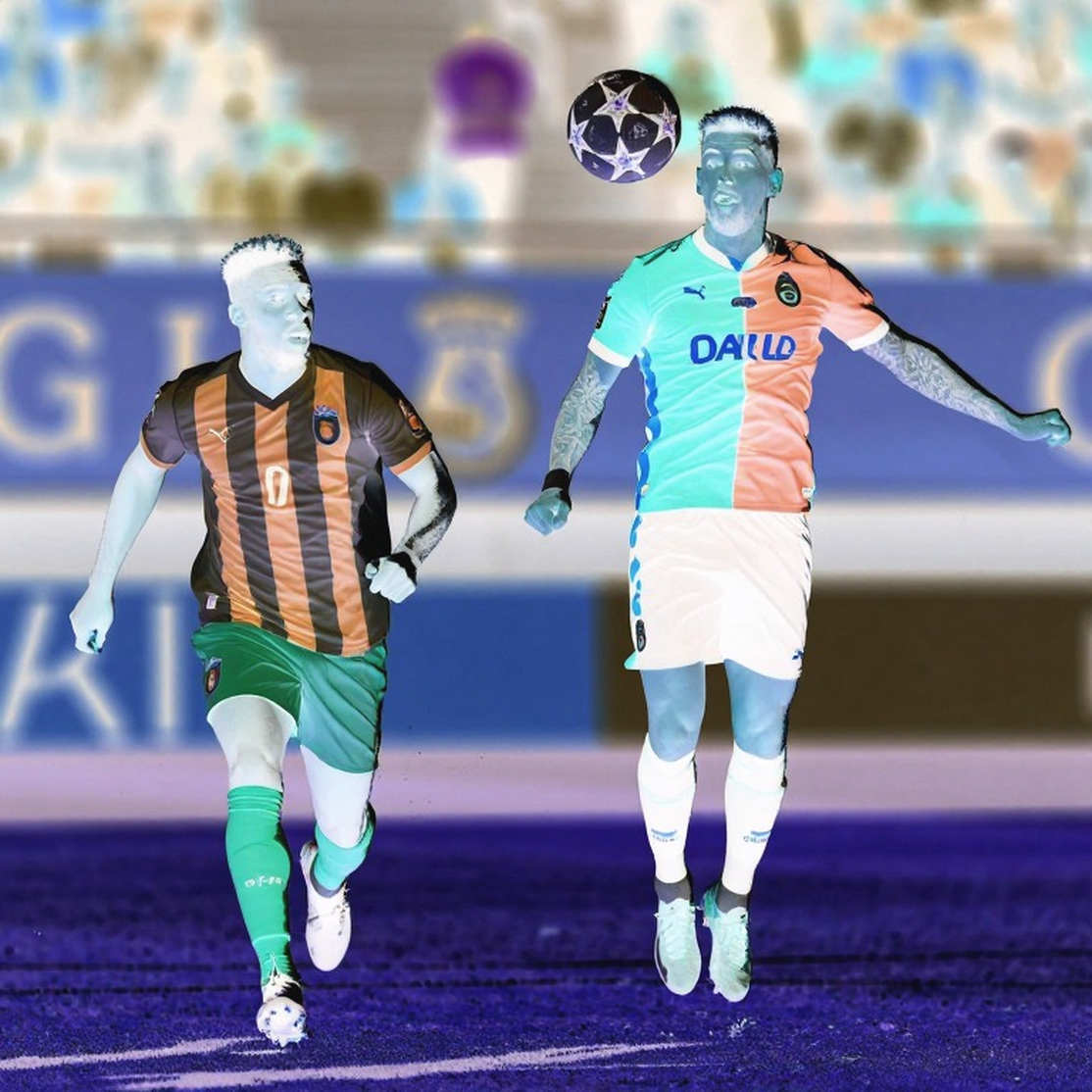
At the Estadio TSM in La Comarca Lagunera, that sentence went on trial in the second minute. Pumas' Brazilian defender Nathan Silva went down inside the box, referee Guillermo Pacheco pointed to the spot and produced a straight red. Santos Laguna scored from the penalty, Pumas played the remaining 88 minutes a man down, and the game finished 0-2. It was Pumas' fifth defeat of the tournament.
What followed looked less like a dressing room and more like a case-preparation room. César 'Chino' Huerta said plainly that a call like that cannot be made in the first minute. Silva, speaking to ESPN México, made two separate claims that most coverage merged into one — it was not a penalty, it was not a red card, and the referee made that decision. The first sentence is a claim about fact. The second is a claim about law. Everything worth analysing sits between them.
I have watched a lot of Liga MX over the past few seasons, and the fastest-moving thing in it is never the table. It is the vocabulary. Every defeat produces a refereeing argument, every argument produces another week, and that week produces the same five defeats. It is a language I know well from Indian football, where every bad result sends a finger towards the AIFF's filing cabinet and the same question returns the following week.
Context: a tournament that does not forgive a slow start
Liga MX has no European-style qualification. The equivalent is the Liguilla, the top-eight playoff, and the league runs on short tournaments — Apertura and Clausura, seventeen rounds each. Five defeats inside seventeen matches means more than a third of your margin is gone before the middle of the race. Patience is not a virtue here; it is an accounting impossibility.
Pumas UNAM is a big Mexico City club, but big and rich are different things in this league. Against Tigres, Monterrey and América, Pumas' model has historically rested on the cantera: produce your own, sell the ones who move, build a team from the ones who stay. That model works while the results keep arriving weekly. The week the results stop, every external cause suddenly becomes essential.
A trip to Santos Laguna is not the league's easiest assignment — the heat of La Comarca Lagunera, the distance, a host side that plays a direct, physical game. Taking a point from that fixture is generally considered acceptable. After going a man down in the second minute, even acceptable becomes difficult.
One thing has to be stated plainly, because it is the largest disclosure gap in the whole story: there is no xG here, no PPDA, no possession split, no shot map. ESPN México's report contains a refereeing decision, player quotes and a scoreline. Nothing else. Reading it, I think of November 2026, when I spent eighteen months filling a spreadsheet from a sports-marketing office in Gurgaon — and the biggest finding was never who earned what. It was how much simply goes unwritten. The ledger never starts with a scandal; it starts with a rounding error. Here, the rounding error is that the league's most disputed decision of the week has no public record.
Core: one incident, three legal routes, two different statements
Break Silva's sentence in two. 'It was not a penalty' is a factual claim, provable only with replay frames. 'It was not a red card' is a legal claim, and frames alone will not settle it; you have to establish that his attempt was genuinely to play the ball rather than to hold or pull. That is the double-jeopardy clause of Law 12, and it is the only real courtroom in this case.
If Silva genuinely went for the ball while denying an obvious goalscoring opportunity, the correct sanction was a penalty and a yellow. If he held, pulled or pushed, the red is correct. A third route exists: if the foul occurred outside the area, the penalty itself is wrong and the red card question collapses. The report settles none of the three. That is the gap, and it should have been the story.
There is a further layer nobody touched. How likely was VAR intervention in the second minute? VAR exists in Liga MX, but it intervenes on a clear and obvious error — and that threshold is itself a pricing instrument. Overturning a referee in minute two is treated as far more expensive than overturning him in minute 88, because early calls reshape the entire narrative of a match. The decision that defined Pumas' night became the least reviewable one precisely because it came early. Whether VAR looked at all is not reported. Neither fact is public.
Coming from Spain, this is the part that stands out, so I will name it once and move on. La Liga publishes a squad cost limit every season, and in Spain a release clause is a mandatory part of the contract — the price of a transfer sits in a document. In Liga MX that document does not exist. I am not arguing Mexico should become Spain. I am arguing that when there is no document, the only available evidence becomes a player's anger — and a player's anger is, legally, the statement of an interested party, not testimony.
The suspension deal sheet: four lines nobody adds up
When I covered my first ISL window for a Delhi digital desk in 2026, I built a four-line sheet for every deal: fee, wages, agent commission, commercial upside. Suspensions get the same treatment, and here it explains more than any commentary.
Line one — wages paid for nothing. A straight red normally carries a minimum one-match ban, so Pumas will pay a starting centre-back for a game he cannot play. Pumas' wage bill is not public, which is itself the story.
Line two — who covers the slot. Silva was sent off inside the box, which tells you he is first-choice. The report does not say who replaces him, because the report is about the referee, not the team.
Line three — the 88 minutes the squad's legs paid for. The bill for playing a man down for 88 minutes arrives in the next fixture, not on this scoreboard. That is why Silva's remark about his teammates running hard a man short is not only praise; it is an expense report, and it lands in the week Tigres visit.
Line four — the fine. FMF and Liga MX disciplinary codes routinely penalise public statements against officiating. Huerta and Silva both made them. The amounts are never published; the exposure is real.
Add the four lines and you get what no match report adds: the cost of this red card is not three points next week, it is one absent centre-back, eleven tired players and two disciplinary risks — all arriving in the same week, at the same stadium, against the same opponent.
Follow the wage bill long enough and it will name the real decision-maker. Here the decision-maker is not a player but a calendar. Liga MX's short-tournament format is the entity that decides how expensive a fifth defeat becomes. With twelve games left and almost no room for error, the Tigres fixture is not important. It is a referendum.
Contrarian: the grievance is valid; the bill is elsewhere
Pumas' anger is understandable. A second-minute red card is a low-probability, high-variance event, and results shaped by such shocks tend to revert. Anyone arguing this defeat is not clean evidence of a form collapse is right.
That is also where the pricing error sits. The club has priced a 0-2 defeat at the cost of one whistle, when the real bill is five defeats accumulated. The language shifted with each one — performance first, then luck, now the referee. When a team's complaint migrates from results to officials, it usually means the story of improvement has run out.
One absence speaks loudest: the coach. The quotes belong to players, not the bench, and the rest of the squad left without comment. When leadership messaging comes from the dressing room in a crisis, it is either a deliberate communications firewall or a coach under pressure handing the front line to his players. Neither is certain. Silence is not neutral.
Silva's own conduct was the smartest move in the episode. He praised his teammates' effort and noted that eleven against eleven they had a good chance of three points. That is not just courtesy; it is scapegoat insurance. A player who concedes a second-minute red and immediately attacks the referee carries next week's blame alone. He redirected it.
And the uncomfortable question. If Pumas win an appeal — red downgraded, ban reduced — what changes in the table? Nothing. Appeals do not return points; they return availability. The club is spending its energy on a front where the maximum prize is one defender for one match, while the real stake is settled over the next three weeks.
Football doesn't hide its secrets — it buries them in the second paragraph of a balance sheet. Here that paragraph is that the league sells a refereeing argument every week and publishes none of the evidence: no VAR audio, no explanation of decisions, no disciplinary hearing record. That is not Pumas' problem alone. It is the business model's. A league where referees are questioned weekly and answered never will eventually face a fairness question from sponsors and betting markets. That is an estimate, not a data point.
One comparison, used once. Indian football runs the same architecture — decisions go public, grounds do not. AIFF filings lag, club accounts stay private, and the argument always ends on a person: who was the referee, who was the official, who said what. In Spain the argument is fought on paper because the paper exists. In Mexico and India it is fought on tape because tape is the only exhibit.
Takeaway: the Tigres game, and the silence after it
Pumas host Tigres next, a fixture the report itself calls crucial for the club's aspirations — a sentence that comes from circumstance rather than from the club. Tigres is the league's richest, deepest and least sympathetic opponent. You cannot arrive at that fixture carrying a story about being robbed.
Three things reach that one match together: a probable suspension, the fatigue of 88 minutes a man down, and the psychological weight of five defeats. Lose it, and the next press conference will not be about the referee. In any club, the sixth defeat is priced on the coach, and after the sixth the board has to explain why it waited until the fifth.
Win it, and nothing is repaired. One win does not erase five defeats; it postpones them by a week. That is the cruelty of the short tournament — it offers relief, never recovery.

The one thing I will wait for is a written disciplinary ruling that states, in a single line, whether Silva's attempt was a genuine play for the ball. That sentence would end the argument. Its absence is what currently licenses every party to sell its own version. The question is not whether Pacheco was right. It is which register the decision was recorded in, and why nobody can see that register.