
Tennis's New Physiology: How Technology, Data and Endurance Rebuilt the Modern Game
आधुनिक टेनिस में सबसे बड़ा बदलाव तीन स्तरों पर आया है। पहला, उपकरण: ग्रेफ़ाइट और कार्बन फ़ाइबर रैकेट तथा नब्बे के दशक के अंत की पॉलिएस्टर स्ट्रिंग ने गेंद की गति और स्पिन दोनों को भारी रूप से बढ़ाया; दर्ज सबसे तेज़ सर्व लगभग 263 किमी/घंटा है। दूसरा, सतहें: घास धीमी और मिट्टी कुछ तेज़ हुई, जिससे चारों ग्रैंड स्लैम एक-दूसरे के क़रीब आ गए और सतह-विशेषज्ञता धुँधली पड़ी। तीसरा, शरीर और टीम: कोच, फ़िज़ियो, ट्रेनर, पोषण विशेषज्ञ और डेटा विश्लेषक अब सामान्य हैं, और सीज़न की योजना कैलेंडर की जगह रिकवरी-चक्र से बनती है। नतीजा यह है कि टेनिस अब तकनीक और प्रतिभा के साथ-साथ शरीर-विज्ञान, सांख्यिकी और भार-प्रबंधन का खेल बन गया है।
The clearest way to understand modern tennis is to watch a Grand Slam final from thirty years ago and put it beside one from today. The difference is not only in the speed of the ball. It is in the racquet frame, which moved from wood to graphite and carbon fibre; in the string that turned spin into the game's most powerful weapon; in the player's body, which now looks less like an athlete and more like a managed project; and in the team sitting outside the court — coach, physiotherapist, strength and conditioning trainer, nutritionist and data analyst.
None of this arrived at once. It is the sum of three separate revolutions: the equipment revolution, the homogenisation of court surfaces, and the tightening scientific control over the athlete's body. Together they changed the shape of the sport itself.
Racquets and a new language of the serve
When graphite frames became common in the 1980s, racquets grew lighter and stiffer at the same time. The direct consequence was that players could hit the ball harder and from higher above than ever before. Oversized heads enlarged the sweet spot, so a mis-hit was punished less. Then came polyester strings, which entered the professional game in the late 1990s. The increase in spin they produced is arguably the single biggest technical shift in the sport's history. The ball now travels high over the net and dips back into the court, forcing the opponent to strike from a height where attacking is difficult.
The serve showed this change most plainly. The fastest recorded serve has reached roughly 263 kilometres per hour, a mark set in 2026. But average speeds matter more than records — the average pace of the first serve and, even more, the willingness to attack on the second. The second serve used to be protected; now it is also a weapon, because the modern returner punishes even a safe ball.
The court shrank
A parallel shift unfolded alongside it. Grass courts slowed, clay courts became somewhat faster, and hard court pace was standardised. The result is that the four Grand Slams now resemble each other far more than they once did. The benefit is that a single player can be competitive on all four surfaces; the cost is that the distinctiveness of surface specialisation has blurred — the very thing on which tennis's most interesting stories once rested. When pace is roughly equal everywhere, victory is decided not by the surface but by the body's tolerance and the fineness of strategy.
The body: now the biggest investment
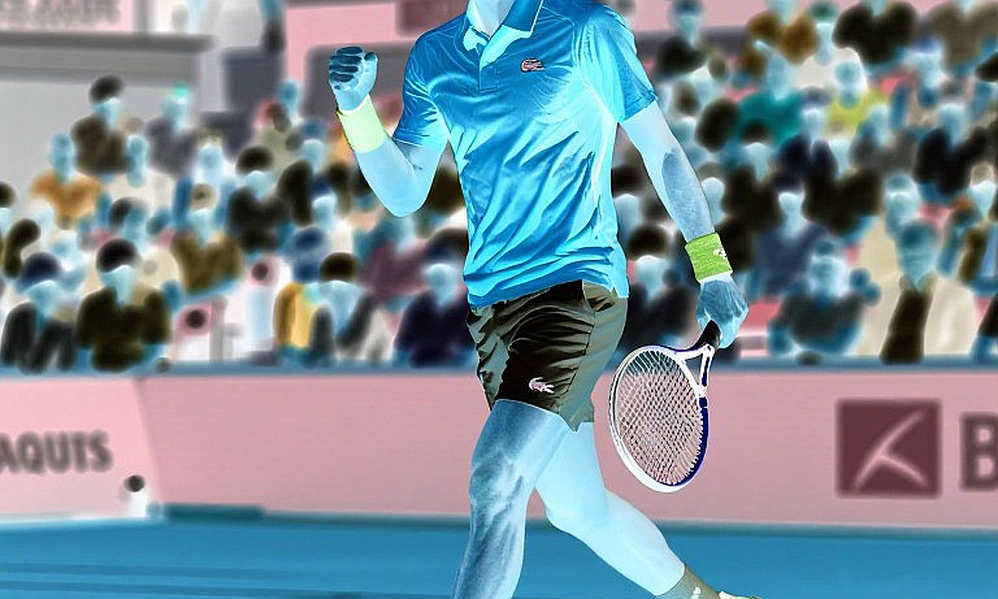
Consider the physical demands of professional tennis. In a major tournament a player may have to play seven matches in a fortnight, sometimes on consecutive days, and a single match can run beyond four hours. Across that time the same explosive movement must be repeated dozens of times — the backward arch and forward snap of the spine on the serve, the rotation of the hip and acceleration of the shoulder on the forehand. That repetition is the real challenge of modern tennis.
That is why players no longer travel alone. A top player is typically accompanied by a head coach, sometimes a second coach, a physiotherapist, a trainer, a nutritionist and someone handling the numbers. Season planning is no longer built from the calendar but from the recovery cycle. Which tournament to skip is decided not by prestige but by load management.
Technical variety is the other face of that same management. Rafael Nadal's left-handed topspin forehand and his dominance on clay, Roger Federer's ease across the whole court, Novak Djokovic's return and physical elasticity, Serena Williams's serving power — these are different answers to the same question: how to extract the maximum from a body without breaking it.
A new geography of injury
When the game becomes faster and longer, injuries change too. The wrist, elbow, shoulder and hip are the most sensitive sites in modern tennis. The race to add serve speed has loaded the shoulder and back; spin-based forehands have loaded the wrist. Injuries that once arrived at the end of a career now appear in the mid-twenties — because at junior level a player already repeats the same movement, all year, from a very young age.
A less discussed dimension is mental fatigue. An individual sport means no timeout on court, no change of partner, nowhere to hide. Spending four hours alone with your own decisions demands a different kind of endurance, and today's teams train for that too.
Data: probability replacing instinct
Over the past two decades the biggest philosophical shift in tennis is that probability replaced instinct. Ball-tracking technology changed line calls, but its larger effect was that every shot became measurable — where the serve landed, from what angle the return came, how much ground each player covered in a rally. Coaches now analyse an opponent's patterns and tell a player which side he plays under pressure. This turned preparation from an experience-based craft into a statistical one.
There is a side effect. When everyone has broadly the same information, the informational edge disappears and the decision returns to the oldest variable of all: the capacity to choose well under pressure.
Money: rising at the top, narrowing at the base
The economic story of the modern era splits in two. At the top, prize money and sponsorship have grown enormously; tennis has become a global entertainment product. At the bottom, the cost of standing still has risen. Coaching, travel, physiotherapy, equipment — all of it lands on the account of a player who is not yet earning. The direct effect is that talent is decided not only by ability but by the financial endurance of the family supporting it.
The race in junior development
That economic pressure has pushed junior development into haste. Adolescent players now grow up in academies, away from home, compromising between schooling and an ordinary childhood. Time once spent playing several sports now goes into repeating one. Experts have long warned that choosing a single sport very early raises the risk of both injury and burnout, but the race for ranking and the hurry for sponsorship drowns out the warning.
The question of beauty
Here an uncomfortable question arises, one the tennis world usually avoids. Does more power, more data and more management make the sport better, or merely different? Critics argue that in a serve-dominated, physically homogenised game the uncertainty that made it compelling has diminished — when a long rally broke, you once saw individual thought; now you often see fatigue. Supporters argue the opposite: today's player is far more complete, because he can play on every surface, in every condition, without depending on a single technique.
The truth probably lies between them. Tennis has deepened and lost some of its variety. It has given players longer careers and placed heavier bets on their bodies.
What comes next
The next turn will decide which way that balance tips. If equipment and surface homogenisation keep growing, the sport will become an even more physical contest. If the tournament calendar is shortened with player welfare in mind, careers will last longer and more talent will get a chance to emerge. Either way, one thing is clear: tennis is no longer merely a game of racquet and ball. It is a game of physiology, statistics and the management of patience — and whoever handles those three best writes the next chapter.