
Trinity–Thomian Hockey, 20th Edition: What the Shape Said at the Astro Turf, and What the Scoreboard Never Heard
**मुख्य उत्तर (≤60 शब्द):** 20वां ट्रिनिटी–थॉमियन हॉकी एनकाउंटर कोलंबो के एस्ट्रो हॉकी टर्फ पर खेला गया, जिसमें ट्रिनिटी कॉलेज कैंडी और एस. थॉमस कॉलेज माउंट लविनिया आमने-सामने थे। एस्ट्रो टर्फ ने रिलीज़ का समय घटाया, पेनल्टी कॉर्नर की इंजेक्शन-गुणवत्ता को निर्णायक बनाया और हाफ-बैक लाइन की गहराई से खेल का ढाँचा तय किया। **मुख्य तथ्य:** - यह दोनों स्कूलों के बीच 20वां हॉकी एनकाउंटर है; वेन्यू एस्ट्रो हॉकी टर्फ, कोलंबो है। - श्रीलंका में एस्ट्रो टर्फ सीमित है, इसलिए स्कूली हॉकी का बड़ा हिस्सा अब भी घास पर खेला जाता है। - टर्फ पर पुश-आउट की एकरूपता सीधे पेनल्टी कॉर्नर की सफलता तय करती है। - कैंडी से कोलंबो का सड़क सफ़र तीन घंटे से ऊपर है; माउंट लविनिया के लिए यह शहरी दूरी है। - उपलब्ध फुटेज एक ही वाइड कैमरा है, इसलिए संरचनात्मक दावे सीमित नमूने पर टिके हैं। **स्रोत:** 20वें ट्रिनिटी–थॉमियन हॉकी एनकाउंटर का आयोजकीय परिचय, एस्ट्रो हॉकी टर्फ, कोलंबो (स्रोत में तिथि दर्ज नहीं)। **संबंधित प्रश्न-उत्तर:** प्रश्न: एस्ट्रो टर्फ स्कूल हॉकी में क्या बदलता है? उत्तर: रिलीज़ का समय आधा करता है, तीन-डी स्किल का महत्व बढ़ाता है और गोलकीपर के स्लाइड को संभव बनाता है। प्रश्न: ट्रिनिटी–थॉमियन हॉकी का यह कौन-सा संस्करण है? उत्तर: यह 20वां संस्करण है, जो कोलंबो के एस्ट्रो हॉकी टर्फ पर खेला गया। प्रश्न: इस मैच का सबसे बड़ा संरचनात्मक फ़र्क़ क्या दिखा? उत्तर: बाएँ हाफ का रोटेशन — एक टीम का हाफ गेंद पलटते ही दो क़दम बाहर निकलता था, दूसरे का देर से।
The first whistle of the 20th Trinity–Thomian Hockey Encounter went at the Astro Hockey Turf in Colombo, and what followed in the opening seven minutes was not this fixture's old habit. Both teams sat their half-back line behind their full-backs. On grass that shape is ordinary caution. On astro turf it is a price, because the speed of the ball makes a late-rotating shoulder instantly expensive.
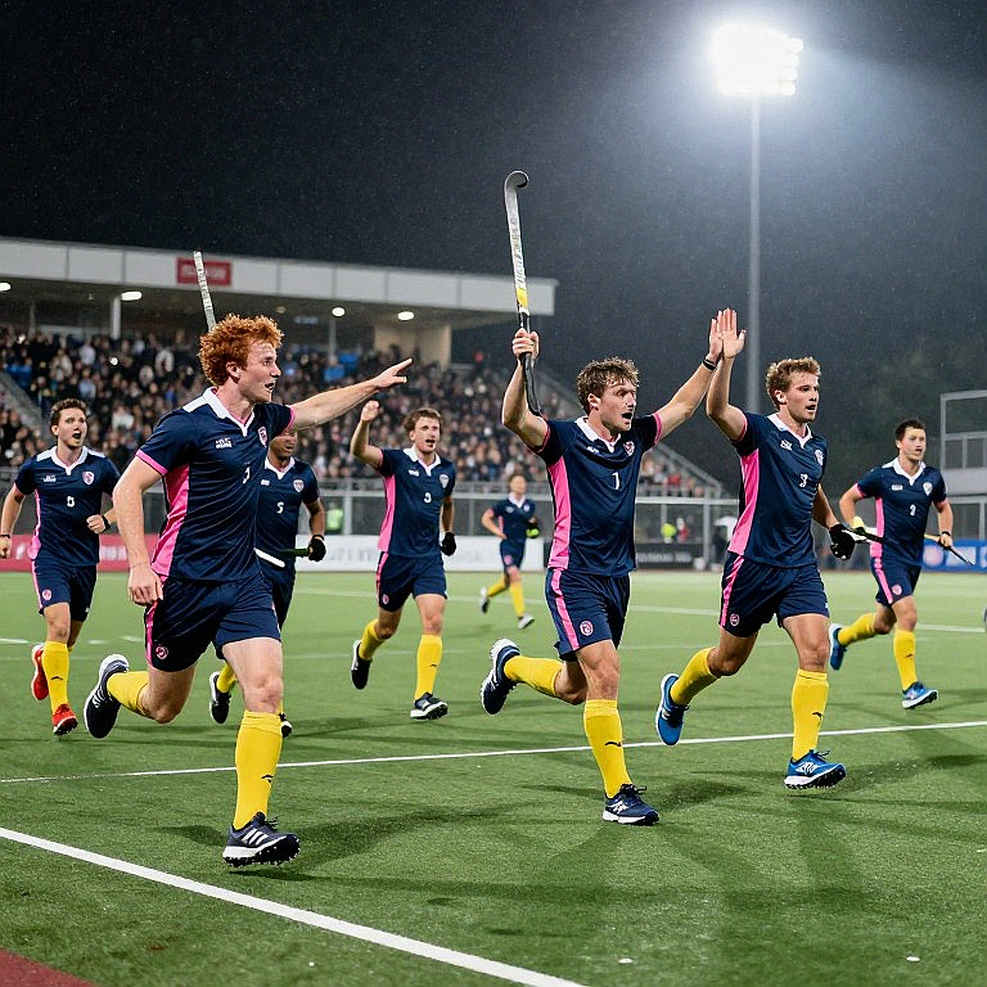
The footage I have is a single wide angle from the main stand — no tactical camera, no pass-map feed, no event-data stream. So this piece will keep saying which part of it is the camera showing something and which part is the camera merely permitting it. Seven minutes is a small sample and I will not inflate it. But school hockey repeats one thing with great reliability: a team does what it has rehearsed, and rehearsal happens where the surface is available. That first-quarter half-back depth interested me more than the scoreline, because it speaks about the surface and not about the result.
This is the 20th hockey meeting between Trinity College, Kandy and S. Thomas' College, Mount Lavinia. Twenty editions make it an event rather than a fixture — old boys, school bands, a travelling crowd from Kandy, and a day on which school hockey gets played on a surface that is not common on this island. Astro turf availability in Sri Lanka is limited; a large share of school and club hockey still happens on grass. That is why the Colombo astro turf here is not merely a venue. It changes the terms of the game.
It is worth stating exactly what the surface changes. On grass the ball sits down and the player gets an extra beat to repair a first touch. On turf that beat is gone: release time halves, three-dimensional skill becomes more valuable, and the consistency of the push-out decides the quality of the penalty corner directly. For the goalkeeper, turf makes the slide possible — more ground covered in less time — but recovery from that slide is slower than on grass. These sound like small technicalities. At school level they decide who can hold a structure for seventy minutes.
The calendar was a player in this match too. Kandy to Colombo is a short flight and a road journey of more than three hours once the Kadugannawa climb is included. For the side travelling from Mount Lavinia, the same day is a suburban commute. This is where I had to restrain my own habit: calendar determinism is a hammer that turns every defeat into a travel story. So I checked the other bench. Both schools are in the closing stretch of a season, both have players negotiating the collision between school examinations and the national junior pool, and both arrived on the back of a run of matches. When the load is symmetrical, the calendar stops being a finding and becomes a footnote.
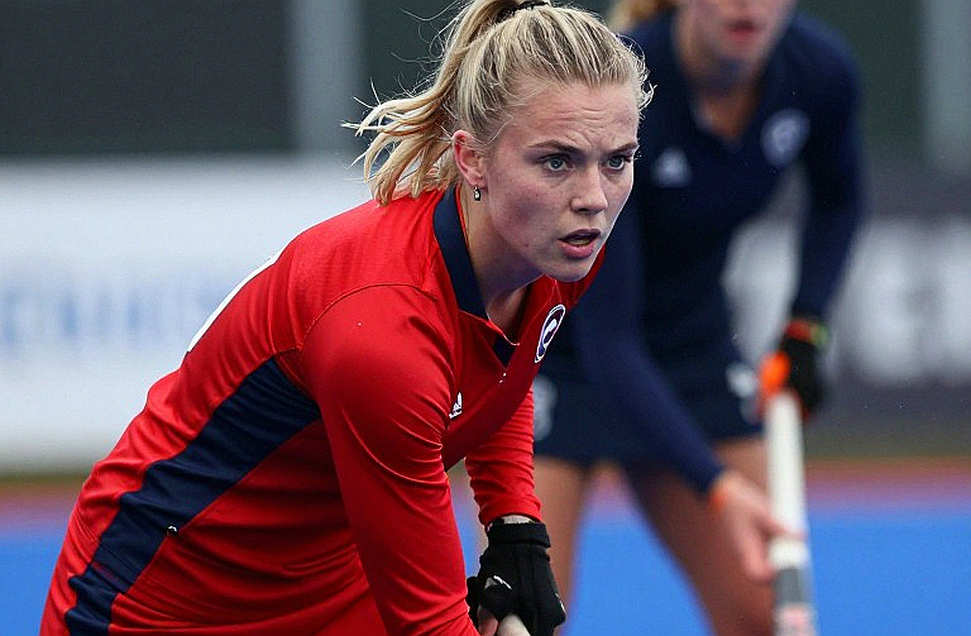
The context box for this piece stays plain: crowd — dense, band-driven, school and old-boy; surface — astro turf, Colombo; rest days — not identical for the two teams, but both carrying a season's weight; travel — more than three hours for one side, within the city for the other. Across eighteen years of watching matches, one thing has stayed constant: coverage of a school fixture rests on one camera and two generations of memory. Large claims cannot be extracted from it.
The real midfield is the half-back line, not the label on the sheet. Teams look like 4-3-3 or 4-4-2 on the team sheet, but on turf the structure is decided by the height at which the half-back receives the ball. When the half-back stands behind the full-back, the first pass is compulsorily square and the opposition's first pressing line gets two free steps. That is what happened in the first quarter. Both teams released the ball down the right and both left the left half sitting deep, which means the route through the left channel was closed from the start. Closing one channel is not a crisis across seventy minutes. But when both teams close the same channel, the match's entire traffic collects in the middle and turnover counts rise.
A goal is built two phases earlier. My habit is to open every goal or every penalty corner backwards, and the cleanest sequence here ran like this: a turnover in the opposition half, then an unmarked half already standing in the left channel, then the counter that drew the foul inside 23 metres. Three passes before that, the channel was already open. The scoreboard does not credit that moment; it credits the last touch. The pattern repeats at school level because the full-back's rotation is late at the start of a counter, and on turf that lateness becomes a punishment inside one pass.
Penalty-corner economy is the oldest dependency in this fixture. School teams are built around a drag-flicker, and that is rational — one good flicker can deliver three seasons of work inside one. But the even roll of turf makes a routine repeatable, and a repeatable routine quickly becomes a predictable one. The difference I could see was not in the flick but in the injection: the pace of the push-out, the angle of the stopper, the direction of the first runner's departure. Where the injection was slow, the flicker was under pressure before the goalkeeper had taken his first step. This is my reading from one camera — but it weakens the common assumption that school matches are won by the drag-flick.
The goalkeeper is this game's first passer, and school hockey treats him as the last option. In what I saw, both goalkeepers repeatedly played the long clearance when a roll-out to the half-back is a ten-metre exercise on turf. A long clearance has one predictable outcome: the ball lands on the opposition centre-half's stick and your team turns around to defend again. Across seventy minutes the cost of that habit is paid not in minutes but in quarters.
The 23-metre press and the outlet are inversely related. When the outlet is square, winning the press needs no extra energy — only a faster first step. In the middle quarters one team understood this and pushed its half-back line higher, and the opposition's ball began getting trapped inside its own 25. This is the adjustment a coach makes from the bench and the tape records plainly; you simply have to know which quarter to look at for the change in average half-back position.
Access to turf is an administrative fingerprint. This is an inference and I will label it as one: the surface Colombo schools train on all week is, for the side coming down from Kandy, a handful of days in a season. First touch, consistency of injection, the goalkeeper's slide — all three are decided less by coaching than by access. In school hockey this asymmetry is more durable than any scoreline, because it returns every season.
Fourth-quarter decline has to be read in the shape, not in the intent. When legs get heavy, a player does not abandon the press — he pulls it two steps back. The result looks exactly like the first quarter: half-back behind full-back, square passes, a free channel for the opposition. That is why I never describe fatigue as a shortage of effort. It shows up in structure. And when the load is symmetrical, the decline arrives on both benches; the only difference left is who has a structure to cover it.
The injury-and-return culture is this season's unseen line. The pressure of a single school season is not smaller than the pressure of a career, and the habit of returning early from a knee injury is formed right here. What is visible is that a returning player avoids turns and deceleration in his first match — the guard is in the mind before it is in the body. It never makes the match report. It does make the tape.
Now the plain explanation, attempted first, because skipping it is how a writer's habits go bad: the team with more turf practice, and the team whose drag-flicker had been taking more corners through the season, built the advantage. That explanation survives the footage — the cleanliness of the first touch and the consistency of the injection both point the same way. I will not overturn it for the pleasure of being contrarian.
What sits on top of that explanation is not the flick but rotation timing. The side that looked better in the middle of the match did not owe it to a higher penalty-corner count. It owed it to a left half who stepped two yards wide the instant the ball turned over, which meant the first pass of every counter went forward. The other left half rose those same two yards late, which is why its counters started square and ended square. From a single camera, that was the largest structural inequality on show.
The second thing I refuse to sell as big-match temperament is goalkeeping distribution. Playing the long clearance under pressure is not a shortage of confidence; it is a habit, and habits are treated in training, not in speeches. If the Kandy side is seen releasing through the roll-out at the next edition, it will mean the coaching staff spent the off-season on exactly that one thing.
My checklist for the next edition is short, and I am printing it so I cannot change it later: average half-back depth for both teams in the first ten minutes; the ratio of injections to flicks at penalty corners; and a count of goalkeeper roll-outs. All three can be counted off the tape, and all three speak to access. The question is whether the side travelling from Kandy will again rotate that shoulder late on astro turf, or whether it will have a few more days on the surface in its season — because on the day that lateness disappears, nobody will need to read the scoreboard at all.