
From a Patiala Noticeboard to Los Angeles: Boxing's New Weight-Class Map and the 57kg Career Lost Inside It
**मुख्य उत्तर (58 शब्द):** वर्ल्ड बॉक्सिंग को 26 फरवरी 2025 को आईओसी की अस्थायी मान्यता मिली और 20 मार्च 2025 को मुक्केबाजी लॉस एंजिल्स 2028 के कार्यक्रम में शामिल हुई। इससे भारतीय मुक्केबाज़ों का भार वर्ग नक्शा और ओलंपिक कोटा मार्ग दोनों बदल गए हैं, क्योंकि अब वर्गों की संख्या और क्वालिफिकेशन कैलेंडर वर्ल्ड बॉक्सिंग तय करेगा। **मुख्य तथ्य:** - 22 जून 2023 को आईओसी ने आईबीए की मान्यता वापस ली; टोक्यो 2020 और पेरिस 2024 अलग-अलग आईओसी निकायों ने चलाए। - टोक्यो 2020 में 13 भार वर्ग थे (8 पुरुष, 5 महिला); पेरिस 2024 में 13 (7 पुरुष, 6 महिला)। - लॉस एंजिल्स 2028 के मसौदे में 12 वर्ग — छह पुरुष और छह महिला। - पेरिस 2024 में भारत के छह मुक्केबाज़ खेले और एक भी पदक नहीं आया, 2008 के बाद पहली बार। - 2023 विश्व चैंपियनशिप में भारत ने चार स्वर्ण जीते थे — निखत ज़रीन, लवलीना बोरगोहैन, नीतू घंघास, स्वीटी बूरा। **स्रोत:** अंतरराष्ट्रीय ओलंपिक समिति (आईओसी) कार्यकारी बोर्ड का निर्णय, 26 फरवरी 2025; आईओसी सत्र का निर्णय, 20 मार्च 2025; बीएफआई राष्ट्रीय शिविर भार-वर्ग पुनर्गठन मसौदा, 6 फरवरी 2026। **संबंधित प्रश्न-उत्तर:** प्रश्न: क्या मुक्केबाजी लॉस एंजिल्स 2028 में होगी? उत्तर: हाँ, 20 मार्च 2025 के आईओसी सत्र में इसे आधिकारिक कार्यक्रम में शामिल किया गया। प्रश्न: भारत के मुक्केबाज़ों के लिए सबसे बड़ा जोखिम क्या है? उत्तर: भार वर्गों की अंतिम सूची और क्वालिफिकेशन कैलेंडर में देरी, क्योंकि चयन ट्रायल उसी कैलेंडर के हिसाब से बनाए जाते हैं। प्रश्न: पेरिस 2024 में भारत को मुक्केबाजी में पदक क्यों नहीं मिला? उत्तर: कम अंतरराष्ट्रीय एक्सपोज़र और घने भार वर्गों में प्रवेश, जबकि 2023 विश्व चैंपियनशिप में घरेलू परिस्थितियों में चार स्वर्ण आए थे।
On the morning of 6 February 2026, a single A4 sheet was taped to the corkboard outside the boxing hall at the SAI NIS campus in Patiala. The Boxing Federation of India letterhead sat at the top. Below it, three words: "Weight class restructuring (draft)". The sheet had twelve boxes drawn on it — six for men, six for women. In the women's row, the 57-kilogram box had been struck through with a pen, and in the margin someone had written by hand: "awaiting final programme". Underneath that cancelled box was a name, erased not with a pen but lightly with a pencil, as though whoever erased it was not entirely sure the erasure would hold.
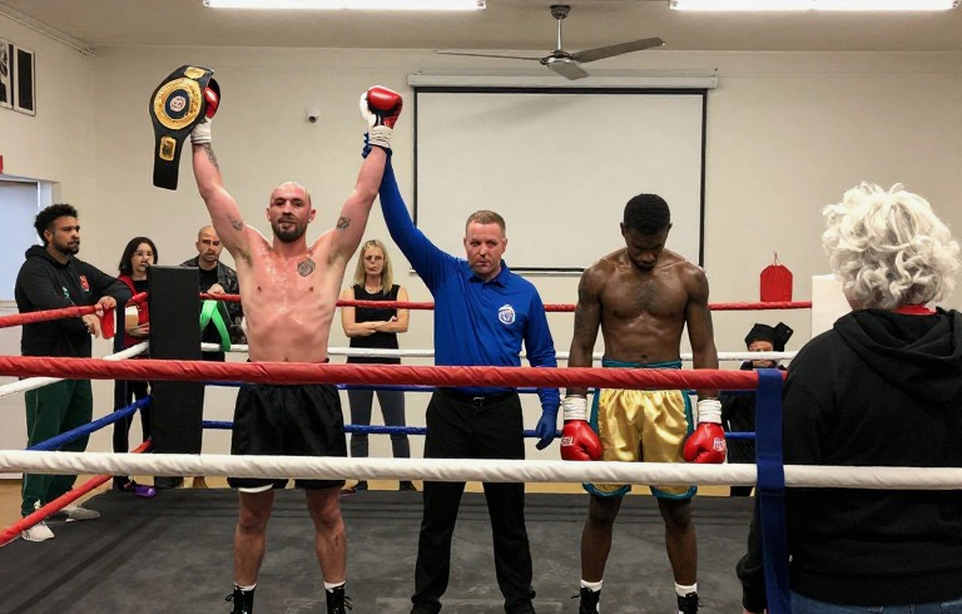
The boxer was inside the hall, near the ropes, a skipping rope in her hand, and she did not look at the board. For three years she had been coming down from 60 kilograms to 57. At the last two national trials she had weighed in at 56.4 and 56.8 — she had compressed herself into a class that no longer exists on the draft. The circular that once killed a league was written by a man who never watched a match. This time the circular was not killing a league. It was cutting three years off one woman's career.
This piece is not about that career. It is about the paper that arrives before the career does.
Three circulars, one emptied bracket
Boxing's institutional story has passed through four different governing bodies since 2026, and every change has landed on the weight-class list. On 22 June 2026, at an extraordinary session in Lausanne, the International Olympic Committee withdrew recognition from the International Boxing Association. Before that, the Tokyo 2026 boxing tournament was run by the IOC's Boxing Task Force. At Paris 2026 the job belonged to the Paris 2026 Boxing Unit. World Boxing, founded on 13 April 2026, received provisional IOC recognition on 26 February 2026 — and on 20 March 2026 the IOC Session put boxing on the Los Angeles 2028 programme.
Memorising those dates is easy. Understanding them is not. What they mean is that a boxer's professional life now rests on three things: which body's ranking system is valid, which tournament is distributing quota places, and whether her weight class exists on that list at all. The fourth question — the one at the bottom — is when she is told. That question never appears in a press release.
I have had access to the Patiala camp since 2026, when I spent a week there before the women's world championships. In those days the coaches talked about weight cuts and hydration tests, not medal projections. Eight years later, in the same hall, the centre of the conversation has moved. The question is no longer who punches harder. It is who punches in which class.
The weight-class map: from thirteen to twelve
Tokyo 2026 had eight men's classes and five women's — thirteen in all. Men: 52, 57, 63, 69, 75, 81, 91 and +91 kilograms. Women: 51, 57, 60, 69, 75. Paris 2026 inverted the arithmetic — seven men's classes (51, 57, 63.5, 71, 80, 92, +92) and six women's (50, 54, 57, 60, 66, 75). One class was added for women and one removed for men, but every boundary line also shifted.
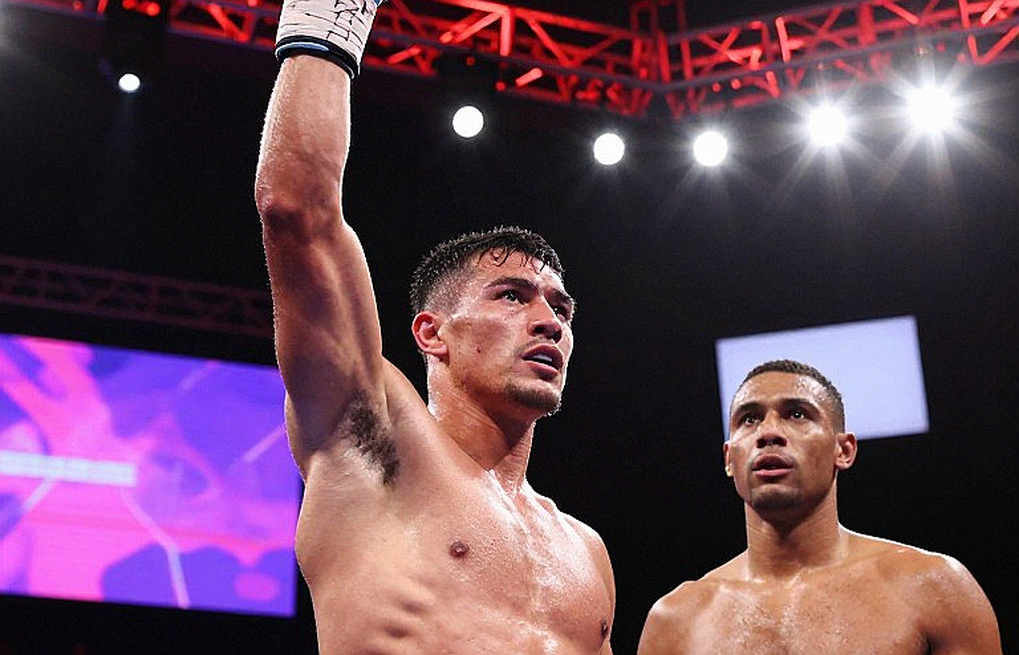
The draft that has surfaced for Los Angeles carries twelve classes — six men, six women. On paper that symmetry reads as progress. On the ground it means India has one fewer men's class, while India's deepest reserves have traditionally sat in the men's lighter divisions — 51, 52, 57. For women, more classes only convert into advantage if those classes come with international tournaments to box in. Announcing a class and filling it are two different circulars.
The right way to read this map is to stop treating any boxer's career as a straight line. Nikhat Zareen won the 2026 world title at 52 kilograms, then came down to 50 for the Olympic cycle. Jaismine Lamboria moved from 60 to 57 and made it to Paris. Lovlina Borgohain went up from 69 to 75 — an upward move that bought her strength and cost her speed. Amit Panghal came down from 52 to 51. Nishant Dev stayed at 71. Behind every one of those shifts sits at least one trial, one diet chart and one weight-management committee report.
The most dangerous place on this map is 57 kilograms. It is the class where India has the most women and the fewest slots. Jaismine, Preeti Pawar and at least three other camp-level boxers are stacked in that band, and not one of them knows whether the class survives. The pencil mark on that box in the draft is the documentary evidence of that uncertainty.
Camp ground truth: weight, wages and one physio
The economy of the national camp does not move as fast as the quota headlines. A boxer living at the Patiala camp has three pillars under her: the SAI stipend, the diet allowance, and a job with a services team, the railways or a public-sector company. Changing weight class hits all three directly. Dropping from 57 to 54 means cutting daily calories, delaying recovery and raising injury risk. Returning to 60 means rebuilding strength, which means burning a cycle of six to eight months.
A physio attached to the camp once told me that the hydration test reports and the weight-management committee's recommendations travel in separate files and frequently do not read each other. "The plan to lose weight gets made. The time to execute it does not." That sentence was true in 2026 and it is true in 2026. I learned to quote physios before coaches in this camp, and that habit remains my most reliable reporting method.
There is another number that never appears in a quota table: how many boxers there are per physio in the camp. When that ratio slips, the first athlete to fall behind is the newest one — precisely the boxer who is supposed to be part of the next cycle. The weight-class map, when it changes, presses hardest on the newcomer, not the star. Stars negotiate their class. Beginners absorb it.
The trial sheet, and the arithmetic of one round
The BFI's selection-trial notice has followed a familiar template for several years: a weighting between assessment and trial, a proviso for exemption on injury grounds, and a window for appeals. It reads as transparent on paper. In practice the biggest question is who set the assessment scale and which cycle's needs it was built around.
At one trial bout in the last cycle I kept round-by-round notes, which is how I work — not the result, the rounds. The opener was fast at both ends. The taller boxer used the jab to hold distance and took it on all three cards, 10-9. In the second, her opponent closed the gap and landed hooks to the body; two judges gave her the round, the third scored it even, pushing the totals towards 20-19 and 20-18. The third round revealed the trial's actual logic: the boxer who needed the quota place did not sit on the lead, she raised the tempo and took the closing round on every card. The result was a split decision. One judge's card went the other way.
That single card decided four years. This is the point where paper and punch cut against each other. So when people ask who the most powerful person in Indian boxing is, the answer is not a coach or a president. It is the judge whose name is printed in small type in the corner of a scorecard.
As a polymath, I see the pattern across disciplines. In javelin, a single centimetre of foul redraws an entire cycle. In wrestling, one weight class moving up or down redirects a career. Boxing differs only in this: the measuring instrument is not a machine, it is a person.
The politics of moving class: down is not cheap, up is not free
What gets written about least in camp is how the cost of changing class is distributed. When the 63.5-kilogram class disappears and 71 arrives, a 63.5 boxer has two routes — down to 60 or up to 71. Going down carries hydration and bone-density risk; going up carries the problem of balancing strength against speed. Neither route completes in a year, and trials usually arrive in eight weeks.
After covering the world championships at the KD Jadhav hall in 2026, I understood that Indian boxing's real strength was never the depth of its domestic competition but the flexibility of its athletes sliding between classes. That flexibility has now become a constraint, because the number of classes is shrinking while the number of boxers underneath them is not. Two Novembers, two worlds — the 2026 World Cup desk and the KD Jadhav hall — taught me the same lesson: the official timetable is rarely the timetable on which the real decisions were taken.
The contrarian angle: stability did not produce medals
Here is an inconvenient number. After 2026 the BFI's leadership was relatively stable — elections held, terms completed, sponsorship secured, a domestic circuit running. In that same period of stability, India returned from Paris 2026 with no boxing medal: the first time since 2026. Six boxers went, all talented, all camp-trained, all standing in the bands where global competition is densest.
The inverse is also true. The 2026 world championships — among the last major home women's events of the IBA era — were India's best ever, with four golds through Nikhat Zareen, Lovlina Borgohain, Nitu Ghanghas and Sweety Boora. So in the very period when India produced its finest world-championship returns, its Olympic output went to zero.
The cause is not institutional instability. It is institutional direction. Under the IBA era, India was getting home hosting, larger brackets, ranking points and cheap international bouts. The World Boxing era is smaller, costlier and mostly abroad. Olympic medals are built in the bouts where a boxer meets ten or twelve different styles a year, not three or four. India's rate of international ring exposure has run at less than half that of Uzbekistan or Cuba. That number never surfaces at a press conference, because it is not the cause of any single defeat — it is the habit of a decade.
And there is a second contrarian point that stings more. We mistake the number of classes for opportunity. Six women's classes mean nothing until India has internationally seasoned boxers in three of them. A class announcement is a document of opportunity; filling it is separate paperwork — trials, foreign exposure, medical clearances, coaching allocation.
Instead of a conclusion, a question
In the coming months two things will become public: the final weight classes for Los Angeles, and the dates of World Boxing's qualification calendar. Announcing those two will not be the real test. The real test will be how many weeks before that calendar the BFI issues its selection-trial circular.
If the answer is fewer than eight weeks, the sheet on that board in Patiala stays a draft, and the pencil-erased name returns on some other list. If the answer is more, then we have to accept that the fastest punch in boxing is not thrown in the ring. It is the date printed on the first page of a PDF.